Friday, February 13, 2026
Home Blog Page 430

Don’t worry, be happy: It could lead to a longer life

0

Is there a science to happiness?

Michelle Lane thinks so. And she can prove it.

“I have found more than 30 studies that found that happiness actually adds several years to your life,” said Lane, the senior director of community wellness and corporate health at North Kansas City Hospital.

Lane was a featured speaker to participants in Kansas State University’s Walk Kansas program, an eight-week challenge that encourages teams of six to exercise and live more healthfully while working toward a common goal.

One research study, Lane says, monitored 1700 people in Canada for 10 years to determine whether their attitude affected their health.

“After accounting for known risk factors within this population, the researchers found that people who were happier were 22% less likely to get heart disease,” Lane said. “Then, study after study demonstrates that people with the most negative emotions had the highest risk for heart disease, and people that scored highest for happiness had the lowest risk.”

Johns Hopkins University reported similar results following a 25 years study: People with a positive outlook were one-third less likely to have a heart attack.

“Pessimism is really a big risk factor for poor health,” Lane said. “When pessimistic people develop age-related illnesses like cancer or heart disease, that illness tends to progress faster.

“Happy people are less likely to get sick because the brain is directly wired to our immune system. Portions of our nervous system connect with our thymus and our bone marrow, which affect the immune response systems in the body.”

Lane noted a trial in which 950 volunteers were asked to be exposed to a cold virus. Prior to the study, the participants were interviewed over a two-week period in which they reported such things as feeling energetic or whether they were pleased with their life.

“During the trial, those that reported more positive emotions were less likely to get the cold, even though they were swabbed with the virus,” Lane said.

Lane reviewed more than 400 studies and came up with four “set points” to increase happiness in one’s life:

  • Satisfaction with relationships. Lane learned that the people most satisfied with their relationships at age 50 are the healthiest. A satisfactory relationship was more important than such health indicators as blood pressure and cholesterol level. Make an effort to talk to and know people you meet daily.
  • Be intentional about finding your flow and seek out new experiences. Exercise is one way to ‘find your flow,’ Lane said. Make it a priority to do healthy things every day that bring you joy. A mystery dinner date, scavenger hunt or other outing helps individual find a flow away from less happy things, such as doing taxes or home repairs.
  • Do nice things for others. “It’s simply part of our nature to be altruistic and compassionate,” Lane said. “Being intentional about it makes you feel good about yourself and make you feel pride, but it also gives you those ‘feel-good’ hormones.”
  • Show gratitude. Lane calls it “foundational science” that doing even a couple things to express gratitude helps to increase one’s happiness. Consider starting a journal to write something you are grateful for every day.

“I like to think of emotions as being contagious…like a virus, right?” Lane said. “Happy people tend to life the mood for everybody around us; unhappy people can bring us down. So, hopefully we can all lift the moods of those around us.”

More information about Walk Kansas also is available at local extension offices in Kansas.

Sedgwick Co Masters Gardners Garden Tour

0

The popular Garden Tour returns for 2024 starting on Friday, May 31st with an inviting array of thoughtfully designed flowerbeds, shady woodland backyard retreats, and calming water features. Sponsored by the Sedgwick County Extension Master Gardeners, this year’s tour includes five distinctive private gardens as well as one newly established community garden, all providing inspiration and information for creating your own gardening dreams. Each garden will be open for your touring enjoyment for three days only: Friday and Saturday (May 31st and June 1st) from 9:00am to 5:00pm, and Sunday, June 2nd, from noon to 4:00pm. Tickets are $10 per person, and children 12 and under are admitted free with adult. Learn more about each garden, and purchase your tickets online.

Federal order requires testing for, reporting of HPAI in livestock

0

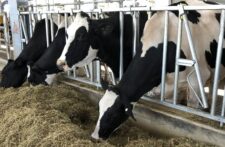
On April 24, the U.S. Department of Agriculture’s Animal and Plant Health Inspection Service issued a federal order to help prevent spread of highly pathogenic avian influenza. It takes effect April 29 and requires mandatory testing for interstate movement of dairy cattle.

The order, issued in accordance with the regulatory authority provided by the Animal Health Protection Act, as amended, 7 U.S.C. § 8301 et seq. Section 8305, authorizes the secretary of agriculture to prohibit or restrict the movement in interstate commerce of any animal, article or means of conveyance if the secretary determines that the prohibition or restriction is necessary to prevent the introduction of any pest or disease of livestock into the United States or the dissemination of any pest or disease of livestock within the U.S.

According to the release, Section 8308 authorizes the secretary of agriculture to carry out operations and measures to detect, control or eradicate any pest or disease of livestock. Section 8315 authorizes the secretary of agriculture to issue orders as he determines necessary to carry out the Animal Health Protection Act. Should this order be deemed a substantive rule, APHIS has determined that good cause exists to impose these requirements without notice and comment, as further delay would threaten to hasten the spread of the disease, multiplying the potential harm to livestock, poultry, the dairy industry and, potentially, human health.

The order requires the following measures, effective April 29, to monitor and understand the virus’ extent and reduce the risk to poultry and other livestock.

Mandatory testing for interstate movement of dairy cattle:

—Prior to interstate movement, dairy cattle are required to receive a negative test for Influenza A virus at an approved National Animal Health Laboratory Network laboratory.

—Owners of herds in which dairy cattle test positive for interstate movement will be required to provide epidemiological information, including animal movement tracing.

—Dairy cattle moving interstate must adhere to conditions specified by APHIS.

—As will be described in forthcoming guidance, these steps will be immediately required for lactating dairy cattle, while these requirements for other classes of dairy cattle will be based on scientific factors concerning the virus and its evolving risk profile.

Mandatory reporting:

—Laboratories and state veterinarians must report positive Influenza A nucleic acid detection diagnostic results (e.g. PCR or genetic sequencing) in livestock to USDA APHIS.

—Laboratories and state veterinarians must report positive Influenza A serology diagnostic results in livestock to USDA APHIS.

About HPAI

HPAI is most often found in domestic poultry and wild birds, and the contagious viral disease is deadly to those segments and can wipe out entire flocks quickly. APHIS said HPAI is a threat to the poultry industry, animal health, human health, trade and the economy worldwide. In the United States, HPAI has now been detected in dairy cattle.

On Feb. 8, 2022, the USDA confirmed HPAI H5N1virus in a commercial poultry flock in the United States. Since February 2022, agencies have responded to more than 1,100 HPAI detections on poultry farms to mitigate the virus’ impact on U.S. poultry production and trade.

Since late March 2024, the USDA, Food and Drug Administration, Centers for Disease Control and Prevention, state veterinary and public health officials and the National Animal Health Laboratory Network laboratories have been investigating the emergence of the HPAI, H5N1 virus in dairy cows.

As of April 24, confirmed cases of HPAI H5N1 clade 2.3.4.4b have been found in 8 states on 33 dairy cattle premises. Those states include Kansas, Idaho, Michigan, New Mexico, North Carolina, Ohio, South Dakota and Texas. USDA has also confirmed—based on specific phylogenetic evidence and epidemiological information—that eight poultry premises in five states (Kansas, Michigan, Minnesota, New Mexico and Texas) have also been infected with the same HPAI H5N1virus genotype detected in dairy cattle. Additionally, APHIS’ National Veterinary Services Laboratories found HPAI in a lung tissue sample from an asymptomatic cull dairy cow that originated from an affected herd and which did not enter the food supply.

HPAI has already been recognized as a threat by USDA, and the interstate movement of animals infected with HPAI is already prohibited. See 9 C.F.R. 71.3(b). However, the detection of this new distinct HPAI H5N1 virus genotype in dairy cattle poses a new animal disease risk for dairy cattle—as well as an additional disease risk to domestic poultry farms—since this genotype can infect both cattle and poultry.

For more information regarding this federal order, visit www.aphis.usda.gov/livestock-poultry-disease/avian/avian-influenza/hpai-detections/livestock.

As reported in the High Plains Journal

Herding Cats (Best Of)

0
lee pitts

The United Kingdom of Great Britain has been responsible for exporting many significant ideas and objects around the world during their long and colorful past. Many of our important breeds of cattle and sheep originated there as did tabloid and smutty journalism you find on the shelves in our supermarkets. Immigrants from Great Britain settled the new world and many of us could trace our heritage to the land across the Big Pond. I, for instance, had a great grandfather who was half Scotch, at certain times of the day that is. Yet it seems incongruous to me that peaceful Great Britain gave the world the violence of boxing and rock music but also the innocence and gullibility of animal rights.

The United Kingdom has shared its colorful language with the world and today English is spoken virtually everywhere, except most metropolitan American cities. And from the language of Shakespeare and Benny Hill sprang some of the world’s great literature… of which I recently discovered an example.

Lords and ladies, I assure the following story is true, occurring in the year 1978. That was the year, you may or may not recall (probably not), of the fireman’s strike in Great Britain. A labor strike, I am told, is not an uncommon occurrence in merry Old England.

So when Muffy’s cat got caught in the neighbor’s tree and she rang on the telly to the fire department for them to come and get the cat down, the British Army responded to the call instead. Valiantly the British Army had taken over the emergency fire fighting duties and other responsibilities of the striking fire fighters. So when the Army was called to the elderly lady’s home in the South of London to retrieve her tabby, they did it with typical British military flair and efficiency.

Three trucks arrived overflowing with soldiers in full military regalia and a crowd gathered to watch the maneuvers. “Thank ‘evins, you’ve come,” cried Muffy. Her own feeble attempts to herd the cat from the tree had failed miserably. Evidently it never dawned on her that if the cat got up the tree by itself it could also get down of its own accord.

But with impressive haste the soldiers hoisted the ladder and in a matter of moments they discharged their duty making possible one of the great animal rescues of all time.

The rescue was so successful, and the elderly owner of the cat was so pleased with the results, that she invited the cat’s rescuers in for tea and biscuits. It seems that Muffy was a member of London’s Dumb Friends League, which is similar to our Humane Society. So naturally, Muffy invited her fellow club members over to the house to share in the cat’s salvation. The members of the Dumb Friends League no doubt cared dearly for all animals and their gratitude to the soldiers seemed genuine enough.

After the mirth and merriment of the moment had subsided the soldiers bid adieu to the elderly lady and the adoring crowd. Backing out the driveway they proceeded to run over the cat and kill it.