
Wednesday, January 28, 2026
Home Blog Page 4545

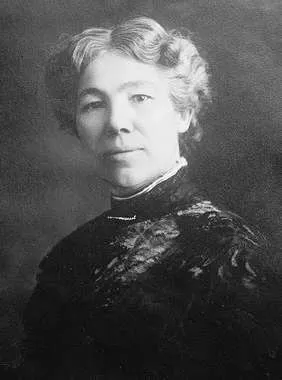
Chronicles of The Farm Woman: Kansas American Cancer Society

0
Farm woman

A call has been issued for the organization of the Lyon County chapter of the Kansas division of the American Cancer society.  The public is invited to the meeting.  All persons who contributed one dollar or more to the cancer drive last spring are eligible to vote.

Cancer is the giant killer that stalks the earth today.  He may meet his match in the surgeon’s knife, x-ray or radium therapy, if these treatments are used in time.

Eleven or 12 years ago, doctors who had been working in the American Cancer society asked the General Federation of Women’s clubs to organize a field army to         disseminate existing knowledge about treatment of cancer.  These  doctors knew that if they could see the patients in time, many lives could be saved.  The women accepted the challenge.  The watchword of the field army became “Saving Lives.”  The theme of the army is “Fight Cancer with Knowledge.”

Progress has been made in these 11 years.  Many years ago cancer was a muted word, as consump-tion or tuberculosis had been a generation earlier.  The field army has seen to it that a piece of literature about cancer has been placed in nearly every home.  Cancer is no longer whispered as if in disgrace.  Doctors report that more patients are presenting themselves for early diagnosis.

In the past two years a  quarter million dollars has been raised by the field army in Kansas.  That much money called for incorporation.  The Kansas division of the American Cancer Society, Inc., was formed.  Now the Lyon County chapter of that society is to be duly formed.  Delegates will be elected to a district meeting where a district director will be elected.  The district directors in turn select additional directors at large.   All these folk with certain designated persons, the president of the Kansas Medical society, the state commander of the field army, the chairman of the State Board of Social Welfare, the superinten-dent of public instruction, the Secretary of the       State Board of Health, the chairman of the cancer committee of the state medical society, compose the Board of Directors of the Kansas division.

Although the name and details of organization may be changed, the purposes of the group will not be altered.  The aim is still to fight cancer with know-ledge; to provide funds for research and to urge frequent physical examina-tions.  Until cancer is conquered, this fight must go on.  More power to Mrs. Lucille Davis and Claudia Williams who, with their corps of helpers, are directing this work in Lyon County.

No Bull

0
lee pitts

Have you attended one of these auctions where bulls are sold in a theater-like setting, displayed on a big screen and aren’t run through the ring? It’s heresy, I say! Pure laziness!

I think a purebred Brangus breeder in Texas was the first to have the courage to try a bull sale without all the bull, and this past fall more breeders used the format. Ranchers looked at the bulls out in pens before the sale, gathered in a heated building in comfortable chairs, were fed a nice meal, promptly fell asleep with their heads falling into their cake and slept right through the entire sale it was so boring. Just kidding.

There’s no reason the concept won’t work, after all, ranchers have sold their calves and yearlings in video auctions for decades with good results. Grudgingly, I must say it does make sense. Bulls won’t get jostled around and hurt, buyers will be more comfortable and sales will be faster because you don’t have to get stubborn animals in and out of a ring. It will also cut down on the number of bidders buying the wrong animal because of all the confusion. But I think the real reason purebred breeders are switching is because they can buy high-def televisions to show the bulls, write off the purchase as a sale expense and the rest of the year they can have a monstrous 72 inch TV in their bathroom. And every other room in their house too

Personally, I’m going to miss all the wrecks and disasters that happened the old way. I can’t begin to count the auctions that were interrupted when a gate broke or bulls turned around in the lead up chute and had to be delivered into the ring with a breech delivery. One time the sale was delayed for half an hour because a bull got stuck behind the bull board and we couldn’t get him out. One of my favorite disruptions was when an athletic bull managed to jump on the auction block with the auctioneer and sale manager. What a hoot that was!

Auctioneers will like the new format because it will be cleaner and they won’t be swallowing big gulps of organic matter because they had their mouth open at the wrong time. There will be no more dust from the sawdust in the ring that can make an auctioneer sound like a five-pack-a-day smoker. I’ll probably never again see a Colonel get his lip tore off and two teeth broken when a bull rammed the microphone into his mouth. One of my favorite moments was when a ring man was using a whip and accidentally popped the man with the gavel. (At least I think it was an accident.)

Most auctioneers are very fastidious and I’ll never forget the time when the auctioneer got some recycled hay on his expensive hat. He got so flummoxed that he took it off to survey the damage and then put in on backwards. And that’s the way it stayed for the rest of the sale! That was almost as funny as the time a big shot in the business sat on the front row at a sale and got plastered with manure and instead of admitting that he made a poor choice of where to sit, he sat there frozen for the rest of the sale because if he moved, liquified grass would drip off the front of his Stetson.

Ring men will like the new arrangement because they’ll be no more breaking their hand when they turn in a bid by flinging their fingers into the sale ring pipes. And their wives will like it a lot because there’ll be no more getting stubborn stains out of white shirts.

Other than a free lunch there’s no reason now for buyers to show up for a sale when they can watch and bid at home on the Internet. What’s next, bull sales on eBay?

I suppose I might as well get used to the concept because evidently this is the future: cleaner, faster, safer, more efficient and B-O-R-I-N-G. As for me, call me a purest but I prefer the broken body parts, the danger, the confusion, the wrecks, the manure and the mayhem.

wwwLeePittsbooks.com


You Just Shot What?

0
Photo credit: Diana Robinson

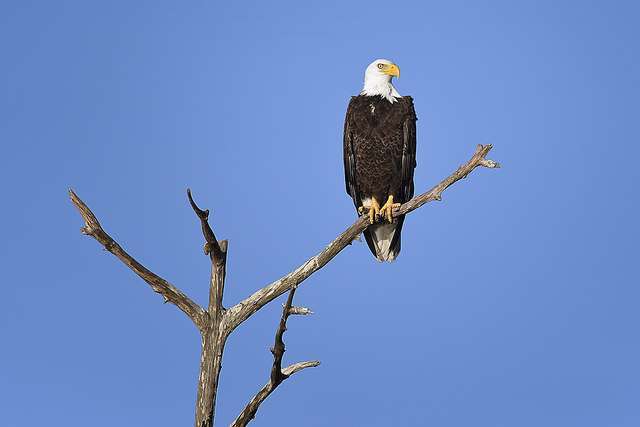
Steve GillilandI figure I’ve written this outdoor column long enough by now that I’ve earned license to ramble a little, so here goes. Most of you have heard by now, whether you’re outdoor enthusiasts or not, that a bald eagle was found shot to death this week near Marion Reservoir. Each winter several hundred bald eagles migrate through Kansas. They like our big reservoirs and rivers and they like to roost in the trees that line the north branch of the Cottonwood River where it flows into Marion Reservoir. It is a federal offence to kill any eagle or other raptor or to possess their parts, nor can you capture one without a special permit, so killing this eagle could earn the simpleton who did this upwards of a five thousand dollar fine and a year in the slammer. Although I have no idea why someone would shoot an eagle of any variety, I can picture a couple scenarios.
I work at a local nursing / retirement home and occasionally arrange programs for the residents. A few years ago I persuaded some friends from the Kansas Hawking Club to come and bring a few of their hawks for show and tell. As I was advertising the event I talked to an old farmer I’ll call Kurt who lived in one of the apartments there. When I told him about the hawks, he replied “They just all need shootin’!” Evidently he’d lost a chicken or two over the years to marauding hawks or owls, which happens occasionally, but is by no means the norm. Bald eagles follow migrating geese and eat mostly wounded or dying waterfowl and fish, not chickens, dogs or cats. But I can picture some farmer who had lost poultry over the years to hawks or owls spotting a bald eagle perched in a tree near his farm and deciding it looked mighty nice in the crosshairs of a rifle scope.
Another scenario I picture simply involves guys hangin’ out, maybe enjoying a little liquid refreshment and deciding someone should shoot an eagle just to see if they could get away with it. Lots of stupid deeds by groups of people begin with the four little words “Here, hold my beer!” Bald eagles, as protected and regal as they are, would make pretty easy targets to the many unethical and unprofessional slob hunters that seem to roam the woods anymore.
I know from working in the prison for ten years that many prison inmates are animal lovers, so if they catch the guy who shot this eagle I guess we can always hope he becomes a popular guy in the pokey, if you know what I mean Anyway, I guess I’ve ranted enough, so If this old man can get down off his soapbox without fallin’ on his head, I’ll help you again next week Explore Kansas Outdoors.
Steve can be contacted by email at [email protected].

Winery and Grape Growers Forum and Trade Show moves to Omaha

0
Photo credit: Axel

Lincoln (Neb.), Feb. 6, 2015 — University of Nebraska-Lincoln professor Paul Read remembers a time when only one winery existed in Nebraska, and his passion for viticulture propelled him to start the very first wine and grape growers forum. That was 18 years ago.

Today, Nebraska boasts 30 wineries, more than 100 grape growers, and numerous national and international wine awards of excellence. It is a testament, Read says, to the education and promotion provided by such events for the growing industry throughout the state.

The 18th annual Nebraska Winery and Grape Growers Forum and Trade Show, sponsored by the University of Nebraska Viticulture Program and the Nebraska Winery and Grape Growers Association, will run March 5–7 at the Omaha Marriott. Featured speakers, particularly well known to the Midwest grape and wine industry, will share their advice on everything from growing grapes to marketing wine.

Read believes the annual forum and trade show has been instrumental in improved wine quality in the state.

“It helps grape growers learn efficient ways to produce quality crops and gives winemakers insights from experts around the country,” Read said. “A large percentage of participants come from the wine supply industry and enologists (winemakers), but it’s open to the public as well.”

Read is hopeful the move from Kearney, where it was held the last 15 years, to a new venue in Omaha will be advantageous for attendees traveling from the four-state area, especially participants from eastern Nebraska and western Iowa. The location near a large airport also will help, he said, and he hopes will bring in a record number of trade show vendors.

Featured speakers include Murli Dharmadhikari, famed enologist and director of the Midwest Grape and Wine Industry Institute at Iowa State University, who will speak on wine and winemaking, and Jerry Lohr, South Dakota native and owner of J. Lohr Vineyards & Wines in California, who will speak at the Grand Awards Banquet. Donniella Winchell, executive director of the Ohio Wine Association, will share marketing and promotion strategies; Andy Allen, chair of the Viticulture and Enology Program at Arkansas Tech University-Ozark, will be the featured viticulture speaker; and Maria Peterson, a filtration specialist from Scott Laboratories in Petaluma, Calif., will be a resource for filtration related questions and products.

Along with the forum and trade show, participants will have the opportunity for wine tasting on several days and to partake in the Grand Awards Banquet held the last evening of the event. The banquet will feature specially selected Nebraska wines paired with each of the six courses served during the meal. The wines were submitted by Nebraska wineries and chosen by a panel of judges this week.

For more information and to preregister for the event, go to http://agronomy.unl.edu/viticulture. Register before Feb. 13 to receive an early bird rate.

From student to instructor

0

credit –  Pratt Community College

After attending Pratt Community College for two years, Ryan Walton said he knew he eventually wanted to come back and teach.

“I had a great experience at PCC,” Walton said. “I knew I wanted to give back to the college.”

Walton graduated from PCC in 2009 with an Associate’s degree as a lineman. He then worked at Kiwash Electric Co-Op in Cordell, Okla. In January, he came back to PCC and is helping teach students to become lineman on PCC’s Wichita campus.

Walton said he decided to become a lineman because both his father and grandfather were electricians.

“I knew I wanted to keep working with electricity and I liked the idea of climbing,” he said.

Since starting in January, Walton said he has enjoyed going from working in the field to teaching but said his favorite part as has been helping share the knowledge he gained in the field with the students and watching them succeed.

His goal is to help the program become stronger and to find ways to get more students in the Wichita program, which has a one-year certificate program and also has classes for high school students.

“If we can get the high school program to be stronger, it will help the certificate program in the future,” he said. “Hopefully when the high school students graduate, they will think of continuing on in the college courses.”

When Walton isn’t working he said he enjoys spending time with his baby, who is almost a month old, hunting, fishing and anything else that allows him to be outdoors.