Friday, January 23, 2026
Home Blog Page 4618

Bethel Softball signs Texas Pitcher

0

NORTH NEWTON, Kan. – Stacy Middleton announced that Rylie Scudder from Little Elm, Texas has committed to play softball for the Threshers next year.

Rylie is a two-time First Team all-district Pitcher and team MVP for Little Elm High School.  She said, “I am excited to further my education at Bethel because I know I’ll fit in and learn amazing things from the professors.”  Coach Middleton stated, “we are excited to sign Rylie to our program. She will bring excitement and energy to our team and will certainly be a great asset in the circle for us.”  Rylie enters Bethel as a Freshman and plans to major in Psychology.  She “is thrilled to have the opportunity to continue her softball career at the collegiate level,” and coach say she “is a very coachable young lady.  We are looking forward to having her join our pitching group!”

credit – Bethel College

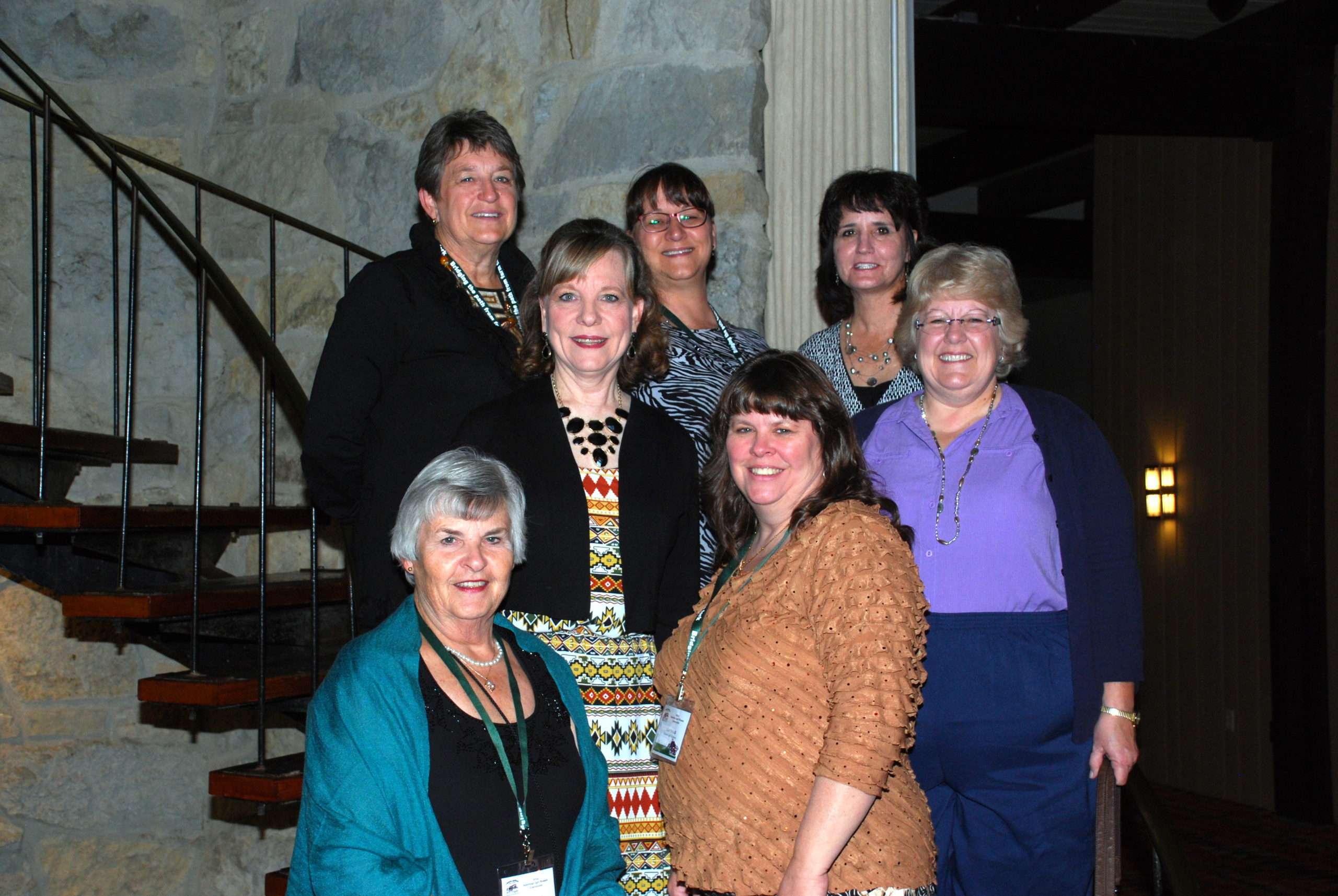
Kansas women elected to leadership roles with American Agri-Women

0
Members of Kansas Agri-Women represented the state at American Agri-Women’s recent national convention in Ohio. Top row, from left: Jean Goslin, Marieta Hauser and Lynn Woolf. Middle row, from left: Donita Whitney-Bammerlin and Donnell Scott. Bottom row, from left: Wanda Kinney and Lisa Nichols.

Members of Kansas Agri-Women are leading efforts to advocate for agriculture on a national scale, with 10 women recently elected to board and committee positions with American Agri-Women (AAW).

AAW is the nation’s largest coalition of farm, ranch and agribusiness women representing more than 50 state, commodity and agribusiness affiliates. AAW promotes the welfare of our national security through a safe and reliable food, fiber and mineral supply. Kansas Agri-Women is among AAW’s oldest affiliates. Both are celebrating their 40th anniversary.

Two KAW members were elected to the executive committee at the annual convention, held recently in College Corner, Ohio:

  • Donnell Scott, Manhattan, Kan., is vice president of education.
  • Lynn Woolf, Milton, Kan., is vice president of communications. Woolf also received the 2014 President’s Award.

Other KAW members holding national positions include:


  • Jean Goslin, Dwight, Kan., is KAW president and serves on the AAW Foundation board.
  • Abby Amick, Alma, Kan., serves on the communications committee.
  • Lori Bammerlin, Council Grove, is president of the Flint Hills Chapter of KAW and serves on the AAW Foundation board.
  • Wanda Kinney, Carbondale, Kan., serves on the nominating committee and the American Grown Goodness and animal welfare subcommittees of the vital issues committee.
  • Bobbi Olivier of Harper, Kan., and KAW’s past president, serves as livestock subcommittee chair for the vital issues committee.
  • Lesley Schmidt, Park City, Kan., and KAW’s first vice president serves on the 40th anniversary event committee planning.
  • Donita Whitney-Bammerlin, Manhattan, Kan., serves on the entrepreneurship subcommittee of the vital issues committee.
  • Chris Wilson, Manhattan, Kan., past national president, serves on the American Grown Goodness subcommittee of the vital issues committee.


More info

Kansas Agri-Women focuses on ag education and advocacy. Its motto is “From Producer to Consumer with Understanding.” Find KAW on social media at: https://www.facebook.com/pages/Kansas-Agri-Women and Twitter.com/KSWomen4Ag/ (@KSWomen4Ag).

Since 1974, AAW members have worked together to educate consumers; advocate for agriculture; and offer networking and professional development opportunities. Go to the AAW web site for more information and to join, www.americanagriwomen.org. Find AAW on social media at: Facebook.com/AgriWomen/ and Twitter.com/Women4Ag/ (@Women4Ag).

Master Food Volunteer Program

0

By: Susan Jackson, County Extension Agent, Family & Consumer Science

Start 2015 right by sharing your talents and register for the Master Food Volunteer Program. If you enjoy cooking, like to share healthy meal plans, and feel a need to give back to your community, this is an excellent program for you.

Why become a Master Food Volunteer?
Make new friends who enjoy cooking and learning about healthy foods and nutrition.
Feel good about helping your community become healthier.

Access to private tours at food production sites and the latest foodie hotspots,
Develop leadership abilities and improve your technology and administrative skills.
Know you’ve made someone else’s life better

The Master Food Volunteer program utilizes the expertise of nutritionists, registered dieticians, food scientists and culinary experts to train volunteers in the areas of nutrition, cooking, food safety and preservation.

Master Food Volunteers are all about food, promoting good health and giving back to the community, Trainees who complete the program requirements become a part of a special volunteering team and participate in activities of their choosing.  All activities are geared toward the single purpose of educating the public and enhancing health and well being.

To become a Master Food Volunteer, you must:
? Enjoy being a lifelong learner ? Live in Harvey County ? Have at least a high school diploma or the equivalent ? Enjoy working with others in a fun, educational environment ? Participate in the 40 hour training class ? Commit to volunteer at least 40 hours of approved service in the community during the first year as a Master Food Volunteer
If you would like to be considered for this volunteer organization or desire more information, please contact:

Susan Jackson  [email protected]   316-283-6930 at the K-State Research and Extension, Harvey County Office.

More information is available on our website   www.harvey.ksu.edu    Family and Consumer Sciences on the left side and find Master Food Volunteer information on the right.  Applications are available at this link or at the Harvey County Extension Office.

Volunteers come from all walks of life and are all ages, male and female, new mothers and retirees, rural residents and suburbanites. But they all share a passion for continued learning and a love of nutrition and cooking. Our volunteers extend this passion throughout our community making Harvey County a better and healthier place to live.
Our volunteer opportunities are endless and with our continual training programs, your personal growth and contribution to the community can last a lifetime. Whatever your goals, there is a place for you in the Master Food Volunteer Program.

Classes begin on January 7th from 1 pm to 5 pm at the Sedgwick County Extension Office.
Classes continue each first Wednesday of the month throughout 2015. Registration fee is $75.00 for notebook, apron and classroom supplies. Please register by January 5th.

This is a continual training so you may join Master Food Volunteer trainings at any monthly training.  Then you may pick up trainings   you have missed.

K-State Corn Production Management Schools scheduled for January

0

By Ryan Flaming, County Extension Agent, Agriculture & Natural Resources

Two K-State Corn Production Management Schools will be offered in early January 2015 in northeast and central Kansas. Each school will provide in-depth training targeted for corn producers. Primary sponsors of the schools include the Kansas Corn Commission and DuPont Pioneer.

The one-day schools will cover several current corn topics relevant to corn producers in Kansas: drought-tolerant hybrids, high-yielding corn factors, weed control, soil fertility, and price and market perspectives. The schools will begin at 9 a.m. and adjourn at 2 p.m., followed by a tour of facilities. The dates and locations are:
Jan. 9: Hesston, AGCO building, 420 W. Lincoln Blvd. and Jan. 16 in Atchinson.

Lunch will be provided, courtesy of the sponsors. There is no cost to attend, but participants are asked to pre-register before Jan. 5 for the Jan. 9 School in Hesston to plan for meals & materials.

Online registration is available at K-State Corn Production Management Schools (http://bit.ly/KSCORNSchools) or by emailing me at [email protected] or calling the Extension office at 316-284-6930.

Careful Consideration Urged When Making ‘One-Time Decision’ For New Farm Program Participation

0

By Frank J. Buchman

Farmers, landowners and anyone actively engaged in agriculture production must soon make decisions regarding options that are available in the new Farm Bill.

Paula Vohs representing Cargill Crop Insurance was most emphatic in her opening remarks for the special luncheon discussion hosted by Webb & Associates Auctioneers and Appraisers at Overland Park, prior to Johnson County land auctions conducted there.

First question among the three dozen producers in attendance likely may have been: “Why is Cargill talking about the Farm Bill?”

In anticipation, Vohs clarified: “We want to help you make better informed decisions, and understand the tie between the 2014 Farm Bill and crop insurance policy to best utilize both and plan marketing around them.”

Continuing, Vohs explained: “The Agricultural Act of 2014 offers new programs and more choices than ever before. To better understand and make the right decision concerning these options, everybody involved must get an appointment as quickly as possible at the Farm Service Agency office serving the agriculture land that is identified only by a farm number.”

In previous Farm Bills, the decisions to participate in various commodity and crop insurance programs were not necessarily intertwined.

“However, with an ever-increasing focus on risk management and a strong emphasis on crop insurance, the Farm Bill introduces new interactions between commodity and crop insurance programs,” Vohs said.

Direct payments provided to crop producers regardless of financial loss in the three previous Farm Bills are gone.

To effectively manage risk in their operations, producers should consider analyzing their entire farm and risk management “portfolio,” which would include projected market revenue, farm commodity payments, and crop insurance indemnities, the speaker said.

“Most importantly, enrollment in the new commodity programs will be a one-time, irrevocable decision this month, or early 2015, so it is essential for producers to go to their Farm Service Agency office immediately to determine the mix of programs that offers the most effective safety net over the next four to five years, versus the program with the largest government payment in a particular year,” Vohs pointed out.

Unlike the Average Crop Revenue Election (ACRE) program in the 2008 Farm Bill where payments were tied to planted acres of covered commodities up to the number of base acres, the new commodity programs are paid on base acres of covered commodities.

Choices for covered commodities include:

1) Landowner chooses to retain or reallocate base acreage.

2) Landowner chooses to retain or update payment yields.

3) Producer or landowner chooses to enroll base acres in Price Loss Coverage (PLC), farm-level Agriculture Risk Coverage (ARC), or county-level Agriculture Risk Coverage (ARC).

4) Producer chooses to purchase an individual insurance policy on planted acres.

5) If producer is not enrolled in farm-level or county-level ARC, there is an option to purchase a new supplemental insurance product, called the Supplemental Coverage Option (SCO), on planted acres.

Direct payments that have been a key component of the producer safety net since 1996 have been eliminated as have Counter-Cyclical Program payments available since 2002.

Initially, crop producers and landowners will need to decide whether they want to reallocate their base acres which would serve to more closely align base acres to recent plantings. The major decision is whether they want to choose farm-level ARC, county-level ARC, or PLC.

“Since this decision will stay with the farm for the life of the Farm Bill, producers are encouraged to consider which choice they feel the most comfortable with over the next five years rather than which might provide a short-term payment,” Vohs restated.

Each producer will need to make this decision for every covered commodity grown on each farm. Once this decision is made, payment yields can be updated for any commodity enrolled in PLC.

“While these decisions may seem complicated for even an average size farm, it is important to note that the safety net provided in this Farm Bill can be especially strong if producers will take the time to tailor their farm program choices to each of their farms. Once these decisions are made, there are several crop insurance changes that can also be considered,” Vohs said.

“Information on the 2014 Farm is always changing and still being defined, while additional rules are being written. This is a one-time opportunity to determine the future of your farm for the next five years.

“Farmers, landowners and anyone actively engaged in agriculture production must go to their Farm Service Agency office and discuss options that are available in the new Farm Bill,” Vohs concluded.

Col. Dave Webb served as announcer and bid taker, as Col. Kevin Borger representing Webb & Associates Auctioneers and Appraisers of Stilwell conducted two successful Johnson County real estate auctions. Later that evening, the firm hosted a reception for Pioneer Bluffs at Matfield Green.