
Tuesday, February 17, 2026
Home Blog Page 485

The Four States attempts to end time change

0

Daylight saving time will start at 2 a.m. Sunday, March 10, when Four State residents will “spring forward” — moving their clocks ahead one hour.

Not long after, on March 19, the season changes and Spring will have officially “sprung.”

As we leave winter behind, many state legislatures would also like to leave behind time change altogether. The question is, If we stop changing our clocks back and forth each year, which way do we leave them?

Federal law currently allows states to “opt out” of daylight saving time (DST) and return to standard time. This would make the “fall back” section of the year (from November to March), the permanent year-round time.

The only two states to observe standard time year-round are Arizona and Hawaii, where residents there never adjust their clocks.

However, what federal law doesn’t allow states to do is make daylight saving time permanent.

According to the National Conference of State Legislatures report on Daylight Saving Time — here is where the Four States stands regarding efforts to keep daylight saving time all year long (though Congress would need to act before states can make any official change).

ARKANSAS

In December 2022, State Representative Johnny Rye introduced a bill in the Arkansas House that would adopt year-round daylight saving time. But, nearly a month later in January of 2023, he withdrew the bill and recommended “its effects be studied by a committee on governmental affairs.”

In March 2023, State Representative Stephen Meeks introduced a bill to the Arkansas House to adopt standard time year-round, eliminating DST. However, the effort failed in the House.

KANSAS

The last time Kansas lawmakers put forward a daylight saving time bill was in 2019. That bill would have kept the state off DST, but the bill died in 2020.

In 2021, Kansas lawmakers went a different route by introducing House Bill 2060 , which would make DST permanent in the “Sunflower State.” HB 2060 died in May 2022.

Kansas lawmakers have also proposed moving to DST year-round, but those proposals have all failed.

MISSOURI

In 2021, lawmakers in Missouri proposed House Bill 848 that would have the Show-Me State permanently use daylight saving time, if three of eight bordering states follow suit. The Missouri House approved the plan, but the state Senate failed to vote on the measure before the session ended.

In 2023, there were two House bills under consideration that would make DST permanent: House Bill 157 and House Bill 265 — both of which failed.

Despite different versions of this bill making progress in past sessions, current members are not confident that DST will ended in Missouri this year.

According to a recent article in Columbia Missourian , Representative Darin Chappell, a Republican from Rogersville, and Representative Michael Burton, a Democrat from Lakeshire, both said there is little hope that the Missouri Senate will prioritize a bill like this during the current session.

OKLAHOMA

An Oklahoma bill to “lock the clock” and permanently establish daylight saving time in the state was more recently introduced by Senator Blake Stephens, a Republican from Tahlequah.

Senator Stephens authored Senate Bill 1200 , which would allow the state to stop changing clocks if a federal law allowing the time change is made. The bill advanced out of the state’s Senate Agriculture and Rural Affairs Committee in late February.

Like many states with similar bills going through the motions, this is not the first time the Oklahoma Legislature has considered a bill aiming to have a permanent DST. During last year’s legislative session, Senator Stephens co-authored a similar bill ( Senate Bill 7 ) that passed the state Senate but was never heard in the House.

Uniform Time Act

In 1966 Congress passed the Uniform Time Act — requiring state governments that choose to observe daylight saving time to begin and end the practice on federally determined dates.

“Under the Uniform Time Act, States may choose to exempt themselves from observing Daylight Saving Time by State law,” the U.S. Department of Transportation website reads . “States do not have the authority to choose to be on permanent Daylight Saving Time.”

This year’s DST will end at 2 a.m. Sunday, November 3.
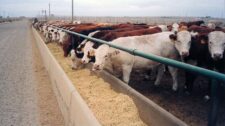
Options for beef producers have evolved over the years

0
credit -NDSU Ag

For as long as cattlemen have been raising beef cattle, there’s always been questions surrounding selling said livestock and getting the most bang for the producer’s buck.

In the 75 years High Plains Journal has been around, options for marketing cattle have likely changed nearly as much as how agriculture in general has.

The very first issue of the Journal had an ad for the McKinley-Winter Livestock Commission Company, Dodge City, Kansas. The ad touted, “Always sell through the largest auction market in the Great Southwest Cattle Country. It’s the safest and most reliable method. We also pride ourself in knowing that each head of your livestock will receive a fair and profitable market price. There’s no longer a need for you to take unnecessary chances on your livestock marketing—instead sell or buy through our competent and competitive auction sales. We assure you of equal privileges and a good market price.”

Visionary

In the 70th anniversary issue of the Journal, Brian Winter of Winter Livestock, said the family’s auction barn has always tried to be ahead of the curve—whether it be the first ring scale or air conditioning in the 1950s.

“The ultimate end goal is to provide better service for our customers,” Winter said in the 2019 story.

Customers have continued to be loyal and they’ve had long time customers selling livestock at the sale barn since its beginning.

“In a lot of ways it’s stayed the same in that it’s more about the relationship and partnership with the customer and us as their service provider and purchaser provider to them,” Winter said. “We are allowed to provide more buying power to the sellers.”

As time went on cattlemen found they had more options outside of their local sale barn or auction market. Private treaty and on farm sales began to get more leverage and as technology advanced the livestock were able to be seen far and wide. Another avenue that became an important factor for marketing cattle was special value-added programs. One of those was Certified Angus Beef.

New influences

Paul Dykstra, director, supply management and analysis with CAB, believes the group has helped influence marketing in a couple of ways.

“The initial impact was two-fold,” he said. “First, since Certified Angus Beef was the original branded beef company this introduced a paradigm shift whereby consumers could identify a brand name and associated carcass quality specifications that they learned to trust for a great eating experience.”

The second part of this impact was recognized by the brand’s founders, and they were able to capitalize on the marbling characteristics of Angus cattle and began to capture added value in the Premium Choice product segment where none had previously existed.

“High quality, larger product availability and a lower price point than USDA Prime really drove the brand’s growth,” he said.

Dykstra said through the years, CAB has been able to push the envelope, and for him one of the biggest accomplishments has been the fact that the brand’s growth in consumer demand played a major role in setting the beef industry on a course toward higher quality carcass production.

“This can’t be stated without also recognizing that the brand has delivered on our mission statement to increase demand for registered Angus cattle,” he said.

Carcass value

The marketing of beef cattle has changed through the years and has gotten to a point where packers are able to price a large share of the cattle based on carcass value.

“Commercial and seedstock cattle procurement decisions upstream are consequently impacted in many cases with some consideration as to carcass quality outcomes,” Dykstra said. “Opinions certainly differ about how today’s fed cattle market is structured, but the evolution that has occurred has had the expected effect in incentivizing us cattlemen to improve our product.”

That is one very positive aspect in driving beef demand, according to Dykstra. It also helps ensure the future of the CAB brand, while continuing to refine a model that has been very good so far.

“Identifying growth opportunities for the brand is always a priority, focusing on listening to consumers to best meet their needs,” he said. “As well, capturing a premium marketing outlet for every possible pound of each CAB carcass will maximize value back to through the supply chain.”

As reported in the High Plains Journal

Governor Kelly Updates Declaration of Drought Emergency, Warnings, and Watches for Kansas Counties

0

Governor Laura Kelly has approved updated drought declarations for Kansas counties with Executive Order #24-01.

“While drought conditions have improved greatly in recent months, many counties continue to be negatively impacted by the decline in water supply or strains on water resources,” said Governor Laura Kelly. “I strongly encourage all Kansans to continue to conserve water as we head into the summer months.”

The drought declaration removed all 55 counties previously in emergency status and placed 15 counties into warning status and 62 into watch status. This action was recommended by Connie Owen, Director of the Kansas Water Office and Chair of the Governor’s Drought Response Team. While a majority of Kansas has seen significant relief from drought since August, central and southeast Kansas continue to be in Severe Drought.

“Counties in a watch status have conditions which indicate the probability of a water shortage is rising. It is important to monitor these conditions and be mindful of water usage in these counties,” said Owen. “The Governor’s Drought Response Team will continue to monitor the drought conditions across Kansas and make recommendations to Governor Kelly as conditions change.”

This Executive Order shall remain in effect for those counties identified until rescinded by an Executive Order ending the declaration or revising the drought stage status of the affected counties.

Effective immediately, Executive Order #24-01:

  • Declares a Drought Emergency, Warning, or Watch for the counties as identified below;
  • Authorizes and directs all agencies under the jurisdiction of the Governor to implement the appropriate watch, warning, or emergency-level drought response actions assigned in the Operations Plan of the Governor’s Drought Response Team.

The Governor’s Drought Response Team will continue to watch the situation closely and work to minimize the negative drought-induced effects on Kansans.

For more detailed information about current conditions, visit the Climate and Drought webpage on the Kansas Water Office website at kwo.ks.gov.

County Drought Stage Declarations:

Drought Emergency:

 Drought Warning: Chautauqua, Clay, Dickinson, Elk, Graham, Harvey, Jewell, McPherson, Mitchell, Montgomery, Osborne, Ottawa, Reno, Rice, Rooks, Wilson.

Drought Watch: Allen, Anderson, Atchison, Barton, Bourbon, Brown, Butler, Chase, Cherokee, Cheyenne, Cloud, Coffey, Cowley, Crawford, Decatur, Doniphan, Douglas, Ellis, Ellsworth, Franklin, Geary, Gove, Greenwood, Jackson, Jefferson, Johnson, Kingman, Labette, Lane, Leavenworth, Lincoln, Linn, Lyon, Marion, Marshall, Miami, Morris, Nemaha, Neosho, Ness, Norton, Osage, Phillips, Pottawatomie, Pratt, Rawlins, Republic, Riley, Russell, Saline, Sedgwick, Shawnee, Sheridan, Sherman, Smith, Stafford, Thomas, Trego, Wabaunsee, Washington, Woodson, Wyandotte.

Beef Preparation Begins 

0

Lovina’s Amish Kitchen
Lovina Eitcher,
Old Order Amish
Cook, Wife &
Mother of Eight

We sure have had mild weather the past few weeks. It brings on some spring fever! Now we have entered into March. It seems so hard to comprehend that the year is already in the third month of 2024.

Last week I spent a day at daughter Susan and Ervin’s. Susan and I painted the bathroom and entry area in their pole barn. That is where they will host church services. After we were done painting, I cleaned some of her canning jars and put them on the new shelves that Ervin built for them. They don’t have a basement in their house, so Ervin built the shelves in the pole barn entrance room—they keep enough heat in there during the cold months so the cans don’t freeze. It’s also where their battery packs for solar power are kept. 

Ervin’s dad is still in the hospital and can open his eyes and have some movement with his hands and feet if I understand it right. He has a long road ahead, so let’s keep him and the family in our prayers. 

Ervin and Susan’s four oldest children came here Saturday night and were here until Sunday night. Ervin and Susan spent all day Sunday at the hospital with his father and family. The children did very well for us. Daughter Verena and her special friend Daniel Ray went after the children Saturday night then took them home again Sunday evening. 

On Saturday we cut up a whole beef. Half was for our friends, and they wanted all kinds of different steaks cut out, so it took more time. Those helping us with the beef were daughter Lovina’s special friend Daniel, Daniel Ray, and Dustin and daughter Loretta. We still need to slice more steaks and grind our hamburger from our half of the beef. We only have a few pints of beef chunks left, so I am glad to have more to can. I’m also glad for the steaks and hamburger to put in the freezer. We have two freezers and one is empty, so it will be nice to have some more meat in there. 

Our plans for tomorrow are to help Susan again with her cleaning in preparation for church services. Sister Verena, sister Emma and her daughters and daughter-in-law, my daughters, and I are all planning to go. We should get a lot done for Susan. Baby Ervin is going to be four months old next week. He smiles and coos and is all happy until Susan wants to get work done; then he fusses. He doesn’t lack any attention with five older siblings. He is such a cuddly baby and has the brightest blue eyes. So precious!

Sunday was such a beautiful day and the temperature went up into the 70s. The children had fun playing outside with Verena and Daniel Ray. They gave them swing rides, etc. 

Our supper guests were Dustin and Loretta and sons, daughter Elizabeth, Tim, and four children, Daniel, Daniel Ray, and Joesph’s special friend Grace.

Daniel and daughter Lovina made a campfire stew in the kettle over the campfire. This was a great help to me to not have to make supper in the house. They used fresh beef chunks for the stew, which was very delicious. I will share the campfire stew recipe since it’s been around four years since I last did. It is also in my cookbook, The Essential Amish Cookbook

God’s blessings to all!

Campfire Stew

2 cups beef stew meat (may substitute a roast, cut into chunks)

4 cups red potatoes, unpeeled, cleaned, and diced

2 cups green beans, cut into small pieces

1 whole onion (used to flavor the soup; it is removed before eating)

4–5 beef bouillon cubes

1 teaspoon garlic powder

Salt and pepper, to taste

Put beef chunks in kettle (or large pot) with enough water to cover, bring to a boil, and boil for 10 minutes. Add potatoes, green beans, and onion, adding enough water so that vegetables are well covered. Add bouillon. Boil until vegetables and meat are tender. Season with garlic powder and salt and pepper. Remove onion if you wish.  

Lovina’s Amish Kitchen is written by Lovina Eicher, Old Order Amish writer, cook, wife, and mother of eight. Her two cookbooks, The Essential Amish Cookbook and Amish Family Recipes, are available wherever books are sold. Readers can write to Eicher at Lovina’s Amish Kitchen, PO Box 234, Sturgis, MI 49091 (please include a self-addressed stamped envelope for a reply); or email [email protected] and your message will be passed on to her to read. She does not personally respond to emails.


Ancient Kansas

0

When we think of ancient places we commonly think of Rome, Greece, and many other hotbeds of early European civilization. A place that probably doesn’t immediately come to mind is North America. This could be for many different reasons but the most probable one is that we commonly focus on a Euro-centric historical curriculum in school. I think one of the biggest crimes of our modern-day history curriculum is that we don’t celebrate the history of North America quite as much. Then again, Native history is significantly less documented than anything of European origin. However, that doesn’t make it any less important. For that reason, let’s take a look at a couple of pretty cool facts about our homeland that may not have been covered in History 101.

First of all one of the more well-known facts, is that Kansas used to be a shallow sea where primeval waters flowed, shallow salt-water deposits are left over in our soil and left more than enough evidence to prove it, such as fossilized sea creatures of various shapes. After these seas left, rivers of freshwater formed what we agricultural folks know as the Ogallala Aquifer. The source of all groundwater for the Midwest. Unfortunately, overuse of the aquifer has led to an increasingly worrying loss of the groundwater resources we have available in recent years.

After this period, jumping forward to about 11,000 years ago to the last Ice Age when megafauna such as mammoths and giant sloths roamed the great plains and other locations. Many of you may know of these creatures but how about what they eat? Lucky for you, we have just a real-life example. The Osage Orange tree is a thorny tree of yellowish hardwood that was prized in the early settlement days for natural fences. The thing that many don’t know is that Osage Oranges, or “hedge apples” were a natural fruit delicacy to the megafauna of the plains during the ice age. The massive size of the fruit was easy for creatures such as giant sloths to eat and digest. Nowadays, no animal eats the fruit itself, however, some, such as deer, have a tradition of eating the seeds within it.

There is evidence to suggest that early peoples of the Native Americans lived during the same time as these megafauna too, early indigenous populations lived nomadically hunting mammoths, mastodons, and giant bison across the plains. Can you imagine hunting an animal so massive? There must have been something in the water all those years ago to give them the strength required to do such incredible things.

After this long length of time of Native Americans living in harmony with nature, Europeans came along, and many of you know the story from there. The incredibly detrimental and horrid forced migration of indigenous populations, and development of the land into what it is today. Don’t get me wrong, I’m happy for the lives we have in the modern day and age, but we can always take care of the land as well.

This was an incredibly brief description of the last hundreds of thousands of years of history for our great state, but it’s certainly something to start off on. I used information from the Kansas Historical Society webpage, if you are interested, you can certainly find more information on everything I mentioned and didn’t. After learning these things, I hope you can call yourself proud to be a Kansan for the rich history we have to offer. I know I certainly am.