Tuesday, February 17, 2026
Home Blog Page 484

After price boom, storm clouds ahead for wheat farmers

0

As they say, “In front of every silver lining, there’s a dark cloud.” The silver lining was the good years in farming of 2021 and 2022. And the dark cloud, well, that’s what’s staring us in the face right now.

Indeed, the good years were good. After wheat prices soared to $12 and $13 per bushel locally when Russia invaded Ukraine, so did net farm incomes. As measured by the Kansas Farm Management Association, net income shot up to a record high of $310,000 per farm.

But having observed several of these super cycles over the past 50 years, it’s fair to say they all start the same. And they all end the same.

Take a look at the Granddaddy of them all—the Russian Grain Robbery of the 1970s that led to a doubling of wheat prices and gigantic increases in net farm Incomes. But with all the newfound wealth created by $5 wheat, farmers took the bait — hook, line and sinker.

They quickly capitalized their new earnings into land which also more than doubled in price. And you had to wait a whole year before you could get a new John Deere tractor. But who cared? The dealers paid more for your trade-in than you had paid for it new. Let the good times roll.

But whether you’re talking about basketball games or movies or farm cycles, they all end. And that particular farm boom ended badly. While Secretary of Agriculture Earl Butz was preaching “Plant fence row to fence row” at the Agriculture Department, over at the Fed, Paul Volker was determined to “Whip Inflation Now”. And when Volker hit the brakes, interest rates soared like a Roman candle — and shot from 6% to 18% in the blink of an eye.

What followed was called The Mid-’80s Ag Crisis. I once read an economic analysis comparing the mid-’80s to farming in the Depression of the 1930s. The mid-’80s were worse. There was an explosion in farm bankruptcies as commodity prices collapsed and surpluses started building. The corn carryover, for instance, walked right on past 3 billion bushels. Farmers, who on paper were worth millions because their land had rapidly inflated, were now no longer paying taxes because they had no income due to high debt loads and high production costs. They were discovering that you service debt out of earnings, not net worth. All that was followed by a collapse in land values.

Land prices that had peaked in 1981 dropped 50% from that point to the bottom in 1985, 1986 and 1987. Here in Lane County, we peaked at between $667 and $700 per acre. In Thomas County where it always peaks, land hit highs of $900-$950. When it settled, land in Lane County sold for $250-$300.

Now I don’t want to spook you by talking about the mid-’80s, because nothing that severe is going to happen again. Still, it’s a perfect model for illustrating what happens in the boom-and-bust farm cycles.

Since then, we’ve gone through several more of those. The one in ’08 was triggered by our nation’s move to lessen dependence on imported oil by making ethanol which resulted in a huge jump in corn prices — zooming all the way to $7 as farmers frantically planted more and more acres to corn in an effort to satisfy the new demand. Then in lockstep with the big jumps in net farm income came the big increases in land prices and just about every farm input you could imagine.

Land is the residual beneficiary of net farm income. After paying all your debts at the end of the year, if you have money left over, you go to land sales and bid against your neighbor who also has excess money. That competition causes land prices to go up. But then the adjustment comes and the bust arrives. And in the ethanol case, land dropped at least a hard 30%. The important thing to remember, though, is while the retracements can be severe and normally run between 30% and 50%, they always end higher than where they started. That makes land a very good long-term investment.

The recent boom was triggered by Russia invading Ukraine and potentially disrupting important international grain trade. Consequently, wheat prices soared while economic uncertainty triggered a run-up in the value of the dollar. The strong dollar today still haunts us and for us producers of exportable commodities like wheat, it’s made even worse by the cheap Russian ruble. In short, the boom is over and the adjustment has started.

By my bookkeeping, I’d say 2023 was the first year of the readjustment. And it is going to get worse. This year is going to be a real challenge. KSU ag economist Dan O’Brien says with 54-bushel dryland western Kansas wheat yields, our breakeven price is $7.50/bu., but our current cash prices are more like $5. In brief, that means we’re spending $7.50 to produce a product we’ll sell for $5. That is not going to work.

But as they say, the cure for low prices is low prices. Because we’re no longer making as much money — or any money — we quit going to land sales and prices start down. Cash rents follow. We also throttle back on other expenses like crop insurance, fertilizers, seed and equipment purchases. And if you do have excess money, the best deal in town is paying off old debt. Where else can you get a 9% return?

How long will this adjustment take? Going back to the mid-’80s example, it took five years to get from the high in the land market to the low. While that was an extreme event, I’d prepare for probably another three years of humble incomes. And in the meantime, I’d plan for the land market to lose probably a good 30% of current value.

The way I figure that is to take 30% off the extreme highs which here in Lane County ranged between $3,100 and $3,400/acre. That should take us down to a stable market of $2,100 to $2,200 for good quality cropland. But if it goes down 50%, it’s going to take more courage on the part of both farmers and ag lenders.

In summary, it’s not like we didn’t know this would happen. And that is why it always pays to keep a little slack in the rope.

Vance Ehmke is a farmer in Lane and Scott counties in Kansas. He runs a seed business and is a former editor for Progressive Farmer. Ehmke also is a past president of the Kansas Association of Wheat Growers.
 

Will the drastic temperature drop at the end of February cause damage to fruit trees that have bloomed?”

0

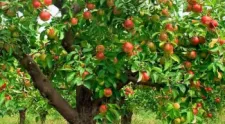
Determining how much damage will be done to fruit trees as a result of the cold depends on bloom stage, length of the cold period, how low the temperature was and type of fruit.

During dormancy, fruit tree buds are hardy to winter temperatures. As the buds develop and swell, they lose their hardiness and become more susceptible to cold injury.

Washington State University published a chart that shows the effect of cold temperatures on fruit trees during varying stages of flowering. You can reference that chart here: https://cpg.treefruit.wsu.edu/critical-temperatures/

Here is an example to help you understand how to read the chart. For apricot trees in their first bloom period, 10% of the buds would be damaged/killed after 30 minutes at 24 degrees F. 90% of the buds would be damaged/killed at 14 degrees F for 30 minutes at that same flowering stage.

Gardening for Life

0
Photo credit: Lori L. Stalteri
The wellness benefits of gardening are available for all ages. Varied abilities among gardeners means adaptations to traditional practices are necessary. There are many tools and tricks to make this possible. Keeping gardeners safe, regardless of age, is key to a successful growing season.

Be realistic about what can be accomplished each day. If you’re gardening with a child, plan to spend plenty of time exploring and learning alongside him/her. If time is of the essence, save these tasks for more experienced helpers or independent gardening.  Hire a crew or seek other help to complete tasks in a timelier manner.

Make a list of the tasks that need to be accomplished each day and complete them in an order that varies the movements. Spending hours kneeling and weeding is going to put strain on joints which can result in long-term damage. Instead, spend 15 minutes weeding each day followed by a task that requires different movement and posture.

Minimize maintenance. Select plants recommended for your area. Use automatic irrigation or a soaker hose to reduce the amount of time spent watering. Limit the garden size. Supplement your harvest by visiting the farmers market. You can grow less and do good by supporting local farmers.

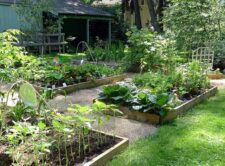
Observe the garden from a different perspective. Identify ways to improve accessibility such as increasing the raised beds to standing height. If there is a body of water, is it fenced to protect young children? Is the pathway level and safe to walk on? Is there a section of the garden that steals your joy? Change it!

Ensure proper maintenance of all tools. Keep pruning tools sharp so less effort is required to make each cut. Keep wooden handles free from splintering. Here is a resource from K-State to assist with keeping tools clean and sharp: https://bookstore.ksre.ksu.edu/pubs/mf3288.pdf

Use lightweight tools such as those made with plastic, carbon, fiber or aluminum handles. Handle the tools prior to purchasing to ensure they are a good fit. Most gardeners tend to prefer lightweight tools with a long handle. This prevents bending over to work and adding strain to the back. Short-handled tools may be a better fit for gardening while seated. The handle of the tool can be thickened to improve grip by wrapping it with layers of tape or adding a foam pad.

A universal cuff is an adaptable device that can be added to most hand-held tools as a grip aid. Gardeners who lack a strong grip can use a hand cuff to assist them in holding tools including the garden hose. The arm cuff supports the hands and wrists to decrease strain while performing tasks such as cultivating and digging.

Kneeling pads/benches can protect joints while also reducing soil compaction. Rolling garden seats allow the gardener to sit while weeding and planting. It can be pulled through the garden to provide a place to rest as well. A bag installed on the side of the kneeling bench or seat can offer a place to store hand-held tools so they are easy to find. Pulling a wagon or other wheeled cart is helpful for gathering debris and transporting plants while reducing the strain to your body and the risk of tripping.

Invest in a good pair of gloves that will accommodate any gardening task. This will protect you from cuts and the potential for infection.

Store tools in a central location. Avoid leaving tools out where they can become a trip hazard. Unplug power tools and never leave tools unattended when gardening with children. It is important for young gardeners to learn tool safety which includes supervision.

Keep pathways smooth and level to reduce fall risks. Use contrasting path materials, sound or plants to define areas of the garden.

Bring the garden to you. Bountiful gardens can be grown in many ways. Window boxes, raised beds and a multitude of container types facilitate gardening while standing or seated. Keep the size of planters less than three feet across to reduce the need for reaching. All points in this size planter can be reached with short handled tools.

Rest and relax. Place a comfortable seat in a shaded area of the garden. On days that are predicted to be warm, do garden work in the early morning hours. Take frequent breaks, wear a hat and sunscreen. Bring your phone with you to the garden, especially if you garden alone, in case help is required. Bring a book to the garden to encourage you to take a break and do some reading in the shade.

There are many considerations to make when designing a garden that is safe for everyone. If you are planning to establish an accessible garden we have resources to help.

Spend Less and Save More at the Grocery Store

0

Do you ever wonder how some people spend so little money at the grocery store each week? You can do it too! The following are a few easy ideas for saving time and money at the grocery store.

Plan Your Meals

  • Take time on the weekend to plan your snacks and meals for the week.
  • Make a grocery list of the foods you will need for your weekly snacks and meals.
  • Check your cupboards and refrigerator as you make your grocery list.
  • Plan your menu around store specials, coupons, and in-season fruits and vegetables.

Shop Wisely

  • Eat before you shop so you are not hungry.
  • Only buy the foods on your grocery list.
  • Compare prices of different brands and sizes.
  • Buy generic or store brands to save money.
  • Check for the expiration dates and use-by dates.
  • Remember that convenience items save time but not money.
  • Use the nutrition label to help make wise food choices.
  • Check out your local farmers market and compare prices.

Don’t Forget

  • Take your groceries home and put them away as quickly as possible.
  • Make sure you store groceries properly to prevent foods from spoiling.
  • Eat sensible portions.
  • Use leftovers for another meal.

AgrAbility strives to help farmers take charge of their health with webinar series

0

Experiencing symptoms from chronic pain is a daily occurrence for many. Symptoms such as fatigue, sleeplessness, stress, and fear are often side effects of chronic pain and can be difficult to manage each day. For farmers and farm families, these symptoms can slow progress on and off the farm, making everyday tasks an extra chore or sometimes impossible.

Illinois AgrAbility emphasizes the importance of learning techniques and providing opportunities to help individuals in the agriculture industry. The Take Charge of Your Health: Chronic Pain Self-Management webinar series is a six-week series weighing heavily on cognitive behavioral techniques for managing pain. The series begins on March 18 and runs consecutive Mondays from 1 to 3:30 p.m. through April 22.

The chronic pain management webinar series is grant-funded and a partnership between University of Illinois Extension, Illinois AgrAbility, Age Options, and specialists from Illinois Extension family life and health teams.

Expanded versions of weekly topics can include:

  • Balancing activity with rest.
  • Learning tools for overcoming worst-case thinking.
  • Working effectively with health care professionals.
  • Creating action plans for problem-solving and decision-making.

“Many experience their chronic pain in silence, so this webinar series is an opportunity for those looking for some relief options to try within their current lifestyles,” says Haley Jones, AgrAbility program coordinator. “Sign up, find resources, and start on a journey to take charge of your health and get back to the responsibilities on the farm.”

The virtual series is free, but registration is required at go.illinois.edu/AgrPainSeries by March 11. Participants will receive a hard copy of “Living a Healthy Life with Chronic Pain” as an additional resource. For series questions, contact Haley Jones, AgrAbility program coordinator, at [email protected], 217-244-2948.