Saturday, February 21, 2026
Home Blog Page 543

Horticulture 2023 Newsletter No. 49

0

https://hnr.k-state.edu/extension/info-center/newsletters/index.html

Blog Post: http://www.ksuhortnewsletter.org

Video of the Week: Plant Amaryllis Bulbs for Winter Color

https://kansashealthyyards.org/all-videos/video/amaryllis-for-winter-color

VEGETABLES

Storing Potatoes in Cold Temperatures

Ideally, potatoes should be stored in a cool garage or basement where the relative humidity is 90% and the temperature is between 40- and 45-degrees F. Although they can be stored for long periods of time in temperatures below 40-degrees F, the starches begin converting to sugars which alters the flavor of the potatoes. If this happens in your storage area, keep the potatoes at room temperature for two to three days prior to consuming and the desired flavor should return. If stored above 45-degrees F for prolonged periods of time, the potatoes will begin to sprout. Potatoes will become soft and shriveled if the relative humidity is too low. Storing potatoes in perforated plastic bags will help maintain higher humidity levels. (Cynthia Domenghini)

ORNAMENTALS

To select a live Christmas tree that will last the holiday season avoid these red flags.

Dull, gray-green needles
Dry, stiff and brittle needles
Needles drop from tree easily
Some commercial sites sell cut trees that have already been stored for several weeks so evaluate these carefully before purchasing.
When you get your tree home, recut the trunk about one inch above the base just before placing it in the stand. This will open up the plant tissues that enable the tree to pull in water. Place the trunk into the stand with water immediately after cutting.
As with traditional houseplants, avoid placing your Christmas tree near heat sources or drafty windows and doors. It is important to always keep water in the tree stand reservoir. If the cut end of the tree is exposed to air for several hours it will begin to seal over and need to be recut again. Fresh cut trees tend to absorb a lot of water during their first couple of weeks so check the water level at least every other day. Ensure the base of the tree has access to the water in the stand as the level drops.

Living trees are a great option for homeowners who have space to add to their landscape. This requires a bit more planning by selecting a tree that will work in your landscape and climate. It is also a good idea to dig the hole where the tree will be planted prior to when the ground freezes so it can be planted soon after the holidays.

Living trees should only be kept indoors for a few days. Trees kept indoors too long will come out of dormancy and initiate new growth. If the tree is then moved outdoors during winter, it will not be hardy to the cold conditions and can suffer extreme damage or even death. At planting, water the tree in well and apply a layer of mulch to prevent the water from freezing. (Cynthia Domenghini)

FLOWERS

Care of Christmas and Thanksgiving Cacti

Christmas cactus (Schlumbergera bridgesii) and Thanksgiving cactus (Schlumbergera truncata) look exotic but are rather easy to maintain with the right growing conditions. While in bloom, water the plants when the soil surface is just becoming dry to the touch. Never let the plants remain in standing water and well-drained soil is a must.

Holiday cacti bloom in response to the shorter days and cooler nights we experience heading into winter. If you are gifted a Christmas cactus this season, to prolong the bloom, keep the daytime temperature between 60-65 degrees F and the nighttime temperature between 55-65 degrees F. Keep your cactus in total darkness for at least 12 of every 24 hours. The plant should receive bright, indirect light for the rest of the time. Sudden changes in temperature can cause the cactus to drop its blooms. When transporting it home be mindful of the outdoor temperature and take measures to protect your plant from the cold.

The segments of the holiday cactus that look like leaves are actually stems known as “phylloclades”. When your cactus finishes blooming, you can prune it at the union of two of these segments. Each cut phylloclade remaining on the parent plant will produce one to two new stem segments. This will encourage branching and a fuller plant. The cuttings removed from the plant can be propagated into new plants. Dip the cut-end of the stem into water and then rooting hormone, which can be purchased at garden centers or online. Secure this end into potting mix and keep it moist and in a warm location with bright light. Once roots develop you can transplant it into a cactus/succulent media.

While the parent plant is not blooming, decrease the water and care for it as you would a typical houseplant. When the danger of frost has passed, holiday cacti can be moved outdoors in part shade. Beneath a tree is a great location that will provide filtered light. If the stems begin to turn pale they may be receiving too much light. Fertilize once each month in June, July and August at half-strength with a balanced houseplant fertilizer. As the temperature drops to the low 50s at night bring your cactus back indoors. When flower buds begin to develop switch to a fertilizer low in nitrogen and higher in phosphorus and potassium. (Cynthia Domenghini)

MISCELLANEOUS

Heat Value of Firewood

Certain tree varieties produce firewood that gives off more heat than others. Osage orange, honeylocust, black locust, bur and post oaks all have high heat values. However, osage orange firewood tends to spark which can be dangerous, especially in an open fire. If you’re harvesting your own firewood, it is beneficial to note wood from certain species, such as black locust and elms, is difficult to split.

The Kansas Forest Service has published a great resource for landowners about this topic: “Managing your Woodland for Firewood”.

Homeowners who plan to purchase firewood should buy local to avoid spreading pests including Emerald Ash Borer. The chart below ranks the woodland species in terms of the heat value (measured in British Thermal Units, BTUs) per cord of wood. A cord is the amount of wood, stacked well, in a pile that measures 4 feet wide by 8 feet long by 4 feet high. Higher BTU values indicate more heat produced. (Cynthia Domenghini)

Tree Variety

BTU

Ash, Green

22.8

Cottonwood

15.9

Elm, American

19.8

Difficult to split

Elm, Red

20.6

Difficult to split

Elm, Siberian

20.9

Difficult to split

Hackberry

21.0


Honeylocust

25.6

Locust, Black

28.3

Difficult to split

Maple, Sugar

24.0

Maple, Silver

18.9

Mulberry

25.3

Oak, Red

24.0

Oak, Bur

24.9

Oak, Post

25.6

Osage Orange

32.6

Tends to spark

Sycamore

19.5

Difficult to split

Walnut, Black

21.8

Contributors:

Cynthia Domenghini, Instructor and Horticulture Extension Specialist

Ward Upham, Extension Associate

Department of Horticulture and Natural Resources

1712 Claflin, 2021 Throckmorton

Manhattan, KS 66506

(785) 532-6173

For questions or further information, contact: [email protected], [email protected] OR [email protected]

This newsletter is also available on the World Wide Web at:

http://hnr.k-state.edu/extension/info-center/newsletters/index.html

The web version includes color images that illustrate subjects discussed. To subscribe to this newsletter electronically, send an e-mail message to [email protected], [email protected] or [email protected] listing your e-mail address in the message.

Brand names appearing in this newsletter are for product identification purposes only. No endorsement is intended, nor is criticism implied of similar products not mentioned.

K-State Research and Extension is committed to making its services, activities and programs accessible to all participants. If you have special requirements due to a physical, vision or hearing disability, or a dietary restriction please contact Extension Horticulture at (785) 532-6173.

Kansas State University Agricultural Experiment Station and Cooperative Extension Service K-State Research and Extension is an equal opportunity employer. Issued in furtherance of Cooperative Extension Work, Acts of May 8 and June 30, 1914, as amended. Kansas State University, County Extension Councils, and United States Department of Agriculture Cooperating, Ernie Minton, Dean.

The World’s Christmas Lights

0

In continuing our theme of looking into foreign Christmas Traditions, I am reminded of a scene from one of the Frozen shorts from Disney. A scene where Olaf goes around to every single house in the village and asks each of them to share a Christmas tradition with him. While we already covered Christmas lights in the last article, did you know that light is also used in different ways by different cultures? Indeed it is rather intriguing when you look into it. Overall the symbolism of light changes, to mean different things at different tables around this time of year. So let’s look at some of the interesting diversity our world has to offer around the happiest time of the year.

First of all, the idea of lighting up a space to make it warmer predates Christianity and all other cultures. The winter solstice (the shortest day of the year) tends to have a lot of meaning to ancient cultures, so why not celebrate lighting up the darkest day of the year in the best way that we can? In fact, early Christians thought the same thing. The idea of lighting small candles to light up a Christmas tree was not only a fire hazard, but also a lovely way to share the warmth in a family home. How they managed to do this without burning down their house, I will never know. Regardless, decorating the Christmas tree with lights spread all throughout Europe and eventually to the United States. As we all well know, the lighting of the Christmas decorations is one of the most special times there is.

In Japan, people have a similar idea. It is tradition to light the streets in the winter season with paper lanterns floating along the cities and countryside. This season is known as “Akari” to all who partake in it. This lantern idea was also picked up by other nearby Asian cultures, including Chinese cultures. The festive display of red lanterns would truly be a sight to behold. In addition to that it is common to put tiny paper lanterns on your window sills as well as light up your shrubbery and whatever other vegetation you may have in your front lawn. A tradition that is similar in many ways to the light shows that we have here in the States.

Another common tradition can be found in the homes of Sweden. With the lighting of candlesticks and placing them in the windows throughout a home to burn through the night. This is actually a tradition that can be observed right here in Kansas. For those of you who love exploring small towns, consider paying a visit to Lindsborg Kansas. Otherwise known as “Little Sweden”, the small town loves to show off its Swedish heritage with all of the lovely Swedish festivities. If you do go, look for Advent stars, ones that are typically placed in windows of Swedish homes, but also ones that line the streets of Lindsborg.

In the Southern Hemisphere, We see many different traditions, including those of South Africa. In South Africa, Christmas falls during the summer season. Many people celebrate this holiday by decorating their homes and neighborhoods with colorful lights and colorful decorations. One famous celebration that you might know of is called the Festival of Lights in Cape Town, this festival attracts many visitors during this time of year. This idea of light festivities is also shared by Australia. Decorating their homes and gardens with the Yuletide fun.

Overall there are many different traditions and uses of light throughout all different cultures of the world, each one of them just as special and important as the last.

Champion Barrel Racer Shares Advice For Winning Career

0

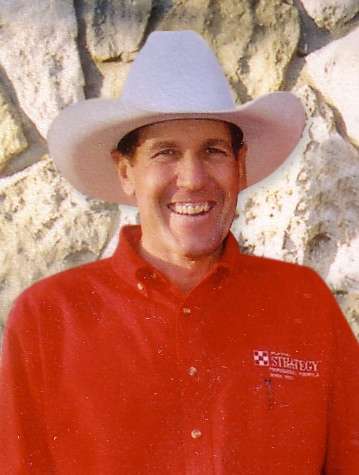
Dona Kay Rule is a four-time qualifier for the National Finals Rodeo (NFR) with her horse, Women’s Professional Rodeo Association (WPRA) 2019 Horse of the Year, High Valor.

The Minco, Oklahoma, resident first qualified for the NFR in 2019 with the 2009 gelding and has stayed in the top standings each year since.

High Valor has been a steadfast partner for Dona Kay, and she values both his character and his athleticism.

The Women’s Professional Rodeo Association (WPRA) is the oldest women’s sports organization in the country. The association started in 1948 with a group of Texas ranch women who wanted to add a little color and femininity to the rough-and-tumble sport of rodeo.

“I’ve done this my whole life, training horses, running barrels, studying it; and being a student of the game,” Dona Kay said.

“High Valor is what you look for. He has the conformation, he has the real power, he has all kinds of try. Attitude and conformation are very important. But his kindness is my favorite thing about him.”

Keeping her horse healthy and happy while competing at the highest levels of barrel racing requires conscientious care and a good relationship with equine professionals.

No matter what discipline, good horsemanship is crucial to keeping your horse sound, Dona Kay said. This also means investing time in conditioning your horse before competing.

“Don’t just pull your horse out and rodeo when you haven’t ridden him in three weeks,” Dona Kay said. “It is not just about having fun. You must work at it.

“I’ve been gifted with being able to feel things in my horse, and when something doesn’t feel right, I have to count on my vet to be able to locate it,” Dona Kay continued.

“So, between my farrier and my veterinarian, I just don’t know if we could have gone as hard as we have for the last five years, and still had a sound horse out of it.”

Dona Kay goes to around 50 rodeos each year, which requires intentional care. She found her veterinarian after Valor got injured a few years ago. Her veterinarian sister-in-law introduced her to Amy Barnes.

“She just had magic eyes and magic hands, and she found the injury, a ligament strain,” Dona Kay said. “We got right on it, and Valor placed at Greeley, at Estes Park, and several rodeos immediately following Amy’s help.”

Having a primary veterinarian means being able to have a solid baseline on your horse when they are sound and healthy, and your vet can better recognize when something is off that needs investigating.

“It’s a big deal to have a great relationship with your veterinarian,” Dona Kay said. “You should be able to talk with them, tell them what you think, and then you should be able to be quiet, listen to what they say, and formulate a group solution.”

Dona Kay believes in excellent quality feed. She has a simple, regular maintenance program that hinges on paying attention to the horse’s wellbeing every day.

“When we have a red flag or a yellow flag, or something that doesn’t seem quite right, we look at it pretty carefully,” Dona Kay said.

Part of her maintenance routine includes regular administration of a joint supplement that replaces lost or damaged synovial fluid, aiding in joint health.

+++30+++

The Weather Will Change

0
Frank J Buchman
Frank Buchman

“Farmers and ranchers are never satisfied with weather conditions.”

During record dry days, conversations are always about the severe need for moisture. Possible ways to provide water for livestock and home use are discussed as wells, streams, springs, and ponds go dry.

Hauling water is a major costly effort with thoughts about developing permanent relief by establishing rural water lines. While rural water meters could have been purchased decades earlier for a few hundred dollars, present water supplies were adequate.

With all expenses in an agricultural operation, another initial and monthly bill seemed an unnecessary added cost. Today, getting that same rural water line put in is a complex ordeal considering time, paperwork, layout, and construction.

Most significant though is the price tag, nearly a thousand times what it would have been initially. Still water is the most essential nutrient for people and livestock.

They cannot live without it, making development of a perpetual clean water source essential regardless of the expenditure. Government assistance programs are available in various forms to cover portions of water development expenses.

Likewise, financial institutions realize the importance of water and generally cooperate with partial funding. In extreme cases, limited dispersal of farm property may be essential, or material goods required as capital to acquire the support.

Moisture has always come at some time even if far later than when desired or needed. That is a major relief to agriculturalists in general, but many continue complaining.

An early snowstorm that was said to provide about 10 percent moisture provided optimism for increasing supplies. Yet the snow was a “mess” to describe it most accurately.

It was virtually impossible to see as the big flakes were falling and blowing. Varying from eight to 12 inches in depth, walking through the yard was difficult to nearly impossible.

Feed trucks and tractors were challenged to get chores done for the cold hungry livestock. Fortunately, warmer days followed, and the white stuff melted away as mud and ruts in roadways and pastures deepened.

With feedstuffs already in short supply, there was considerable waste during the snow and aftermath mud.

No need to worry, the weather will change, the weatherman will be wrong, and complaining will continue.

Reminded of Job 37:10: “He orders the snow and rain, No one can escape the weather, it’s there.”

+++ALLELUIA+++

XVII–51–12-17-2023

A NOSTALGIC CHRISTMAS TREE

0
Thayne Cozart
Milo Yield

Ah, recall nostalgic Christmases,

So many years ago.

That fondly stir up memories,

And tug our heart-strings so.


T’was back when the old Christmas tree,

Was a cedar, not a pine.

That Dad cut from the Back 40,

And for us kids, that was fine.


We enjoyed tramping out with Dad

Down the creek and up the hill,

‘Til we found the perfect size and shape

That for Mom would fit the bill.


Dad’s hand saw brought down the tree,

And trimmed the trunk just right.

And, when standing in the living room.

It made kids’ eyes shine bright.


Then came the fun we all looked for,

Trimming the tree on Christmas Eve.

Using just the stuff we found at home

Or Mom pulled out her sleeve.


Cranberries strung end to end,

Popcorn garland and popcorn balls

Became our homemade ornaments

And fond memories to us all.


A star made out of tinfoil,

Adorned the cedar’s tip.

A few glass globes with history

Went on, with eggnog’s sip.


Tinsel cut from aluminum foil,

Provided the final touch

That put the sparkle to the tree

That we all enjoyed so much.


Alas, the tree was finished

Standing fine in all its glory.

Then was time for Dad to read,

The true Biblical Christmas story.


About Joseph and his Mary

And baby Jesus ‘neath a star

With animals and shepherds

And wise men from afar.


Then us kids were sent to bed,

Heated blankets kept us warm.

We slept with great anticipation

Of presents the following morn.


We woke wide-eyed before the dawn,

And down the stairs we flew

To find ol’ Santa’d made his trip.

We weren’t surprised. We knew!


Sure enough, we found our presents

In our stockings and ‘neath the tree.

One toy, a flannel shirt, a knitted cap,

An apple and orange to eat with glee.


Electronic gadgets? There were none.

Just common stuff we’d need.

But, oh, the memories we made

Nostalgic tree? Why, yes, indeed!

***

Wishing all the very best wishes for the Christmas season and the upcoming 2024 New Year? Make plenty of holiday memories. They are the gift that keeps on giving.

Have a good ‘un.