Tuesday, January 20, 2026
Home Blog Page 125

Celebrating Verena and Daniel Ray’s Wedding Day

0

Lovina’s Amish Kitchen
Lovina Eitcher,
Old Order Amish
Cook, Wife &
Mother of Eight

Lovina is taking this week off from the column to rest up after her busy week hosting Verena and Daniel Ray’s wedding. I am her “English” friend Ruth, and I helped Lovina last week by running errands and was able to attend the wedding so I will share a little about that.
Monday and Tuesday were spent shopping for wedding food. Lovina’s grocery list was long but organized. Some of the items on the list were 36 loaves of bread (for the dressing), 8 fifty-pound sacks of potatoes, 400 pounds of chicken leg quarters, 15 gallons of milk and the list goes on. On Tuesday morning sisters Emma and Liz, who were chosen to be the head cooks, came over and wrote out the recipe cards for the dishes being made and checked the final quantities for groceries to be purchased.
Wednesday and Thursday mornings ladies came to start the food preparation. Pie crusts and fillings were prepared, strawberries were cleaned and sliced, vegetables were chopped and bread cubed for the stuffing, butter was browned for the noodles and hundreds of cupcakes were baked. Each afternoon Emma and Liz would prepare the work spaces for the next day tasks. When the men got off work, they set benches for the wedding and for the wedding meal, worked on the yard and barns and whatever other tasks needed to be finished. Two large tents were set up, one for the cooks and the other for the guests to sit under and keep the gifts. Wednesday brought a storm in the morning and another around 5 pm. The tents stayed in place and the work continued.
The morning of the wedding Verena and Daniel Ray were across the street by 7:30 am to be ready to greet all the guests who were attending the 9:00 wedding. They sat in a row and welcomed everyone as they came in. Before the wedding began, they left to meet with the ministers and when they came back, they sat in the middle of the shed with guests on three sides facing them. The men sit on one side and the women on the other. At 11:15 all the cooks and table waiters walk over so they can watch them being pronounced as married. Then they file out and get ready to serve the noon meal. After the wedding, guests all wait outside the shed (pole barn) to be ushered in. First the Bishops and Ministers that are attending are seated, then the male family members, then the rest of the men. Then the women are seated followed by the children that are old enough to sit by themselves, followed by English guests. Even the folks who drove guests to the wedding are given a seat at the table. There is a silent prayer and then everyone sings a song that has been chosen by the bride and groom. They also choose if they want it sung in German or English. Verena and Daniel chose Amazing Grace sung in English.
Verena chose different shades of the ocean for the cooks, servers, table waiters, moms, sibling and special helpers to wear. She had an ocean theme with cute little dolphins on her cupcakes, and décor all related to the ocean. She and Daniel did a great job preparing for their wedding and were relaxed and really enjoyed their day. They chose not to have the traditional 7:00 pm meal with the Youth, and instead invited them to the 5:30 meal. It was nice for all who helped to get all the clean up done and be finished while it was still light outside.
Between the noon meal and the evening meal some played volleyball while others visited with friends and family. Under the tent Verena and Daniel opened their gifts while the family watched. They received many nice gifts and were genuinely grateful for all that everyone did to make their day special.
As an English guest it was an honor to share this special day with Daniel and Verena. To see how the community gathers and works together to set up for the wedding, prepare and serve the meal and clean and pack up when it is finished is quite an experience. There was no grumbling or arguing, but I did hear laughter and good conversations. This is Lovina’s last daughter to get married so this is the last wedding she will host, and I think she is probably ok with that. Congratulations Verena and Daniel, may God bless you as you begin your life together. To see more pictures of the wedding go to Lovina’s Amish Kitchen on Facebook.


Fresh Strawberry Pie

½ cup granulated sugar
3 tablespoons cornstarch
2 tablespoons light corn syrup
1 cup water
3 tablespoons strawberry flavored gelatin
Red food coloring (optional)
6 cups fresh strawberries, hulled and sliced
1 (9-inch) baked pie crust
Combine the sugar, cornstarch, corn syrup and water in a large saucepan and bring mixture to a boil. Stir constantly until thickened, about 5 minutes. Remove from heat. Stir in the gelatin and a few drops of food coloring, if desired. Let cool until lukewarm, then add the strawberries stirring until well coated. Pour in to baked pie shell. Refrigerate pie for 2 hours before serving. Can be topped with whipped topping.


Egg Salad, ‘seriously’

0

Macaroni & Cheese, mashed potatoes & gravy with radishes, rice pudding, egg nog, chocolate chip cookies, and egg salad are just a ‘few’ of my favorite comfort foods! This week I was asked about a recipe for egg salad!!! Seriously; I didn’t know there was one! Every nationality has their version of egg salad, much like hand pies. It’s been around since forever, the first recorded recipes go back to the late 1800’s, appearing in one of the earliest cookbooks. The salads we are discussing today are all referred to as ‘bound’ salads.

We could spend quite a few hours talking about how to boil eggs for egg salad. There are ‘many’ methods. I usually put my eggs in cold water, bringing it to a hard boil. At that point I time it for 10 minutes, and immediately remove them from the heat. I pour off the hot water rattling the eggs to crack them, pour on ice water, and allow to cool.

Sometimes I put vinegar in the boiling water which is supposed to help the shells to release more easily. But if you really want the shells to come off easily use mature eggs, not the dozen you just picked up at the store.

In one of my columns I wrote about deviled eggs and how funny I think it is that grocery stores put eggs on sale the week of Easter. They should be placed on sale a couple weeks before the big event.

You can study about egg cooking methods and what people like to do to render the perfect hard boiled eggs. Even a little research into how various countries prepare their egg salads.

I don’t know about you, but I don’t always know when I’m going to make a bowl of egg salad. Therefore it’s rare that I get to use fresh dill or parsley in my egg salads. Since deli meats prices started increasing a couple of years ago , I started making lots of chicken salad, tuna salad and egg salad. Lots of protein and it doesn’t run 10-12 dollars a pound.

When making a tuna, chicken, beef or egg salad one very important tip is to use quality mayonnaise. The fat content is very important in making creamy meat, egg or pasta salads. It will be extremely creamy and you will be pleased with the bind. Years ago when low fat mayonnaise first came out I didn’t know what was wrong with my tuna salads, they seemed extra runny, with lousy ‘body’. Well; I certainly learned a few things since those days. I.E. with tuna salad I always use albacore tuna. Water or oil based? They actually say oil based makes a better salad. Mayonnaise, I failed to tell you the 2 tie winners for first place, mayonnaise, it was Duke’s and Hellman’s. My brand came in second place, which is the ‘Kraft mayo’ brand.

A little mustard is a nice addition to an egg salad. Everything from prepared mustard, to Dijon, or stone ground are options. There are times I also use dry mustard. When I made all my own pickles I would chop them by hand for salads, these days I usually reach for dill relish, well drained for the pickle portion. When my dad was alive he always wanted ‘sweet’ relish or pickles in his salads. There will be a few that say leave out the pickle entirely, all good, but don’t forget a little pickle juice or vinegar added to the dressing.

Celery, if I have it on hand it’s going to be in the salad! You will have some family members that won’t care for it in the salad. I seldom use it in tuna or beef salads. I make chicken salads with celery but my favorite chicken salad is with the yogurt based dressing, grapes, celery and nuts added.

Probably the fastest egg salad is made from leftover deviled eggs. This produces a very tight egg salad. Have you ever grilled an egg salad sandwich? I highly recommend toasting at least the inside of the bread, before adding the salad. In my research I even found that folks will use leftover scrambled eggs to make egg salad. Hmmm…I’ll pass on that one. Let’s journey into this easy heart warming salad. Simply yours, The Covered Dish.

Simple Egg Salad

Green Onion, 4-6 finely chopped, include the good part of the green tops

Celery, 3 stalks, sliced

12 eggs, hard boiled, peeled

(And easy cut is to use your egg slicer, cut one direction, then switch directions.)

1-2 teaspoons dry mustard or prepared mustard 2-3 teaspoons

1 teaspoon black pepper could use ground white instead-

Drained Dill relish, ½ cup, if you like the pickles, add a tad more, drain-

1-2 teaspoons dry dill weed

Mayonnaise, ½ – ¾ cups

Panko to bind should it be runny and not tight.

Years ago I started keeping panko plain and Italian on hand at all times. It can rescue a runny salad, by fixing the bind. No one will ever know, unless you spill the beans.

Don’t Scratch that Itch!

0

My mom was so allergic to poison ivy I still believe to this day she could have caught it by merely looking at the plants. I remember her being hospitalized once with poison ivy so bad on her hand that it resembled raw hamburger. My dad on the other hand could’ve rolled around in the stuff and never known it. One night a few years back I went to change a flat tire on our mobile deer blind which was still in the woods, and found it to be afloat in a sea of the healthiest poison ivy I’d ever seen. I chopped it down all around the tire, wore gloves and was pretty careful as I worked, but three or four days later I had a small patch of rash on one arm, the first time I ever “got” poison ivy.

Each stem of a poison ivy plant has three shiny, pointed green leaves, thus the old saying “Leaves of three, let them be.” The troublemaker is the oil called “Urushiol” that is found on poison ivy plants. Urushiol by itself is fairly harmless, but when absorbed by our skin, our body attacks to it as an intruder and the red, itchy rash follows. Urushiol is found in ALL parts of a poison ivy plant ALL year round, and has actually been found to be present in plants that have been dead for up to five years. Animals and pets do not react to urushiol but can carry it on their fur or hide and infect humans that way. It can also remain indefinitely on clothing and tools. Liquid from poison ivy blisters WILL NOT spread poison ivy; urushiol must be absorbed by our skin to cause a reaction and by the time a rash develops the oil has long since been absorbed. Sensitivity to poison ivy is thought to be genetic so it can run in the family; someone sensitive to poison ivy can also have a reaction from the smoke of burning poison ivy plants.

To keep this from reading like a pamphlet about poison ivy you’d pick up at the County Extension office, I’ve put together a little fun trivia about the “leaves-of-three” plant, plus few not-so-common facts and cures for poison ivy rash.

Five hundred people could itch from the amount of urushiol found on the head of a pin. It’s estimated that 85% of the world’s population would have an allergic reaction to poison ivy. Samples of urushiol several centuries old have still been found to cause skin irritation on sensitive people.

If using water to attempt to rinse urushiol off your skin before it’s absorbed, ALWAYS rinse with COOL water as hot water will actually open skin pores and speed absorption.

Capsaicin cream, labeled for arthritis pain can suppress the itch of poison ivy rash for hours.

Apple cider vinegar, rubbing alcohol or lemon juice poured liberally over your skin can rinse off urushiol if done soon enough after contact. Either liquid can also help heal poison ivy rash if drizzled over the rash or used on a compress.

Other ways to soothe poison ivy rash include coating the rash with cucumber slices or a paste made from cucumber, and rubbing the rash with the inside of a banana peel or cool melon rind.

Witch hazel, strongly brewed tea, buttermilk or yogurt dabbed on poison ivy rash with a cotton ball can help draw toxins out of the rash and dry up seeping blisters.

Aloe Vera juice will soothe poison ivy rash like it soothes sunburn.

One cup of oatmeal ground into a fine powder, put into an old pair of pantyhose and used like a teabag in a tub of cool bathwater can provide relief from the intense itching of poison ivy rash.

Three teaspoons of baking soda mixed with one teaspoon of water makes a good paste to spread over poison ivy rash to aid in healing and offer temporary relief from itching.

In summary, lots of things can give relief from the itch of poison ivy rash, but the only sure way to prevent a reaction is to rinse off the urushiol oil before it can be absorbed into the skin. The opening lines of the old Coasters song “Poison Ivy” say “she comes on like a rose but everybody knows she’ll get you in dutch, you can look but you better not touch; poison ivy, poison ivy, at night when you’re sleepin’ poison ivy comes creeping around.” …Continue to Explore Kansas Outdoors

Steve can be contacted by email at [email protected]

Gardeners enter home stretch for onions, tomatoes

0

K-State horticulture expert shares tips for successfully growing two garden staples.

If gardeners are crying about their onions right now, it’s not because they’re slicing them in their kitchen. But they may soon.

“This is the time of time of year that onions grow and develop rapidly,” said Kansas State University horticulture expert Cynthia Domenghini. “Regular watering – if the soil is dry – and a light fertilization are helpful to maximize growth.”

In soils that tend to be alkaline, Domenghini suggests using ammonium sulfate (21-0-0) at the rate of ½ cup per 10 feet of row. The number combination refers to the rates of nitrogen, phosphorus and potassium contained in the fertilizer.

“You can use lawn fertilizer (such as 29-5-5, 27-3-3, or similar) but only use 1/3 cup per 10 feet of row,” she said. “Make sure the lawn fertilizer does not have a weed preventer or weed killer included. Sprinkle the fertilizer 2-3 inches alongside the row and water in. Do not fertilize after the onions start to bulb.”

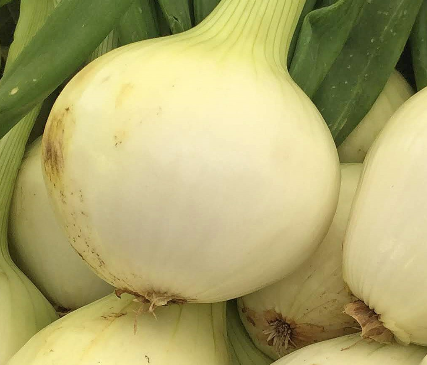
Domenghini said that as onions develop, as much as 2/3 of the bulb remains out of the soil. She said that is normal and there is no need to cover the bulb with soil.

Tomatoes

Another garden favorite – tomatoes – could benefit from mulching as long as soils are warm enough and not saturated with water, according to Domenghini.

“Tomatoes prefer even levels of soil moisture, and mulches provide that by preventing excessive evaporation,” she said.

Mulch also helps to suppress weeds, moderate soil temperatures, and prevent the formation of hard crust on the soil. Crusted soils restrict air movement and slow the water infiltration rate.

Domenghini said hay and straw mulches are “very popular for tomatoes, but may contain weed or volunteer grain seeds.” Grass clippings can be used as mulch, but should be applied in a thin layer – “only 2-3 inches thick,” Domenghini said.

“Do not use clippings from lawns that have been treated with weed killer until some time has passed,” she said. “With most types of weed killers, clippings from the fourth mowing after treatment may be used.”

Domenghini and her colleagues in K-State’s Department of Horticulture and Natural Resources produce a weekly Horticulture Newsletter with tips for maintaining home landscapes and gardens. The newsletter is available to view online or can be delivered by email each week.

Interested persons can also send their garden and yard-related questions to Domenghini at [email protected], or contact your local K-State Research and Extension office.

Tall fescue adds to heat stress in cattle

0

Cattle rid their bodies of heat in three ways: radiation, convection and evaporation. “If your cattle can’t use all three methods, they’ll overheat fast,” says University of Missouri Extension state beef nutrition specialist Eric Bailey.

Summer heat knocks weight off calves and pounds off milk, Bailey says. Losses come in the form of less gain, weaker fertility and other health issues. “Heat stress costs real money,” he says.

Producers can reduce heat stress by providing adequate shade, proper fly control, access to water and the right choice of pasture grass.

Tall fescue pastures turn up the heat

Cattle grazing on tall fescue grass when temperatures rise is a recipe for disaster.

Toxic endophytes in fescue can turn up the cattle’s body heat. Their efforts to keep cool can melt profits. But there are practical fixes that keep weight and profits steady, Bailey says.

Most fescue pastures in the Fescue Belt carry endophytes that make toxic ergot alkaloids, which mess with your cattle’s ability to stay cool, he says.

These toxins tighten blood vessels, cut blood flow to the skin and prevent heat from escaping. They make it hard for cattle to sweat and pant, essential tasks to rid their bodies of heat. Third, ergot alkaloids delay shedding by lowering prolactin. This leaves cattle with shaggy coats that trap summer heat.

Summer temperatures, especially heat waves, make cattle on fescue vulnerable to problems. Normally, cattle can tolerate temperatures of 31 C or 88 F. Cows likely consume enough ergovaline by Memorial Day to make heat stress worse during the summer.

Small amounts cause big losses

Even ingesting small amounts of ergot alkaloids can result in reduced weight gain and smaller calves, less milk, lower fertility and lighter wallets, says Bailey. He offers these suggestions on avoiding losses from heat stress:

• Rotate toxic tall fescues with other grasses such as clover, or interseed pastures with nontoxic novel-endophyte fescue to dilute.

• Consider investing in full pasture renovation on the worst fields. See the Alliance for Grassland Renewal website for information on renovating tall fescue pastures.

• Provide supplemental feed in the range of 0.5% to 1.0% of bodyweight per day to dilute ergovaline in the diet.

Maintain good fly control

If you have cows on tall fescue, pay special attention to fly control.

“If your cattle are on toxic tall fescue and they are crowding together to dodge flies, the deck is stacked against them,” says Bailey.

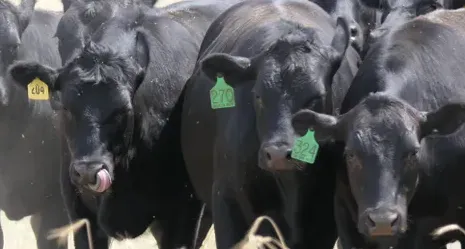
Cattle tend to bunch up to avoid flies, especially stable flies that attack their legs. They congregate in the middle of the pasture and avoid the field edges where flies gather most.

Bunching traps heat, cuts radiation and convection in half, and raises humidity significantly. “In severe cases, cows quit radiating heat and actually begin to heat up even in the shade,” says Bailey.

Here’s the fix:

• Drag pastures to break up manure, which is a breeding ground for flies.

• Use fly tags, traps or parasitic wasps to cut fly numbers.

• Finally, rotate pastures to break fly life cycles.

Give your herd shade

Bailey gives guidelines to discourage bunching and encourage cattle to space out in pastures:

• Provide 20-30 square feet of shade per cow.

• Provide portable shade structures that allow airflow.

• Place water troughs 50-100 feet apart to encourage animals to spread out.

Finally, radiation and convection need cool surroundings and airflow to work, says Bailey. “They fail when it’s hot and crowded. Evaporation is the last line of defense in a heat wave, but humidity and fescue toxins can cripple it,” he says.

For more information, see the MU Extension publication “Tall Fescue Toxicosis” (G4669), which is available for free download.