Wednesday, February 18, 2026
Home Blog Page 518

KDA Offers Farmers’ Market and Local Food Producer Workshop Series

0
Shelley Pauls

The Kansas Department of Agriculture and K-State Research and Extension (KSRE) will offer four regional Local Food Producer Workshops to assist farmers’ market vendors and managers, and for those wanting to sell food products directly to consumers.

Kansas farmers’ markets not only provide a fresh food source, but also stimulate the local economy. In 2023, more than 100 farmers’ markets were registered with KDA’s Central Registration of Farmers’ Markets.

“It’s part of our mission to provide education to Kansas farmers’ markets and agricultural businesses to help them grow,” said Russell Plaschka, KDA marketing director. “These workshops will support them in their endeavors to provide safe and abundant food to Kansas communities.”

Workshop topics will vary slightly by location. Highlighted topics include:

  • Marketing
  • SNAP and Double Up Food Bucks
  • Food Safety
  • Regulations on Selling Meat, Eggs and Poultry
  • Sales Tax for Vendors

KDA’s weights and measures program will also offer free scale certification at the workshops for attendees.

Dates and locations for the Local Food Producer Workshops are as follows:

Friday, Feb. 9  Olathe: K-State Olathe

Saturday, Feb. 10 — Hutchinson: Hutchinson Community College

Friday, Feb. 23 — Parsons: Southeast Research–Extension Center

Friday, March 1 — Hays: K-State Agricultural Research Center

Registration for the workshops is now open and is $20 per participant. Registration forms can be found at FromtheLandofKansas.com/FMworkshop or at local extension offices.

For more information, contact Robin Dolby, KDA’s From the Land of Kansas marketing coordinator, at 785-564-6756 or [email protected]. The workshops are funded by the Kansas Center for Sustainable Agriculture and Alternative Crops, Kansas Sustainable Agriculture Research and Education Program, and sponsored by KSRE and KDA.

KDA is committed to providing an environment that enhances and encourages economic growth of the agriculture industry and the Kansas economy. The Kansas Ag Growth Strategy has identified training for small companies via workshops as a key growth outcome for the specialty crop sector. The Local Food Producer Workshops will provide education through partnerships to help make Kansas farmers, ranchers and agribusinesses more successful.

###

KDA Offers Farmers Market and Local Food Producer Workshop Series.pdf
Increasing Winter Interest in the Landscape

0

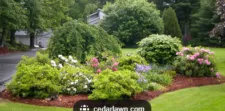
The garden chore list is minimal at this time of year though many gardeners are deep into the planning phase for the upcoming growing season. Now is the perfect time to evaluate your landscape for winter interest and identify areas for improvement. Looking for dull areas now will help you determine the shape and size of plants needed to fill the space. Here are a few ideas to get your started.

Allegheny serviceberry (Amelanchier laevis) is a native tree/shrub that provides year-round interest. Even after the leaves drop the form of the branches is appealing.

Blue rug juniper (Juniperus horizontalis ‘Wiltonii’) is a low-growing evergreen that is silvery-blue in color. It offers dense coverage and is resistant to deer. As long as the soil isn’t constantly saturated, this is a great option for bringing low maintenance, year-round interest to the landscape.

The Coral Bark Maple (Acer palmatum ‘Sango Kaku’) is a 20-25-foot-tall tree with beautiful foliage that gives way to coral-colored bark in the winter. It makes a lovely focal point with its attractive leaves, fruit and branches.

These plants along with many others are detailed in the Kansas Roots resource online: www.ksroots.org.


Soup, Stew or Creation?

0

A couple years ago after catching my last bobcat of the trapping season, I laid it on the pickup tailgate and marveled at the magnificent creature it was. First the eyes, eyes that could probably spot a scurrying mouse at a hundred yards. Then the ears, each tipped with a tiny tuft of fur, they’re wondrous little organs that would probably have heard the same mouse even farther away. I stroked its plush fur and wondered aloud how its creamy-white spotted belly could be so beautiful. I took one of its paws in my hand, paws that seemed much too big for its lanky body. I cradled the paw upside down in my palm, and with my thumb pressed down on the underside of one toe. Out came a curved, talon-shaped claw sharp as a fishhook. When I released the toe it immediately covered itself again with a sheath of skin as if it was not even there. “How does this all work?” I wondered.

Given the “cancel culture” so prevalent in the US today, and the determination by many to completely eradicate God from every facet of our society, I hope today’s column doesn’t cause readers to turn the page without reading. I’m going to make a rather bold statement here, but stick with me… I believe in evolution. Yes, you read correctly, I believe in evolution… I believe in evolution as a process by which all wildlife adapts over years, generations or decades to changes in their environment, but I REFUSE to believe in anything other than God’s Creation as the vehicle by which the creature that lay on the pickup gate before me came to exist!

No matter how mundane or uneventful an outdoor adventure seems, I absolutely never leave nature’s presence without being fascinated by something. Maybe it just doesn’t take much to fascinate me anymore, but my wonderment with Creation starts pretty simply. For example, how does putting a kernel of corn into this stuff we call “soil” with a little water and sunshine cause a plant to grow? And furthermore, how does that seed know to grow a stalk of corn and not a soybean plant, a pigweed or a maple tree for that matter? And then there’s the part where it produces a big ol’ cob full of the exact seeds we started with, covered by several layers of heavy leaves to protect those seed till they ripen. Or how about the vibrant colors around a rooster pheasant’s face, the shimmering green of a mallard drake’s head, the stunning red hues of a male cardinal’s body or even the amazing palate of colors found on the tail of a pesky peacock? Then inversely, how do all the females of those same species end up totally dull and drab so they blend in with their surroundings as they sit on a nest filled with peculiar looking vessels called “eggs” that will hatch, and just like the corn plant, produce young that are exactly like their parents?

How do geese navigate to spots hundreds or even thousands of miles away, and yet find their way back home to nest? How do salmon end up where they were hatched to lay eggs of their own, which – you guessed it – will hatch into little salmon looking just like mom and dad. How do ducklings know how to swim when they are barely dry after hatching and how do hoards of baby turtles know to head straight for the ocean mere minutes after digging themselves free from their sand covered nests?

I’ve barely scratched the surface here, but I’ll tell you how I believe this all happens; it’s all Divinely designed to happen that way! Oh, I’ve heard all the other explanations; how we began as monkeys and “evolved” into humans. I have no doubt our ancestors looked nothing like us, (some people I still

wonder about today) but trust me, we still began as humans. Then there’s the theory that life began as some sort of “stew” or “soup” and over a gazillion years “just happened” to develop into all we see today. As my wife would say, “It takes way more faith to believe that than it does to believe in Creation.”

Anyway, I’ve ranted enough for now, but the bottom line is that I believe deeply in evolution as the process by which all life adapts to its changing surroundings, but I believe deeply that all nature was created by God for us to enjoy and manage, and the day I stop believing that way, I’ll sell all my traps, fishing rods and guns and take up knitting, because I won’t deserve to Explore Kansas Outdoors anymore!

Steve can be contacted by email at [email protected]

KDA Announces Specialty Crop Grant Opportunity

0

The Kansas Department of Agriculture is accepting applications for the 2024 Specialty Crop Block Grant Program. Funds for the program are awarded to the agency by the U.S. Department of Agriculture’s Agricultural Marketing Service.

The grant funds are in turn granted to projects and organizations to enhance the competitiveness of specialty crops by leveraging efforts to market and promote specialty crops; assisting producers with research and development relevant to specialty crops; expanding availability and access to specialty crops; and addressing local, regional, and national challenges confronting specialty crop producers. Specialty crops are defined by the USDA as “fruits, vegetables, tree nuts, dried fruits, horticulture, and nursery crops, including floriculture.”

Applications will be evaluated by a team of external reviewers. The team will rate proposals on their ability to successfully enhance the competitiveness of the specialty crop industry in Kansas and make a positive impact on the Kansas economy. Those recommendations will be submitted to the Kansas Secretary of Agriculture, who will make the final awards.

Applications are due to KDA no later than 5:00 p.m. on March 15, 2024. For more information, please download and carefully read the 2024 Kansas Request for Applications document from the KDA website: agriculture.ks.gov/specialtycrop.

Specialty Crop Block Grant Program funding from USDA–AMS is awarded to states based on recent value and acreage of specialty crops in the state. In 2024, Kansas will receive approximately $330,000.

The vision of the Kansas Department of Agriculture is to provide an ideal environment for long-term, sustainable agricultural prosperity and statewide economic growth. The agency will achieve this by advocating for sectors at all levels and providing industry outreach.

KDA Announces Specialty Crop Grant Opportunity.pdf

Nobel Peace Prize winner highlights Feb. 7 K-State Garden Hour

0

Nobel Peace Prize winner Charles Rice will highlight Kansas State University’s popular Garden Hour series on Feb. 7 when he gives a talk on strategies related to successfully gardening in a changing climate.

The K-State Garden Hour is a free, online series held on the first Wednesday of each month from noon to 1 p.m. In 2023, organizers report that 13,794 participants were drawn to at least one presentation in the series.

Rice is a Kansas State University Distinguished Professor of Soil Microbiology who was a co-winner of the 2007 Nobel Peace Prize for his work with the United Nations’ Intergovernmental Panel on Climate Change.

His Feb. 7 talk will cover the difficulty of gardening in the extreme weather of Kansas, as well as information on how to adjust gardening practices in response to climate changes. Rice gave a similar talk during the International Master Gardener Conference in Overland Park, Kansas last summer.

The 2024 K-State Garden Hour series kicked off on Jan. 3 with a presentation on using nature’s décor in floral design. Matthew McKernan, one of the series’ organizers, said that session is available to view online.

Upcoming Wednesday sessions include:

  • March 6 – Selecting and planting fruit trees for Kansas.
  • April 3 – Companion plants for your garden.
  • May 1 – Understanding water sources for your garden.
  • June 5 – Growing cut flowers for the home and farmers market.
  • July 3 – Success with cacti and succulents.
  • Aug. 7 – Establishing a more environmentally sustainable lawn.
  • Sept. 4 – Season extension in the vegetable garden.
  • Oct. 2 – Evergreens in Kansas.
  • Nov. 6 – Rabbit, mole and deer mitigation.
  • Dec. 4 – Home hydroponics.

Full descriptions of each topic are available online. McKernan said all sessions are recorded and available shortly after to view online, as well.

“We want to invite all gardeners to participate in the 2024 series,” McKernan said. “Whether you join the presentations live or view the recordings, we hope each month brings inspiration to every level of gardener.”

Since the K-State Garden Hour began in 2020 – during the height of the COVID pandemic – McKernan said 62,887 participants have viewed the monthly discussions. He notes that 97% of the participants said the webinars have contributed to improvements in their physical and emotional health, including 98% who said they are more physically active, and 99% saying they have experienced more personal optimism through gardening.

Also, 70% of participants in the K-State Garden Hour reported making at least five efforts to improve water quality in their community, and 69% reported implementing at least five water conservation practices as a result of the webinar series.

The series has always been available for free, but McKernan said some assistance may be needed to keep it that way. Those who wish to make tax-deductible contributions to the K-State Garden Hour – McKernan said contributions pay for an annual Zoom webinar license – can do so through the KSU Foundation.

By Pat Melgares, K-State Research and Extension news service