Saturday, February 21, 2026
Home Blog Page 556

KU News: Class of 2024 honors chemistry professor Shuai Sun with HOPE Award for teaching

0

From the Office of Public Affairs | http://www.news.ku.edu

Headlines

Class of 2024 honors chemistry professor Shuai Sun with HOPE Award for teaching

LAWRENCE ­— The University of Kansas senior class has honored a chemist with the 2023 HOPE Award — to Honor an Outstanding Progressive Educator. Shuai Sun, assistant teaching professor of chemistry, was presented with the award Nov. 18 during the Sunflower Showdown football game between KU and Kansas State. The HOPE Award was established by the Class of 1959 and is given to a faculty member who greatly affects students’ lives and exemplifies Jayhawk values in the classroom through exceptional teaching strategies.

Distinguished professor lecture to address how theatre contributes to healthy communities

LAWRENCE — Peter Ukpokodu, the Roy A. Roberts Distinguished Professor of African & African-American Studies, will present “Statements From an Interventionist Theatre Practice” as his inaugural distinguished professor lecture at 5:30 p.m. Dec. 6 in Slawson Hall’s Beren Petroleum Conference Center. Individuals can register to attend the lecture, which will also be livestreamed.

‘Masculine Pregnancies’ reveals literary relationship between artistic creation and procreation

LAWRENCE — A new book from a University of Kansas scholar, “Masculine Pregnancies: Modernist Conceptions of Creativity and Legitimacy, 1918-1939,” reveals how modernist writers used depictions of “mannish” pregnant women and metaphors of male pregnancy to explore the relationship between artistic creation and physical procreation. “I’m making the argument that pregnancy and femininity — or pregnancy and womanhood — are not dependent on one another,” said Aimee Wilson, associate professor of women, gender & sexuality studies. “In the early 20th century, writers adapted centuries-old reproductive themes by depicting queer pregnancy.”

Full stories below.

————————————————————————

Contact: Erinn Barcomb-Peterson, KU News Service, 785-864-8858, [email protected], @ebpkansas

Class of 2024 honors chemistry professor Shuai Sun with HOPE Award for teaching

LAWRENCE ­— The University of Kansas senior class has honored a chemist with the 2023 HOPE Award — to Honor an Outstanding Progressive Educator.

Shuai Sun, assistant teaching professor of chemistry, was presented with the award Nov. 18 during the Sunflower Showdown football game between KU and Kansas State.

The HOPE Award was established by the Class of 1959 and is given to a faculty member who greatly affects students’ lives and exemplifies Jayhawk values in the classroom through exceptional teaching strategies. Today, the award remains the only honor given to faculty by the senior class through the Student Alumni and Endowment Board.

Sun typically teaches between 300-600 students each year in introductory chemistry courses. The student who nominated Sun said he cares not just about students’ academic success, but also how they are doing mentally.

“He helps students achieve their goals outside of the classroom,” the student wrote. “He has helped me through my tough medical times and has helped me with DEIB issues. He has been a very reliable and compassionate professor to me and many others.”

Sun said he was “deeply honored and humbled” to receive the award.

“This recognition holds a special place in my heart, as it reflects the meaningful connections and impactful learning experiences shared with my students,” he said. “I am grateful for their trust and the opportunity to contribute not only to their academic growth but also to their personal and professional development.”

Sun earned a doctorate in physical chemistry (theoretical and computational chemistry) from the University of Alberta in Edmonton, Canada. Before that, he earned a master’s degree in physical chemistry (colloid and interface chemistry) from Shandong University and a bachelor’s degree in chemistry and chemical education from Shandong Normal University, both in China.

“My journey in chemistry — from my academic roots in China and Canada to teaching hundreds of students each year at KU — has been driven by a passion for education and a commitment to the well-being and success of every student,” Sun said. “The joy and fulfillment I find in teaching are amplified by the engagement and curiosity of my students.”

Sun, who also won first place in Best of Lawrence for teacher five years in a row from 2019-2023, said the HOPE Award is a testament to the collective effort of the university community in fostering an environment where every student can thrive.

“Together, we continue to uphold and advance the esteemed Jayhawk values in every aspect of our academic journey,” Sun said.

-30————————————————————————-

The official university Twitter account has changed to @UnivOfKansas.

Refollow @KUNews for KU News Service stories, discoveries and experts.

———————————————————————–

Contact: Savannah Rattanavong, Office of the Provost, 785-864-6402, [email protected], @KUProvost

Distinguished professor lecture to address how theatre contributes to healthy communities

LAWRENCE — According to Peter Ukpokodu, theatre and arts have long been associated with community health by how they seem to rejuvenate people’s emotional well-being so they can appreciate life though a new lens.

Ukpokodu, the Roy A. Roberts Distinguished Professor of African & African-American Studies, will present “Statements from an Interventionist Theatre Practice” as his inaugural distinguished professor lecture at 5:30 p.m. Dec. 6 in Slawson Hall’s Beren Petroleum Conference Center.

Individuals can register to attend the lecture, which will also be livestreamed. Additional webinar details will be available upon registration. A recording of the lecture will be posted afterward on the Office of Faculty Affairs website.

In addition to being the first faculty member in the Department of African & African-American Studies to be named a distinguished professor, Ukpokodu is a courtesy professor in the Department of Theatre & Dance.

“My research for over 25 years in sociopolitical theater has enabled me to include theatrical interventionism as a way of responding and seeking resolution to problematic issues in our shared humanity in order to continue to create a healthy and virile community, whether that community is local, national, international or global,” Ukpokodu said.

“I approach this from two main angles: as a creator of culture and as an interpreter of culture. In both, I have found it exhilarating working seamlessly within the two departments that are so close to my heart — African & African-American Studies and Theatre & Dance — at the University of Kansas.”

A playwright and theatre director, Ukpokodu is the co-editor of “African Literatures at the Millennium” and the author of “African Political Plays,” “It Happened to the Blind Beggar” and “Socio-Political Theatre in Nigeria.”

After joining KU in 1990 as an assistant professor in the theatre & film department, Ukpokodu went on to become a professor in African and African-American studies in 2003. He previously taught at the University of Benin and the Bida College of Technology, both in Nigeria.

Ukpokodu has directed plays, including “Sizwe Bansi is Dead,” “The Island,” “Eshu and the Vagabond Minstrels,” “Oedipus Rex” and “Waiting for Godot.”

He serves as an editor-in-chief of Africana Annual as well as a consultant and reviewer for publishing companies. Some of his previous appointments include being an advisory board member for numerous organizations, including the Lied Center of Kansas, the Nobel Laureate Wole Soyinka annual festival, African Traditional Peoples Institute and the David-Wright Institute for African Studies.

Ukpokodu is a member of numerous academic and theatre organizations, such as the International Federation for Theatre Research, American Society for Theatre Research, African Studies Association, National Association for African-American Studies and Black Theatre Network. He is an invited member of the Oxford Round Table at Oxford University, England.

A past president of the Mid-America Alliance for African Studies, Ukpokodu has additionally served as the former co-convener of the millennial conference of the African Literature Association, chair of the KU African & African-American studies department and founding parliamentarian of the Kansas chapter of the Association for the Study of African American Life and History.

His publications on theatre theory and criticism have appeared in several journals, including the Journal of Dramatic Theory and Criticism, the Harvard Journal of African American Public Policy, Theatre Research International, TDR: A Journal of Performance Studies and the American Historical Review.

Along with the W. T. Kemper Fellowship for Teaching Excellence, Ukpokodu has received several awards, including the Excellence in Teaching Award from the KU Center for Teaching Excellence and the World of Poetry’s Golden Poet Award.

Ukpokodu earned his bachelor’s and master’s degrees in theatre arts from the University of Ibadan in Nigeria as well as a doctorate in theatre from KU.

The first distinguished professorships were established at KU in 1958. A university distinguished professorship is awarded wholly based on merit, following exacting criteria. A complete list is available on the Distinguished Professor website.

-30-

————————————————————————

Subscribe to KU Today, the campus newsletter,

for additional news about the University of Kansas.

http://www.news.ku.edu

————————————————————————

Contact: Jon Niccum, KU News Service, 785-864-7633, [email protected]

‘Masculine Pregnancies’ reveals literary relationship between artistic creation and procreation

LAWRENCE — Pregnancy has traditionally been seen as among the most “feminine” traits.

A new book argues that not only is this perspective changing, but it’s also been a contested viewpoint in literature for more than a century.

“There are a lot of people who tend to think about pregnancy as being automatically connected to women and femininity,” said Aimee Wilson, associate professor of women, gender & sexuality studies at the University of Kansas.

“I’m making the argument that pregnancy and femininity — or pregnancy and womanhood — are not dependent on one another. In the early 20th century, writers adapted centuries-old reproductive themes by depicting queer pregnancy.”

Her latest book, “Masculine Pregnancies: Modernist Conceptions of Creativity and Legitimacy, 1918-1939,” reveals how modernist writers used depictions of “mannish” pregnant women and metaphors of male pregnancy to explore the relationship between artistic creation and physical procreation. It’s published by ‎State University of New York Press.

Wilson said that when she discusses the concept of masculine pregnancy, she is referring to an umbrella term that she coined to cover a variety of ways that masculinity and pregnancy link in the imagination and reality. It includes topics that have been part of the scholarly conversation for a long time, like male characters who are pregnant in works of fiction, as well as ones that haven’t been studied by scholars before, like pregnant “mannish” women.

“Scholars typically argue that masculinity and pregnancy only combine in ways that are oppressive to women — like when male authors compare writing a book to having a baby and imply that male ‘procreation’ of this kind is superior,” she said. “By creating mannish female characters who are pregnant, modernist authors show us that masculinity and pregnancy can sometimes combine in ways that are liberating for women and queer people.”

The professor said one of her motivations for examining this subject is the current boom in “queer pregnancy literature.”

“Yet when people talk about these memoirs and novels in the popular press, they usually perceive it as something that doesn’t have a history,” she said. “One of the things my book does is demonstrate we have a long lineage of queer pregnancy in literature. It stretches back at least a century, and I would venture to guess further.”

In addition to works by William Faulkner and Ezra Pound, she cited Willa Cather’s 1918 novel “My Ántonia” as particularly notable. Wilson recalled reading the classic in high school.

“Honestly, I thought of it as a boring book about life on the prairie,” she said of the Nebraska-based tale concerning immigrants and the great migration.

“But when I returned to it, I found it queer in ways I hadn’t realized. The character Ántonia, when she’s a teenager working on the farm, says, ‘I like to be like a man.’ And when people complain she shouldn’t behave so mannishly, she says she prefers acting that way.”

When Ántonia is expecting, she still retains her masculine traits. By the end of the novel, she’s given birth to 10 children.

“I realized there was something really fascinating going on with the way Cather is depicting a woman as queer and pregnant, yet also depicting her as a domestic goddess. I’m interested in this idea that a masculine pregnant woman could be a figure of normativity and stability,” she said, noting that Cather herself wore men’s clothing and went by the name Will or Willie at various points in her life.

Mannishness was a concept (and term) popularized in the interwar years. Wilson explains societal fears arose that women were becoming too masculine because they had gone out and gotten jobs in factories.

“They were wearing pants, going to college and fighting for the right to vote. There was worry women were becoming problematically masculine. And there was also a lot of literary talk about pregnancy at this time. So I became interested in where these areas of discourse intersect,” she said.

In the years between the world wars, a perceived overlap between mannishness and lesbianism began surfacing, Wilson said.

She said, “These things weren’t always connected in the American worldview. Over the course of the 20th century, they increasingly became aligned to where there was an assumption that if you’re mannish then you must be sexually attracted to women as well.”

A KU faculty member since 2016, Wilson specializes in modernist literature, gender studies and feminist theory. Her first book, “Conceived in Modernism: The Aesthetics and Politics of Birth Control” (Bloomsbury, 2016), looks at the early birth control movement in the interwar years and how it overlaps with literature.

Wilson said she hoped her latest endeavor could change some long-standing viewpoints regarding the gender spectrum.

“We need to really push the conversation in a direction that is recognizing the legitimacy of queer people, including trans men, as reproducers in our society,” she said. “Literature can help us think through the ethical implications of our society’s approach to queer pregnancy.”

-30-

————————————————————————

KU News Service

1450 Jayhawk Blvd.

Lawrence KS 66045

Phone: 785-864-3256

Fax: 785-864-3339

[email protected]

http://www.news.ku.edu

Erinn Barcomb-Peterson, director of news and media relations, [email protected]

Today’s News is a free service from the Office of Public Affairs

 

Winter Hints for Houseplants

0

Well we have a great blanket of snow on the ground like we haven’t seen in a long time. So after all of the sledding and making of snow angels I was reminded of caring for houseplants in the home.

If you plan to buy houseplants during the winter, be sure to protect the foliage from the cold on the trip home. Place plants in a cardboard box or other protective covering to prevent damage to leaves.

During the winter, houseplants typically need less water than in the summer due to reduced hours of sunlight. Err on the side of caution and use tepid water instead of cold water. Overly wet soils can lead to increased numbers of fungus gnats that lay eggs in the wet soil.

On extremely cold nights, move houseplants back from icy windows to prevent freeze injury.

Poinsettias do best with bright, indirect light and night temperatures in the 50-60’s. Keep plants away from drafts and vents. Let the soil dry only slightly between thorough waterings. Ensure the water can drain and evaporate; punch holes in the decorative foil if needed.

Be sure to check houseplants often for common pests: aphids, spider mites, scale, mealybugs, whiteflies, and thrips.

Horticulture 2023 Newsletter No. 47

0

https://hnr.k-state.edu/extension/info-center/newsletters/index.html

Blog Post: http://www.ksuhortnewsletter.org

Video of the Week: Succulent Plants for Your Home

https://kansashealthyyards.org/all-videos/video/succulent-plants-for-your-home

UPCOMING EVENTS

Kansas Turf & Landscape Conference

The 73rd Annual Kansas Turf & Landscape Conference will be held on Wednesday, November 29 and Thursday, November 30 at the Hilton Garden Inn, Manhattan. The conference is an excellent way to learn about turf and landscape management, visit with old friends, network with new ones, and see all the latest products and supplies from local and national vendors.

The conference has been approved for commercial pesticide recertification hours:

1 Core hour

3A – 7 hours

3B – 7hours

GCSAA education points and International Society of Arboriculture CEUS will also be available by attending the conference.

For more information, go to https://www.kansasturfgrassfoundation.com/

ANNOUNCEMENTS

K-State Garden Hour: Beekeeping Basics: How to Start Your Own Colony

Wednesday, December 6th, 12 pm – 1 pm

Beekeeping is both popular and important for many reasons. Whether it’s to produce your own local honey, supplement pollination of nearby plants, promote conservation or even personal entertainment, there are many reasons to become a beekeeper. Join Ryan Engel, Golden Prairie District Horticulture Extension Agent, as he covers the equipment you will need, how to source your bees, and what it takes to establish a new colony.

https://hnr.k-state.edu/extension/consumer-horticulture/garden-hour/

REMINDERS

If there are spring-flowering bulbs that you forgot to plant, plant them now. Don’t wait until spring.
Plan out next year’s vegetable garden so that crops are rotated.
Be sure lawn irrigation lines are drained.

TURFGRASS

Dormant Seeding of Turfgrass

The best time to seed cool-season grasses such as tall fescue and Kentucky bluegrass is September because the turf has more time to mature before spring crabgrass germination and the heat stress of summer. Dormant seeding of turfgrass is sometimes done to fill in bare spots of lawns that weren’t overseeded in the fall. Dormant overseeding is done during the winter (December – February) when it is much too cold for germination.

As with any seeding program, good seed-soil contact is vital. Several methods can be used. One method is to seed when there has been a light snowfall of up to one inch. This is shallow enough that bare spots can still be seen. Spread seed by hand on areas that need thickening up. As the snow melts, it puts the seed in good contact with the soil where it will germinate in the spring.

Another method is dependent on the surface of the soil being moist followed by freezing weather. As moist soil freezes and thaws, small pockets are formed on the wet, bare soil that is perfect for catching and holding seed. As the soil dries, the pockets collapse and cover the seed.

A third method involves core aerating, verticutting or hand raking and broadcasting seed immediately after. Of course, the soil must be dry enough and unfrozen for this to be practical. With any of the above methods, seeds germinate as early as possible in the spring. There will be limitations on what herbicides can be used for weed control. Dithiopyr, found in Hi-Yield Turf and Ornamental Weed and Grass Stopper and Bonide Crabgrass & Weed Preventer, can be used on tall fescue, Kentucky bluegrass, and perennial ryegrass two weeks after germination. Other preemergence herbicides available to homeowners require that the turf be well established before application. (Ward Upham)

ORNAMENTALS

What is the “Wild” Shrub with the Bright Red Berries?

Red berries can seem festive at this time of year, and you may notice some adorning our shrubs in the eastern third of Kansas. They are likely one of two species of bush honeysuckle, Amur and Tartarian. Although they can provide a quick-growing screen or backdrop to the landscape reaching six to twenty feet tall, they can easily become invasive and are included on the noxious weeds list for many states.

The bush varieties of honeysuckle leaf out earlier than many other plants in the spring and remain into late fall. The long growing season supports vigorous growth each year enabling it to fill the woodland understory. Left ignored bush honeysuckle will spread quickly and creates competition for native woodland wildflowers and shrubs.

Hand pulling bush honeysuckle can be effective when the plants are small if the ground is wet. For larger plant chemical control is likely necessary. Cutting the stems to the ground without chemical application will result in vigorous resprouting. Research has shown one of the most effective methods for controlling bush honeysuckle is cutting the branches to the ground and spraying the cut stems immediately with concentrated (20%-50%) glyphosate (i.e., Roundup). Foliar applications of glyphosate or Crossbow (2, 4-D + triclopyr) in late summer and fall can also be effective especially if applied on young plants though damage can be caused by overspray onto nearby plants. Follow all label instructions when using pesticides. (Cynthia Domenghini)

MISCELLANEOUS

Compost Pile Maintenance

With colder weather, decomposition is still taking place, it just slows down. The interior of the pile is warmer than the edges so aerating the compost heap by turning it is not recommended as this will cool down the whole pile. If desired, you can put a layer of straw or even a tarp over the pile to capture the heat from the pile. You may notice the compost pile freezing and thawing during the cold season. Though decomposition may not be efficient during that time, this process actually does help to break down the materials and provide more surface area for bacteria to do their job when the weather warms up again.

Adding food scraps to the compost pile can cause issues since it will not decompose very quickly. This can cause odors and attract pests to the heap. To avoid this, as you add food waste add a layer of dried leaves as well to maintain the carbon to nitrogen (green to brown) ratio. Also, be sure to bury the food scraps several inches into the compost heap. When the weather warms up, thoroughly turn the pile to incorporate the food scraps.

Smaller compost heaps do not generate as much heat as larger piles, so if you are heading into winter with a pile smaller than one cubic yard you may consider limiting the amount of food scraps you add during the winter months. (Cynthia Domenghini)

Poor Drainage in Garden Areas

Poor drainage in the garden can result in waterlogged soil and consequently not enough oxygen for the plant roots. Interestingly, plants will be limited in how much water they can take up and will suffer as they become stressed.

Soil compaction, grading and erosion are some of the conditions that can lead to drainage problems in the garden. While some of these problems may require digging a drain or culvert to re-route water, soil drainage can be improved by incorporating organic matter.

Organic matter can help improve water retention, aeration and nutrition in the soil. Peat moss, rotted hay, tree leaves and compost are some options of organic matter. Incorporate two to four inches of organic matter into the existing soil as deep as possible. Otherwise, the plant roots may have difficulty penetrating across the barrier created between the organic matter and the old soil. (Cynthia Domenghini)

Champion Trees of Kansas

Champion Trees of Kansas is a program put on by the Kansas Forest Service to identify the largest trees within each species in our state. This is part of a larger nationwide effort to preserve historic trees and increase awareness for natural beauty.

Trees that are candidates for becoming a champion must be measured and assigned points for their height, circumference and canopy size. Volunteers are trained to gather these measurements and report them to the forest service to nominate a tree.

To learn more about volunteering to measure and nominate a tree and to see current Champion Trees of Kansas visit: https://www.kansasforests.org/discover_kansas_forests/championtrees.html. (Cynthia Domenghini)

Building Plans

If you’re looking for a project check out this site by North Dakota State University: https://www.ag.ndsu.edu/extension-aben/buildingplans/.

Engineers at Land Grant Universities have worked together to develop an extensive list of building plans within a variety of categories. Some plans included that may be of interest to our readers are: cold frames, hotbeds, propagation frames, vegetable cellars, greenhouse benches, fruit driers and many more. To access most of the horticulture-related plans visit “Crops” or “Miscellaneous” on the Building Plans landing page. Please note the disclaimer at the bottom of the page and follow proper safety guidelines. (Cynthia Domenghini)

Contributors:

Cynthia Domenghini, Instructor and Horticulture Extension Specialist

Ward Upham, Extension Associate

Department of Horticulture and Natural Resources

1712 Claflin, 2021 Throckmorton

Manhattan, KS 66506

(785) 532-6173

For questions or further information, contact: [email protected], [email protected] OR [email protected]

This newsletter is also available on the World Wide Web at:

http://hnr.k-state.edu/extension/info-center/newsletters/index.html

The web version includes color images that illustrate subjects discussed. To subscribe to this newsletter electronically, send an e-mail message to [email protected], [email protected] or [email protected] listing your e-mail address in the message.

Brand names appearing in this newsletter are for product identification purposes only. No endorsement is intended, nor is criticism implied of similar products not mentioned.

K-State Research and Extension is committed to making its services, activities and programs accessible to all participants. If you have special requirements due to a physical, vision or hearing disability, or a dietary restriction please contact Extension Horticulture at (785) 532-6173.

Kansas State University Agricultural Experiment Station and Cooperative Extension Service K-State Research and Extension is an equal opportunity employer. Issued in furtherance of Cooperative Extension Work, Acts of May 8 and June 30, 1914, as amended. Kansas State University, County Extension Councils, and United States Department of Agriculture Cooperating, Ernie Minton, Dean.

KU News: Opera singer, director aims to embody music’s epic storytelling

0

From the Office of Public Affairs | http://www.news.ku.edu

Headlines

Contact: Rick Hellman, KU News Service, 785-864-8852, [email protected], @RickHellman

Opera singer, director aims to embody music’s epic storytelling

LAWRENCE – For Stella Markou, opera is a ticket to a magical world where she can embody not only life’s ecstasy and agony but even inhabit the skin of the greatest singer of all time.

After 15 years of establishing and creating a nationally recognized opera program at the University of Missouri-St. Louis, Markou joined the University of Kansas School of Music in fall 2022 as an associate professor and area coordinator of voice & opera.

Opera is also an opportunity for Markou to travel the world. Last summer she was in Urbania, Italy, directing for the Festival of International Opera in collaboration with the Fondazione Pergolesi Spontini. Markou directed Baroque composer Giovanni Pergolesi’s rarely performed “Lo Frate ‘nnamorato” (“The Brother in Love”), sung in the original Neapolitan.

She will be in Brazil in November for a series of concerts, lectures and master classes at the University of Campinas in São Paulo and at the Federal University of Uberlândia, working with collaborative pianist Thiago de Freitas.

“I love performing incredible repertoire with wonderful artists,” Markou said. “Through arias and art songs, you get to tell unbelievable stories, fall in love, die, be resurrected and live these epic scenarios onstage through musical storytelling. Hopefully, at the end of the day, you get to go home in one piece.

“You also get to show the extreme joys and sorrows of the human experience and express it within the most beautiful vocal and acrobatic extremes. This is why I also love directing — because you can tell unforgettable stories and, in their creation, not only transform the lives of your audience but of those who bring these stories to life.”

Markou is a lyric coloratura soprano.

“It means we sing both in a lyrical style along with the capacity to display a lot of fioritura, which means melismatic runs,” she said. “Lyric coloratura sopranos typically have a three-octave range and also possess a lyrical vocal warmth throughout the staff. Our repertoire is very demanding and difficult but also extraordinarily rewarding and satisfying to perform.”

Well-known coloratura roles include the Queen of the Night in Mozart’s “The Magic Flute,” with her famous vengeance aria, and the title character in Donizetti’s “Lucia di Lammermoor,” with the thrilling “Mad Scene,” which Markou will perform in April 2024 with KU’s orchestra.

Markou said she is dedicated to getting the best out of her students and in helping them discover their full vocal potential (“it is like polishing a diamond”), no matter what their vocal type or musical and educational aspirations.

She also enjoys the directing and designing aspects of opera, such as costumes and sets. This fall, she directed and designed KU Opera’s productions of Purcell’s “Dido and Aeneas” and Pergolesi’s “La Serva Padrona.” Next semester she will direct Sondheim’s “Sweeney Todd” in collaboration with KU’s Department of Theatre & Dance. She promises “a haunting — albeit not your typical — ‘Sweeney Todd.’”

In Brazil, Markou will perform two different recital programs. One is a solo recital, and the other will be a combined lecture-recital performance on singer Maria Callas to mark the 100th anniversary year of her birth.

“Given my Greek heritage, Callas was an extremely pivotal figure growing up, and it is an incredible honor to be able to celebrate the life and musical accomplishments of ‘La Divina.’ Callas’ voice was indescribably unique, possessing truly astonishing abilities of technical and dramatic prowess. I will highlight the roles that were quintessential to her career’s success, singing excerpts from ‘La Traviata,’ ‘Tosca,’ ‘Norma’ and even ‘Carmen.’

“I will give an all-encompassing view of her life and works, linking through my lecture how, in many ways, her life imitated her art. For instance, in Puccini’s ‘Madama Butterfly,’ the character of Pinkerton betrays and abandons Butterfly, much like the relationship Callas had with the Greek shipping magnate Aristotle Onassis.”

Not that Markou allows the offstage drama to overshadow Callas’ onstage achievements.

“I talk about the repertoire,” she said. “I describe what makes it so musically breathtaking, and then I sing it. It’s not an easy task when you’re talking about the greatest singer of all time and continue to sing some of the most challenging repertoire of all time … but it’s a supreme honor, and, in the immortal words of Callas, ‘Coraggio.’”

-30-

————————————————————————

KU News Service

1450 Jayhawk Blvd.

Lawrence KS 66045

Phone: 785-864-3256

Fax: 785-864-3339

[email protected]

http://www.news.ku.edu

Erinn Barcomb-Peterson, director of news and media relations, [email protected]

Today’s News is a free service from the Office of Public Affairs
Bringing the beef to the rest of the world

0

If someone had asked Jenny Betschart when she graduated from high school or even college if she planned to come back to live and have a retail store in Ashland, Kansas, her answer would have likely surprised you.

“No, never,” she said.

She’s the fifth generation raising the sixth on the Giles Ranch near Ashland, Kansas. She still helps on the family ranch and with the help of two of her three sisters, they manage The Meating Place, a store front in Ashland and soon a holiday market in Dodge City’s Village Square Mall. The Meating Place features Giles Ranch Beef and curated items including chicken, pork, cheeses and other products.

Betschart and her sisters, Molly Beckford and Katie Shaw, started selling beef in 2006 when they took a trailer load of beef to Houston, Texas, where their aunt lived, to sell.

“We took six head down then, and kind of sold it off and on like that until 2012,” she said. “And that’s when we bought a walk-in freezer and started doing more of it.”

They kept selling beef to consumers directly and had some success until the Starbuck fire in 2017 put a halt to their enterprise. A large portion of the ranch and Clark County was destroyed by the wildfire, and Betschart and her sisters had to rebuild their homes lost in the fire. They also had to work on rebuilding the cowherd.

“And then when COVID hit, it really took off again and that’s when we had the chance to open up a store in Ashland in 2020,” she said.

They began regularly selling out of their beef cuts online and were shipping orders out of the office and shop at the ranch and needed some more space for shipping. Kendel Kay with the Stockgrowers State Bank in Ashland offered them a lease for a building on Main Street.

“It had plenty of space and worked perfectly for shipping,” she said. “And then we thought well if you’re going to be shipping in town we might as well see if a store would work.”

So the trio got to work gathering various items they liked and wanted to offer to their customers. Some of their items include pork and chicken from Dale Farms in Protection, cheese from Jason Wiebe Dairy in Durham, and eggs from Whirlwind Farm near Bucklin. Jellies and candies come from Nash Originals in Coldwater, and some handmade wooden items come from a man who grew up in Bucklin. They also have some food mixes that have Kansas roots.

“And then we have also started selling some things, the kind of products that we use and like and one of our biggest clients is called Essentially Salv-ee,” she said. “It is a line of home remedies and health products that a mom in the Texas Panhandle makes.

Betschart said they have a special fondness for Kansas products but also love products that tied moms and supporting them. She sees how important it is to have a presence in Ashland.

“Every business that we can have on Main Street is something that helps attract people to our hospital and our school and do things to keep those businesses open,” she said. “There are so many small towns that struggle to keep anything on Main Street, and they just look so desolate and sad, and I am so proud of Ashland for working hard to support their local businesses.”

She said Ashland boasts clothing boutiques, a T-shirt shop, two florists and four salons right now, among other businesses.

“There’s just been a lot of opportunities for families to come back and make Ashland home,” Betschart said.

Having those type of enterprises in town is important, not only in keeping business local, but attracting more to the community.

The beef of it

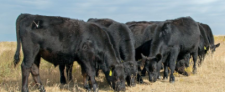
All of the beef sold in the Meating Place store comes from the Giles’ commercial Angus herd, with the majority of the genetics coming from nearby Gardiner Angus Ranch.

“We do a lot of genomic testing now, so that has really helped us increase our Primes and ribeyes, and rapidly increase our beef quality so that we are really providing a consistent, quality product,” she said. “Not only for this small portion that goes through our store, but for the rest that are fed and go through National Beef.”

As reported in the High Plains Journal