Friday, February 20, 2026
Home Blog Page 555

A Real Endangered Species

0

As a typical prey species I want to return to the last place where I felt comfortable and safe but that was in my hometown in 1956 when I was just five years old. Now I’m an endangered species and I feel the world closing in around me.

Here’s how really rare I am. I don’t own a cell phone, I’ve never twittered or tweeted, exposed myself on Facebook and have no idea what an Instagram is. I don’t Hulu or Peacock, I’ve never watched porn on You Tube nor placed a bet with Draft Kings. I rarely watch television and haven’t been inside a movie theater in over 15 years. I’ve only played a video game one time in my life and it turns out I was just as bad a golfer in cyberspace as I was on real estate.

I’ve never tasted plant-based meat, pheasant under glass, white truffles, Beluga caviar or psychedelic mushrooms. I’ve never smoked marijuana, cigarettes or a cigar. The only pills I’ve taken were prescription meds and Advil. I haven’t tasted a beer in 33 years or any other alcoholic drink for that matter. I’ve never had a Mimosa, tasted tequila, Jack and Coke or a craft beer. I’ve been tipsy probably twice in my life and it shames me to admit it.

I still write thank-you notes on stationary and mail them with a stamp. I don’t owe a penny except for my one credit card which my wife pays off religiously every month. My car is 15 years years old but I can’t drive it due to my propensity to have seizures. I’ve never killed anybody that I know of.

My wife and I have never hired a gardener, a cleaning lady or a handyman. We paint our own house and mowed our own lawns. I can still lay down a pretty bead with an old arc welder, I keep my knives razor sharp and my tools rust-free.

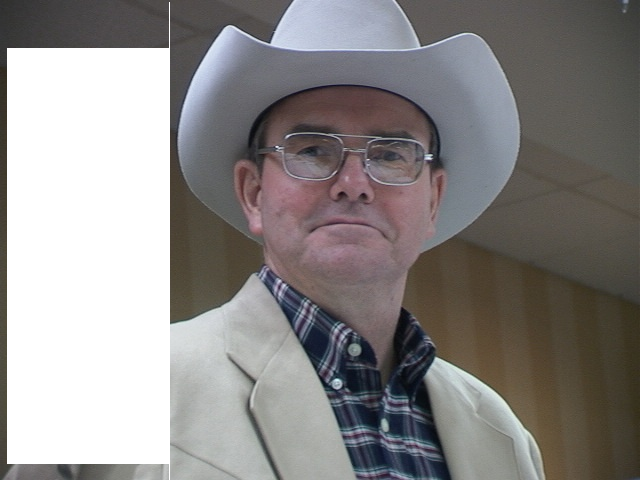
I am not represented by any of the letters in LGBTQ+ and have been married to the same wonderful woman for 50 years. I’ve never had a mistress or an affair. I don’t have a single tattoo or body piercing and have not done anything to prevent my loss of hair. Hair plugs or a toupee would be a big waste of money because I wear a ball cap or a cowboy hat 90% of my waking hours.

I’m not an Eagle, Lion or Elk nor do I belong to any other organization. I’ve never put a bumper sticker on the back of my car or truck. I did try to join my county cattlemen’s but they said they never got the check. I guess I didn’t meet their high standards. I’ve never been in jail nor have I served on a trial, although I did show up for jury duty every time I was asked. I’ve had lunch and a great conversation with a President (he was our governor at the time) and I’ve voted in every election except for the one year we lived in Australia. I’ve never been to a Super Bowl but I’ve been to several NFR’s. Likewise, I’ve never been to an opera but I would have loved to have heard Johnny Cash at the Opry.

The Post Office hasn’t delivered a package from Amazon to my house in months, there are no solar panels on my roof, I still write longhand and do most math in my head. I read extensively which has been one of the great joys of my life. I thoroughly enjoyed raising both cattle and sheep.

I demand reparations because my father’s family were Okies and were poorly treated once they got to California. And doctors have been trying to kill me for 32 years now. The Feds already own land the size of India but I think they should carve out a refuge for me and stop all this harassment. There’s a 6,000 acre ranch I’ve had my eye on for a long time that would do quite nicely.

I am a totally unique, one of a kind animal who is definitely endangered. There’s never been another like me, nor will there ever be again. And I know the many people I’ve offended in the past 40 years of writing a weekly column will be real happy about that.

Here’s how an anticipated Super El Niño could quench much of drought-stricken Kansas

0

Last weekend’s heavy November snowfall may signal the approach of a particularly snowy winter for Kansas.

This is a year of El Niño, a climate pattern that historically results in Kansas seeing more precipitation than usual, assistant state climatologist Matthew Sittel noted in a report published Nov. 16.

Nine days later, on Nov. 25, Topeka saw its heaviest November snowfall in 135 years, with 6.3 inches falling that day, followed by 0.9 inches more the following day. Parts of Kansas saw 12 inches of snowfall or more, according to the National Weather Service.

What does the National Weather Service say?
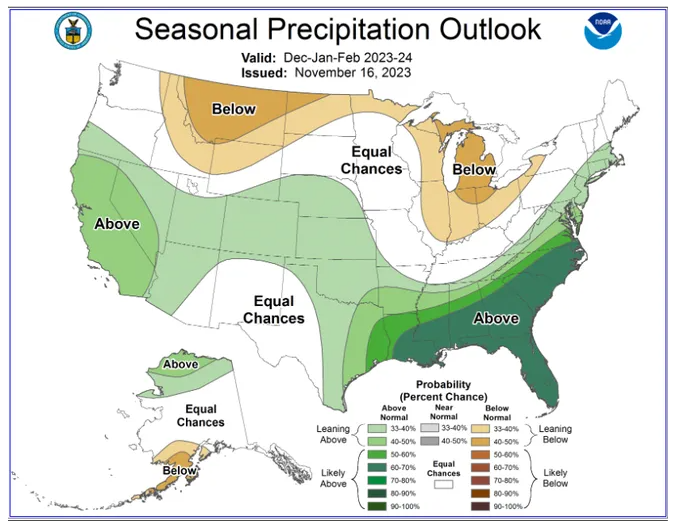
More than 90% of the area of the state of Kansas is likely to see above-average precipitation over the months of December, January and February, the National Weather Service said in a graphic posted recently on its website.

A small sliver of northeast and east-central Kansas, along the state’s border with Missouri, is expected to see equal chances of above-average or below-average precipitation, that site said.

‘Meteorological Superhero’

Sittel’s report said a snowier-than-usual winter in this drought-stricken state will become even more likely if the current El Niño becomes a “Super El Niño,” which the National Center for Atmospheric Research has predicted will happen.

The “Super El Niño” name “conjures up images of a meteorological superhero,” Sittel’s report said. “As it turns out, a Super El Niño could be a hero for Kansans.”

What is El Niño?

Last June brought the start of the current El Niño, a warming of surface waters in the Pacific Ocean. In a departure from normal, Kansas has seen below-average precipitation in the months since.

El Niño’s Spanish-language name refers to the baby Jesus and was given by South American fishermen who noted that some years, around Christmas, the waters off their Pacific coast would mysteriously become warmer.

El Niño typically starts with a slackening of trade winds that blow west across the Pacific at the equator, weather experts say. The winds provide constant pressure that keeps the ocean slightly higher on its Asian side.

As they ease up, massive amounts of heated tropical water slosh from one side of the Pacific to the other.

Water and air temperatures rise across millions of square miles in a long, relatively narrow equatorial zone between Indonesia and South America. Water expands as it heats up, meaning warmer seas become higher seas.

Heat energy consequently creates an imbalance in surface air pressure that affects weather patterns throughout the world, bringing record high temperatures in some areas and storms and flooding in others.

How has El Niño historically affected Kansas?

In Kansas, El Niño has historically brought above-average rainfall and snowfall, Sittel’s report said.

Kansas has seen 73 winters since 1950, with 21 coming during an El Niño, it said.

Nineteen winters came during a La Niña — El Niño’s counterpart, in which surface temperatures are below normal in the area of the Pacific that El Niño affects — while 33 have come at times when neither is taking place, the report said.

On average, it said, Kansas sees 2.72 inches of precipitation over the months of December, January and February during El Niño winters; 2.48 inches during La Niña winters; and 2.34 inches during neutral winters.

Precipitation and snowfall amounts are not the same. Snowfall totals are reported as the amount of liquid water the snow produces upon melting, said the website of the National Oceanic and Atmospheric Administration.

“An old rule of thumb was that for every 10 inches of snow, there would be 1 inch of water (10:1),” says the website for the National Weather service office in La Crosse, Wisconsin. “However, this is far from the norm, and recent studies indicate that a 12:1 ratio might be more representative (on average) for the Upper Midwest.”

Using the figure of 1 inch of precipitation for every 10 to 12 inches of snow, the extra 0.38 inches of precipitation Kansas sees on average in El Niño winters would equate to between 3.8 inches and 4.56 inches of additional snow.

What is a ‘Super El Niño?’

This year’s El Niño is shaping up to be stronger than most, Sittel stressed in his report.

“It does appear that the stronger the El Niño event, the more precipitation Kansas gets on average,” he wrote.

Sittel noted that the National Center for Atmospheric Research predicted Sept. 26 that December would bring a “Super El Niño.”

A Super El Niño occurs when water temperatures reach a point 2 degrees warmer than average in the area of the Pacific affected by an El Niño.

‘Reason to be optimistic’

The added precipitation brought by a Super El Niño would greatly benefit drought-stricken Kansas, Sittel said.

The Sunflower State since 1950 has experienced five winters during Super El Niños, with those being in 1965-66, 1972-73, 1982-83, 1997-98 and 2015-16, Sittel’s report said.

It said average precipitation during those five winters was 3.49 inches, or 1.15 inches above the average of 2.34 inches recorded during neutral winters.

Using the figure of 1 inch of precipitation for every 10 to 12 inches of snow, the extra 1.15 inches of precipitation Kansas sees on average during Super El Niño winters equates to between 11.5 inches and 13.8 inches of additional snow.

Will Ogallala Aquifer go the way of the buffalo? Conservation must be collective effort

0

The thing that very nearly led to the extinction of an entire species, the American Bison, was what they call, “The Tragedy of the Commons.” In other words, the 19th century Americans saw the bison as owned by everybody, but owned by no one.

And the parallels between how we saw the bison then and how we see the Ogallala Aquifer now are striking — and ominous. If you turn back the clock to the years of 1871 to 1874, the western Kansas bison herd was virtually annihilated in that four-year period by hunters anxious to satisfy the lucrative hide market back east.

This was a classic example of “The Tragedy of the Commons” — individuals consuming a resource at the expense of society. By the 1900s, only 500 bison were left out of the 20 million head that used to graze in the Great Plains.

The “Tragedy” concept was made popular by American ecologist Garrett Hardin. In explaining the idea, he used the example of ranchers grazing their cattle on a common field. When the field is not over capacity, ranchers may graze their animals with few limitations. But the rational rancher will want to add livestock to increase profits. By thinking logically, not collectively, the rancher benefits. But the costs are shared.

The tragedy is that ultimately no rancher will be able to use the field due to overgrazing. Kansas State University researchers led by irrigation engineer Jonathan Aguilar, Garden City Experiment Station, says in trying to better understand perceptions regarding Ogallala use, they surveyed 8,000 producers in Kansas, Colorado, Nebraska, New Mexico, Texas and Oklahoma — states overlying the Ogallala. And guess what? They found very interesting — and troubling — attitudes.

Aguilar points out that producers view groundwater as important for their own farms and their communities. “Producers also clearly believe that groundwater should be conserved for use by future generations,” he says.

So far, so good. But beyond that lies a serious conflict in attitude. Aguilar says even though they see the importance of groundwater, producers do not have a strong sense, at all, of their personal responsibility for the depletion of this resource. Neither do they feel the need for them to reduce groundwater use. In fact, they believe they should not, or cannot, reduce their use of irrigation water.

But can an individual accomplish something on his own? Wallace County farmer Bill Mai tried that. Their family decided a number of years ago to shut off some of their irrigation wells largely in an attempt to save water for future generations. Fortunately, one of the wells they shut off just happened to be a state-monitored observation well.

And low and behold, even though the Mai family no longer pumped the well, the water level continued to drop precipitously due to active neighboring wells to the northwest and to the southeast — and these were wells that were over a mile away.

Former K-State ag economist Don Pretzer agrees this is exactly what will happen with individual efforts at water conservation. He explained that if four irrigators each own a quarter of land in a square section and if one wants to conserve his water for later use, all he’s going to get for his efforts is a warm feeling in his heart that he conserved — and his neighbors will get all his water. Looks like we’re building a case for community action … and regulation.

A great example of moving in the right direction is the LEMA (Local Enhanced Management Area) recently established by Groundwater Management District No. 1 based in Scott City. In that district, all irrigators will voluntarily cut back on water use somewhere between 5% and 25% based on their historic consumption.

One of the problems we have with the Ogallala here in Kansas is that there are a number of groundwater management districts. And beyond that, this aquifer underlies a number of states — each speaking a different language and each with a different philosophy about how to utilize this shared resource.

In looking back a number of years ago here in Kansas, when faced with the corporate hog issue, our legislature took the easy way out and punted the issue down to the county level. But on issues like hogs, there should have been a statewide policy on how to manage this resource.

One of the problems with other or multiple units of government trying to manage resources that cross boundary lines is that certain districts, for instance, may see themselves as competing and wish to maximize their resource at the expense of their neighbor. Or along the same lines, they may see common authority as a threat to their sovereignty. These are tough issues.

Lettuce Eat Local: A beau-tea-ful season of rest

0

Amanda Miller
Columnist
Lettuce Eat Local


They say to keep your eyes on the prize, and a couple weeks ago at 40 weeks and 6 days, the prize was definitely birthing a healthy baby into the world. But to be honest, I also had my eyes on a malt.

Specifically, a chocolate malt from Bull’s Eye Grill, located conveniently a block or two from the birthing center. After having Benson in the middle of the night after almost three days of not being able to keep food down, and then having the only food offered to me be a pitifully unappealing coldcut turkey sandwich, I knew I needed to proactively take matters into my own hands. So I resolved with no level of uncertainty that a chocolate malt was what I needed after I got this baby out. As far as I was concerned, while it wasn’t the actual target, it was definitely going to hit the mark. And did I think about it at least once during labor? Why yes, yes I did. I was going to get a baby after this, and thank goodness, I was also going to get a chocolate malt. 

Was that the most nutritious and replenishing immediately-postpartum meal? Especially in combination with the spicy chicken sandwich I had craved for both pregnancies and not actually eaten until also just now? Should I have gone with some sort of organic bone broth porridge type situation instead? 

Enough with the rhetorical questions. I think postpartum nutrition is a much more significant issue than we Americans tend to acknowledge or understand, but I also think there are no clear-cut answers as to the best way to approach it, and there may be as many answers as there are new mothers. Around the globe, there are both beautiful themes and beautiful variations in values and practices regarding postnatal care. I’m clearly a little biased at this stage in my life, but I’m finding all the traditions to be beautiful in their sweet, gentle care of new mothers; pregnancy, childbirth, and caring for a newborn require mamas to be both strong and weak in so many ways, and I don’t mind saying it’s great to be taken care of. 

Many cultures emphasize more than ours that caring for new moms and their nutrition is as critical as caring for new babies (although my community does an amazing job). Often the first month or so after a new baby arrives is a particular period of intentional rest for mama: cuarentena in Mexico, saam-chil-il in Korea, omugwo in Nigeria, and so on around the world. The resting mama focuses on feeding her newborn, maybe not even leaving the house for 40 days, and meanwhile her mom, in-laws, or other community and family members focus on feeding her specific postpartum foods, sometimes exclusively so. Postnatal food traditions in different countries range from seaweed soup or bone-broth congee to nettle tea or spiced pudding panjiri. In my very minimal research, I saw a theme of warming, hydrating foods, with soups, porridges, and teas topping the lists and including ingredients like rice, oats, ginger, cinnamon, garlic, and cumin. Easy to digest and nutrient-dense, fortifying and restorative.

Not exactly how I would describe my milkshake. Cold, highly-processed, without many redeeming nutritional qualities…chocolate malts weren’t on any of the lists I found. I probably could have made a better choice. 

I, however, don’t regret it for a second. A crucial aspect of postpartum care is listening to your body, and mine said it needed a malt. 

But looking at all these postnatal teas got me thirsty for something a little warmer. Newborn baby or not, tea is always the answer. 


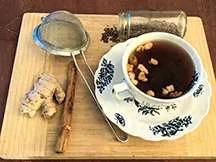
Lebanese New Mama Spiced Tea: Aynar

This tea (or technically tisane, since it doesn’t have any actual tea leaves) is lovely for this time of year. It’s considered perfect for new moms — the spices have healthful healing properties, and some are purported to be galactagogues (aiding in milk production) — but also for anyone visiting or meeting the baby. The nuts are quite a twist, included to give strength to the mama, but I find them oddly delectable. If you want to adhere to other Lebanese postpartum traditions, consider making “meghli,” a rice flour pudding made with much the same flavors as the tea. The timing is on point to discover right now, as it’s served for 40 days after a baby is born, and also on Christmas Eve in honor of Jesus’ birth! 

Heat water in a saucepan, along with cinnamon, ginger, caraway, anise, and nutmeg. Simmer for 15-60 minutes, until tea is deep brown and aromatic. Season to taste with sugar. 

Meanwhile, put a handful of nuts in the bottom of your cup. Strain the hot tea into the cup and drink, enjoying the surprisingly delicious chew of the nuts!