Tuesday, February 24, 2026
Home Blog Page 605

KU News: Author decries cost of pervasive incentive rhetoric

0


From the Office of Public Affairs | http://www.news.ku.edu

Headlines

Author decries cost of pervasive incentive rhetoric

LAWRENCE — A University of Kansas communication studies scholar has written a new book, “Works Like a Charm: Incentive Rhetoric and the Economization of Everyday Life,” which tackles the intrusion of incentives into nearly every facet of modern life, from health care to education to the legal system.

Law Review Symposium to revisit the landmark housing trial Shelley v. Kraemer

LAWRENCE — In 1948, the landmark case Shelley v. Kraemer set the precedent that it was unconstitutional for the judiciary to enforce racially restrictive housing covenants. On Oct. 13, the 2023 Kansas Law Review Symposium will host a panel of scholars to revisit the case and discuss what issues are still in play. Home Is Where the Law Says: 75 Years of Shelley v. Kraemer is free and open to the public. Registration is required.

Dole Institute announces 2023-24 Fellow

LAWRENCE – The Robert J. Dole Institute of Politics at the University of Kansas has named its 2023-2024 Dole Fellow in partnership with the Kansas Rural Center. Karen Willey, a KRC board member and Douglas County commissioner, will engage with members of the Dole Institute’s Student Advisory Board to develop public programming for spring 2024 on topics related to sustainability in Kansas.

Full stories below.

————————————————————————

Contact: Rick Hellman, KU News Service, 785-864-8852, [email protected], @RickHellman

Author decries cost of pervasive incentive rhetoric

LAWRENCE — Ever feel like a hamster on a wheel, being forced to race for crumbs? Maybe when you’re offered a break on your health insurance premium if you’ll take part in a daily 10,000-step challenge?

Robert McDonald said this sort of financial incentive works only too well, which is part of why the University of Kansas assistant professor of communication studies resents the intrusion of incentives into virtually every facet of modern life, from health care to education to the legal system.

He lays out how this happened and discusses ways to counter the false choices we are too often offered from on high in his new book, “Works Like a Charm: Incentive Rhetoric and the Economization of Everyday Life” (SUNY Press).

While tracing the history of the incentive back to its Greek mythical etymology, McDonald lays the blame for its alienating quality today mainly at the feet of 20th century economists – epitomized by the University of Chicago’s Gary Becker – whose “parsimonious” philosophies have now metastasized into every other sphere of American life, McDonald said.

“The argument is that the tools of rhetoric help me understand precisely how that happens, how economic causality — supply and demand — becomes a universalizing explanation for every person’s behavior,” McDonald said. “The word incentive becomes increasingly a load-bearing term that explains virtually every precept of how we behave rationally.”

McDonald devotes two chapters in the book to the concept of “nudges” — things governments, corporations and others with power do to push us in the direction they desire.

“The idea behind the nudge,” McDonald said, “is that what economists call a choice architect is, instead of directly coercing people to do something or asking them nicely, constraining their available choices in order to get them to choose the thing that they would have wanted them to choose in the first place. Obamacare is a great example of this where you are nudged by penalties; you are nudged by cheap cost to sign up for health insurance.

“So the argument is that what nudges do, ultimately, is break the back of universal social goods because they introduce choice, rather than saying, ‘This is the thing we are going to offer people.’ Basically, it gives a kind of alibi for why people wouldn’t do such a thing.”

After diagnosing the problem, McDonald said, “What I advocate for in the final chapter is essentially a shift in the way we see ourselves, because we’re frequently told we are individualized. We are frequently told that we are largely alone in the world, that people are coming for our jobs and so forth.”

“So my suggestion is largely about collective ways of seeing things. I use the example of the West Virginia public school teachers. They struck. They put themselves on the line. They risked their jobs. They risked their livelihoods, because of a lot of changes that were happening … including around nudges … their health insurance premiums being raised, expectations for them to … have their bodies monitored, etc.

“And so my argument is that we have to look toward collective solutions, because we are always going to be told if you want a little bit cheaper health insurance, sign up for this and get your biometric scan, stuff like that.”

-30-

————————————————————————

The official university Twitter account has changed to @UnivOfKansas.

Refollow @KUNews for KU News Service stories, discoveries and experts.


————————————————————————

Contact: Emma Herrman, School of Law, [email protected], @kulawschool

Law Review Symposium to revisit the landmark housing trial Shelley v. Kraemer

LAWRENCE — At a most basic level, a person’s home should be a source of safety, comfort and privacy. The freedom to decide where you live has historically been restricted to a small, wealthy and white section of the population. In 1948, the landmark case Shelley v. Kraemer set the precedent that it was unconstitutional for the judiciary to enforce racially restrictive housing covenants.

On Oct. 13, the 2023 Kansas Law Review Symposium will host a panel of scholars from across the country to revisit the case and discuss what issues are still in play 75 years later.

Home Is Where the Law Says: 75 Years of Shelley v. Kraemer will run from 9 a.m. to 4 p.m. at the University of Kansas School of Law in Green Hall. Check-in and breakfast will begin at 8:30 a.m. The event is free and open to the public, but registration is required.

Register and learn more about the symposium.

Speakers include:

Keynote speaker: Taja-Nia Henderson, Rutgers Graduate School-Newark
Stephen Clowney, University of Arkansas School of Law
Randall Johnson, University of Missouri-Kansas City School of Law
Rosa Newman-Ruffin, Elon University School of Law
Brandon Weiss, American University Washington College of Law
Lua Yuille, Northeastern University School of Law

This symposium will explore modern legal theory and realities of property rights, housing access, race and segregation, contracts and the implicit and explicit powers and effects of the law. Through this symposium, organizers seek to engage scholars writing in diverse areas including property rights, housing rights, constitutional law, contracts, tenancy, access and discrimination, zoning, tax and other topics.

Scholarship associated with the symposium will be published in a spring 2024 edition of the Kansas Law Review. For more information, contact Libby Rohr, symposium editor, at [email protected].


-30-

————————————————————————

Subscribe to KU Today, the campus newsletter,

for additional news about the University of Kansas.


http://www.news.ku.edu

————————————————————————

Contact: Maria Fisher, Dole Institute of Politics, 785-864-4900, [email protected]

Dole Institute announces 2023-24 Fellow

LAWRENCE – The Robert J. Dole Institute of Politics at the University of Kansas has named its 2023-2024 Dole Fellow in partnership with the Kansas Rural Center (KRC), a state-based nonprofit dedicated to promoting the long-term health of the land and its people through research, education and advocacy.

As a fellow-in-residence, Karen Willey, a KRC board member, will engage with members of the Dole Institute’s Student Advisory Board, led by students Braiden Bangalan and Rachel Creighton, to develop public programming for spring 2024 on topics related to sustainability in Kansas.

Karen Willey also serves as the Douglas County Commissioner for District 3. She has a bachelor’s degree in environmental studies and doctorate in geography, both from KU. She works as a nonprofit consultant through Futureful, a local company providing organizational health and fundraising support to health, housing and human services organizations in urban Kansas City. She leverages this social impact work along with her science and entrepreneurship experience in crafting grounded local policy.

Bangalan, from Lawrence, is majoring in global & international studies, political science and data science. Creighton, from Fort Morgan, Colorado, is majoring in political science and English with a minor in business.

“We are excited to partner with the Kansas Rural Center to create bipartisan, student-focused programming around critical issues of rural sustainability and their broader implications,” said Audrey Coleman, Dole Institute director.

“The Kansas Rural Center is honored to partner with the Dole Institute to bring together Kansans to discuss some of the most pressing challenges we face. This partnership is a great way to connect students with the community and issues around them,” said Tom Buller, executive director of the Kansas Rural Center.


-30-

————————————————————————

KU News Service

1450 Jayhawk Blvd.

Lawrence KS 66045

Phone: 785-864-3256

Fax: 785-864-3339

[email protected]

http://www.news.ku.edu

Erinn Barcomb-Peterson, director of news and media relations, [email protected]

Today’s News is a free service from the Office of Public Affairs
Horticulture 2023 Newsletter No. 38

0

https://hnr.k-state.edu/extension/info-center/newsletters/index.html

Blog Post: http://www.ksuhortnewsletter.org

Video of the Week: Garlic, Easy to Grow
https://kansashealthyyards.org/all-videos/video/garlic-easy-to-grow-and-store

EVENTS
Kansas Forest Service Tree, shrub Seedling Sale, September 1 – October 15 https://www.kansasforests.org/conservation_trees/

Kansas Turf & Landscape Conference
The 73rd Annual Kansas Turf & Landscape Conference will be held on Wednesday, November 29 and Thursday, November 30 at the Hilton Garden Inn, Manhattan. The conference is an excellent way to learn about turf and landscape management, visit with old friends, network with new ones, and see all the latest products and supplies from local and national vendors.
The conference has been approved for commercial pesticide recertification hours:
1 Core hour
3A – 7 hours
3B – 7hours
GCSAA education points and International Society of Arboriculture CEUS will also be available by attending the conference.

For more information, go to https://www.kansasturfgrassfoundation.com/

REMINDERS
• Plant Kentucky bluegrass by October 1. Tall fescue should be seeded no later than October 15.
• Herbs can be dug from garden and transplanted into pots for indoor use during the winter.

VEGETABLES
Garlic Planting Time
Planting garlic (Allium sativum) in the fall allows the cloves to go through a chilling period which is important for bulb and flower growth. October is a good time to plant because the cloves can begin to develop roots and shoots before freezing weather arrives.
Purchase large, mature garlic bulbs from a reputable grower rather than the grocery store. Separate the bulb into individual cloves just before planting. Larger cloves tend to yield larger bulbs at harvest. Mix three pounds of 10-10-10 fertilizer per 100 square feet into the soil prior to planting. If a soil test is available, fertilize according to those recommendations. Plant each clove one to two-inches deep spaced six-inches apart with the pointed end of the clove up. Water the cloves in well and apply a layer of mulch to insulate the soil.
Bulbs should be ready to harvest next summer when the lower third of the foliage is yellow. Carefully dig one area to check the bulbs for maturity. The bulbs are ready for harvest when the cloves are beginning to separate.
Kansas’ climate is suitable for growing a variety of garlic types. Elephant garlic (Allium ampeloprasum) has a milder garlic flavor. Varieties of Allium sativum that are good options include: Inchelium Red, Chesnok Red, Armenian, Music, Purple Glazer, Carpathian Mountain, Metechi, China Strip, Ajo Rojo, Asian Tempest and Silver White. (Cynthia Domenghini)

FRUIT
Fruit Planting Preparation
If you plan to develop or add to your fruit garden next year, now is a good time to take advantage of the weather conditions and prepare the planting site.
If the planting area currently has grass, till so there won’t be competition for water and nutrients. Organic materials such as compost, grass clippings, leaves, hay, straw or dried manure, can be tilled into the soil to help improve its condition. Do not use grass clippings that have been treated with a crabgrass killer as tree growth may be affected.
Contact your local K-State Research and Extension agents to guide you in obtaining soil samples to determine a fertilizer program. Fruit trees can be planted in the fall, but they will need to be monitored through the winter. Warm winter temperatures can promote bud development which can be detrimental to fruiting if followed by a freeze. It is also important to ensure trees are watered, as needed, through the winter.
For a small planting area with only a few trees that won’t be planted until spring, tarping the freshly tilled soil is a good idea to protect it. Getting the trees in the ground by early April is ideal to allow roots more time to develop. (Cynthia Domenghini)

MISCELLANEOUS
Amaryllis, Bringing it Back In
Amaryllises are sensitive to cold temperatures so they should be moved indoors prior to the first fall frost. Allowing the bulbs to go through dormancy or a rest period enables them to store energy which is necessary for blooming.
Keep the amaryllis in a cool, dry, dark area. Do not water and remove leaves as they dry. Allow the bulb to rest for eight to twelve weeks. If new growth develops, move the amaryllis to a sunny window. Otherwise, wait until you are ready to encourage new plant growth. At that time, move the bulb to a warm, sunny spot and water thoroughly. Wait to water again until roots have established to avoid bulb rot. Maintain temperatures between 50- and 60-degrees F. Flowers will last longer, even up to one month, if the plant is kept in a cool location away from intense sunlight. (Cynthia Domenghini)
Yellow Jacket Wasps
Yellow jackets are social insects and by this point in the year their nests may be home to thousands of wasps. Though they do sting, yellow jackets are beneficial insects.
Yellow jackets are about ½ to ¾-inch long with a black and yellow striped abdomen. They are scavengers and will impose on outdoor events where sugary foods and drinks are being served. They are also commonly seen swarming trash cans and are attracted to perfume and flowers as well.
If possible, avoid the nest as yellow jackets are more aggressive in this area. Yellow jackets prey on soft-bodied insects such as caterpillars and sawfly larvae so if they are not causing danger they do not need to be eradicated. Removing food sources, including fruit dropped from trees, can reduce the presence of yellow jackets. (Cynthia Domenghini)

Preventing Sunscald on Thin-Barked Trees
Many young, smooth, thin-barked trees such as honeylocusts, fruit trees, ashes, oaks, maples, lindens, and willows are susceptible to sunscald and bark cracks. Sunscald normally develops on the south or southwest side of the tree during late winter. Sunny, warm winter days may heat the bark to relatively high temperatures. Research done in Georgia has shown that the southwest side of the trunk of a peach tree can be 40 degrees warmer than shaded bark. This warming action can cause a loss of cold hardiness of the bark tissue resulting in cells becoming active. These cells then become susceptible to lethal freezing when the temperature drops at night. The damaged bark tissue becomes sunken and discolored in late spring. Damaged bark will eventually crack and slough off. Trees often recover but need special care — especially watering during dry weather.
If you have seen this type of damage in previous years or fear you have susceptible trees, preventative measures are called for. Applying a light-colored tree wrap from the ground to the first branches can protect young and/or recently planted trees. This should be done in October to November and removed the following March. Failure to remove the tree wrap in the spring can prove detrimental to the tree. (Ward Upham)
Questions on Ornamental Grasses
In general, avoid cutting back ornamental grasses while they are still green because they need to store energy during this time. As the grasses turn brown and dry, they can be cut back if they present a fire hazard. However, many gardeners leave them intact through the winter to provide interest to the landscape. Early Spring is typically the best time to cut back and divide ornamental grasses. (Cynthia Domenghini)

Contributors:
Cynthia Domenghini, Instructor
Ward Upham, Extension Associate

Division of Horticulture
1712 Claflin, 2021 Throckmorton
Manhattan, KS 66506
(785) 532-6173

For questions or further information, contact: [email protected], [email protected] OR [email protected]
This newsletter is also available on the World Wide Web at:
http://hnr.k-state.edu/extension/info-center/newsletters/index.html
The web version includes color images that illustrate subjects discussed. To subscribe to this newsletter electronically, send an e-mail message to [email protected] or [email protected] listing your e-mail address in the message.

Brand names appearing in this newsletter are for product identification purposes only. No endorsement is intended, nor is criticism implied of similar products not mentioned.

K-State Research and Extension is committed to making its services, activities and programs accessible to all participants. If you have special requirements due to a physical, vision or hearing disability, or a dietary restriction please contact Extension Horticulture at (785) 532-6173.

Kansas State University Agricultural Experiment Station and Cooperative Extension Service K-State Research and Extension is an equal opportunity employer. Issued in furtherance of Cooperative Extension Work, Acts of May 8 and June 30, 1914, as amended. Kansas State University, County Extension Councils, and United States Department of Agriculture Cooperating, Ernie Minton, Dean.

Time to Control Broadleaf Weeds with Postemergence Herbicides

0

We often think about weed control in the spring when all of the advertisements and commercials come out and promote their products to the consumers. Spring is not the only time weeds are growing and need to be controlled. Late October to early November is the most effective time to control broadleaf weeds with postemergence herbicides in lawns. Dandelions usually produce a flush of new plants in late September, and the winter annual weeds henbit and chickweed should have germinated in October. These young plants are small and easily controlled with herbicides such as 2,4-D or combination products (Trimec, Weed-B-Gon, Weed-Out) that contain 2,4-D, MCPP and Dicamba. Even established dandelions are more easily controlled now than in the spring because they are actively moving materials from the top portion of the plant to the roots in the fall. Herbicides will translocate to the roots as well and will kill the plant from the roots up. Choose a day that is 50 degrees or higher. The better the weed is growing, the more weed killer will be moved from the leaves to the roots. Cold temperatures will slow this process but these products will still work at lower temperatures.

Weed Free Zone (also sold under the name of Speed Zone) contains the three active ingredients mentioned above, plus carfentrazone. It will give a quicker response than the other products mentioned especially as temperatures move below 50 degrees.

You will have better success of you control the weeds in your lawn at the right time of year!

KU News: KU offers new cybersecurity engineering degree

0

From the Office of Public Affairs | http://www.news.ku.edu

Headlines

KU offers new cybersecurity engineering degree
LAWRENCE — A new engineering degree program at the University of Kansas will send students into the cybersecurity market armed with tools to create programs and systems that protect the world’s most critical assets from hacking, ransomware and other online threats. The Bachelor of Science in Cybersecurity Engineering, approved this summer by the Kansas Board of Regents, is available through the Department of Electrical Engineering & Computer Science.

KU researchers land grant to test app that delivers successful self-determination method for students with disabilities
LAWRENCE — University of Kansas researchers have been working with students with disabilities and their teachers to use the Self-Determined Learning Model of Instruction for more than a decade. A new five-year, $3.8 million grant from the Institute of Education Sciences will allow them to test the efficacy of the Goal Setting Challenge App. Students will use the app for 14 highly engaging lessons that promote self-directed goal setting during the critical period of transition from secondary school to college, careers, community living and other new phases of life.

Full stories below.

————————————————————————

Contact: Cody Howard, School of Engineering, 785-864-2936, [email protected], @kuengineering
KU offers new cybersecurity engineering degree
LAWRENCE — A new engineering degree program at the University of Kansas will send students into the cybersecurity market armed with tools to create programs and systems that protect the world’s most critical assets from hacking, ransomware and other immensely disruptive crimes and mischief generated during the digital age.
The Bachelor of Science in Cybersecurity Engineering, approved this summer by the Kansas Board of Regents, is available through the Department of Electrical Engineering & Computer Science. Students completing the required 126 credit hours — including 30 hours of math and science — will be equipped to protect data, computer systems and networks from unauthorized access and destruction involving government entities, health institutions, banking, e-commerce, academia and more.
“While dozens of schools across the country offer cybersecurity degrees of one kind or another, the inclusion of the word ‘engineering’ in the title of KU’s program means it is grounded in the calculus-based engineering that makes it all work,” said Erik Perrins, professor and chair of the electrical engineering & computer science department. While other degree programs train students to implement cyber protections, graduates of KU’s engineering-based program will be creating the actual protections themselves.
“This degree focuses on what engineers focus on, which is design,” Perrins said. “Right now, in the company where you work, someone takes a cybersecurity product off the shelf and puts it to use. What we do is different. We create the cybersecurity technology and don’t just deploy it.”
The program is designed to meet standards of the Engineering Accreditation Commission of the Accreditation Board of Engineering and Technology (ABET). It would be the fourth such engineering program to be accredited.
The program also is aligned with standards from the National Security Agency’s National Center of Academic Excellence in Cyber Defense Education and the National Center for Excellence in Cyber Research. For its existing programs, KU is one of 45 academic institutions nationwide to already hold both designations.
The Department of Electrical Engineering & Computer Science is experienced in cyber education, offering an undergraduate certificate in cybersecurity since spring 2020. A dozen students have received certificates, and an additional 43 were pursuing the certificate in spring 2023.
The department also is making another change this year, this one involving terminology: The Interdisciplinary Computing program is now known as Applied Computing. The popular program combines a background in computing with education in other professional disciplines — astronomy, biology, chemistry, journalism, economics and financial technology among them — to address real-world market needs.
The change is akin to a file name reboot, one intended to help students’ innovative and ever-applicable degrees translate more clearly with HR departments and hiring managers.
“Applied Computing is just more user-friendly,” Perrins said.
-30-
————————————————————————
The official university Twitter account has changed to @UnivOfKansas.
Refollow @KUNews for KU News Service stories, discoveries and experts.


————————————————————————

Contact: Erinn Barcomb-Peterson, KU News Service, 785-864-8858, [email protected], @ebpkansas
KU researchers land grant to test app that delivers successful self-determination method for students with disabilities

LAWRENCE — Research has shown that when students with disabilities are given ownership in their education and are involved in setting goals for themselves, they have better outcomes. Researchers at the University of Kansas who have been instrumental in developing and implementing the Self-Determined Learning Model of Instruction have secured funding to test a new app that delivers the proven method to students.
KU has been working with students with disabilities and their teachers to use the Self-Determined Learning Model of Instruction, or SDLMI, for more than a decade. A new five-year, $3.8 million grant from the Institute of Education Sciences will allow them to test the efficacy of the Goal Setting Challenge App. Students will use the GSC app for 14 highly engaging lessons that promote self-directed goal setting during the critical period of transition from secondary school to college, careers, community living and other new phases of life.
Karrie Shogren, Ross and Marianna Beach Distinguished Professor of Special Education, director of the KU Center on Developmental Disabilities (KUCDD) and senior scientist at the Life Span Institute is principal investigator for the project. She said there are not many research-based apps that can engage and immediately provide feedback to students as they are setting and pursuing goals.
“One of the biggest issues in schools is often teachers having the time to implement interventions and having the training and supports to effectively use them,” Shogren said. “SDLMI was designed to be a teacher-driven intervention, and we wanted to develop the GSC app to provide teachers and schools another tool to make sure students could engage in the SDLMI and self-determination instruction.”
Valerie Mazzotti, Roy A. Roberts Distinguished Professor of Special Education and affiliated faculty at KUCDD, is a co-principal investigator on the grant, and Tyler Hicks, assistant research professor and director of quantitative methods at KUCDD, is a co-investigator.
The research team will partner with Arkansas Transition Services and two cohorts of 21 high schools in the state. Approximately 85 teachers and 1,000 students will take part. A cluster randomized control trial will assign schools to use the GSC app, traditional teacher-delivered SDLMI instruction or business as usual. Students with disabilities who exit school will be followed for longitudinal examination of post-school outcomes to determine the effectiveness of the app compared with other methods. The team will also evaluate the cost-effectiveness of the GSC app.
The GSC app lessons guide students through interactive activities where they learn about self-determination, setting goals, building action plans and evaluating their progress. Students can engage with the GSC app across multiple semesters as they continue to build new goals and plans. The GSC app also contains a dashboard that allows teachers to monitor students’ progress, provide feedback and link what students are doing in the app to what they are doing in the classroom and beyond. It was designed with accessibility and universal design for learning principles, as well as culturally responsive supports and features for students with disabilities including text-to-speech, options to type or record responses and pulling responses forward to the next lesson. Teachers and students were highly engaged in the development process, which was funded with a previous IES grant.
“This project will let us look at if there are any differences when students use technology as part of the SDLMI delivery,” Shogren said. “Some students or teachers may prefer using technology, others may not, but we need to test new ways of delivering the intervention. Ultimately, the goal is to see if the GSC app works and is effective to advance transition outcomes. And, if it is successful, we want to get it out into the hands of teachers.”
The research team will analyze student outcomes including course/grade completion, GPA and standardized score tests during school and self-determination, goal attainment, graduation and dropout rates, postsecondary education enrollment and completion, and employment for post-school outcomes. They will also look at school, teacher and student characteristics and demographics that may affect outcomes. The analyses should provide more information to educators and families about how to advance self-determination and transition outcomes.
“The GSC app has the potential to provide teachers with an innovative, technology-driven tool to embed self-determination instruction into the academic day,” Mazzotti said. “We feel the app can provide an option for teachers and students to use technology to support student-directed goal setting and attainment. We are excited about this study and the opportunity to test the efficacy of the app and its impact on transition and post-school outcomes for students with disabilities.”
-30-
————————————————————————

KU News Service
1450 Jayhawk Blvd.
Lawrence KS 66045
Phone: 785-864-3256
Fax: 785-864-3339
[email protected]
http://www.news.ku.edu

Erinn Barcomb-Peterson, director of news and media relations, [email protected]

Today’s News is a free service from the Office of Public Affairs
Flint Hills Cowboys Teams To Compete In State’s Oldest Ranch Rodeo

0


The 37th annual Fall Ranch Rodeo sponsored by the Morris County Youth Rodeo Association (MCYRA) is scheduled for Sunday, October 1st.
Four-member cowboy teams representing 14 Flint Hills ranches have pre-entered in the rodeo at the MCYRA Arena, 1½ miles east of Council Grove on Highway 56.
A junior ranch rodeo will be Sunday morning at 10 o’clock, followed by the ranch rodeo starting with a grand entry at 1 o’clock.
“Of special significance is that our ranch rodeo is the oldest in the state of Kansas,” said Clay Wilson, MCYRA president.
“The rodeo is also one of the oldest in the nation, along with possibly being the longest continuous annual ranch rodeo anywhere,” Wilson added.
Events for the junior rodeo include sorting, calf branding, and mugging while the afternoon matinee features penning, steer branding, team roping, and mugging.
To provide for a full family day of rodeo activities, the host Morris County Youth Rodeo Association will again offer complete concessions with meals, drinks, and homemade lunch offerings.
There’s still time for teams to enter the rodeos and find out more information by contacting Wilson at 785-466-1359, and on Facebook.

CUTLINE
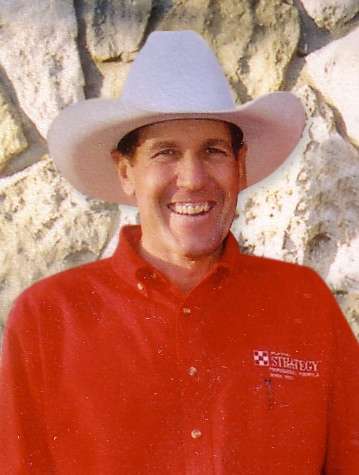
Four-member cowboy teams representing 14 Flint Hills ranches are pre-entered in the 37th annual Fall Ranch Rodeo at Council Grove Sunday afternoon, October 1st, at 1 o’clock. A junior ranch rodeo will be Sunday morning at 10 o’clock.