Wednesday, February 25, 2026
Home Blog Page 612

“just for fun”

0

Horticulture News
By: Scott Eckert, Harvey County Extension Agent, Horticulture

I remember growing up and enjoying being a kid on summer break from school and being outside all of the time. The neighbor kid and I would have “sticker fights”. There was a grass that had stickers on them and at a certain stage can be thrown to stick in the neighbor “just for fun”. Yes, it hurt but we did it anyway. Grassy sandbur is an annual grassy weed that is often found in lawns or other turf areas. It produces a spiny bur and is the “sticker” plant whose bur is often caught in clothing or in pet fur. It will often invade thin lawns, especially in dry years and prefers but is not limited to sandy sites.

The best control for grassy sandbur is a good, thick lawn. Preemergence herbicides can be used on lawns that are not thick enough to prevent an infestation. The product that can help minimize grassy sandbur is pendimethalin.

Pendimethalin is sold commercially as Pendulum as well as several other names. On the homeowner side, it is sold as Scotts Halts. Pendimethalin is best applied as a split application with the first half applied about April 15 and the second about June 1 in the central part of the state but should be applied a couple of weeks earlier in southern Kansas and a week or so later in northern areas. Alternatively, make the first application when redbud trees approach full bloom and the second six weeks later. Pendimethalin can be used on all of our commonly used turfgrasses.

Pendimethalin will not give complete control but should help. Quinclorac (Drive) can provide some postemergence control especially if the sandbur is in the seedling stage. Quinclorac is also found in a number of combination products that control both broadleaf weeds and crabgrass such as one of the following: Ortho Weed-B-Gon Plus Crabgrass Control BioAdvanced All-in-One Lawn Weed and Crabgrass Killer. Monterey Crab-E-Rad Plus Fertilome Weed Out with Crabgrass Killer Trimec Crabgrass Plus Lawn Weed Killer Bonide Weed Beater Plus Crabgrass & Broadleaf Weed Killer Spectracide Weed Stop for Lawns Plus Crabgrass Killer.

Again, the best control for grassy sandbur is a healthy, thick lawn.

Horticulture 2023 Newsletter No. 37

0

https://hnr.k-state.edu/extension/info-center/newsletters/index.html

Blog Post: http://www.ksuhortnewsletter.org

Video of the Week: Planting Bulbs for Spring Color
https://kansashealthyyards.org/all-videos/video/bulbs-planting-for-spring-color

UPCOMING EVENTS
Kansas Forest Service Tree, Shrub Seedling Sale, September 1 – October 15
https://www.kansasforests.org/conservation_trees/

REMINDERS
• Divide perennials such as peonies and daylilies, if needed.
• Prune broken and dead branches from trees.
• Remove suckers and watersprouts from fruit trees.

ORNAMENTALS
Time to Plant Spring-flowering Bulbs Approaching
Spring-flowering bulbs such as tulips, daffodils and crocus can be planted from now through October giving bulbs time to establish roots before the required chilling period during winter months.
Choose an area with full sun to part shade. Ideally the soil should be a sandy loam, but if not, it can be amended by adding compost to a depth of at least one-foot. Incorporate fertilizer based on a soil test or use a 5-10-5 at a rate of three pounds per 100 square feet. The soil pH should be between 6.0 and 7.0.
Determine the planting depth based on the bulb size. Planting depth refers to the distance from the bottom of the hole, where the base of the bulb will rest, to the surface of the soil once the hole is backfilled. Bulbs the size of tulips and hyacinths are typically planted six-inches deep while daffodil-size bulbs should be six- to eight-inches deep. In general, bulbs should be planted two to three times as deep as their width. Space large bulbs four- to six-inches apart. Small bulbs can be spaced one- to two-inches apart. Mass plantings create a more aesthetically-pleasing display when spring blooms emerge.
Backfill each hole halfway and water in to settle the soil. Replace the remaining soil and water again. Though you will not see above-ground growth in the fall, roots are still growing. Keep the soil moist and add mulch after the soil freezes to provide insulation and prevent bulbs from being heaved out of the soil. (Cynthia Domenghini)

VEGETABLES

Adding Organic Materials Directly to the Garden
Organic matter can aide in replenishing almost any type of soil. It improves tilth, aeration and water absorption of clay soil. In sandy soils, it acts as a sponge by holding water and nutrients. Adding organic materials gathered in the landscape directly to the garden is an easy and inexpensive way to enjoy these benefits.
Materials such as grass clippings (untreated), leaves, old mulch and straw are some examples of organic matter that can improve the soil. Shred large materials using a mower or other tool so they will decompose more quickly. Spread a layer about three-inches thick over the surface of the garden. Till or dig in the organic matter on a day when the soil is not saturated. Warm weather will expedite decomposition and this process can be repeated every other week into November or December when the cold slows decomposition significantly. (Cynthia Domenghini)

MISCELLANEOUS
Reblooming Poinsettias
Photoperiodism, the amount of light or dark a plant is exposed to, affects the bloom of most plants. Some plants need longer periods of darkness and are known as “short-day” plants. Others require fewer dark hours, “long-day” plants.
Many summer flowers and vegetables are in the long-day category. Chrysanthemums, Christmas cactus and poinsettias fall in the short-day category. These plants require at least 12 hours of darkness every 24 hours in order to bloom. Growers can force blooming by controlling the light and dark periods.
If you have poinsettias from last year, follow these steps to encourage blooms in time for the holidays.
1. For no more than 12 hours each day, keep poinsettias in an area where they will receive the brightest light possible. Temperatures should be kept between 65- and 75-degrees F.
2. Provide at least 12 hours of uninterrupted darkness to the plants every 24 hours. If a completely dark room or closet is not available, place a cardboard box over the top of the poinsettias. Be sure to seal the openings of the box with duct tape to prevent light from entering. 60- to 65-degrees F is the ideal nighttime temperature to promote blooming.
Continue the dark treatment for six weeks until buds have set. Within another two to five weeks poinsettias should be blooming. (Cynthia Domenghini)

Planting Trees in the Fall
Fall can be a great time to plant trees and take advantage of the root growth that can occur while the soil is still warm before freezing begins. This gives trees a head start enabling them to endure spring growth and summer stress. Early September to late October is the ideal planting time for most trees. Some trees are not good candidates for fall planting such as beech, birch, redbud, magnolia, tulip poplar, willow oak, scarlet oak, black oak, willows and dogwood. These trees will not be able to establish roots in time to survive the winter.
Newly planted trees require some care even when the above-ground growth is dormant. The soil should remain moist so roots do not dry out. A layer of mulch can be beneficial for regulating soil temperature and reducing water loss. (Cynthia Domenghini)

Moving Houseplants Inside for the Winter
With some relief from hot weather this week and colder temps on the way, it’s time to turn our attention to protecting cold-sensitive plants. Some gardeners move houseplants outdoors to bask in the summer heat and recover from the stress of an indoor environment. Planning for their reentry to the house is important so houseplants have time to adjust to the changes in growing conditions.
Before bringing any plants indoors, check thoroughly for pests. Small populations of insects, such as mites and aphids, can be dislodged by spraying the foliage with a hose. If the insects are found in the soil, soak the entire container in lukewarm water for 15 minutes. Plants with a heavy infestation may be better off discarded.
Once moved indoors, continue to monitor for pests to prevent spreading throughout the house. Plant growth will slow substantially indoors and will therefore require less water and fertilization. Most houseplants will benefit from receiving water only when the soil surface is dry. Fertilization will likely not be necessary until spring.
It is best to help plants adjust to the lower light conditions indoors gradually to prevent leaf drop. Initially, place plants near windows with the brightest light. Over several weeks move the plants further away until they’ve reached the desired location. Supplemental lighting can be provided with grow lights. Avoid cold drafts from doors and windows and heat from air vents. These extremes can put plants under stress.
Many houseplants come from tropical locations and favor humid conditions. Kitchens and bathrooms tend to be more humid areas inside the home. If space and lighting permits, this may be a good location for your plants. You can increase humidity for your plants by using a humidifier or grouping multiple plants together creating a microclimate. (Cynthia Domenghini)

Root Cellars
Root cellars are a time-tested solution for storing the harvest surplus through winter. The temperature and humidity underground can provide favorable conditions for certain vegetables. Traditionally, onions, garlic, turnips, carrots and potatoes are stored in cellars. However, many types of fruits, squash, nuts and other vegetables can successfully be stored as well. Here are a few tips to increase the shelf-life of your harvest.
1. Store fruits separate from vegetables to avoid ethylene exposure to vegetables.
1. Turnips, cabbage and other vegetables with a strong odor may transmit this to nearby produce
2. See the chart below for recommended storage conditions for specific produce.
(Cynthia Domenghini)
Temperature (degrees F) Humidity (%) Produce
32-35 60-70 garlic, onions
32-40 80-90 apples, grapes, oranges, pears
32-40 90-95 beets, brussels sprouts, cabbage, carrots, cauliflower, celery, horseradish, artichoke, kale, kohlrabi, leeks, parsnips, radish, rutabaga, turnips
32-50 60-70 dry beans and peas
38-40 80-90 potatoes
50-55 60-75 pumpkins, winter squash
above 50 80-90 sweet potatoes, tomatoes

Contributors:
Cynthia Domenghini, Instructor
Ward Upham, Extension Associate

Division of Horticulture
1712 Claflin, 2021 Throckmorton
Manhattan, KS 66506
(785) 532-6173

For questions or further information, contact: [email protected], [email protected] OR [email protected]
This newsletter is also available on the World Wide Web at:
http://hnr.k-state.edu/extension/info-center/newsletters/index.html
The web version includes color images that illustrate subjects discussed. To subscribe to this newsletter electronically, send an e-mail message to [email protected] or [email protected] listing your e-mail address in the message.

Brand names appearing in this newsletter are for product identification purposes only. No endorsement is intended, nor is criticism implied of similar products not mentioned.

K-State Research and Extension is committed to making its services, activities and programs accessible to all participants. If you have special requirements due to a physical, vision or hearing disability, or a dietary restriction please contact Extension Horticulture at (785) 532-6173.

Kansas State University Agricultural Experiment Station and Cooperative Extension Service K-State Research and Extension is an equal opportunity employer. Issued in furtherance of Cooperative Extension Work, Acts of May 8 and June 30, 1914, as amended. Kansas State University, County Extension Councils, and United States Department of Agriculture Cooperating, Ernie Minton, Dean.


Bread Pudding

0


It’s been a weekend full of prep and cooking as my household has joined in to assist me with a wedding reception. At ten o’clock at night I often kick myself, and say: ‘What was I thinking?’ But, it’s been rather fun honing my entertainment skills to make someone’s day extra special. I can’t miss a beat, everything has to be perfect-o. When this wraps up it will be interesting to see if my family agrees to assist me ever again.

We continue this week with foods from the great depression. Folks should probably be paying some heed to this style of cooking. Nothing was wasted &
frugal was the name of the game. Many meals were meatless and achieved protein through different versions of beans. This past week I saw an article about the somewhat ‘gross’ things people ate during this time frame. One dish that has surfaced over and over, in my reading is peanut butter stuffed onions! In northeast Missouri where I was raised, I never heard a soul speak of this dish.

Bread pudding can be made with a variety of left over breads. One of my favorites was served at the KCI Marriott Hotel. I was working part time in the catering offices while teaching school. Often on Mondays, the employee cafeteria would have the most decadent bread pudding. I couldn’t stand it any longer, so I finally approached the chef and asked what his secret was. He actually told me! On Sundays they served a well-known breakfast buffet filled with croissants, bagels, muffins, donuts and delicious pastries. The chef used his ‘leftovers’ to make his exquisite pudding.

At home my favorite bread to use is cinnamon raisin bread and sourdough. The sauce of choice in my presentation is rum. My spouse, doesn’t like undertones of alcohol in his foods, so ‘sometimes’ I’ll switch to a plain vanilla sauce. (Interestingly enough he has a more adventurous palate than I do.) I have several dishes that rely upon the flavor of specific alcohols to make them sail. If I had to list the alcohols I use the most in cooking it would be: Sherry, rum, dry wines, merlots, and orange liquors.

As we look at some of the desserts from the depression era we stumble upon
dishes featuring farm standards like eggs, cream, milk, molasses, honey, some sugar. One thing I have noticed about cooks raised by depression era parents, is how they frequently use less sugar, specifically in their pies.

Alrighty, let’s take a look at this easy recipe. For the fall try adding pieces of apples and nuts. Simply yours, The Covered Dish.

Bread Pudding

1 loaf, stale French Bread
1 quart milk, cream or blend
4 eggs
2 cups sugar
1 teaspoon cinnamon
1/2 teaspoon nutmeg
2 tablespoons vanilla
1 cup raisins
2 apples, peeled and diced
1/4 cup butter

Pull the bread apart and mix with the milk. Beat eggs and add to bread mixture stirring well. Add remaining ingredients except for the butter. Melt the butter in a 9X13 inch pan on low on the top of the stove. Pour the bread mixture in on top of the melted butter. Bake about 50 minutes in a preheated 350 degree oven until firm.

Prepare topping while baking.

Topping:

1 cup brown sugar
1 cup white sugar
4 tablespoons flour
2 cups water
1 jigger of rum
4 teaspoons butter
1 teaspoon vanilla
Cook sugars, water, and flour until clear (high boil). Add butter, vanilla, and rum, stirring until the butter melts. This should be about pudding thickness. Even if it’s runny, it’s wonderful! Pour over the bread pudding. Serving both the pudding and sauce warm.


Some Like it Dry

0

Unless you have spent all this summer under a rock somewhere, you are aware of how dry this part of the country has been. Ponds I have never seen dry look like parking lots, and some stream and river beds could easily double now as roads. Drought affects all living creatures, animals included. I’m sure you’ve heard by now that fall turkey season has been suspended this year because of declining turkey populations over a large swath of the country, not just Kansas. “Declining production” is cited as the reason for that decision. Drought affects this too, as lack of green cover offers less concealment for young chicks and fewer insects for their sustenance. Drought is just bad news all around, but dry years can help hunters, fishermen and trappers.
Drought will obviously affect waterfowl hunting. Most of the McPherson Valley Wetlands near McPherson are dry, and the wetlands just outside Inman have water in perhaps only one-half the pools. There are several ponds along the 61 four-lane highway that are completely dry, as are many other ponds in this part of the state. Many of these ponds and water impoundments are favored by ducks and geese over the next couple months, so now all those birds will have to find other water in farm ponds, stock ponds and sand pits for example. There is just as much feed around for them this year as any year, so that will probably mean just as many ducks and geese will stop here for a spell as on any year. Putting two-and-two together means if you can get permission to hunt some of those otherwise overlooked and out-of-sight spots, the waterfowl hunting for you this year may be tremendous.
Whether big game, small game, winged or four footed, furbearers or predators, all critters need water, and even though dry spells don’t affect critter movement patterns much, it’s a no-brainer that more wildlife will be watering at the ponds, creeks and rivers that still hold water. Deer stands placed near water are good bets near dawn and dusk on any year, but this season hunting near a water source may be especially productive as more deer will be drinking from those spots. If your hunting property doesn’t have water on it, try hanging a stand or putting up a blind as close as you can get to the nearest water. Stock tanks and windmill tanks will probably be more popular watering spots this season for wildlife too, so, if possible, find some cover within shooting range of them. In short, this year water sources may be as big a draw as anything, so place you deer stands and blinds accordingly.
Although the properties I trap rarely have ponds on them, most predator trappers agree that pond dams are good spots to set traps for bobcats and coyotes, as they also need water and like to nose around on the dams. All pasture ponds will have cattle trails leading to and around them, and predators use those same trails too. Following the same thinking, since some of those ponds are dry this year, the ones still holding water might be better trap sites this year than usual, as more predators and furbearers will be traveling there to drink. Deep holes in creeks and rivers that still have water will also see more wildlife traffic that normal. I always wonder where all the beavers and muskrats go when ponds and drainage ditches go dry, and this year water sources still with water could see an influx of them too.
Fishing is affected by extended dry spells also as water levels drop in ponds, lakes, rivers and streams and fish become more concentrated around cover in the available water. I questioned a friend about this who is a tremendous fisherman and he confirmed my assessment. He also added that ice fishing is often great on years when water levels are low, as fish are easier to locate beneath the ice.
Jacques Cousteau once said “We forget that the water cycle and the life cycle are one.” Leonardo da Vinci saw that “Water is the driving force of all Nature.” Yes, it’s dry again and we need good soaking rains. It seems that all the native Kansans I know have long ago made peace with our states propensity to stay dry, but as a Kansas transplant, I still struggle with that. Nelson Mandela said “Let there be work, bread, water and salt for all.” I guess we can furnish the work, bread and salt, but only God can send the water. Even though it’s dry, use some of the above tips to Explore Kansas Outdoors!
Steve can be contacted by email at [email protected].


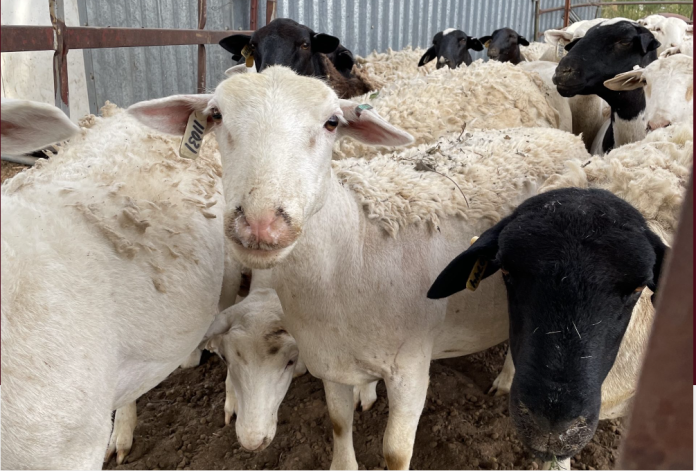
ALB launches new website for sheep industry

0

As reported in High Plains Journal, American Lamb producers can now turn to LambBoard.com for resources on checkoff production, promotion and other programs. The new American Lamb Board official website launched in early September.

“This is a totally new site all for the American Lamb industry—commercial and seedstock producers, feeders, direct marketers, sale managers, auction markets and processors. In addition to production and promotion resources, it’s also the home to everything about the American Lamb Board and the checkoff program,” says Peter Camino, ALB Chair, Buffalo, Wyoming.

A wealth of information is available on the new website, including best practices for sheep productivity and efficiency, lamb quality, recipes and premium items for local promotions in the ALB Store, free downloadable handouts, details on ALB’s cooperative funding program, the latest news and results of the American Lamb Checkoff’s activities, and even an online assessment payment tool.

Those who sell American lamb directly to consumers will want to check out toolkits on marketing to ethnic markets and other resources.

LambBoard.com replaces the previous industry website, LambResourceCenter.com. Information for consumers and chefs on American Lamb, such as cooking videos, recipes, sustainability and how sheep are raised in the United States is available at AmericanLamb.com.

Visit LambBoard.com today on your smartphone, computer or tablet.