Thursday, February 26, 2026
Home Blog Page 629

“With New Knowledge comes New Discoveries”

0


My son is a Boy Scout. Hopefully, he will become an Eagle Scout like his dad, his grandpa, his uncle, and not to mention eleven of the twelve men that walked on the moon. Whether he does or not, it has been an honor seeing the program help him and other boys mature into responsible young men.

This summer, our troop took our canoes along the 108 miles on the Missouri River in Montana, in the Upper Missouri River Breaks National Monument. That stretch of the Missouri, where the river has carved impressive rock formations that create “breaks” in the land, is largely untouched and flows as it did for Lewis and Clark’s expedition in 1804 to 1806.

Canoeing and camping along the same places as the Corps of Discovery was an amazing experience, and provided ample time to ponder the immense changes our nation has made in 200 years.

Medicine has also made immense changes and progress in the last two centuries. For instance, bloodletting, which had been used for thousands of years, was still in practice at the time of Lewis and Clark, although some physicians were doing studies that showed its harms and limited benefit. Contrast that to advances today in germ theory, insulin for diabetes, surgical advances, tiny stents that can open up blood vessels in the heart and brain, x-rays, CTs and MRIs, amazing new drugs, the list is exponential.

Dr. Benjamin Rush was a leading American physician at the time of the Lewis and Clark Expedition. A big proponent of bloodletting and purging, he convinced Meriweather Lewis to bring 600 of his “Rush’s Thunderbolts” pills along the journey. Containing mercury and other strong purgatives, they were used for about anything. They cleared your bowels if nothing else. Higher levels of mercury in the soil have helped identify where Lewis and Clark camped.

As “Prairie Docs” we know we do not have all the answers, and some of our answers, because of science and research, can and do change with time. That is one reason we invite other medical experts to write articles and be on the “On Call with the Prairie Doc” shows. We are dedicated to enhancing health and diminishing suffering by communicating useful information, based on honest science, provided in a respectful and compassionate manner. We want to highlight the changes and progress in medicine, while also stressing the importance of good old preventative care, a healthy diet, and exercise. We do this as volunteers, because we all know the importance of providing trusted health information free to our audience. We are funded by you, our readers and viewers. Thank you for your support and trust as we begin our 22nd season.

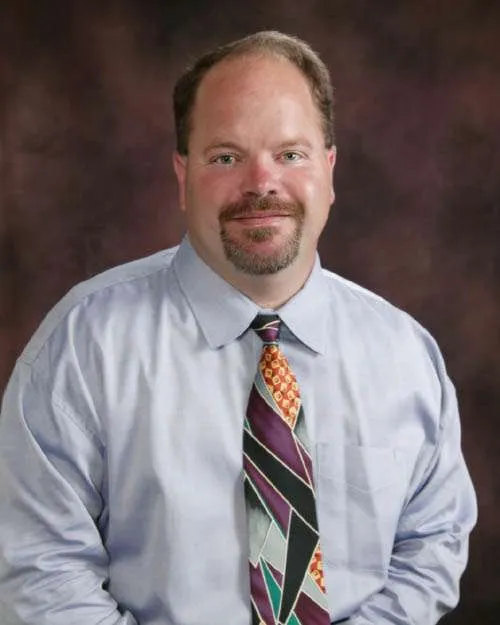
Andrew Ellsworth, M.D. is part of The Prairie Doc® team of physicians and currently practices family medicine in Brookings, South Dakota. Follow The Prairie Doc® at www.prairiedoc.org and on Facebook and instagram featuring On Call with the Prairie Doc® a medical Q&A show celebrating its 22nd season of health information based on science, built on trust, streaming live on Facebook most Thursdays at 7 p.m. central.

KU News: KU Alumni Association honors two recipients of Fred Ellsworth Medallion

0

From the Office of Public Affairs | http://www.news.ku.edu

Headlines

KU Alumni Association honors two recipients of Fred Ellsworth Medallion
LAWRENCE — Two pivotal leaders of organizations vital to the University of Kansas will receive the KU Alumni Association’s 2023 Fred Ellsworth Medallion for their dedicated service. David Mucci, who directed KU Memorial Unions for 23 years, and Dale Seuferling, who guided KU Endowment as president for 20 years of his 41-year career with the foundation, will be honored Sept. 7 in conjunction with the fall meeting of the Alumni Association’s national board of directors. Both leaders retired in 2022.

Paper Plains Zine Fest returns with creative workshops, fair and more
LAWRENCE — The Emily Taylor Center for Women & Gender Equity at the University of Kansas will partner with local organizations Sept. 2-3 to celebrate the zine — a self-published creation, usually reproduced by photocopier and circulated as a physical medium — at the second annual Paper Plains Zine Fest. The free public events include workshops, panels, a film screening and vendor fair. Some activities require advance registration.

Full stories below.

————————————————————————

Contact: Jennifer Sanner, KU Alumni Association, 785-864-9782, [email protected]; @KUAlumni
KU Alumni Association honors two recipients of Fred Ellsworth Medallion
LAWRENCE — Two pivotal leaders of organizations vital to the University of Kansas will receive the KU Alumni Association’s 2023 Fred Ellsworth Medallion for their dedicated service. David Mucci, who directed KU Memorial Unions for 23 years, and Dale Seuferling, who guided KU Endowment as president for 20 years of his 41-year career with the foundation, will be honored Sept. 7 in conjunction with the fall meeting of the Alumni Association’s national board of directors. Both men retired in 2022.
The association created the medallion in 1975 in tribute to Ellsworth, a 1922 KU graduate who led the organization as executive director and secretary from 1929 to 1963.
David Mucci
Mucci built strong relationships across KU and championed the interests of students as he led the Union through dramatic growth in facilities and programs.
He arrived in Lawrence in 1999 after overseeing student unions at the University of Idaho, Ohio State University and his alma mater, the University of Kentucky, where he earned his bachelor’s degree in English and film studies and his master’s in business administration. As an undergraduate, he was elected student body president, a role that prepared him well to mentor a succession of KU students who participated in Student Union Activities, Student Senate and KJHK radio. More recently, he supported new student initiatives, including the annual community volunteer day (known as The Big Event) and KU’s Esports team.
Jay Howard, a 1979 graduate who served five years as an alumni representative on the KU Memorial Unions board, credited Mucci for uniting teams and finding solutions to even the most vexing challenges.
“I doubt this is in any business school textbook, but David embodied what I call ‘management by cheerfulness,’” said Howard, who also led the Alumni Association as national chair. “He never failed to have a sense of positivity, happiness and empowerment for everybody he met.”
Under Mucci’s leadership, the Union completed ambitious renovations that modernized the Jayhawk Boulevard landmark while preserving traditions and history. His devotion to Mount Oread’s history is evident not only in the physical spaces of the Kansas Union, the Burge Union and the DeBruce Center, but also through his collaboration with a team of staff members and graduate students (led by the late Henry Fortunato, a 2007 graduate) to create the website kuhistory.com and add history display panels throughout the unions.
Mucci also oversaw expansion in union programs on the Lawrence campus, and he helped establish programs to serve students on the Edwards Campus in Overland Park as well as KU Medical Center campuses in Kansas City and Wichita. He led the repurposing of the Jaybowl for students in architecture and graphic design, the transformation of the KU Bookstore and the opening of the South Dining Commons. Through the years, he provided vital employment opportunities for hundreds of students.
Mucci served on the KU Master Plan Steering Committee and the Sesquicentennial Steering Committee. He helped develop the Union Alumni Council to engage recently graduated student leaders and encourage them to continue their involvement with KU. During the pandemic, he guided the Union through tremendous challenges, continuing to connect students and the community despite severely limited budget and staff resources.
Dale Seuferling
Throughout his KU Endowment career, Seuferling nurtured trusted relationships with countless alumni and guided fundraising campaigns that provided unprecedented support for students and faculty, along with new buildings and major renovations that transformed and expanded KU across all campuses.
After earning his KU journalism degree in 1977, Seuferling landed his first job as a radio news reporter for the Office of University Relations. In 1981, he became public relations director for KU Endowment, where he soon transitioned to a fundraising role and through the years took on added responsibilities. He served as director of major gifts, vice president for development and executive vice president before he became president in 2002.
His KU tenure spanned seven chancellors and included three of Endowment’s four multiyear fundraising campaigns. The most recent, Far Above: The Campaign for Kansas, which concluded in 2016, raised $1.66 billion to benefit KU. More than 131,000 donors — 49% of them new donors — from all 50 states and 59 countries made gifts. The historic campaign resulted in 735 new scholarships and fellowships, 53 new professorships and 16 new buildings or major renovations across KU’s campuses in Lawrence, Overland Park, Kansas City, Salina and Wichita.
Seuferling also helped develop new programs, including Women Philanthropists for KU (WP4KU) and the Student Endowment Board. Sue Shields Watson, a 1975 graduate who led the Alumni Association as national chair and, with her husband and KU classmate, Kurt, co-chaired Endowment’s Far Above campaign, praised Seuferling for creating new leadership avenues through WP4KU.
“Dale realized that some women hadn’t had the opportunity to get to know the university,” she said, “and the fact that he brought them in and gave them the opportunity to know what was going on, to become involved, to serve on KU boards and ultimately to serve on the Endowment board, was such an important touch.”
Seuferling provided essential fundraising guidance for comprehensive landmark initiatives across the university, most recently the successful quest to earn the National Cancer Institute’s comprehensive designation for the University of Kansas Cancer Center in July 2022. He also strongly advocated for the new Jayhawk Welcome Center and renovated Adams Alumni Center, a $29.4 million project funded entirely through private gifts.
In addition, he became a national leader in higher education philanthropy through his many years of involvement in the Council for Advancement and Support of Education and his work with longtime KU Endowment consultant Grenzebach Glier and Associates (GG+A). He was the first KU Endowment president to acquire membership in an elite group of 20 public universities who participate in industry research, benchmarking and sharing of best practices under the auspices of GG+A.
-30-
————————————————————————
The official university Twitter account has changed to @UnivOfKansas.
Refollow @KUNews for KU News Service stories, discoveries and experts.


————————————————————————

Contact: Nikita Haynie, Emily Taylor Center for Women & Gender Equity, 785-864-7674, [email protected], @KUETCWGE
Paper Plains Zine Fest returns with creative workshops, fair and more
LAWRENCE — Paper Plains Zine Fest, a two-day event celebrating and showcasing zine culture in Lawrence and beyond, returns for a second year at multiple venues over Labor Day weekend.
The Emily Taylor Center for Women & Gender Equity at the University of Kansas will partner with multiple local organizations Sept. 2-3 to celebrate the zine — a self-published creation, usually reproduced by photocopier and circulated as a physical medium.
“We’re so excited for the return of Paper Plains Zine Fest,” said planning committee member Megan Williams, assistant director of the Emily Taylor Center. “The success of last year’s event inspired us to expand our programming to a second day, allowing us to look deeper into the impact of zines in our community as well as to grow partnerships with organizations and institutions across KU and Lawrence that support our burgeoning zine culture.”
Sept. 2
The first day of the festival will include programming, panels and workshops at KU, some of which require advance registration on the Paper Plains Zine Fest website. Imani Wadud, KU doctoral student in American studies, will give a keynote address about zine-making as a solidarity practice with a focus on decolonial and Black feminist thought at 4 p.m. at the Spencer Museum of Art.
The day’s programming will conclude with a 7 p.m. screening of “Queercore: How to Punk a Revolution” (2017) at the Lawrence Arts Center, hosted in partnership with Lawrence Arts Center Microcinema, KU Libraries and Trans Lawrence Coalition. The documentary traces the cultural phenomenon known as Queercore and the place of zines within this LGBTQ punk movement. The screening is recommended for ages 18-plus and will be followed by a panel of queer and trans zinesters moderated by Zine Fest co-organizer and KU undergraduate Monty Protest.
Sept. 3
The second day of the festival will feature the Vendor Fair from 11 a.m. to 5 p.m. at Van Go, 715 New Jersey St., featuring over 100 local and regional artists, including Black, Indigenous, people of color, woman/femme, LGBTQIA+ and youth zine-makers as well as zinesters with disabilities. These vendors from around the Midwest and beyond will have zines, comics, chapbooks, pamphlets and more to sell and trade. Also planned is a youth zine-making workshop hosted by Jenny Cook, children’s librarian at Lawrence Public Library, and Williams at 11:30 a.m. at Van Go.
Paper Plains Zine Fest is sponsored by Wonder Fair, Emily Taylor Center and Van Go and made possible with a grant from the City of Lawrence.

-30-
————————————————————————

KU News Service
1450 Jayhawk Blvd.
Lawrence KS 66045
Phone: 785-864-3256
Fax: 785-864-3339
[email protected]
http://www.news.ku.edu

Erinn Barcomb-Peterson, director of news and media relations, [email protected]

Today’s News is a free service from the Office of Public Affairs

KU News: Study uses motion capture to determine what makes the best free-throw shooters

0

From the Office of Public Affairs | http://www.news.ku.edu

Headlines

Editors: See video.

Contact: Mike Krings, KU News Service, 785-864-8860, [email protected], @MikeKrings
Study uses motion capture to determine what makes the best free-throw shooters
LAWRENCE — Every basketball coach has told their players at some point that free throws win games. A new study from the University of Kansas used innovative markerless motion capture technology to determine the mechanics of proficient free-throw shooters and help better understand one of the biggest keys to success in the game.
According to the study, proficient free-throw shooters — those capable of making more than 70% of their shots — performed the shooting motion in a more controlled manner. They had lower knee and center of mass peak and mean angular velocities when compared with nonproficient shooters. Also, proficient shooters attained greater release height and had less forward trunk lean at the point of the ball release.
“These findings imply that basketball shooting motion is not as simple as some may think. Shooting efficiency can’t be simply attributed to one biomechanical variable. It is founded on a mix of multiple segmental body movements performed in a controlled manner,” said Dimitrije Cabarkapa, lead author of the study and associate director of the Jayhawk Athletic Performance Laboratory.
The study examined 34 males with at least four years of basketball playing experience, ranging from recreational to collegiate competitive levels. Each participant attempted 10 free throws with a 10-15 second rest interval between each attempt. A three-dimensional markerless motion capture system developed by Southwest Research Institute (SwRI Enable, San Antonio, Texas), composed of nine high-definition cameras (120 fps), was used to record and analyze the biomechanical characteristics of free-throw shooting motion.
“We’re very interested in analyzing basketball shooting mechanics and what performance parameters differentiate proficient from nonproficient shooters,” Cabarkapa said. “High-speed video analysis is one way that we can do that, but innovative technological tools such as markerless motion capture systems can allow us to dig even deeper into that. In my opinion, the future of sports science is founded on using noninvasive and time-efficient testing methodologies.”
The study, conducted at the Jayhawk Athletic Performance Laboratory, also found that when differentiating between made and missed shots attempted by proficient free-throw shooters, overemphasis on release height could be counterproductive.
“These findings can be metaphorically represented by some everyday life healthy habits. Exercising, drinking water and consuming enough vitamins and minerals are all very beneficial for our health. However, overdoing these things in certain instances may be harmful, and it may actually produce the opposite effect than expected,” Cabarkapa said.
The study, published in the journal Frontiers in Sports and Active Living, was co-written with Damjana Cabarkapa and Andrew Fry of the Jayhawk Performance Athletic Laboratory at KU; Jonathan Miller of KU’s Higuchi Biosciences Center; and Tylan Templin, Lance Frazer and Daniel Nicolella of the Southwest Research Institute.
The use of markerless motion capture technology is beneficial for several reasons, authors said, as other motion capture systems that use markers that must be placed on the skin or clothing have several issues, such as not staying in place and participant’s awareness of the markers, which may alter the normal movement patterns. That is vital when testing is conducted in a sport-specific setting, where efficiency is of critical importance. The use of markerless motion capture technology allows for noninvasive assessment.
Dimitrije Cabarkapa said that, to the authors’ knowledge, this is the first study to use this motion capture system to examine the biomechanical characteristics of proficient free-throw shooters. Previous research has shown that teams with better free-throw shooting, especially close to the end of the game, have a greater chance of winning. While the current study didn’t include the effects of fatigue on shooting mechanics and accuracy, researchers hope to examine that factor in upcoming studies as well as the effect of a presence of a defender on jump-shot shooting mechanics and accuracy.
The lab is part of the Wu Tsai Human Performance Alliance, a consortium of researchers working to understand optimum human performance. This alliance encompasses the University of Stanford, University of Oregon, Boston Children’s Hospital, Salk Institute, University of California at San Diego and KU.
“These findings add to the work we’ve done in the past and the body of scientific literature pertaining to basketball shooting performance that we are continuously expanding in our lab,” Dimitrije Cabarkapa said. “We’ve found that both the preparation and release phases of the shooting motion are of critical importance for attaining solid levels of shooting efficiency. The implementation of innovative technology can allow us to examine the transition phase of the shooting motion and kinematic chaining in more detail. Ultimately our goal is to have an answer to the question that every basketball fan wants to know: ‘Why did Steph Curry miss that shot?’”

-30-
————————————————————————

KU News Service
1450 Jayhawk Blvd.
Lawrence KS 66045
Phone: 785-864-3256
Fax: 785-864-3339
[email protected]
http://www.news.ku.edu

Erinn Barcomb-Peterson, director of news and media relations, [email protected]

Today’s News is a free service from the Office of Public Affairs

Enroll in our Basic Master Gardener Training Course that starts in Mid-September

0

Harvey County residents, don’t forget to enroll in our Basic Master Gardener Training Course that starts in Mid-September. For more information call K-State Research and Extension-Harvey County at 316 284-6930 or email [email protected] for more information. The fee for the 11 week course is $125.

Tall fescue lawns may have struggled with the heat this year as hot as it has been. When lawns stress they often thin out and can need to be reseeded to thicken up. September is the best month to reseed cool-season lawns such as tall fescue and Kentucky bluegrass. We usually recommend not planting Kentucky bluegrass past early October. However, you can get by with an early to mid-October planting for tall fescue. October 15 is generally considered the last day for safely planting or overseeding a tall fescue lawn in the fall. If you do attempt a late seeding, take special care not to allow plants to dry out. Anything that slows growth will make it less likely that plants will mature enough to survive the winter.

Seedings done after the cut-off date can be successful, but the success rate goes down the later the planting date. Late plantings that fail are usually not killed by cold temperatures but rather desiccation. The freezing and thawing of soils heave poorly rooted grass plants out of the ground, which then dry and die. Keeping plants watered will help maximize root growth before freezing weather arrives.

Tomato Soup

0
It’s a late-night burn at our abode.  Never enough hours in the day to get everything done that’s on my ‘do’ list.   I have so many projects going on.  The ‘just cleaned’ house looks like a tornado blew through.  But….I have been doing my research on food from the depression, and we are off and rolling.
One of the first things I have noticed as I approached this little study is how many of these recipes I make, however; I have no recipe!  For those of you who are
reading my column for the first time today.  I am traveling for a few weeks through foods that were popular during the Great Depression.  Black Thursday started on October 24, 1929 which started our ten-year run of the Depression.  What caused the stock market crash and the span of ten difficult years?
Slow consumer demand-
Mounting consumer debt-
Decreased industrial production-
Rapid, reckless expansion of the US Stocks Market-
A large decline in spending-
Inactivity followed by overaction by the Federal Gov’t-
Tight money policies adopted by Central Bank of America-
Stock Market Crash-
Failure of banks-
The Smoot Hawley Tariff of 1930, which raised taxes on imported goods.
In order to survive this economic time our great-grandparents had to be creative when it came to cooking.  Foods had to be cheap and wholesome.  Foods that were rationed were:  sugar, coffee, pork, fish, butter, eggs and cheese.
Farmers and those who had access to gardening were fortunate.  In my mother’s family they had many supplies because they ran a self-sufficient farm.  Truck garden, regular gardens, ponds for fish, cattle, pigs, chickens and a sorghum mill.  The picture was totally different for people residing in large cities.  For example, in 1931 New York City food lines were serving 85,000 people per day.
My recipe for the depression this week is going to be tomato soup.  I grew up on homemade tomato soup.  I never had a can of Campbell’s tomato soup until I was 43 years of age!  Seriously, the only way I knew to make it was from scratch.  Campbells had 5 flavors of soup at that time:  Tomato, Chicken, oxtail, vegetable & consommé.   Soups and stews were staple meals throughout the depression.  In some areas folks were using discarded vegetable tops and peels to help them make a soup with flavor.   Many meals had no meat whatsoever.
Spaghetti was made with bacon versus beef because it was cheaper and it lended a great deal of flavor to the sauce.   Hot dogs were a huge hit because they were cheap.  They were actually in one recipe called ‘Poor Man’s Supper.’  This would have been fried potatoes and onions with diced hot dogs.  My dad is going to get a hoot out of this one, because it was one dish he would make for us when I was a young girl.  I actually think it was one of his favorites!   At least ‘I’ thought so!
Basically, nothing was wasted, Eleanor Roosevelt even got on board providing inexpensive recipes like her prune pudding.  Spam became a staple item, those in rural areas were eating wild game.
I can tell this is going to be an interesting subject and each column could probably go on for days!  As a child growing up the conversations about the depression, I remember the most was the chatter about ham and beans.  In fact, the first time I had them in elementary school, I thought: “Wow, the cooks don’t have much to cook with right now!”   Every region, state and country had foods that were unique to their regions.   Buttermilk also became a well-used ingredient during this time frame.
OK friends, it’s perfect timing for some old-fashioned tomato soup.  Since I first wrote this recipe I have changed/altered the dish so many different times.  Sometimes I blend about 1/2 of the soup and leave the rest with pieces of tomato more visible.  I enjoy using different spices and herbs to jazz it up.  Nothing is more soul-warming than a bowl of tomato soup.  I enjoy the soup served with a marble bread grilled cheese sandwich.  If there’s no sandwich, I like to add toasted cubes of seasoned marble bread on top of the soup.   Ok, OK, here comes the recipe.  Simply yours, The Covered Dish.
TOMATO Soup
 (14.5 oz.) can diced tomatoes with garlic and onions
1 quart of tomatoes or 1 (14.5 oz.) can store bought whole tomatoes
2-3 tablespoons butter
1 pint of milk, (I used 2%)
1 pint of fat free half and half, sure use regular
Dried basil to taste
1 teaspoon baking soda
1 cup shredded cheddar cheese
1 cup milk, for thickening
3 tablespoons flour
You will be using 2 separate pans to start this soup.  Place the quart of tomatoes in a blender and smoothly mix, add about 2/3’s of the diced tomato blend.  Blend these smooth.  Pour the smooth tomato mixture and the remaining tomato pieces into a saucepan with the basil and pepper.  In another saucepan heat 1 cup of milk, 1 cup of half and half, butter and soda.  When both saucepans have reached about the same temperature combine the tomatoes into the milk mixture.  Stir to blend, add cheese, and mix until smooth.  After the soup is thoroughly warm you can whisk the flour into the remaining cup of milk.  Add the slurry to the soup and continue with a whisk or spoon until smooth.  Do not allow to boil.  Don’t leave tomato soup unattended as it can get too hot very very quickly.
Sometimes I add onions and peppers which I have sautéed in a small amount of butter, celery is another good addition.  The truth is every time I make tomato soup the recipe is slightly different.  Sometimes I don’t puree the tomatoes as much and I leave more pieces floating.  Do what pleases you the most. Debbie