Friday, February 27, 2026
Home Blog Page 638

Improving Poor Soil: Turning Lemons into Lemonade

0

The soil that sustains plant life is very complex and quite variable. One classic definition for soil states that it (soil) is the “chemically and physically weathered, biologically molded upper layer of the earth’s regolith.” The definition, in part, describes the intricate nature of soil both from the standpoint of its origin and composition.

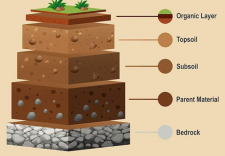
The source of all soil is rock. In particular, it results from the weathering of the mantle rock which is the layer of disintegrated rock fragments that exist in varying depths above the soil rock of the earth’s crust. This component of the earth’s cover often is referred to as the regolith.

In the upper portions of the regolith, rapid weathering takes place. It is this weathering that leads to the development of soil as we know it. Soil covers the earth in a very thin layer when compared to the regolith and bedrock below it. Remarkably, it is this thin layer combined with the proper amounts of air and water that supports life. Only when soil exists can land plants and all the animals they sustain grow and thrive.

For those who have gardens and landscapes, the details of soil complexity may not seem that important. However, without any special training we know that plants grow very well in good topsoil, and very poorly in subsoil. Erosion, construction, and a variety of other processes often leave gardeners and homeowners only with subsoil, or something closely akin to it in structure and appearance, after the topsoil has eroded away or removed purposefully by man.

The question arises then, “Is it possible to grow plants in subsoil?” The answer is “yes,” but with the understanding that the conditions needed for good topsoil—proper proportions of air, water, mineral materials, and organic matter—must be developed in what currently is subsoil. In essence, gardeners and homeowners need to create topsoil as much as possible from subsoil in a few years—a process that takes nature thousands of years to accomplish.

The major portion of any soil consists of its mineral components. The mineral component of soil is made up of particles raging in size from large sand particles, to smaller silt particles, and (finally) to very fine particles of clay. The ratio of sand, silt, and clay is known as soil texture. A mixture of these three particle sizes (in proper proportions) creates a soil texture known as loam. The latter is considered to be soil good for gardening because of its ability to retain water and nutrients, while at the same time allowing excess water to drain through freely.

Another important component of a garden loam is organic matter which is essential for good plant growth. Organic matter improves soil structure by acting as a bonding agent that holds soil particles together in aggregates. Without organic matter, aggregates are less stable and can be easily broken apart. Soil aeration, water drainage, root growth, and biological activity all are affected by the organic matter content of soil.

The average upland mineral topsoil contains from only two to four percent organic matter (by weight). This rather small amount is caused by the continual decay of organic matter by soil microorganisms. Since organic matter is constantly being broken down, it needs to be replaced either by nature of by the gardener on a regular basis. Ideally, soils destined for growing ornamental flowers and vegetables should contain a minimum of five to ten percent organic matter.

Subsoil differs from topsoil in several ways. Perhaps the most important of these is that in subsoil organic matter content is greatly reduced to less than one percent or, in certain cases, none. As mentioned above, organic matter is important for creating soil structure. The latter, in turn, greatly influences the pore space of soil which represents the area in which air and water move, providing essential nutrients and oxygen to plant roots.

In a good soil, such as a silt loam, the pore space may comprise as much as 50 percent of the soil (by volume). Of the 50 percent, ideally half (25 percent) is air space and half (25 percent) is made up of water-holding space. Subsoils, and particularly clay subsoils, contain much less pore space which reduces root activity and (consequently) shoot growth as well.

Since, in nature, organic matter is important in converting subsoil into topsoil, the frequent application of organic matter to poor garden soils will start the process of topsoil development. Compost is ideal but, in many cases, in short supply. Therefore, materials such as tree leaves, grass clippings, straw, organic mulches such as bark and wood chips can be added to decompose and contribute to soil organic matter.

Where large areas must be improved, the use of green manure crops is an inexpensive way to help build organic matter in soil. Grasses with fine, extensive root systems such as annual ryegrass (Lolium multiflorum) are ideal. Because of its vigor and rapid growth rate, a warm-season grass such as a Sorghum-Sudangrass hybrid (a.k.a., Sudex) can add significant amounts of organic matter to poor soil at a time when cool season grasses go dormant.

With the addition of nitrogen and other nutrients to assist organic matter decomposition by soil microorganisms, the process of soil improvement can be hastened. Tilling soil to work the organic matter more deeply into the soil in the early stages of development also speeds the development of a good growing medium from poor soil.

In closing, it is important to be patient since it takes time to accomplish the transition of creating topsoil out of subsoil or, “turning lemons into lemonade.”
Anthracnose of Tomatoes

0
Photo courtesy: KSU

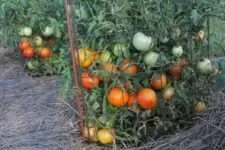
Reports of tomato anthracnose are increasing so it’s time to share some information about how this disease spreads and what can be done about it. As with many problems of the garden, preventative efforts go a long way.

Description: High humidity and frequent rainfall favor development of the fungal disease, anthracnose. Most often seen in the later part of the growing season on ripe fruit, anthracnose reduces the quality and yield of the tomato harvest.

Damage: Symptoms begin as small, circular lesions that are slightly depressed on the surface of the fruit. Spots grow both in diameter of the circles and the depth of the depressions. The sunken lesions give a water-soaked appearance beneath the skin of the fruit. At the center of the lesions are black, concentric rings which are small fruiting structures (acervuli). This is the disease-causing fungus.

During humid weather, the fruiting structures release buff-colored fungal spores (conidia). As lesions grow, they can join and cause the fruit to decay which promotes microorganisms to invade and rot the fruit entirely.

Control: Anthracnose spores survive in plant debris and soil. Spores can get splashed onto fruit during a heavy rain or even with overhead watering. This continues the spread of the disease. Proper cultural practices can prevent this by using mulch over the soil around the tomato plants and removing plant debris from the ground. Promote air flow to reduce humid conditions by staking the tomato plants. Use drip irrigation or a soaker hose to prevent splashing spores onto plants.

Chlorothalonil is effective and has a 0-day waiting period from application to harvest. Products that contain chlorothalonil include, but are not limited to, Fertilome Broad Spectrum Landscape & Garden Fungicide; Ortho Garden Disease Control; Bonide Fungonil Concentrate; Hi-Yield Vegetable, Flower, Fruit and Ornamental Fungicide and GardenTech Daconil.

Cynthia Domenghini, Extension Agent

Composting: What to Add

0
Photo credit: K-State Horticulture

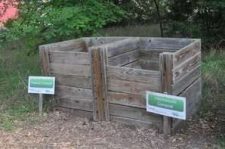
The recipe for the most efficient compost is the right combination of carbon and nitrogen. “Browns” are the materials that have higher amounts of carbon than nitrogen. These are dried items such as leaves, twigs, straw, wood chips and sawdust. It is best to chop up the dried materials to expedite decomposition. “Greens” are the materials that provide a good source of nitrogen such as coffee grounds, egg shells, fruit and vegetable scraps and fresh plant parts. Manure is another green waste that can be added but ensure it is manure from farm-type animals such as cows, sheep, etc. and not pets (dogs, cats, etc.) Pet waste may introduce diseases into the compost

Layer the compost pile alternating between six to eight inches of brown waste and two to three inches of green waste until the pile reaches three to five feet tall. You can wet down each layer of “browns” as you build the pile. This combination of materials creates an ideal environment for microorganisms to get to work decomposing. If you do not have enough “greens,” you can use a garden fertilizer to get the nitrogen benefit.

Cynthia Domenghini, Extension Agent

Fall Planting Time is Approaching for Turfgrass: Buyer Beware!

0

Not all grass seed is created equal. Lower quality seed can introduce unwanted weeds and a lot of extra work to eradicate it later.

Orchardgrass and/or rough bluegrass (Poa trivalis) are the names to watch for when preparing to overseed. These perennial grassy weeds cannot be selectively controlled once introduced to a lawn.

Orchardgrass grows more rapidly and is lighter green than our turfgrasses. It doesn’t spread but creates unsightly tufts of light green bunch grass in the lawn. Rough bluegrass creates fine-textured, circles in the lawn. Initially it can blend in with the other grasses, but turns brown quickly with the summer heat. When temperatures cool it greens up again.

Understanding the contents printed on the label of the grass seed bag will save you from introducing unwanted species. Look for the percent “Other Crop Seed” or “Other Crop” printed on the label. “Other Crop” includes any species grown intentionally such as turfgrasses and pasture grasses. Unfortunately, orchardgrass and rough bluegrass fall into this category. By law, seed labels must identify the percentage, by weight, of “Other Crop Seed” in the bag. However, the species does not have to be named unless it constitutes 5% or more of the contents.

Knowing what percentage of “Other Crop” is too much depends on what the “Other Crop” is comprised of as well as the buyer’s preference. “Other Crop” could include small amounts of a species that will not significantly impact your lawn such as perennial ryegrass in a bag of tall fescue. On the other hand, it could include orchardgrass or rough bluegrass. Since the homeowner has no easy way of knowing what is included in the “Other Crop,” look for a bag of seed where the percentage of “Other Crop” is as close to zero as possible. Quality seed may have 0.01% “Other Crop” or less. “Weed Seed” listed on the label should also be 0.01% or less.

Cynthia Domenghini, Extension Agent

Cool-season vegetables are hot choice for fall garden

0

The recent shift to milder temperatures is a pleasant reminder that it is time for gardeners to plant cool-season vegetables, said University of Missouri Extension horticulture specialist David Trinklein.

Warm days and cool nights make conditions ideal for a second round of cool-season vegetables, Trinklein said. They most often are more flavorful than a spring crop of the same species.

First, pull spent plants and clean debris and weed from the garden. This helps to prevent insects and diseases that tend to be drawn to fall gardens more than spring gardens. Some gardeners use floating row cover to keep insects away, Trinklein says. Row cover is an inexpensive translucent and breathable polyester fabric found at many garden centers.

Next, work the soil lightly and, if needed, add a general-purpose garden fertilizer such as 5-10-5 or 12-12-12 before planting. The need for additional fertilizer depends largely on the vigor of the species previously growing in the space.

Lettuce, beet, kale, collards and some other cool-season vegetables can be planted from seeds. Choose varieties based upon days-to-maturity date. Look for vegetables that can withstand a light frost of about 26 F. Read seed packets for maturity and frost dates. Some greenhouses and garden centers carry started plants of vegetables such as broccoli, cauliflower and kohlrabi.

Keep soils moist until seedlings become established. Scout often for insects and diseases.

As reported in the High Plains Journal