
Cowboys and Quarter Horse breeders have lost one of their very own
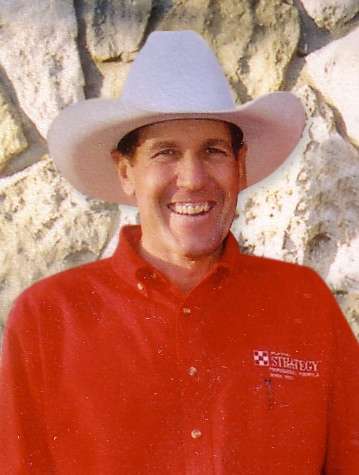
World renowned Quarter Horse breeder, always first a cowboy, Duane W. Walker, 87, passed away July 24, 2023, at his ranch near Canton.
Duane was born on December 18, 1935, at his Ellsworth County home in Carneiro to Raymond C. and Evelyn Mae (Sheridan) Walker.
One of 14 children, Duane acquired his love for horses from his father who worked as a ranch hand on the Fortner and CK Ranches at Brookville.
Duane met the love of his life, Arva Jo Janssen of Lorraine, at the Ellsworth County 4-H Fair in the summer of 1952. He didn’t see her again until later that year when he heard on the radio that she was in the hospital with polio.
Even though Jo was in isolation, Duane was determined to see her and decided to sneak in, with the help of the mail clerk, who was delivering get well cards. They were married on April 10, 1954, and remained inseparable for nearly 70 years.
The Walkers moved to Canton in 1958, where Duane was the manager of the Canton Grain Elevator for more than 40 years.
His passion for horses led him to purchase the gray stallion named Jackie Bee from a local horseman, which would change the course of Duane’s life.
His Tee Jay Quarter Horses, became a world renowned, breeding program, producing numerous American Quarter Horse Association (AQHA) world champions, in multiple categories.
In 2008, Duane and Jackie Bee were both inducted separately into the AQHA Hall of Fame.
In addition to the AQHA, Duane was a member and leader of the Kansas Quarter Horse Association and the Kansas Livestock Association. He served as a trustee for the Canton Community Church and board member of Canton Township.
In 1999, Duane was named Stockman of the Year by the Livestock and Meat Industry Council at Kansas State University in Manhattan. He also was inducted into the Kansas Cowboy Hall of Fame at Dodge City in 2009.
Just a few weeks ago, Duane and Jo were honored at the ground-breaking for a new Animal Science Arena in their name at Kansas State University.
Among their many clients, Duane and Jackie Bee were an integral part of football star player Terry Bradshaw’s Quarter Horse operation for nearly 40 years. Duane considered Bradshaw a friend, colleague, and business partner with mutual admiration of Jackie Bee horses.
Also, among Duane’s nationwide friends and Jackie Bee fans and customers was world champion saddle bronc rider Bill Smith.
Affectionately referred to as “Gramps” by his family, Duane is survived by his wife Jo, and their four children, five grandchildren, and seven great grandchildren.
The funeral was July 29th, 2023, at The Countryside Covenant Church in McPherson with Terry Bradshaw as a eulogist. It can be viewed online https://boxcast.tv/view/funeral-fbaokgjjo35ktes6ajym…
Memorials for the following can be sent in care of Olson’s Mortuary Canton: The Canton Community Church or the Duane Walker K-State Animal Science Arena at Manhattan.
Duane Walker returned to the horse business in 1964, when his oldest son, Tim, needed a 4-H horse. Duane purchased Frosty Money for $300 and the Tee Jay Ranch, named after Tim and Jo, was formed.
Frosty Money went on to win multiple national championships and Duane sold her for $10,000 in 1967.
Later that year, Duane purchased Jackie Bee who that would become kingpin of the Tee Jay operation,
In the 1972 Kansas Quarter Horse Breeders Futurity, Jackie Bee’s foals won more than 50 percent of the purse paid in the halter classes. In five classes, his get won four firsts, one second, one third, and three fourth places.
“If Jackie Bee had been a man instead of a horse, he’d have been the kind of man you’d like to partner up with. The kind of man you’d be proud to call a friend,” Duane said of the horse he shared 23 years of life with.
Foaled in 1962, the gray stallion was sired by Jimmy Mac Bee by Sonny Day Bee and out of a Jack R mare named Jackie Diane. He stood 15.2 hands and weighed about 1,300 pounds at maturity.
Duane and Jackie Bee, with the help of outstanding foundation Quarter Horse mares, started a new family of Quarter Horses that were unique in their look and consistent in their size, structure, muscling, and color.
Duane saw the colt on the day he was born and made several offers to buy him but was turned down for five years. By the time Duane purchased Jackie Bee, the stallion was past the age for a halter career, but Duane was convinced the big gray was just the horse he needed to take his breeding program to the next level.
“We never won any halter classes with Jackie, but we did accomplish what we set out to do. We wanted to get him out before the public,” Duane said. “They liked him, they bred to him, and they bought his foals, and that enabled us to build up our breeding program and stay in the horse business.”
From the early 1970s to the early 1980s, Jackie Bee foals became a fixture in the halter showring. In the 1980s, Jackie Bee foals were sought for their performance ability.
“Jackie liked people,” Duane said. “He’d come up to anyone, anywhere, to be petted and scratched.”
Jackie Bee’s legacy came to an end in October of 1990. After Jackie Bee’s death, at the age of 28, Duane buried him in front of the pen that had been his home for most of his life.
+++30+++
Always A Cowboy, Best Known For Owning Jackie Bee, World Renowned Quarter Horse Breeder Duane Walker Passes Away
Roots of discord (4)
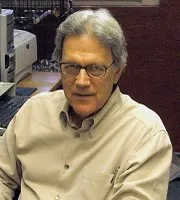
Fourth of five articles on a history of trouble in the Kansas Republican party
Quarrels are inflamed in most political parties, a product of the beast, especially if the beast is dominant in a state. But in recent years, the struggles for attention and power among Kansas Republicans have turned venomous and vindictive. For many members, their party has soured.
Earlier this year at a GOP convention in Topeka, delegates elected a new state chairman, Mike Brown, a hard-right election denier and conspiracy theorist. Brown won a nasty fight by the thinnest margin over a longtime moderate who had preached “inclusion.”
In May, the state committee proposed exclusion. Groups representing women, Black, Hispanic and young Republicans were to be removed from the state party’s executive board. This would secure Brown’s power. The new order ‒ not yet enacted ‒ would also expunge Republicans holding state or federal office, including members of Congress, state executives and legislative leadership.
Brown’s bid for more power against the rising discontent of moderates is another chapter in the party’s legacy of dispute. It follows the trouble reignited during Sam Brownback’s first gubernatorial run in 2010 and the campaign hysterics of Kris Kobach, who was a candidate for secretary of state.
By 2010, Brownback had been Kansas Secretary of Agriculture (1986-’93), a member of congress (’95-’96) and a United States Senator for 14 years. He was unremarkable in Washington, a minor Republican voice known mostly for his pious fervor and his boorish staff.
In Kansas Brownback preached trickle-down economics, abolishing income taxes, banning abortion, funding faith-based education, cutting state aid, and privatizing the state’s social welfare, Medicaid and prison system, among other programs.
Kobach, a hard-right mercenary who had helped draft stringent voter and immigration laws in Arizona and Alabama, was running for secretary of state; he warned of immigrant hordes invading Kansas to flood the polls with illegal ballots.
Both were elected.
Early in his first term, Brownback orchestrated primary election campaigns against Republicans deemed disloyal because they questioned his policies. Eight Senate incumbents were in his crosshairs; six, including the senate president, were purged in the 2012 GOP primary election, replaced with dutiful Brownbackers who won general elections.
*
Over time, Brownback’s tenure and Kobach’s time in office were marked by trauma and embarrassment.
Brownback’s “Glide Path to Zero” income taxes brought the state a billion-dollar budget deficit and near-bankruptcy. Kobach’s charade was unmasked by courts that threw out his unconstitutional schemes, and by a federal judge who ordered him back to law school for a refresher course.
In Topeka the Speaker of the House and Senate President commanded loyalty, preferring to rule rather than lead. Dismayed Republicans, fearful, remained mum. The party had come under the authoritarian spell of special interest crusades and the hardened dogma of President Trump.
But by then Brownback, his popularity gone, left office to become the president’s special ambassador for international religious freedom. Kobach ran for governor.
Brownback was gone but his acolytes remained in Topeka. Republican leaders demanded loyalty to a stringent conservatism, their legislation and talking points scripted by distant cause lobbies and political action committees.
Local concerns were put aside. Immigrant invasions and voter fraud took priority over school finance, fixing bad roads, rising local taxes.
*
For the 2018 primary elections, Republican officials measured candidates for their loyalty. They were to sign contracts that restricted debates to party-sanctioned events with questions screened or scripted in advance.
One candidate for governor, Jim Barnett, would not sign. He had been the Republican nominee in 2006 but was now banned from debates, blacklisted because he had changed. In 2006 he was as far right as Republican conservatives went, and campaigned for governor that way. He lost to incumbent Kathleen Sebelius. Over time, Barnett embraced moderation.
Kobach won the primary election, then lost to Laura Kelly. Voters had grown weary of Kobach’s sharp elbows, his fear-tactics, his authoritarian edge, his fists.
Kansans ‒ Republicans, Democrats and independents ‒ had elected a governor and legislators to pull the state from its pool of red ink, to rejuvenate local schools, restore the highway budget, to fix mangled welfare and Medicaid programs.
As the state turned moderate, the Republican party turned inward, stiffened. The spirit of traditional conservatives ‒ of Landon, Eisenhower and Dole ‒ was shoved aside for the national megaphone, its dogma imperious and absolute. Local matters, community concerns, no longer seemed important.
(Next: Good people, bad politics)
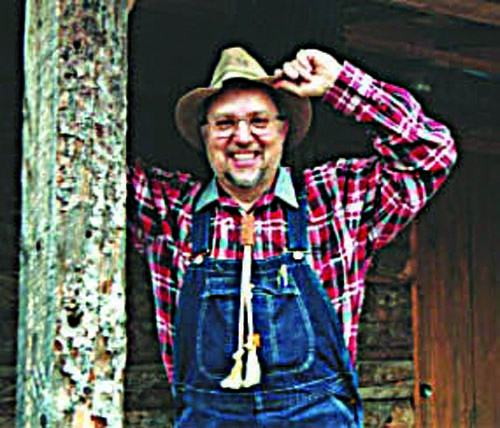
Farmer juggler
Kyle the Kite
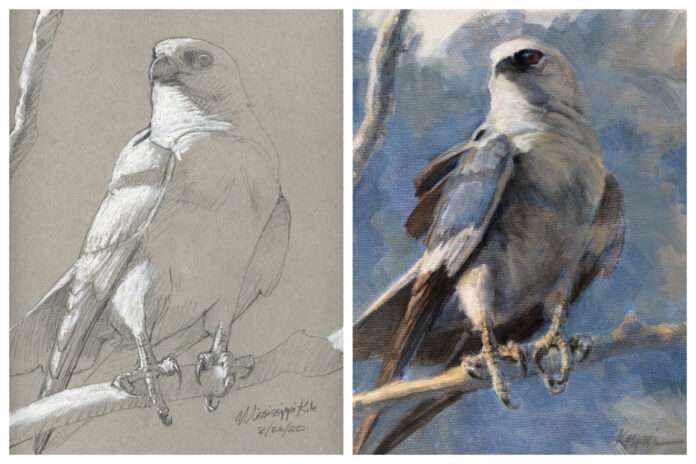
As most of you are aware, over the past few years, most small towns around this part of Kansas have become summer homes to magnificent raptors called Mississippi Kites. They arrive in late April to nest and raise young, then in late October they head to South America for the winter. They are marvelous aerialists, and are mesmerizing to watch as they effortlessly glide and navigate the Kansas winds. They feed mostly on insects, and find a real bonanza here when cicadas first appear. Their call is a high-pitched whistle that is very disguisable and common now during mid to late summer.
On Saturday morning two weeks ago, there seemed to be more “kite whistling” going on than usual, and as I walked around the front of our house in preparation for mowing the lawn, I saw why; an very immature Mississippi Kite chick was standing in the lawn along the house. Evidently having tumbled from a hidden nest we were not aware of, the youngster stood there whistling desperately for its parents. I managed to pick it up without getting pecked or clawed and deposited the youngster in the flower bed out-of-the way. A later check found a half-eaten cicada at its feet, telling us its parents were aware of its plight. Later in the day, as the sun became scorching, we moved it again to a corner in front of the house where the sun never directly shines. A small stack of large clay flower pots was laid on their side and turned around and pushed towards the corner, pretty much hiding the little guy from marauding neighborhood cats and a red fox that hunts our end of town, and giving it a place to crawl into at night and out of the weather, which it made good use of. Having no idea of its gender, we named it “Kyle the Kite.” We spoke to the wildlife rehab people at the Hutchinson Zoo, who told us we were handling the situation correctly by not intervening and by allowing the parents to care for it. They also assured us the chick would indeed be able to fledge from there and fly from the ground, but also warned us that kites are notoriously slow learners and it could take 2 weeks or more for the chick to figure things out.
A big picture window in the front of our home faces west, overlooking two big oak trees in the front lawn. Kyle’s temporary “digs” were just around the corner out-of-sight, but we could see its parents constantly coming and going all day, every day, continuously bring snacks. We put a trail camera on one tree and got some nice pictures of an adult bringing food, and of Kyle strutting and exercising its wings. Joyce checked on Kyle most evenings at dusk, always finding it snoozing in its flower pot shelter.
Fast forward to last Thursday morning. Joyce left early to swim at the YMCA, and when I checked on Kyle a little later, it was nowhere to be found. When Joyce got home, she told me Kyle was standing at the edge of the flower garden when she left, looking all proud and grownup, with lots of new feathers and all, and she just had the feeling today was the day Kyle would take to the air and we would never see it again. Later that day, we observed a mature kite coming and going from one tree in the front yard, and sure enough, there sat Kyle peering down from the branches above, now being cared for where he belonged.
We recently lost a good church friend to cancer; Kyle was his name also. Kyle spent his entire life in a wheelchair, in a body with numerous problems, but when our Savior Jesus took him home, just like Kyle the Kite, he flew away in a new body that finally worked. Continue to Explore Kansas Outdoors!
Steve can be contacted by email at [email protected].
Fire and Freedom at Coronoda Quivira Museum

“Fire and Freedom – Food and Enslavement in Early America’ is a six panel banner exhibit from the National Library of Medicine which opened at the Rice County Historical Society/Coronado Quivira Museum on August 1, 2023.
The exhibit focuses on meals which reflect how power is exchanged between and among different peoples, races, genders, and classes. In the Chesapeake region during the colonial era, European settlers relied upon indentured servants, Native Americans, and African slave labor for life-saving knowledge of farming and food acquisition, and to gain economic prosperity. “Fire and Freedom” peers into life at George Washington’s Mount Vernon plantation and the labor of enslaved workers to learn about the ways that meals transcend taste and sustenance.
Slavery was never benevolent or kind. Because of their status on the plantation, some slaves were awarded extra privileges. These privileges may have included the ability to earn income from selling leftover foodstuffs or their own crops in the marketplace; the opportunity to wear fine clothes; and, permission to travel outside the plantation. Despite these advantages, slaves, no matter how revered or “well-treated,” still longed for freedom.
The United States National Library of Medicine, operated by the United States federal government, is the world’s largest medical library. It is located in Bethesda, Maryland, and the NLM is an institute within the National Institutes of Health.
The Coronado Quivira Museum is located at 105 West Lyon, Lyons, Kansas. Hours of operation are Tuesday to Friday from 10:00 a.m. to 4:00 p.m. and Saturday from 10:00 a.m. to 1:00 p.m. Call (620) 257-3941 for more information.
