Friday, January 16, 2026
Home Blog Page 4690

Long Live The Cow

0
lee pitts

Some market reports show bred heifers selling for $2,700 and young pairs fetching $3,300. And these are commercial cattle! I remember when a whole Gooseneck load of them wouldn’t bring that! These prices are giving cattlemen problems they’ve never had before, like having to hire an accountant and paying income tax. Next thing you know the wife will want to quit one of her jobs in town!

It certainly makes one pause when preg checking. Say an old crippled cow limps into the squeeze chute, is safe in calf but looks like she could die any minute. Do you keep her and take your chances, or do you pay three grand to replace her? I know what I’d do.

I’m aware that slaughter cows are selling well and may fetch $1,500 but you’ll have to double that to replace one. And older cows are experienced, know the ranch, calve easily and have built up immunity to any pathogens on your place.  Most cows are done by the time they are eight but what if you could extend that life expectancy by three or four more years? I read about a purebred Angus cow that is still in production at 17 years of age and she looks like a million dollars.

You really don’t want to lose a cow like that and should want to keep her alive. Now you can.

A cow’s ovaries will outlast her teeth and since cows spend 15 hours a day chewing, teeth become a cow’s limiting factor. You may have read stories about false teeth being implanted into Argentinean range cows with good results. But it‘s nothing new. As a kid we used to watch a television show called What’s My Line? In the show a panel of four pompous washed up Hollywood stars would try to guess the occupation of a person. In August of 1959 a fellow from Colorado appeared on the show and the panelists were not able to guess his occupation: he sold false teeth to cows!
A bridge of eight stainless steel teeth cost just $15 and extended a cow’s life about three years. The guy must have been a poor salesman though because for some reason the idea never caught fire. I think it would now days.

The Argentinean cow teeth take 30 seconds to insert with a simple pair of pliers. Besides the stainless steel teeth there is also a plastic variety and you can go on something called the Internet and see them being made and inserted.

I think this will be the first of a plethora of new geriatric products and devices for bovine senior citizens. Old cows will consume Ensure from troughs with lick wheels and with the combination of dentures and Ensure I’m sure your cows will give you three extra calves and delay the time you have to buy replacements which, if we mess up this market like we always do, will probably be much cheaper.

Just think of the bran extensions, excuse  me, I meant brand extensions, for the bovine gray market including Metamucow, bread pudding, Pavarotti CD’s, Ben Gay for cows, support hose, prune juice, oxygen, hair tint, Fig Newtons, Old Spice, antacids, heavy woolen sweaters, and those cheap glasses you can buy off the rack at the drugstore for nearsighted old cows. Of course, you’ll have to start feeding the cows earlier than usual so they can take advantage of the
early bird dinners.

Geriatric care veterinarians will burn skin cancers off bovine faces, perform cow hip replacement operations, flip off cow cataracts, implant hearings aids and write prescriptions for Lipitor for cows. I’ve seen paraplegic dogs get around thanks to two wheels strapped to their butt so why not cows? It won’t be long before insurance salesmen start selling your old cows annuities and life insurance.

Of course, it makes just as much sense to keep over-the-hill bulls in service longer too and vets will write Viagra prescriptions for older bulls. But don’t worry, anything you buy at the feedstore for senior bovines will get AARC discounts. Better yet, you’ll always have the option of buying it cheaper in Canada.
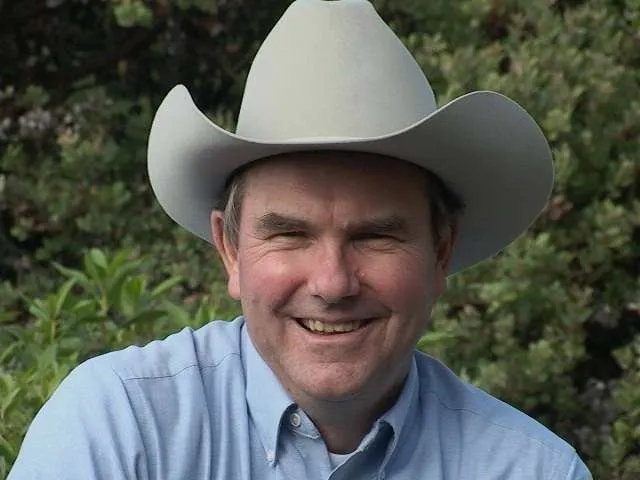
wwwLeePittsbooks.com

Chronicles of the farm woman: Eight grade graduation

0
Farm woman

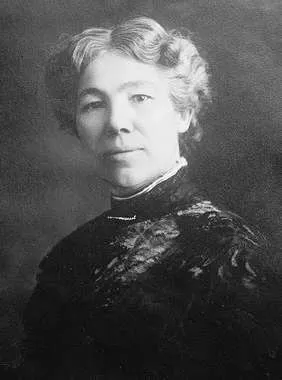
Farmers did not have a holiday last Saturday.  The day was perfect and too few perfect days have come along this spring.  Teams and tractors could be seen in every field all day long.  Some member of the family did take time to go to the cemetery.  While there, one felt that the old timers who have passed on to their reward looked down in understanding.   They had experienced the rush of farm work in their day.

Although Monday was equally as fine a day as Saturday it was a holiday to many farm families. You may not have realized it but Monday was the annual rural eighth grade commencement.  Whether it was making hay, cultivating corn, planting soybeans or canning peas, every-thing was laid aside for the exercises.  A casual onlooker may go to a college or high school commencement but no one goes to the eighth grade exercises unless he is especially interested in one of the graduates. The audience is composed always of beaming parents, school teachers, grandparents and neigh-bors.  It is always a receptive audience for the speaker.

Eighth grade boys who unleashed would prob-ably make a stampede for their reserved seats, marched in as dignified as did the K. U. seniors and faculty in the procession in the stadium the night before.  It was a big moment in the lives of each boy and girl when he or she marched across the platform and received that purple diploma from the hands of Gary Wilson.

The eighth grade graduate is not handi-capped as is the high school or college grad.  The former feels that the world is good  and there is an eagerness to find out more about it. Somewhere in the next four years he will suddenly come to believe there is little in this world he doesn’t know.  And if he chances to go on to college he will become self assured that he knows it all, even more than some of his professors.  The world is his rare and especial oyster.  Fortunately the world is waiting for one such as this.  Disillusionment is swift and certain.

The eighth grade boy rides the tractor down the corn rows today.  He is confident and pleased with his first educational triumph, but not over-confident.                   6-5-42

Dine and Donate set for 11/9

0

dine and donate

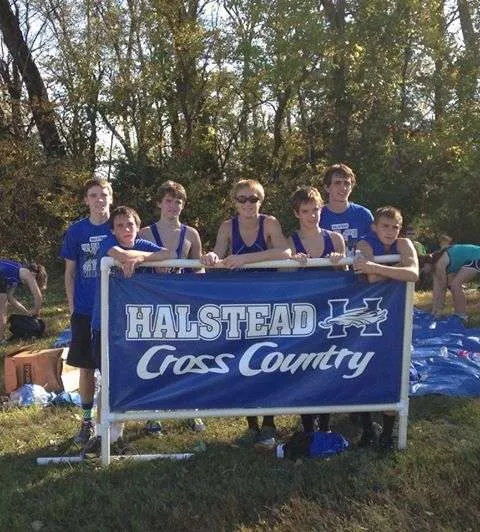
Halstead  boys cross country takes places first at Regionals!

0
Halstead High School - USD 440

Congratulations to coach Curtis Vermillion and the Dragons cross country team for an excellent performance on Saturday.

Good luck at the State Meet!

photo credit – Halstead High School – USD 440

In praise of hunting

0

By John Schlageck, Kansas Farm Bureau

During the early days of our country, settlers hunted out of necessity. While farming and trading provided them with a great deal of food, it wasn’t enough for sustenance. In order to survive, they hunted, fished and trapped wildlife where they lived and worked.

Today, hunting in America offers two major benefits to society: wildlife management and an economic boost.

Protecting wildlife makes sense from an environmental standpoint in today’s society. This allows for future hunting seasons. Wildlife management also ensures overcrowding will be less likely.

Today, most wildlife populations continue to thrive under conservation programs put into place in the early 1900s. For example, the white-tailed deer population was a meager half a million 100 years ago. With careful conservation efforts, plentiful crops, well planned hunting seasons and reasonable limits for hunters, the population has grown to approximately 32,000,000.

Almost every other wildlife species has flourished as well. Most of these animals number in the millions today. This wasn’t the case before the efforts of hunters and wildlife enthusiasts became commonplace.

Just as impressive are the numbers on the economic impact of hunting. With approximately 6 percent of the U.S. population hunting today, business is booming.

For countless small businesses in rural communities in Kansas and across this nation, hunter spending plays a major role in economic success.

Local shops, outfitters, hotels, convenience stores, restaurants and landowners all benefit. In 2011, nearly 13.7 million hunters spent $38.3 billion, according to a 2011 U.S. Fish and Wildlife Service survey.

In addition to the 680,000 jobs supported by hunters, hunting generated $11.8 billion in tax revenues for federal, state and local coffers. Wildlife agency positions are also supported by sportsmen through the purchase of hunting licenses and funds collected as excise taxes through the long-running Federal Aid in Wildlife Restoration

These sportsmen contribute on average $8 million per day, much of which goes toward conservation efforts. Billions of dollars have been used to protect the habitats of fish and wildlife throughout the country.

Through conservation efforts, money generated and jobs created, hunting remains a positive engine in this country’s economic industry. What many fail to understand about this sacred tradition is that it isn’t just about the act itself.

Hunting provides the opportunity to experience nature. Some sportsmen will tell you the best part about hunting isn’t shooting; it is the peacefulness and serenity of being outdoors.

Some may even feel a connection with their ancestry while hunting. It’s also an opportunity to pass such traditions to their children and friends.

For generations, families have shared these experiences and it has strengthened their relationships. It is a visceral feeling that can strengthen family bonds. Hunting remains a way of sharing in nature’s beauty and the dynamic between human and animal have few comparisons in society today.

Hunting prevails as a part of our American identity. Millions of people take pride in hunting. Their experiences are much bigger than themselves and create this community called hunting.

John Schlageck is a leading commentator on agriculture and rural Kansas. Born and raised on a diversified farm in northwestern Kansas, his writing reflects a lifetime of experience, knowledge and passion.      

– See more at: http://www.kfb.org/news/insight/index.html#sthash.atnVQ1xt.dpuf

cover photo – DNR Wildlife and Heritage