Saturday, February 7, 2026
Home Blog Page 389

Now its time

0
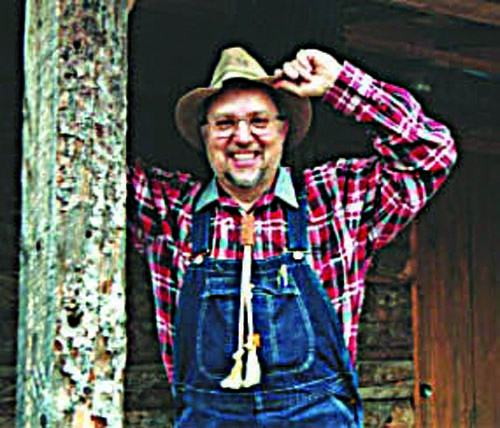
photo credit: K-State University research and extension

So, what can I still plant in my garden? We’re still in the beginning stages of the vegetable garden season. Now its time to plant the next round of garden produce to keep the harvest growing!


What can you plant after the cool season vegetables are winding down? Warm season produce is next. You can still plant cucumber, melons, peppers, pumpkin, squash, sweet corn, sweet potato, tomato, tomato and watermelon. Lots of things can still be planted!


Cucumber Cucumbers are warm-season crops that traditionally have required a lot of garden space. With a trellis or newer compact varieties, cucumbers may be grown in small spaces and even in containers. An increasing diversity of cucumber types are available to a home gardener. Some types of cucumbers are best grown in a greenhouse or high tunnel, but many will grow well in a regular garden.


• Pickling. These varieties are short and blocky in shape, with a firm flesh that makes a crisp pickle. They frequently have very prickly skin.

• Slicing. Slicing cucumbers are long and slender, with a dark-green skin. They are usually not as prickly as pickling cucumbers.

• Asian cucumbers. These cucumbers are also long and slender with relatively thin skin but can have prickles. They have been bred to be both burpless and bitter-free.

• English or greenhouse. English cucumbers are very long with very thin, tender skins. They are usually grown in a greenhouse and may not be as heat tolerant.


Variety considerations. There are many types of cucumbers with range of plant characteristics to consider when selecting varieties. There are certain varieties that have a more bush-type growth habit and would not need trellising. The majority of cucumbers will need some sort of trellis or lots of space to grow.


Be aware that some heirloom and older hybrid varieties can be more susceptible to developing bitterness during the heat of summer or due to other stress on the plants. Look for varieties that are bitter-free for best eating qualities during a hot summer. Choose varieties that are resistant to powdery mildew and other diseases.


If planting cucumbers for a fall crop or for early season harvest in June, be sure to look for varieties that have fewer days to maturity. It may also be helpful to look for types that are more likely to perform well under cooler conditions.


When to plant. Cucumbers require warm conditions with no danger of frost for best results. Soil temperatures should be approaching 60°F, which occurs in early May in most of Kansas. Using black plastic mulch to warm soil is a way of producing cucumbers earlier.


Spacing. Cucumbers are usually spaced 2 feet apart in rows 5 to 6 feet apart. However, bush types may be spaced 2 feet apart in rows 3 feet apart. If planting on a trellis, space plants about 2 feet apart along the trellis.


Crop rotation. If possible in your garden space, do not plant cucumbers in an area where melons, squashes, pumpkins or cucumbers have been planted in the past 3 to 4 years.

Care. Cucumbers may be transplanted by starting seeds in large containers and moving them carefully to the garden area, taking care not to disturb the roots. Do not let transplants get larger than one or two sets of true leaves or start to vine before planting.


Cucumbers are fairly shallow-rooted and require caution at initial cultivation. One application of fertilizer along the row when the vines are 6 to 12 inches long will improve production into the bearing season. Cucumbers can be grown on a trellis or cage, but you may have to help the vines get started up the trellis.


Avoid areas where strong winds may damage vines on the trellis. Cucumbers have separate male and female flowers on the same plant. Male flowers predominate and usually appear before female flowers start to develop. Many newer cucumber varieties are of the gynoecious type or have a larger number of female flowers for higher yields. Bees are required to transfer pollen from male to female flowers for the fruit to develop.


Harvesting. Select firm, dark-colored cucumbers developed before the seeds have a hard seed coat and while the skin is tender. Small cucumbers may be harvested for pickles at any stage. Removing large, overgrown fruits will keep vines productive longer.
Kindness is the Best Medicine

0

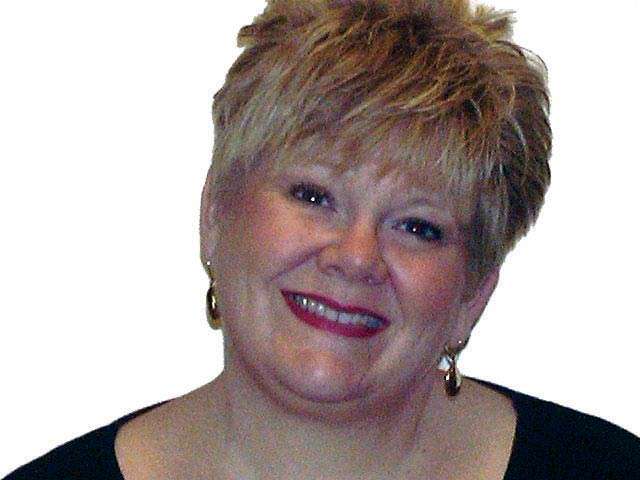
“Kindness is the Best Medicine” by Joanie Holm, RN, C.N.P. My name is Joanie Holm. I am a certified nurse practitioner in Brookings, South Dakota and I am the person fortunate to have been the life partner of the original Prairie Doc, Richard P. Holm, M.D. Rick and I were married for 40 years before his passing in March of 2020.

During those wonderful decades together, if I could point to one powerful action that strengthened our relationship with each other, with our family, our community and with our patients, it would be the act of kindness.

Thankfully, Rick was alive to see the recognition and formalization of kindness as an essential element of medical education. Medical schools across the country have started to offer courses on compassion and caring. One of the first to do so was the University of South Dakota Sanford School of Medicine.

When Dr. Mary Nettleman was Dean of the USD medical school, she explained why the school embraced kindness as part of its core curriculum at the time. “People want a physician who is not only competent, but also kind, so we will work to elevate this value throughout the school. By approaching this intentionally, we hope that students will learn how important kindness is in medicine and how they can incorporate it into their everyday practice. A culture of kindness can make us exceptional,” said Nettleman.

I celebrate this awareness and elevation of kindness in medical education and I salute educators for enriching their medical students in this way.

Since Rick’s death, I have received many wonderful notes of condolence that have been very meaningful to me and my family. With permission from the author of one such letter, I share the following message which further illustrates kindness.

Dear Mrs. Holm, I’m one of the people who knew your husband through his TV show, and I learned from him. I have cerebral palsy and sometimes it’s hard for people to understand me. One day, my mom and I were having dinner in Sioux Falls and you were seated close to us. When Dr. Holm walked by my table, I put my hand out and he stopped and talked to me. I wanted to tell him that we were praying for him and I will never forget how he made me feel. I have worked with many doctors and he was one of the best!

My dear husband practiced kindness in all he did. Regardless of our profession, may we all embrace acts of kindness and stop to hold the outreached hand of a fellow human being.

Joanie S. Holm, R.N., C.N.P. is co-founder and president of Healing Words Foundation that supports Prairie Doc® programming. Follow The Prairie Doc® at www.prairiedoc.org and on Facebook featuring On Call with the Prairie Doc® a medical Q&A show providing health information based on science, built on trust for 21 Seasons, streaming live on Facebook most Thursdays at 7 p.m. central

Pancake Syrup

0

What a great weekend. I took a neighbor and we journeyed down to Persimmon Hill Farms in Blue Eye, MO for a few pounds of fresh berries and ‘extras’. Brought home a famous ‘thunder muffin’ and blueberry scone. Plus, Debbie’s favorite ‘Amaretto Blueberry Sauce’, as I tell everyone: ‘Just give me a straw, this sauce is so good!’ Ice cream, pound cake, cheesecake this syrup is a dream. I used it for years at Silver Dollar City because it took my lemon pound cake to a whole new level. If you want to visit Persimmon Hill you can pick your own berries or purchase them already picked, as I did.

As a girl growing up my mom always served blueberry pancakes with a homemade blueberry sauce. Moms was made using cornstarch, which gave it a bit of a congealed look after it totally cooled. I’m not a fan of the appearance using cornstarch, plus you cannot ‘can/process’ with cornstarch inside a jar. I went with the use of pectin, and I’m pleased with the outcome. If I didn’t have pectin, I would probably place minute tapioca in my coffee grinder until it was almost powder-like in appearance and use this as a thickening agent. Drawback; this is a form of a flour now and it will not process properly in the canning process.

In this recipe I used 2 full cups of blueberries, and I truthfully think I could have used somewhere between 1 and 1 1/2 cups of berries. The strength of the syrup was very strong, great taste, however very dark in color. See my notes at the bottom of the recipe for other inputs on this subject. Without a doubt everyone felt the 1 cup of sugar was just right!

You could also experiment with a combination of maple syrup and blueberry together, lots of people enjoy this approach today. Sadly, I didn’t have any canned whipped cream on hand this morning, or that would have been yummy too.

Pancakes happen to be one of my favorite foods. Sometimes I want to pinch folks who complain that someone didn’t use ‘scratch’ pancake batter. Let’s let that go in one ear and out the other. If it’s a good mix, they will be delicious because you took the time to make them. Today I used a mix and I didn’t tell anyone that I

also added 2-3 tablespoons of cornmeal to the mix. Everyone thought they were wonderful!

Here are just a few ‘Debbie’ pancake tips:

1. Pre-heat the oven to warm or 200. Keep the cakes in the oven until you are done making all of them. Mom would do this ‘sometimes’, but most of the time she made each of us a plate right off the griddle. Here’s what’s wrong with that approach, the cook eats last, and often alone. It feels a bit disrespectful, but let’s remember years ago women did this sort of thing

a great deal. Today, it’s just not acceptable.

2. I do brush my griddle with butter or olive oil between each batch of cakes.

Usually it’s oil, because the leftover butter gets browner and browner.

3. Easy additions to pancakes are smashed bananas & maybe toasted chopped pecans. Another favorite is to add applesauce to the batter.

4. Family in McPherson, KS taught me to make pancakes with white soda pop, it gives a tremendous lift to the cakes.

5. Let the batter sit 5-10 minutes after you stir it up, a few lumps are just fine too. DO NOT put pancake batter in a mixer, use a spoon!

6. Sausage, not fried like a patty! Fried, drained, crumbled sausage. Drop the pancake batter and then sprinkle maybe a tablespoon of sausage on the top. Flip as usual. These are called Grandpa’s pancakes at our house. My dad, Jerry, loves his pancakes this way, now all his great grandkids do too.

7. How to scoop out pancakes? Use a 3-tablespoon scoop. Each one will be consistent in size and will bake evenly.

8. In the column I share the easy blueberry syrup, but you know I have another idea. If you ever get in a big bind purchase blueberry jam. Thin it down with a bit of water, use a whisk to get it smooth, you could even thin it down with white soda, perhaps a lemon lime. Heat thoroughly. I almost did this the last time I made blueberry cakes for my dad. I stopped on the way home for berries, there were none in the store. We just used maple instead, but hey, I’m pretty sure all of us could make this work.

9. Melt the butter for pancakes, believe it or not it saves on the amount used.

10. We use ‘real’ maple syrup, and the usual grocery store labels. The real maple syrup should be kept in the refrigerator, the processed kind has LOTS of preservatives and can be kept in the cabinet. Believe me, you don’t want to use the maple syrup and see mold all over an $8. bottle.

Just wondering why we can’t keep the homemade syrup going during peach and apple seasons????? It’s better for the family.

Alrighty, get the pancakes flippin’, and enjoy a big breakfast with the family. Oh yes, pancakes just happen to be a very economical way to entertain. We always used pancake breakfasts to help raise money for church camp each year. Simply yours, The Covered Dish.

Blueberry pancake sauce

2 cups squished berries, wash first, of course,

1 cup water

1 tablespoon pectin

1 tablespoon butter

1 cup sugar

1/2 teaspoon almond flavoring, after it has cooled for about 10 minutes. *

OR fresh lemon zest, omitting the almond flavoring.

Small berries for cakes, chunky berries for sauce.

My Surejel had 4 tablespoons of powdered product, I suggest measuring it out every time.

Follow the instruction on the pectin box as if you were making jam.

Canning the sauce: I believe you could only do 1-1/2 cups of berries, and still be pleased with the outcome, I would raise the water content for every 1/2 cup less of berries, add 1/2 cup of additional water. After the jars are filled with the hot product, seal with flats and rings, then hot water bath boiling the jars about 10 minutes for 2-3 jars. Remove from bath, listen for the pings, and monitor for sealing. If it didn’t seal feel free to use a new flat and redo the process. Do all the jars make a ping, nope, not always.

*If you are making these cakes and sauce for a bunch of Northeast Missouri farmers, I would totally omit the almond flavoring, or use only 1-2 drops, so they are hardly aware of the undertone.

Our Amazing World

0

The world is a very interesting place. It’s filled with wonder and creativity that fills even the most adventurous of souls. To speak more literally, I mean to say that there are so many different things that we can experience that most of us don’t even know about. Too often we focus on the bad things that come across our news headlines. Instead, why don’t we take a journey through the strange, terrific, and absurd things in our world today? Trust me, there are a lot of them.

Over the past couple of weeks, we’ve heard a lot of news about the warming climate, and how the ice caps have been melting for a long time now. Climate change is a real threat, but that’s not the only interesting thing happening in the polar regions. Interestingly enough, Antarctica, which penguins and frozen scientists primarily inhabit, has been developing small parts of its own regional culture. Scientists have noted the emergence of a distinctly Antarctician Accent among the researchers there. The most notable changes were reports of their ‘o’ vowels changing to be placed at the front of their mouth rather than the back like us Midwesterners. Who knows, maybe they’re all secretly trying to imitate Canadians over there.

One absurd story comes to us from California (of course), where the world’s oldest tree, Pinus Longaeva, is found. Arborists and scientists have been working together to try and clone many species of the oldest trees in the world. Methuselah the oldest tree in the world, is thought to be over 5000 years itself! The reasoning behind this cloning? To save the ancient species from the warming effects of climate change and the drought-ridden landscape of the region. Honestly, I can’t blame them too much. If I had a tree over 50 centuries old in my backyard, I’d want to save it too.

This next story is quite literally out of this world. NASA has been racing China to the moon as of late with its new Artemis program. The eventual goal of which is to establish a permanent moon base which will be used as a launch pad to Mars. It’s exciting stuff to think that it’s going to happen in our lifetime. On National Public Radio just this last week, a building entrepreneur who developed 3D printing concrete machines already has plans in place for construction on the lunar surface. In fact, I would encourage you to keep up with NASA’s news outlets, because they do cool new things on a daily basis.

Back here on Earth, we have some more wild news that comes to us from the Florida Everglades. As many of us North Americans know, invasive species are a real problem in our half of the world, and the Everglades are no exception to this. Burmese Pythons have been destroying the natural ecosystem by overfeeding on rabbits and other rodent populations in the area. It’s gotten so bad that the Florida Government will pay people who kill and bring in remains of pythons. In fact, there are some Kansan residents who plan to do just that towards the end of this Summer. Can you imagine, the thrill of hunting and killing large reptiles? And getting paid for it? Sounds like a summer vacation to me!

With all that being said, there are so many different pieces of interesting information out there in the world that we all should get to enjoy. Our world is a crazy place, and it’s always fun to dig a little deeper into what’s going on.

Tip-top horse racing tip

0
Thayne Cozart
Milo Yield

Regular readers are aware that I am an unapologetic enthusiast of horse racing. As such, I have keenly watched the first two races of Thoroughbred’s Triple Crown — the Kentucky Derby in Louisville and the Preakness in Baltimore. Mystik Dan won the Derby and Seize the Grey won the Preakness.

I’m writing this column on Wednesday and the third leg of the Triple Crown — the Belmont Stakes at Saratoga in New York — will be run Saturday. So, you’ll be reading this column after the Belmont is in the books.

Now, I don’t claim to be an expert in horse racing, but I do know that, while the horse trainer is important, it’s who the trainer hires as the jockey on the horse’s back during a race that is most often the deciding factor in winning or losing. The jockey is tasked with expediting the race instructions and strategies given to him by the trainer prior to the race.

Given that obvious fact, I’ve given a lot of thought how the trainer and jockey can greatly improve the odds of their horse winning. I’ve come to the conclusion that the single most important factor that a trainer can look for in a jockey is effective communications.

And, the single most important communications tool a jockey can develop is to train himself to “throw” his voice like a ventriloquist.

Now picture this race strategy unfolding if the jockey can “throw” his voice. First, he breaks from the starting gate and goes all-out, pell-mell, hell-bent to be leading the field at the first turn. From there to the finish line, every time a horse attempts to pass the ventriloquist jockey, the jockey covertly throws the word “WHOA!” at the horse’s ears. Since every race horse understands “whoa” means to stop, then the opposing horse eases up and the jockey’s horse stays in the lead to the finish line and collects all the winning and accolades.

My suggestion could lead to fame and fortune for trainers and jockeys who normally don’t have horses that win big races very often.

***

I’ve had a lot of interesting and enjoyable things going on in my life lately. A couple of weeks ago I went to the historic Carnahan Church on the east side of Tuttle Creek Reservoir for an educational event and book signing. Kansas author Eric T. Reynolds of Eureka has penned a “time-travel historical novel” entitled “The Lost Town of Garrison.”

It’s a novel based on all that happened during the building of Tuttle Creek Reservoir by the U.S. Corps of Engineers in the late 1950s. The new lake ended up drowning out 10 little rural communities in the Blue River Valley north of Manhattan, Kan. The actual town of Garrison was one of those 10 inundated towns.

I haven’t finished the novel yet, but for folks who might be interested the book was published by Hadley Rille Books in Kansas City. Information can be found on the internet at www.hrdpress.com or email at [email protected].

***

Nevah and I had a most welcome visit recently by Mrs. P. N. Cilpusher, a near lifelong friend now residing in Rogers, Ark. Sadly, during her visit, a severe storm and tornado tore through Rogers and did a lot of damage to homes and biznesses, including our friend’s accounting bizness and the homes of her two sons. Thankfully, it wuz only minor-league property damage and no one wuz injured.

While she wuz visiting, we toured the KSU campus and walked through the university’s arboretum and formal gardens. Plus, she and Nevah went to Wamego, Kan., and visited the Wizard of Oz museum.

Then on her last evening with us, we went “country crusin'” in northern Riley County with our daughter and son-in-law on their fancy road-equipped utility vehicle. We traveled about 40 open-air miles that evening and saw an abundance of wildlife — including five pair of bobwhite quail on the road, four bunches of wild turkeys, rabbits and squirrels. I’ve not seen that many pairs of wild quail for a goodly number of years. Hopefully, it wuz a sign that the quail population is rebounding in the northern Flint Hills.

***

Speaking of wildlife, on our recent trip to our old stomping grounds near Parsons in southeast Kansas I counted 26 roadkill wild animals. They included two deer, a coyote, and numerous raccoons, possums, and (yippee) armadillos.

All those dead critters made me wonder why so many get ran over? Is it purely accidental or are they attracted to roadways by something? It’s a mystery but, for sure, lots of wildlife are destroyed by vehicles and vice versa.

***

Another unfortunate wildlife notice. Recently, a very good friend at Cottonwood Falls wuz bitten on the hand by a small massassagua rattlesnake. She wuz working in her flower bed when she got bitten. She got quite ill, swelled up, and spent some time in the hospital while the anti-venom medicine did its job.

To my knowledge in all my years in Kansas I’ve never seen a massassagua rattlesnake. They are quiet lethal, but rare. Her experience wuz an object lesson that it pays to keep a sharp eye peeled when outdoors in Kansas.

***

A sad note to mention that Pat Gottsch, the founder of RFD-TV, recently died. All of us rural folks who enjoy all the entertainment and information that RFD-TV brings into our lives certainly owe Pat Gottsch a full measure of our appreciation. Pat was a true north star for Rural America.

***

My bumper-snicker words of wisdom for the week: “Sorry if my political views offend you. But, the future of my country is more important than your feelings.” Have a good ‘un.