Monday, February 9, 2026
Home Blog Page 421

Rice County Historial Society

0

“A Place to Call Home” is currently on display at the Rice County Historical Society/Coronado Quivira Museum and will run until July 31, 2024. The exhibit from the Smoky Hill Museum provides stories from people who risked it all to settle in Kansas.

The stories reveal the decisions immigrants made, the hardships they faced, and the hope that brought them to a new home of the Plains.

The Coronado Quivira Museum is located at 105 West Lyon, Lyons, Kansas. It is open Tuesday through Friday from 10:00 a.m. to 4:00 p.m. and on Saturday from 10:00 a.m. to 1:00 p.m. For additional information call (620) 257-3941 or go to www.cqmuseum.org.

Cucumber Beetles and Bacterial Wilt

0

Description: Cucumber beetles can either be striped or spotted. Striped cucumber beetles are more common with ¼-inch long bodies, black head and antennae, straw-yellow thorax and yellowish wing covers. There are three parallel longitudinal black stripes down the body. Spotted cucumber beetles have 12 black spots on the wing covers with yellow
on the underside of the abdomen.

Life Cycle: There are two generations of cucumber beetles each year. They overwinter
as adults. After mating the females lay eggs in the soil at the base of cucurbit plants
making it easy for larvae to feed on roots when they emerge. Two to three weeks later
the larvae pupate in the soil giving rise to the second generation later in the growing
season. It takes about four to six weeks for a single generation to go from egg to adult.

Damage: Cucurbit plants are targeted by cucumber beetles whose feeding reduces
growth and can cause plant death. Young pumpkin and squash plants are common
targets. Holes in leaves, stems, flower and fruits caused by feeding can affect yield.
Cucumber beetles also transmit the disease, bacterial wilt, which causes sudden
browning and death of cucumbers and muskmelons. Once infected the plant cannot be
cured making prevention key.

Control: Protect young plants now by using row covers, cones or another physical
barrier. Seal the edges of the barrier to prevent beetles from entering. Use transplants
which can stand up to bacterial wilt better than seedlings. Mulch with straw around
plants to create a habitat for predators such as wolf spiders. Remove crop debris after
each growing season and manage weeds. Monitor plants regularly and manually remove cucumber beetles. Sticky cards can be used to help monitor for pests present in
the garden.

Insecticides with permethrin (Bonide Eight Vegetable, Fruit & Flower Concentrate and
Hi Yield Garden and Farm Insect Control) can be used when pollinators are not present.
Always follow all label instructions and only use insecticides in combination with proper
cultural controls.

KS Extension Office

Tips on protecting gardens during storm season

0

K-State horticulture expert shares how to help gardens through severe weather

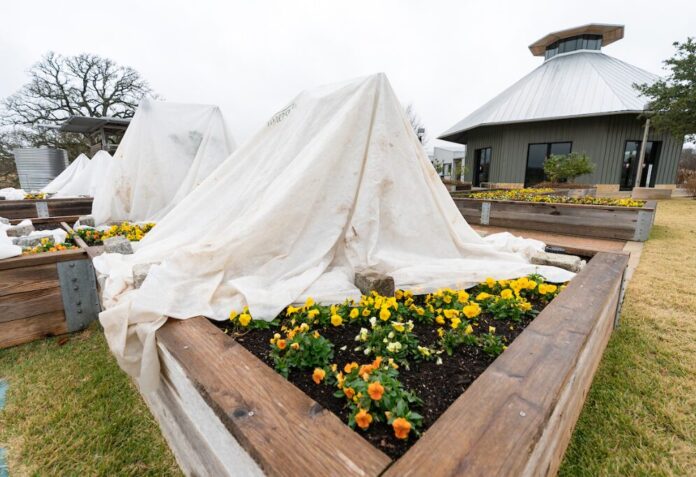
Storm season can be stressful for many reasons, but for Kansas gardeners, protecting their plants is a priority.

With Kansas’ storm season in full swing, Kansas State University horticulture expert Cynthia Domenghini has tips on how to protect and recover gardens from severe weather damage.

“We are entering storm season and various areas of the state will likely have high winds, excessive rainfall and hail,” Domenghini said.

Domenghini’s recommendations include:

Heavy Rain

“The force of rainfall pounding on the soil can result in a thick crust that prevents seed emergence and partially blocks oxygen from reaching roots,” Domenghini said. A shallow cultivation with a rotary hoe or other tool can break up the crusted soil. Domenghini cautions against deep tiling as it could damage young, tender roots.

Standing Water

“Standing water cuts off oxygen to the roots, which can result in plant damage if it doesn’t drain quickly enough,” she said. Plants can sometimes handle 24 hours of standing water, but hot weather following the rainfall can cause the water to become hot enough to ‘cook’ the plants.

“There isn’t much that can be done about this unless a channel can be cut to allow the water to drain,” Domenghini said.

Hail Damage

Hail damaged plants should recover quickly as long as only the leaves were damaged. If stems and fruit were damaged the situation may become more serious. “The plant can recover from a few bruises, but if it looks like the plants were mowed down by a weed whip, replanting is in order,” Domenghini said.

Leaning Plant

“Either wind or water can cause plants to lean,” Domenghini said “They should start to straighten after a few days.” She does not recommend trying to bend them back as the plants often break easily.

Domenghini and her colleagues in K-State’s Department of Horticulture and Natural Resources produce a weekly Horticulture Newsletter with tips for maintaining home landscapes and gardens. The newsletter is available to view online or can be delivered by email each week.

Interested persons can also send their garden and yard-related questions to Domenghini at [email protected], or contact your local K-State Research and Extension office.

Dig safe, plant happy: prevent injuries in the yard and garden!

0

Whether you’re a weekend gardener or you spend time in the dirt daily, you have probably experienced working too hard and feeling sore. Soreness can stem from exerting a new or weak muscle, and it generally subsides after a few days. But pain that lingers can occur from overworking or doing a task incorrectly. These types of injuries can be considered “traumatic,” such as a rotator cuff injury, or they can be a “repetitive strain injury,” which occurs in muscles, tendons, and nerves from repetitive movement or overuse, mainly seen in the hands, wrists, shoulders, elbows, knees, and lower back.

Consider these tips to prevent injuries and minimize pain while working in the yard and garden.

  • Treat gardening like exercise. Warm up, stretch to loosen sore muscles and joints, and cool down. A warmup can be dynamic stretching, jogging, etc., but it can also include walking around the garden, which has the added benefit of you seeing areas that need work and determining which tools you’ll need.
  • Drink water before, during, and after gardening. Sports drinks are not necessary unless you’re working for more than 1 hour and sweating or doing strenuous work.
  • Wear comfortable, breathable clothing with long sleeves, tall socks if possible, and closed-toed shoes with ankle support, such as hiking shoes or sneakers.
  • Wear sunscreen and a hat, even if it’s cloudy. Wear sunglasses for eye protection. Look for broad-spectrum sunblock with an SPF30 or higher, and follow the reapplication instructions on the label to get the best benefit. Also consider mosquito repellant if needed, but avoid sunblock/repellant combinations because sunscreen should be reapplied more often than repellant.
  • Use ergonomic tools and equipment to make tasks easier. Ergonomic attachments, such as handles, can be purchased to retrofit existing tools.
  • Switch it up. If you’re doing a task that favors one side, such as raking or shoveling, switch to the other side every few minutes. If your task includes kneeling, have your next task focus on standing. Change tasks every 20-30 minutes to alternate the muscles used, and stretch as needed.
  • Take a break every 5-10 minutes when trimming tree branches and performing other overhead tasks that require looking up or having your arms at or above your shoulders. If necessary, use a ladder so your body is in line with the task.
  • When working low to the ground, kneel rather than crouching or squatting, and use a foam mat or knee pads. Kneel on one knee while keeping the other foot flat on the ground for support. This helps avoid hunching and keeps your back straight. Alternate legs every few minutes.

Use the proper techniques and posture to avoid injuries and strains to your neck, shoulders, knees, wrists, ankles, and back. Consider these three techniques:

  1. Squat—This exercise is used for picking up and putting down items. It engages the quads, hamstrings, hips, glutes, and abdominals and helps avoid strain to the back, knees, ankles, neck, and shoulders.
  2. Pivot technique—This technique allows you to change directions without twisting. It works well for shoveling and dumping dirt or moving bags and other materials from one side to another. It also helps avoid strain to the back, knees, and ankles.
  3. Back-and-forth weight transfer—This technique is used to move items back and forth with a long-handled tool, such as a rake. This helps avoid hunching over, pulling, and twisting and uses larger leg muscles that prevent straining the back, shoulders, and arms.

Managing storm damaged trees

0

K-State expert says not all trees should be salvaged.

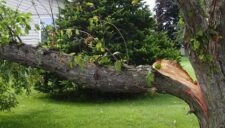
Recent storms across the Midwest left many homeowners with damaged trees from heavy wind and rain. Kansas State University horticulture expert Cynthia Domenghini shares tips to manage storm-damaged trees:

Not all trees should be salvaged. Trees with bark that has split and exposed the cambium or those where the main trunk has split are not likely to survive.

“Trees with so many broken limbs that the structure is altered may best be replaced,” Domenghini said. “Though these trees may produce new growth, they are under such extreme stress they are much more susceptible to diseases/pests and can be dangerous due to increased risk for further breaks.”

Prune broken branches to the next large branch or the trunk. Domenghini cautions against cutting branches flush with the trunk, cut to the collar area where the branch attaches to the trunk.

“Cutting flush to the trunk creates a larger wound that takes longer to heal,” Domenghini said.

Cut back large limbs progressively. The first cut should be made on the underside of the branch about 15 inches away from the trunk. Cut about one-third of the way through the limb.

The second cut should be made on top of the branch but about two inches further away from the trunk, creating an angle when joined with the first cut. This will cause the branch to break away.

The third cut should be made at the collar to remove the resulting stub.

Domenghini and her colleagues in K-State’s Department of Horticulture and Natural Resources produce a weekly Horticulture Newsletter with tips for maintaining home landscapes and gardens. The newsletter is available to view online or can be delivered by email each week.

Interested persons can also send their garden and yard-related questions to Domenghini at [email protected], or contact your local K-State Research and Extension office.