Thursday, February 12, 2026
Home Blog Page 457

Understanding Your Knife Rights in Kansas

0

Knives are versatile tools with a wide range of uses, from everyday tasks to outdoor excursions. However, knife laws can be complex and vary from state to state. Understanding your knife rights in Kansas is essential to avoid any potential legal issues and ensure you’re carrying and using your knives responsibly.

A. State Laws

Kansas has remarkably permissive knife laws. The state places very few restrictions on the types of knives you can own, carry, and use. Here’s a breakdown of what you need to know:

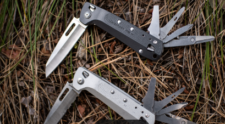
  • Definition of a Knife: Kansas law broadly defines a knife as “any cutting instrument consisting of a sharpened or pointed blade.”
  • Blade Length: There are no statewide blade length restrictions in Kansas. You can legally carry knives with blades of any length.
  • Illegal Knives: The law does prohibit certain types of knives, primarily those designed to be hidden or used primarily as weapons:
    • Ballistic knives
    • Switchblades (Automatic knives)
    • Blackjacks, slungshots, billy clubs, sandclubs, metal knuckles
  • Exceptions: The law may have exceptions for using knives during hunting, fishing, or other lawful activities.

B. Local Laws

While Kansas has no statewide restrictions for most knives, specific cities or municipalities within the state may have their own knife ordinances. These local laws could be more restrictive than state laws. Important points to remember:

  • Check Your Local Ordinances: Always research local regulations governing knives in your specific city or county. You can find this information on the official websites of cities like Wichita, Topeka, Overland Park, or by contacting local law enforcement.
  • Potential Restrictions: Local laws might place restrictions on blade length, carrying methods, or prohibit certain knives in design

    Carrying Knives in Kansas

    Kansas allows both open and concealed carry of knives. Here’s what this means:

    • Open Carry: You can legally carry a knife visibly on your person, in a belt sheath or holster, for example.
    • Concealed Carry: You can carry a knife hidden from view, such as in a pocket or bag. There are no permit requirements for concealed carry in Kansas.
    • School Property: Carrying knives of any kind on school grounds is generally prohibited. Consult your school district’s policies for specific information.

    Using Knives in Kansas

    While Kansas laws are lenient towards owning and carrying knives, it’s crucial to understand restrictions on their use.

  •  

    Threatening Behavior: Using a knife to threaten or intimidate someone is a crime, regardless of the blade length.

    • Self-Defense: Kansas law recognizes the right to self-defense. You may be justified in using a knife to defend yourself or others if you reasonably believe there’s an imminent threat of serious bodily harm. However, it’s important to seek legal counsel if you are involved in a situation where the use of a knife for self-defense is involved.

    Conclusion

    Kansas offers its citizens broad freedoms when it comes to knife ownership and carry. It’s essential to be aware of restrictions on specific types of knives and potential local ordinances. Remember, carrying a knife is a responsibility. Always use knives safely and avoid situations where they could be perceived as a threat.

    Disclaimer This article provides general information on Kansas knife laws. It is not intended as legal advice. If you have specific questions about your knife rights or legal situations, please consult with a qualified attorney.

Are My Leftovers Safe to Eat?

0

Have you ever wondered how long you can keep your leftovers or if the canned goods in your pantry are safe to eat? There is an app for that! This free resource was created by the USDA and is available for both Android and Apple devices. If you don’t have a smart phone, you can access a less extensive version on the internet. The purpose of the app is not only to help consumers maximize the freshness, quality, and safety of food but also to provide cooking tips and cooking methods for meat, poultry, and seafood, along with food recalls. You can even set up an alert to remind you when your food items are nearing their recommended storage date so you can make sure and get them used up.

Feel free to call Sara Sawer, the Nutrition, Health, and Wellness Agent at 316.660.0118 with these types of questions or check out this resource at https://www.foodsafety.gov/keep-food-safe/foodkeeper-app

Spring Lawns & Summer Weed Control

0

Warmer tempuratures and rain are sure to bring green growth, spring flowers, and of course, summer weeds. Now is the time to take action and apply a pre-emergent product that can help eliminate many summer lawn & garden weeds before they become an issue.

Crabgrass, grassy sandbur, goosegrass, and spurge are all weeds we commonly see in lawns & flowerbeds, all of which can be controlled this month with a pre-emergent product. While there are many pre-emergent products available, two products are available for summer-long weed prevention:
o Dimension (active ingredient = dithiopyr)
o Barricade (active ingredient = prodiamine)

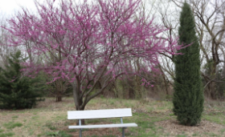
Other products available will typically need repeat applications throughout the summer, so be sure to read and follow the label instructions. Pre-emergents must be applied before summer weeds begin to grow, so application timing is critical. Look for the purple flowers of the Eastern Redbud tree to tell you when to apply weed control pre-emergent. Once the trees begin to bloom, it’s best to apply a pre-emergent within the next two weeks.

If you plan to re-seed your lawn this spring, most pre-emergent products will kill grass seeds as well as weed seeds, so most products are not safe to use when seeding. There are, however, a few options that are safe to apply around the time of planting grass seed:
o Siduron (the active ingredient in products like Tupersan)
o Meotrione (the active ingredient in products like Tenacity)

Always read and follow the label instructions before applying any of these products. Although fall seeding is preferred, Tall Fescue grass seed will start to germinate when soil temperatures reaches an average of 50 degrees Fahrenheit.

For more information, you can visit any of the articles below:
• Crabgrass
• Grassy Sandbur
• Wichita Area Soil Temperatures
• Pre-Emergent Products & Spring Grass Seeding
• For weekly reminders of timely gardening activities, visit our K-State Horticulture Newsletter with new gardening suggestions each week!

Tools & Treasure Sale

0

Shop new and gently used gardening tools, supplies, garden art, landscape décor, and more at the 6th annual Tools & Treasures Sale. This 3-day event, will be held from Thursday, April 4th to Saturday, April 6th, and will be held at the Sedgwick County Extension Education Center (inside 4-H Hall), located at 7001 W. 21st Street N. in Wichita. The sale will feature an extensive assortment of new and gently used gardening related items for sale, and all proceeds go to support the Sedgwick County Extension Master Gardener Volunteer program’s community outreach programs. Support a great cause while discovering amazing finds to add to your garden! Learn more online at: https://www.sedgwick.k-state.edu/news/newsreleases/2024/Tools_and_Treasures_Sale_Garden_Deals_for_Everyone.html

How much of the solar eclipse will Kansans see?

0

People in Kansas won’t see a total eclipse on April 8, but they’ll come close.

At the peak of that afternoon’s eclipse — which will reach totality in states that include nearby Oklahoma and Missouri — people in Wichita will see the sun obscured 87.7% by the moon. Those in Kansas City, Missouri, will see it obscured 87.2% by the moon.

The eclipse will be viewable from 12:31 to 3:06 p.m. in Wichita, 12:36 to 3:09 p.m. in Topeka and 12:38 to 3:11 p.m. in Kansas City, Mo.

What determines how much of the sun you’ll see covered?

The April 8 total eclipse will chart a 115-mile-wide path of totality across parts of Mexico, the U.S. and Canada.

In the U.S., 13 states and an estimated 44 million people from Texas to Maine are along that path.

Most Americans will be able to the eclipse in some form, but the distance between your location and the path of totality will determine how much of the sun will be covered by the moon.

Search for your ZIP code above or select a major city to reveal the time, duration, peak and percentage of the eclipse in your area.

What is a solar eclipse?

The April 8 solar eclipse will be the first in the U.S. since 2017 and the last until 2044, according to NASA. A celestial object can create an eclipse by passing in front of another and obscuring the view of objects, such as the sun.

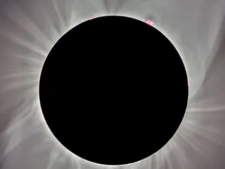
A total eclipse occurs when the moon appears to be the same size as the sun and blocks the entire view of the sun from Earth, bringing a temporary period of darkness and enabling observers to see the outmost layer of the sun’s atmosphere, the corona. The darkness can confuse animals, causing nocturnal creatures to become active.

NASA experts warn people against looking directly at the sun during a solar eclipse without specialized eye protection, saying that could cause permanent eye damage and potential blindness.

Those watching a solar eclipse are asked to use approved solar viewing glasses (also known as “eclipse glasses”) or a handheld solar viewer. Regular sunglasses, no matter how dark, are not safe for viewing the eclipse, NASA says.

A total solar eclipse can only be viewed without protective eyewear during totality, which is when the sun is completely covered by the moon, it says.

As reported in the Topeka Capital Journal