
Thursday, February 12, 2026
Home Blog Page 458

How much of the solar eclipse will Kansans see?

0

People in Kansas won’t see a total eclipse on April 8, but they’ll come close.

At the peak of that afternoon’s eclipse — which will reach totality in states that include nearby Oklahoma and Missouri — people in Wichita will see the sun obscured 87.7% by the moon. Those in Kansas City, Missouri, will see it obscured 87.2% by the moon.

The eclipse will be viewable from 12:31 to 3:06 p.m. in Wichita, 12:36 to 3:09 p.m. in Topeka and 12:38 to 3:11 p.m. in Kansas City, Mo.

What determines how much of the sun you’ll see covered?

The April 8 total eclipse will chart a 115-mile-wide path of totality across parts of Mexico, the U.S. and Canada.

In the U.S., 13 states and an estimated 44 million people from Texas to Maine are along that path.

Most Americans will be able to the eclipse in some form, but the distance between your location and the path of totality will determine how much of the sun will be covered by the moon.

Search for your ZIP code above or select a major city to reveal the time, duration, peak and percentage of the eclipse in your area.

What is a solar eclipse?

The April 8 solar eclipse will be the first in the U.S. since 2017 and the last until 2044, according to NASA. A celestial object can create an eclipse by passing in front of another and obscuring the view of objects, such as the sun.

A total eclipse occurs when the moon appears to be the same size as the sun and blocks the entire view of the sun from Earth, bringing a temporary period of darkness and enabling observers to see the outmost layer of the sun’s atmosphere, the corona. The darkness can confuse animals, causing nocturnal creatures to become active.

NASA experts warn people against looking directly at the sun during a solar eclipse without specialized eye protection, saying that could cause permanent eye damage and potential blindness.

Those watching a solar eclipse are asked to use approved solar viewing glasses (also known as “eclipse glasses”) or a handheld solar viewer. Regular sunglasses, no matter how dark, are not safe for viewing the eclipse, NASA says.

A total solar eclipse can only be viewed without protective eyewear during totality, which is when the sun is completely covered by the moon, it says.

As reported in the Topeka Capital Journal

 

Sterling loader and backhoe manufacturer to expand

0

KMW Ltd, a leading manufacturer of loaders, backhoes, and attachments, is pleased to announce that they are growing. Plans for building new facilities situated in Sterling, Kansas, are well underway. The new construction will include 430,000+ square feet under roof, located on a new 150-acre site near the new highway interchange in Sterling. This expansion will result in KMW growing to employ approximately 450 people when fully completed.

Beginning in 1965 as Ark Manufacturing Co., originally KMW produced trailers for hauling swathers and soil packers. Small lawn and garden loaders were added in 1968, an early indication of what the future KMW would become. Over the years, KMW made the shift to focus more on its loader and backhoe lines as the company grew.

Under the leadership of the current CEO, Wayne Buchberger, who took over KMW during the pandemic in 2020, there has been strategic acceleration of our growth. In this period KMW has been expanding its product lines and customer base. KMW and its team currently produce loader models ranging from 45-380 hp, a solid line of backhoes, and multiple loader attachments across three locations. The purchase of KMW by Agrostroj Pelhřimov in July of 2021 was pivotal with their strong support of KMW’s growth and team here in the USA. This expansion would not have been possible without their support.

For over 50 years KMW has designed, manufactured, and assembled our products in the USA. “As a company, we appreciate and value our Mid-American roots and the diligence and steadiness of our workforce. KMW is grateful for, and strives to stay true to, our Midwest Kansas ideals and heritage, helping to propel our continued growth. Our products embody the excellence of the KMW team and inspire pride in our customers.” says CEO, Wayne Buchberger, adding “Those factors made the decision to stay in our hometown a natural fit despite the strong interest in becoming our new headquarters expressed by other locations around the country.”

The size of the land acquisition ensures room for the growth of not only KMW but the entire Agrostroj Group long into the future. In addition to current KMW products we will continue to expand our manufacturing and sales activities for both our current and new OEM partners, meeting their needs in the North American market for many years to come. “With even greater capabilities and using state-ofthe-art machinery and automation, we look forward to making the new KMW headquarters a growing show piece for the state of Kansas” states Agrostroj Group owner, Lubomir Stoklasek. This is an exciting new chapter for our company. We are pleased at the strong possibilities this expansion affords us, allowing KMW to increase production capacity to even higher levels.

KMW currently employs just under 200 individuals across their 3 locations.

Yoder water solution still waiting on contract

0

Those dealing with the nitrate problem in Yoder Water District 101 will get a solution, but it’s taking a while to get done.

“The City of Hutchinson and Reno County have agreed in principle that Reno County, for Yoder residents, will buy water from the City of Hutchinson,” said Reno County Administrator Randy Partington. “We will build a line from somewhere on Airport Road, connect with a meter there and we’ll then run it down Yoder Road to blend the water. The contract with the City of Hutchinson has not been completed yet.”

It’s really about being sure that the math works out for both sides.

“It’s really just coming to an agreement of what that rate is, what the commercial water rate is,” Partington said. “The City of Hutchinson charges in cubic feet, the county, for our water districts, charges in thousands of gallons, getting different conversions and the agreement that the city of Hutchinson has with the number of meters, versus us just having one meter. It’s really just the legal part.”

There are 7.48 gallons of water in one cubic foot of water.

“We’ve been working on the financing, grant applications, loan applications,” Partington said. “We just about two months ago, I believe, went to engineering, to full engineering. That takes about three to four months. Then, it has to get KDHE approvals, 90 to 120 days. It will be October or November before we put it out to bid. We’re moving as quick as we can, but with government, sometimes the red tape takes a long time.”

This means that the line probably won’t actually be run until at least next year.

As reported on Hutch Post.

Proposed medical marijuana pilot, opposed by many advocates of marijuana reform, tabled

0

The Kansas Senate Federal and State Affairs committee on Thursday killed a bill that would have created a pilot medical marijuana program.

The program, if enacted, would become one of the most restrictive in the country. It would tightly limit who could grow, process and distribute marijuana in a way that opponents said creates a monopoly for the company that requested the bill’s introduction, Kansas Natural Remedies.

“Designed to monopolize the medical cannabis industry and unnecessarily restrict patient access, SB 555 is illegal, unfair and fraught with contradictions. It hands over all of what should be available business opportunities to just four companies,” said Sarah Stephens, of the Kansas Cannabis Chamber of Commerce. “Those four companies are then legally allowed to monopolize medical cannabis by growing, processing and distributing.”

Smoking or vaping the marijuana would remain illegal, and the products would only be available to people with one of 14 qualified conditions. Unlike other states that use marijuana dispensaries, medical marijuana would be distributed at pharmacies.

The bill’s proponents included the Kansas Pharmacists Association, a handful of private citizens and Kansas Natural Remedies, which is the largest hemp producer in the state. They said that the bill addresses concerns about allowing smoking, establishing too low of barriers for patients and creating a gateway to full legalization.

“This is not an opening for a recreational cannabis program, and our polling shows that there is little desire by Kansans to pass a recreational cannabis program in Kansas,” wrote Sam Jones, a lawyer representing Kansas Natural Remedies. “This is truly and simply a medical program that will give Kansas patients the medical freedom to choose medical cannabis instead of prescription narcotics to treat their illness.”

Organizations opposed the bill for a range of reasons. Some groups, like those representing law enforcement agencies, opposed any medical marijuana measures while medical cannabis advocates called the bill too narrow.

The Kansas House passed a medical marijuana bill in 2021, but the Senate never considered it. Since then the Senate has been more considered the more hesitant chamber on this issue, but Senate President Ty Masterson, R-Andover, signaled that the issue is likely to come up again.

“It has been my hope to have sincere discussions about a policy framework that combines meaningful regulation with legitimate and safe delivery of medical benefits to the people who need it, thereby avoiding the mistakes made by several of our neighboring states who are now facing severe consequences from which they may never emerge,” Masterson said. “Unfortunately, the hearing demonstrated there were concerns with the bill presented and approaches that deviate from that framework.

As reported in the Topeka Capital Journal
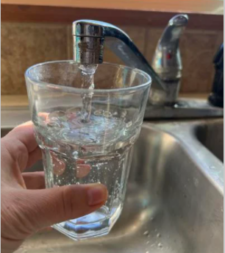
KDHE Announces the Beginning of the Harmful Algal Bloom Season

0

The Kansas Department of Health and Environment (KDHE) and the Kansas Department of Wildlife and Parks (KDWP) are announcing the beginning of the Harmful Algal Bloom season.

The water recreation season in Kansas officially runs from April 1 to October 31, as do the harmful algae blooms (HAB) response program’s active operations. Kansans should remain extra vigilant while engaging in activities taking place in or on the water, such as swimming, boating, and fishing.

A harmful algal bloom (HAB) may look like foam, scum or paint floating on the water and be colored blue, bright green, brown or red. Blooms can develop rapidly; if the water appears suspicious or there is decaying algae on the shore, avoid contact and keep dogs away. These toxins can be absorbed by ingestion, inhalation of aerosols and even skin contact. Symptoms vary depending upon the type of exposure (e.g., direct contact, ingestion, inhalation) but can include rash, vomiting, diarrhea, fever, sore throat, and headache.

If you, or your pets, come into contact with algae rinse the area with clean, fresh water. Suspected HAB-related health incidents, whether human or animal, regardless of season, should be reported as soon as possible at kdhe.ks.gov/1163.

Kansas recognizes three advisory levels:

Hazard status indicates that a HAB is present, and extreme conditions exist.

  • Signage should be posted at all public access locations.
  • It is recommended that either a portion of the lake or the entire lake or zone, be closed to the public.
  • In some cases, the adjacent land should be closed as well. Actual setback distances will be determined on a site-specific basis, if necessary.
  • When partial closures (i.e., beach or cove) are issued, the remaining lake or zone area will carry a warning status.

Warning status indicates that conditions are unsafe for human and pet exposure.  Contact with the waterbody should be avoided.

When a warning is issued, KDHE recommends the following precautions be taken:

  • Signage should be posted at all public access locations.
  • Inhalation of spray or aerosols may be harmful.
  • Lake water is not safe to drink for pets or livestock.
  • Lake water, regardless of blue-green algae status, should never be consumed by humans.
  • Water contact should be avoided.
  • Fish may be eaten if they are rinsed with clean water and only the fillet portion is consumed, while all other parts are discarded.
  • Do not allow pets to eat dried algae.
  • If lake water contacts skin, wash with clean water as soon as possible.
  • Avoid areas of visible algae accumulation.

Watch status means that blue-green algae have been detected and a HAB is present or likely to develop. People are encouraged to avoid areas of algae accumulation and keep pets and livestock away from the water.

During the watch status, KDHE recommends the following precautions be taken:

  • Signage should be posted at all public access locations.
  • Water may be unsafe for humans/animals.
  • Avoid areas of algae accumulation and do not let people/pets eat dried algae or drink contaminated water.
  • Swimming, wading, skiing, and jet skiing are discouraged near visible blooms.
  • Boating and fishing are safe. However, inhalation of the spray may affect some individuals. Avoid direct contact with water, and wash with clean water after any contact.
  • Clean fish well with potable water and eat fillet portion only.

Advisories are Lifted when cell densities and toxin concentrations dissipate to levels below the Watch thresholds.

KDHE investigates publicly accessible bodies of water for blue-green algae when the agency receives reports of potential algae blooms in Kansas lakes. Based on credible field observation and sampling results, KDHE and KDWP report on potentially harmful conditions.

If you observe a scum or paint-like surface on the water, small floating blue-green clumps, or filaments in the water, or if the water is an opaque green, avoid contact and keep pets away. These are indications that a harmful bloom may be present. Pet owners should be aware that animals that swim in or drink water affected by a HAB or eat dried algae along the shore may become seriously ill or die.

For information on blue-green algae and reporting potential HAB’s, please visit kdhe.ks.gov/HAB and view our interactive story and informative video.