Friday, February 13, 2026
Home Blog Page 469

Bringing back native grasslands after wildfire

0

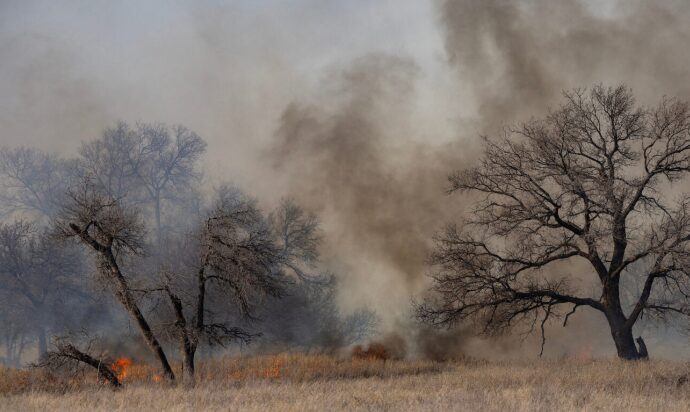
The first blades of green grass have already shown up in native grasslands blackened in the wake of the Smokehouse Creek Fire or other fires in the Texas Panhandle over the past month.

But green grass doesn’t equate to available grazing for ranchers. True recovery will take time, according to Morgan Treadwell, Ph.D., Texas A&M AgriLife Extension Service range specialist, San Angelo, and Jeff Goodwin, Ph.D., director of the Texas A&M Center for Grazinglands and Ranch Management, both in the Texas A&M Department of Rangeland, Wildlife and Fisheries Management.

“This isn’t just an ecological recovery; it’s a construction recovery – lost fences and water infrastructure – and even a mental recovery, too,” Treadwell said. “So, it is time to take a big step back and evaluate our purpose as stewards of rangelands and allow time for rest and recovery.”

Top tips to keep in mind

While Treadwell and Goodwin know this isn’t the first fire for many ranchers, the two experts offered a few tips to keep in mind:

– Keep livestock off burned pastures where possible until adequate forage recovery has occurred.
– Find lease land for animals or designate a sacrifice pasture or trap pasture if fences remain intact and there are unburned areas to graze.
– Destock and cull animals. The market is high, so if there are no fences, water or grass, send key seedstock to feedlots or sell now and buy back when the land is recovered.
– Collect hay donations where there is room for cattle to stay during range recovery. Isolate those hay areas to avoid heavy traffic in recently burned areas and the consequences of potential undesirable weed establishment.
– Assess fence needs.
– Assess water/poly line needs.
– Build a list of priorities in rebuilding infrastructure.
– Keep detailed daily records and receipts of expenses, animals euthanized and replacement material purchased.

Grasses will recover stronger, with time

Ecologically speaking, native perennial grasses are very resilient against fire, Treadwell said. This wildfire was unique in that it moved very quickly pushed by extreme high winds and extreme gusts, which pre-heated the fuel ahead of the fire. However, these factors provide optimism because the duration and dosage of heat wasn’t prolonged.

Rangeland takes time to grow grass after a fire, she said, and rainfall is needed to jumpstart natural recovery processes.

“The green grass that is already showing is a great sign, but we need to make sure those root systems below ground are strong,” Treadwell said. “We need to make sure plant crowns have every opportunity to recover and start developing, growing leaf tissue and beginning the photosynthesis process all over again.”

Recovery time will depend on moisture and the nutrient contents in the soil that support grass growth. Take the stress off recovering pasture by letting it rest. There is no cookie-cutter timeline for how long to stay off the pasture. Treadwell said it is completely contingent on rainfall and soil composition.

“We have to put our stewardship hats back on and make sure that we take care of the land so it can take care of us, yet again,” she said.

Destruction provides opportunity

When ranchers begin building back their herd, Treadwell said they should keep the next fire in mind – because it is not an “if” situation, but rather a “when” situation. Wildfires are starting to resemble historical fire frequencies, and in the Panhandle, that was every two to five years.

Building back smarter and including recovery space is important, she said. Here are a few tips to think about when the rebuilding begins:

– Fire-friendly fences are a must, and that means coming back with all steel.

“Everyone loves a good cedar post, but you can lose them quickly, even with a low-intensity fire, because they hold embers and will smoke forever,” she said. “Build back with steel where possible, and work with neighbors in prioritizing all steel perimeter fencing.”

– For water development, use of non-buried polyline does not make sense in a fire-prone ecosystem.

– Mark where donated hay is dropped because that will be the first place where introduced or invasive species may show up.

– Take inventory and keep detailed records of when you start to see recovery occur. When possible, identify the species of grasses that are responding the quickest – it will give you an idea for forage production later in the year.

– Plan the build back — do you want to lay out the same fencing structure and same pastures? This is a challenge, but also an opportunity to improve efficiency; now is the time to reconfigure pastures in relation to water, varying terrain or soil types, and to use roads and existing infrastructure more strategically from a wildfire mitigation standpoint.

– Strategic location of pastures. Think about building trap pastures that can protect the headquarters more — concentrating animal grazing around the headquarters can create a cost-effective fire break.

“Strategic thinking should guide how we come back,” Treadwell said. “For example, take time to pinpoint vulnerable areas — maybe that is the southwest area of your ranch where the prevailing winds come from. Start buffering or mitigating the next fire approaching on that vulnerable side.”

Fire is fire and native perennial grasses benefit

Treadwell said fire is fire, whether that is in a prescribed fire or wildfire — in the end, fires are beneficial and completely synergistic to grasslands.

“This fire is an opportunity to build resiliency and strength into our ranching livelihoods by way of stewarding our native perennial grasses,” she said. “Resetting brush density is an advantage that our producers will reap the benefits from for years and generations to come with proper grazing management.”

Fire suppresses encroaching trees, cactus and brush, stunting undesirable species. Pastures allowed to recover should flourish in terms of native plant communities and diversity of native grasses, especially following rains, she said. This is a natural process and the very disturbance that built native grasslands full of fertile soils.

Fire also makes the soil more productive, she said. Soils are full of organic material due to historic fires injecting more nutrients from above-ground biomass through combustion.

“It has a massive fertilizer effect for future grasses, and it all starts below ground,” she said. “Right now, above ground, we are seeing direct effects of fire, but below ground life is flourishing and thriving. We just have to be patient and give nature time for those effects to transition above ground.”

Additionally, such a widespread impact on invasive trees and brush will also positively affect recharge in aquifers and stream systems.

Moving forward with intention

Treadwell said now is the right time to plan ahead.

There are many tools in the toolbox, she said. Proactive prescribed fire is one of the tools, but it is not for everyone. Cattle and livestock are the next best thing to reduce the fuel loads and create a footprint that will complement existing fire breaks, like roads encircling headquarters and mechanically thinning or removing woody plants near structures.

“Read the system, the landscape,” she said. “No two years will ever be the same. Fuel accumulation for this fire occurred in a relatively short timeframe. We grew a lot of grass, and it cured quickly, and before we knew it, we were in a record-breaking fire season.”

The ability to pivot, to adapt, to read the landscape and proactively address potential dangers takes knowledge, experience and science, she said.

“We must be aware of the challenges Mother Nature is setting us up for before we are dealing with them, because when we are reacting to them, we don’t have flexibility to manage the situation. But if we are proactively reading them ahead of time, then we have room to adapt and respond in a way that is more successful in the long-term.”

Reading the landscape in terms of fuel accumulation is key. If grass growth is booming, it may mean grazing fuel loads down to manageable levels.

Landowners managing for wildlife should develop mutually beneficial relationships with grazing neighbors to flash graze deferred landscapes and actively manage potential fuels for a fire-ready response.

“I’m not saying overgraze or overstock, but we have to create some defendable spaces in these native plant systems that allow us to live in them and manage them,” Treadwell said.

Courtesy of: AgriLife Extension offers range restoration tips after Panhandle wildfires.

Coloring Outside The Lines

0
lee pitts

In my younger years I fantasized about becoming fabulously wealthy as an artist. There was only one thing standing in my way… I couldn’t draw. Oh, that’s not entirely correct as I could draw farm animals but I simply couldn’t draw people. My men all had faces that resembled Berkshire hogs, a breed known for being especially ugly, my women all had horse faces and my children all had countenances that only a nanny goat could love. I also couldn’t draw clouds and no matter how hard I tried they invariably ended up looking like exploding bags of flour.

I’d have to say that my artistic masterpiece was probably a wood carving I did using my mother’s brand new coffee table as my pallet on which I carved my troop number using my Cub Scout knife. I made the mistake of signing my name on the masterpiece and I’ve never made that faux pas again, no sirree.

I take solace in the fact that my artistic efforts will one day be fully appreciated because Van Gogh sold only one painting while he was alive. Of course, when he died his pieces sold for what are called “dead men’s prices”.

I didn’t fail as an artist for lack of trying. Did you know that the average kid between the ages of two and eight spends 28 minutes of their day coloring? I easily tripled that. I attribute any artistic shortcomings to the fact that I was a deprived kid who had only the pack of eight Crayolas®. And please note that I included the ® thingy and that’s because I wrote the word Crayola® without it once and got a nasty letter from Binney and Smith threatening legal action. I was quite honored to receive such a letter to think that the people who made Crayolas® actually read my column. That company got bought out by Hallmark in 1984 and ever since then they don’t seem to be so uptight about the ® thingy because I’ve never received such a letter from them. Just for fun, let’s see if Hallmark reads my column or takes legal action this time… Crayola, Crayola, Crayola.

I was jealous of the kids who had the 64 piece set of Crayolas® and attributed my shortcomings in the art department to not having the other 56 colors. I probably should be getting reparation payments for being deprived of the full color spectrum.

I enjoy painting with oils and I’ve done two pieces that deserve the space they take up on our walls. One is of a Hereford cow and the other is of a sea otter and her pup. The rest of the wall space in our house is covered with cowboy art. I have originals from people you’ve heard about like Will James, Joe Beeler and two pen and inks from Edward Borein. Then there are all my originals from artists who are still alive including Phil Tognazzini, Vel Miller and Jerry McAdams, who all happen to be friends of mine. My favorite all time cowboy artist is Tim Cox and years ago I asked Tim and his wife Suzie if I could use a favorite of mine on the cover of one of my books called Essays From God’s Country. Not only did they give permission they also gave me a large artist proof of the piece which takes center stage in our home.

My favorite dead artist is Georgia O’Keefe and her work borders on modern art which I usually hate. I agree with Al Capp who drew a comic called Lil’ Abner when he said modern art was, “A product of the untalented, sold by the unprincipled to the utterly bewildered.”

Some of the stuff being called “art” these days is a real travesty. Like the ten foot round circle of manure that was shown at the San Francisco Art Institute that was taken down after only one day because it stunk up the place… both artistically and aromatically. Then there was the air conditioning vent that wasn’t even entered in the show that got top prize at a different modern art show.

I shouldn’t leave you with the impression that I have zero artistic talent. I love airbrushing some of my leather creations but as for drawing the human form I agree with the anonymous art critic who said, “His illustrations were horribly executed and the artist should be.”

Pea Salad

0

Where do I begin to share about my last week? We just returned from a 1400 mile trip touring Southeast Minnesota, (St. Charles & Winona area) Wisconsin and Iowa. We experienced great bakeries, dairies and beautiful countryside’s as we traveled. We enjoyed some of the best ice cream in Wisconsin, not to mention the phenomenal cheeses. I’ve decided we have to go back when it’s nice and green, because I didn’t have time to fish, visit the wineries or take part in a Minnesota fish dinner.

We spent time with friends and learned what a ‘Kwik Trip’ is up north. It is not like the ‘Quik Trips’ in Missouri, it’s even better! A ‘wayside’ is comparable to a Missouri rest area. As you can imagine my favorite spots were associated with the bakeries, one in Winona was 100 years old. You want to sample everything, but there’s just no way!

We departed from Northeast Missouri after a brief visit with my dad, Jerry, in Lewistown. And concluded our holiday in Cameron, at my sis’s home. We also stopped at a large Mennonite store in Windsor, Missouri, where I picked up many specialty items. The travels were most enjoyable, but I did spend most of Sunday just chilling.

Frequently I have the urge to make a batch of this simple and delicious pea salad. Most of the time I make it and take it somewhere, because I love the salad, but don’t want to eat it ‘every’ day. For me it’s refreshing on the palate and a terrific travel dish. You don’t want to overdo, remember peas are a bit on the starchy side. Added to the holiday dinner table it will add a bright kick of color. It can also be made the night before, perhaps refreshing with a small amount of extra dressing at serving time, if necessary. Make a good ham sandwich and the salad as your side.

This year I haven’t put any thought whatsoever into my Easter dinner plans. This week I’ll probably get a good grip on the dishes to be served, and start watching my sale ads too. I know one thing, there will be scalloped pineapple, this is a necessity at our home, and I’m doing deviled eggs this year, even if I’m the only one to eat them! Remember you can always chop large amounts of deviled eggs up and make a yummy egg salad. Then you can stuff peppers/tomatoes or make an egg salad on rye, yummy! Slice a little avocado under a scoop of the salad for a nice presentation, or fill two avocado halves, as they sit on a bed of greens. You’re getting it……..Have an enjoyable week, get the house in order, company’s coming! Tomorrow I return to work and start planning the next little get away! Simply yours, The Covered Dish.

Pea Salad

4 slices cooked, drained & crumbled bacon

1 (16 ounce) package drained & thawed frozen peas

8-12 small green onions, finely chopped

1/2 cup shredded cheddar cheese

4, hard boiled eggs, chopped

1/2 cup ranch dressing

Thaw and drain peas, mix all ingredients adding the bacon and boiled eggs last. Stir in the ranch dressing. Refrigerate at least one hour before serving. Use additional ranch or mayonnaise if the salad is not to your desired consistency.

Serves 4-5 persons.

Use a high quality of frozen peas, there is a palatable difference.

This salad is not seen too frequently. Usually we don’t make ‘large’ batches of this salad because it is such a huge concentration of peas.

The Science of Today

0

Every now and then I see something in the news that really piques my interest. Something flashy or new that I had never really imagined before. Such is the state of our world of science today. With the recent developments of AI technology and so many other things to date, it’s tough to keep up with the developments of our world. World. Not to worry though, these developments come with greater standards of living, better access to humanitarian needs, and if used in the right way, happier people overall. Now it’s true that some of these developments are fairly questionable, but it’s important to also realize the wonders of good at have come to us because of scientific development. Which is exactly what we will be focusing on today in this article.

Speaking of artificial intelligence technology, the science world has made leaps and bounds in the past couple of years on this front. Needless to say, this technology has outperformed nearly all standards that have been put to it by scientists and users of the internet alike. As a matter of fact, AI can now be used for a number of various creative purposes. One of these is a development in education implementation. Teachers, as of late have been using an artificial intelligence technology known as Magic School AI which has changed the game of lesson planning and unit planning for them. We all know that teachers are overworked and underpaid, but perhaps AI could be the very tool that helps them succeed as both teachers in the classroom and functioning adults outside of the classroom. Artificial Intelligence is truly a wonderful tool, and it will be interesting to see how future developments will help members of our society and others.

Now turning our attention heavenward as we look to the stars for answers in our universe. NASA has made quite a few developments as of late in their space explorations. With the increased amount of private space companies, the new space race is underway. And the topic of conversation recently has been on Jupiter’s moon, Europa. The increased levels of oxygen and possibilities of the building blocks of life have made scientists quite interested in this small moon. I don’t know about the rest of you, but I am waiting for the day when we finally step foot on another planetary body outside of our very own moon. Perhaps Europa would be that new frontier. Although Mars certainly looks to be the target of choice for the new frontier.

You’ve heard about developments in space and in education, but how about in health care? Researchers have recently found a way to 3D print functional human brain tissue. This breakthrough comes from the University of Wisconsin-Madison, and it is perhaps one of the most incredible medical achievements I have ever heard of. The achievement is important for implications working on treatments for a range of neurological disorders such as Alzheimer’s. Just imagine what other medical developments we have in store in our society.

With all of these developments, I should note that it’s just the tip of the iceberg. There are so many more stories of scientific development happening on the daily. If you’re interested, I would encourage you to look through the interwebs for new and different stories about our world developments. Every day brings new adventure, and every day brings new blessings to our world. I hope you found interest in these couple of stories that I shared with you, and until next time, stay curious!

Wildlife Math; Count the Tracks and Divide by Four

0

I remember an old gag from my high school days; when you were with a carload of people and came to a railroad crossing, you would abruptly tell the group that a train had just passed through that crossing. Naturally someone would ask “How can you tell?” Your reply would be “Cause’ I can see its tracks.”

There is no better way to tell where and how wildlife move through and around an area that to see their tracks. Deer hunters rely on tracks to tell them where to place blinds and stands. Yes, today trail cameras show hunters animal movements, but hunters rely on tracks to know where to place the cameras. Trappers try to place predator traps where the most predator traffic occurs, and they rely on tracks to tell them that. There are some things to consider when looking at animal tracks.

For starters, we need to consider that all mammals we hunt and trap have 4 legs, and 4 feet can leave a multitude of tracks in one night’s time. Secondly, animal’s lives revolve around survival, and a major part of that survival is foraging for food. Lots of steps are taken each night in pursuit of food, two- legged birds included. All of you who have watched deer browse or raccoons waddle along a stream know that they don’t stand in one place very long. Figure them doing that for eight hours or more and that’s a lot of tracks! If we were to freshly paint the floors and isles of our workplaces then observe the number of shoe prints there at the end of an eight-hour shift, we’d be amazed how many tracks just a few of us would make.

In the end, this all amounts to a few animals leaving a multitude of life-signs of various kinds. When scouting there is no better proof than tracks and other signs left by our four- legged quarry. And while it is true that the more tracks and other signs you see, the more animals there are using that particular area, we just need to consider all the above when estimating wildlife numbers. So, to be on the conservative side, count the tracks and divide by four.

A discussion that comes up a little more often all the time, is whether or not there are mountain lions here in our part of Kansas. When sightings began to crop-up years ago, it was hard to know what to believe, as a few sightings seemed credible, but most, not so much. But with the emergence over the past few years of some credible trail camera photos, it’s hard to deny their existence here, and along with more credible pictures come more questions about identifying mountain lion tracks. I’m hardly an expert, as there are numerous outdoorsmen around who are more qualified than I, but let me tell you what I know about identifying mountain lion tracks. Given their size, the only other tracks that can be confused with them are the tracks of very large dogs. First of all, the shapes of canine tracks (dogs and coyotes) will be slightly more rectangular, whereas cat tracks (bobcat and mountain lion) will be more rounded. Those of you who have dogs and cats, look at the difference in the shapes of their paws. Secondly, and the most identifying feature for me if you can find soft enough ground here in Kansas, is the presence or absence of claw marks in the tracks. All cats (except Cheetahs, which I hope to never see in Kansas) have retractable claws that WILL NOT normally show up when they walk, whereas canine’s claws will show up at the tip of each toe.

So, there you have it, a few facts about wildlife tracks, and a primer on mountain lion track identification. And don’t worry, we will never see cheetahs in the wild here in Kansas; but isn’t that what we once thought about mountain lions too? Just sayin’.

Steve can be contacted by email at [email protected].