Monday, February 16, 2026
Home Blog Page 499

The state budget (4)

0
john marshal

To most Kansans, the state budget is a ghost. It lives only on line ‒ a mysterious, cyberworld phantom roused only when politicians speak of it vaguely.

The budget is a digital dream for numbers-nerds, its long columns of numbers rippling along the margins page after page. The sum of the 2024-25 edition is $26,523,723,077. (In reporter-speak, $26.5 billion.) This is the governor’s estimate of the cost, in state and federal dollars, of Kansas government for the 12 months ending June 30 next year.

The budget, over two volumes and 893 pages, breaks the money out in many ways and from different angles ‒ where it comes from, where and how it is to be spent down to the dollar.

Among the bigger angles is counting the Kansas taxes and how state revenues are collected and spent, with or without money from Washington ($6 billion next year). Education, public safety, transportation, health and welfare, agriculture and more are covered.

All politics aside, it’s a marvel of accounting.

But politics always latches onto the budget. For a governor and a legislature, the numbers convey statements of principles. That is, how public funds are best used to advance a public interest such as tax relief, better schools, soil and water conservation, economic development. In this way, money talks.

*

This year, the budget’s policy statements make a long list. Among Gov. Laura Kelly’s top tier are three:

‒ Reinvestment of roughly $1 billion in remaining covid relief funds.

During the pandemic, Kansas received billions in federal aid for Medicaid expenses. Of the remaining surplus, the governor would spend half to pay down state debt decades ahead of schedule, saving significant interest and debt service expense.

The other $500 million is for new capital investment. By paying cash for projects, the state avoids issuing bonds (and new debt). This plan would save an estimated $400 million in interest.

‒ Greater access to health care for the poor.

The governor has offered another proposal to expand Medicaid for roughly 150,000 uninsured Kansans who are poor but not poor enough for the state’s low-income brink. This plan starts with a $370 million federal increase in base Medicaid funding, more than enough to offset the state’s cost for the first two years of expansion.

After two years, a surcharge on Kansas hospitals would generate at least $35 million annually for the state’s share of the expansion cost. With Washington paying 90 percent, the plan is to finance 15 years of expanded Medicaid with “no new state cost,” the governor said.

‒ Income and property tax relief.

Incomes up to $75,000 are exempt from state income tax on Social Security benefits; the governor proposes to exempt all taxpayers, regardless of income. Estimates savings for seniors, $152 million.

Homeowners currently pay a 20 mill ($20 per $1,000 assessed valuation) property tax to help finance a state revenue pool for aid to local schools. The formula now exempts the first $42,000 in valuation from that levy; the governor proposes to increase that exemption to $100,000. Estimated savings, $93 million.

Local property tax relief, demanded by state law but ignored for 20 years, would be restarted with $54 million annually. State payments to cities and counties would be apportioned by population and property valuation.

*

The policy statements in any governor’s budget are far and wide, proposals that draw both support and fire from the legislators reviewing the document. Ultimately a budget is wrangled into statute.

Crafting a budget from concept to law is a grinding process. The politics of it run from shop-worn to enlightened. A budget may be seen another way, as a living thing, one that reaches into every community, and ultimately into the lives of all Kansans.

Lovina Reflects on Over Twenty Years of Writing the Column 

0

Lovina’s Amish Kitchen
Lovina Eitcher,
Old Order Amish
Cook, Wife &
Mother of Eight

Saturday was a very cold and windy day, so the men were unable to put the roof metal on the new pole barn. They kept busy doing other work on the barn such as building the sliding doors, putting on the wainscoting, and more. 

This week, they will work on putting on the roof metal at night since temperatures have warmed up again. It’s getting done slower than we had anticipated, but it helps to not have to pay for labor. Those helping Saturday were son-in-law Dustin, Daniel (daughter Lovina’s special friend), Daniel Ray (daughter Verena’s special friend) and his brother Marvin, sons Benjamin and Joseph and my husband Joe. 

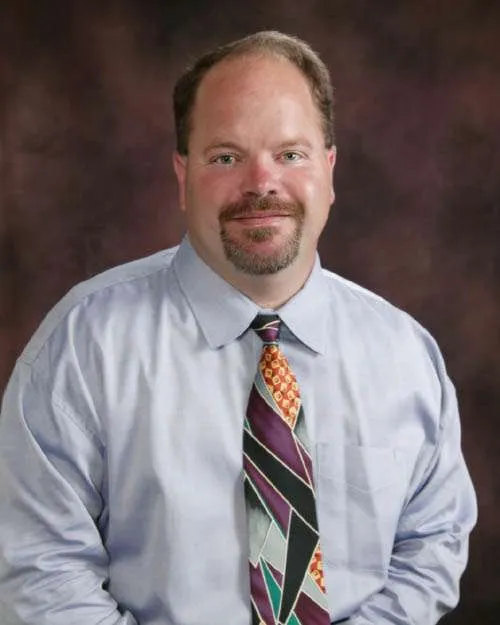
Grandson Denzel thinks he has to help me write the column. After he kept interrupting me quite often, I sat him down beside me and gave him a paper and pencil. He was scribbling all over the paper. It seems just short years ago when my children would sit beside me pretending to write the column too. Sometimes I find it hard to believe that I have been penning this column every week almost 22 years. So many changes have happened since then. It was a challenge writing and finding quiet time with eight children around. Many times, I would write early in the mornings or later in the evening after they were all sleeping.

Some weeks, it’s so much easier to write than others. Then there are weeks when you get writer’s block, or you can’t concentrate on writing. 

On Sunday evening, our family gathered at daughter Elizabeth and Tim’s house for a birthday supper for their youngest daughter Andrea. She enjoyed being able to blow out the two candles and having us sing. Happy birthday to her. She reminds me so much of her mother when she was young. 

We had a delicious meal consisting of grilled chicken breasts, campfire stew, chicken salad, loaded nacho dip and chips, cake, ice cream, oatmeal pie, mocha pudding, and finger jello. Daughter Lovina made the cake again. She is really doing a good job. She also made the loaded nacho dip, and it was delicious. We all took a dish, so it adds up to more than was needed. Leftovers make nice additions when you pack lunches for the men. 

We attended church on Sunday in our church district, which was 11 miles from here. Our church district plans to divide this fall, Lord willing. It seems a long way to travel with horse and buggy on a Sunday morning when it’s cold to go to church. Joe and I went with sister Verena and our friend Beth who drives for Amish, so it wasn’t a long cold drive for us. Beth usually takes sister Verena to church. 

Since we moved to Michigan 20 years ago, this will be the third time our church has to divide because of growth. It’s always sad in a way when you have to divide, and some will have church on one Sunday, and some the next. We can go visit though, so that is a good thing. I’m used to having our whole family in our church district, and I admit that it will be very hard to have that changed depending which way the division lines will go. My grandchildren sit beside me often during the services, so I would miss that. 

I finally answered all my mail from readers. I am sorry about the delay in answering everyone. I appreciate all the kind words of encouragement. The mail was from eight different states this time. Last time, it was from 15 states. Thanks again and God bless!

Loaded Nacho Dip

8 ounces tortilla chips

1 pound ground beef

1/2 cup water

1 packet taco seasoning

1 large sweet onion, diced

3 medium tomatoes, diced

8 ounces shredded cheese

1 cup sour cream mixed with 2 tablespoons buffalo ranch dressing

1 cup cheese sauce

Thoroughly brown ground beef, drain fat off, and mix in the water and taco seasoning. Then add onions and fry for a few minutes. Layer in a 9 x 13-inch baking pan. Add cheese sauce and sour cream mixture then shredded cheese and bake at 400°F for 5 minutes or until cheese is melted. Remove from oven and garnish with tomatoes. Jalapeños, banana peppers, olives, and other toppings can be added as well. Serve with tortilla chips. 

Lovina’s Amish Kitchen is written by Lovina Eicher, Old Order Amish writer, cook, wife, and mother of eight. Her two cookbooks, The Essential Amish Cookbook and Amish Family Recipes, are available wherever books are sold. Readers can write to Eicher at Lovina’s Amish Kitchen, PO Box 234, Sturgis, MI 49091 (please include a self-addressed stamped envelope for a reply); or email [email protected] and your message will be passed on to her to read. She does not personally respond to emails.

NOTES TO EDITORS: text=738 words; end material=80 words 

Contact: [email protected]; 1-800-245-7894

Peas are one of my favorite vegetables!

0


Peas are one of my favorite vegetables! They are also one of the most cold-tolerant plants grown in Kansas gardens. They can be planted about as early as soil can be prepared in the spring.


• Shelling peas. Sometimes called English or garden peas, these varieties must be shelled and the seeds are eaten.

• Sugar snap peas. These peas have fleshy, edible pods and are consumed when the seeds are developed and the pods are full. They have a very sweet flavor.

• Snow peas. These edible-podded peas have thin, tender pods that are typically eaten when the seeds are still very small and immature.


Variety considerations. Many varieties are good choices in Kansas, although early maturing varieties may be more consistent, especially in the southern half of the state. Varieties that are resistant to powdery mildew may also be a good choice.


For most gardeners, the two primary considerations are vine height and pod length. Some peas have shorter, dwarf vines that will not need any staking or trellising. Others have much taller vines — as tall as 5 feet — and will need a trellis for best production.


Pod length typically has a direct impact on yield, with longer pods having more seeds. Larger podded snow and snap peas also will often yield more per plant. However, gardeners may find that they prefer the flavor and tenderness of smaller podded varieties.


When to plant. Plant seed in early to mid-March when soil is dry enough to work. Peas will germinate when soil conditions are favorable. Peas planted later in the spring may not produce before the weather gets too hot. Peas are not well adapted for fall gardens because seed usually fails to germinate well in warm soil.


Spacing. Plant seed 2 to 4 inches apart with rows 12 inches apart. Peas usually do best where 2 to 3 rows can be planted 4 to 6 inches apart to allow the weak, spindly vines to support each other.


Crop rotation. If possible in your garden space, do not plant peas in an area where peas or beans have been planted in the past 3 to 4 years.


Care. Peas prefer cool soil and need water during stressful periods. They grow best in moderate- to well-fertilized soil. A trellis may be needed to support the flimsy vines; short wire mesh or string trellis works well.


Harvesting. When the shelling pea pods are swollen so that seeds within are full sized but tender and not yet starchy, pick and shell the peas. Harvest sugar snap peas when the pods are succulent and tender, but the seeds are mostly enlarged. Harvest snow peas when the pods are crisp and tender but before the seeds begin to enlarge significantly. Tasting a pea or two is also helpful in determining if they are ready to pick. Edible-podded peas should be tender and sweet at optimum harvest.


Store peas in a refrigerator in a plastic bag for up to a week. Edible-podded types should be picked and used immediately after harvest as they tend to dry out readily. Peas are easily frozen for later use.

‘Everything Horses’ Featured For EquiFest Of Kansas At Salina

0


Calendar dates must be circled in red for the EquiFest of Kansas, March 14-17, at Salina.

That’s the announcement from Justine Staten, executive director of the Kansas Horse Council, producer of EquiFest.

The first EquiFest was at Wichita in 1998, then in Topeka starting in 2016, and Salina has hosted EquiFest since 2020.

“This year’s EquiFest is again four days at the Saline County Livestock Expo Center and Tony’s Pizza Events Center,” Staten said.

More than 15,000 people have annually attended EquiFest which serves as the Kansas Horse Council (KHC) primary fundraiser.

“The KHC provides the Kansas equine industry with leadership and direction through education, promotion, and public policy advocacy,” Staten said.

​“What makes EquiFest so special is the variety,” Staten emphasized. “There’ll be all breeds of horses and all disciplines represented throughout the competitions, demonstrations, and displayed exhibits.”

In addition, EquiFest features educational and informative workshops, world-renowned clinicians, music, poetry, history, and storytelling.

The horse trade show is open all four days featuring wall-to-wall vendors in multiple locations.

“They’ll offer something for everyone, clothing, accessories, saddles, tack, home décor, trucks, trailers, tractors, implements, and more,” Staten said.

Children are the future of every horse activity, so a special Kids’ Corral is again being developed encouraging youth involvement.

The EquiFest horse judging contest has been revamped this year with additional divisions to increase participation for impressive awards.

Everybody always asks: “What will there be to eat?” According to Staten, “If you like a variety of food, check out several food trucks and concessions on site. Again, there’s something for all tastes.”

Attendees at EquiFest will also once more have an opportunity to meander through the stall barn. “You can see up close anything from long-eared minis to gentle giants. Living history is on display at a military encampment,” Staten said.

Competitions include a barrel race, ranch rodeo, and breakaway roping.

Among clinicians are Guy McLean, Australian horseman; Jerry Diaz, family horsemanship; Patrick Sullivan, liberty horsemanship; Julie Goodnight, training resources; and Sally Batton, equestrian team coach.

Workshops throughout the four days are to feature Native American Traditions, riding exercises, Kansas horseback trails, and legendary horsemen panel.

A special feature is Celebrate EquiFest The World Of Horses on Thursday night, March 14.

Annual meeting of the Kansas Horse Council is Sunday morning, March 17, with a complimentary Chris Cakes breakfast for all. Cowboy church will follow.

A complete schedule of activities is available at www.equifestofks.com.

Cows Are Having Calves

0

Spring calving time has arrived, and workload has sharply intensified for Flint Hills ranchers with cow-calf operations.

A cow’s gestation is the period between conception and birth. During this time, the baby grows and develops inside the mother’s womb.

The cycle is around nine months, about 285 days, but it can vary depending on several factors. Some cattle breeds take longer to have a calf, and boys are often born later than girls. Of course, inclement weather conditions can delay when smart momma cows decide to have their calf.

Research indicates that feeding cows later in the day and evening increases the number of calves born during daylight hours. It is typically easier to keep a close eye on them.

Bulls are generally turned out with cows about May 1st, so some cows could have calves as early as February 1st.

However, most cows don’t mate with a bull the first day due to several reasons. She might not be ready for romance yet and the bull is busy breeding other cows.

Typically, a couple bulls are with a certain number of cows to help ensure mating when the cow is ready.

Ranch managers must keep a close eye on their cows once calving season is underway. Most mature cows can take care of themselves when it’s time to calve.

However, there are instances when even the very best producer can have problems. A calf can be too large or come backwards and require assistance. There are extreme cases when a veterinarian must be called to get a live calf.

Those cow-calf producers with lots of experience can generally tell when a cow is thinking about having her calf. He will keep a more watchful eye on her to provide help if needed.

First calf heifers typically require the most attention at calving time. They are just babies themselves, about two-years-old, and the whole birthing process is completely new to them.

After giving birth, a heifer must look after her newborn to get it to start eating and moving. Certain heifers have naturel mothering instinct, while others don’t and require assistance.

To keep a closer watch on first calf heifers they are brought to the headquarters for more intense supervision.

Reminded of Job 21:20: “Their bulls breed without fail. Their cows calve, and don’t miscarry.”

+++ALLELUIA+++

XVIII–8–2-19-2024