Friday, January 2, 2026
Home Blog Page 23

The Little-Known, Uncrowded Natural Wonder Hailed As The ‘Grand Canyon Of Kansas’ Read More: https://www.islands.com/2029257/arikaree-breaks-uncrowded-little-known-natural-wonder-grand-canyon-kansas/

0

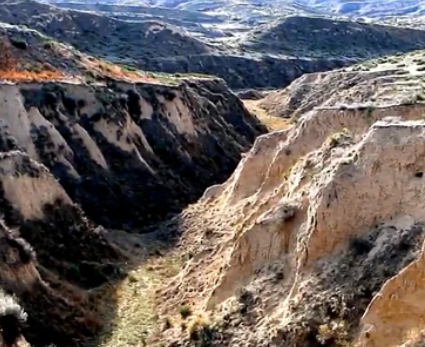
For all its virtues, Kansas doesn’t have a reputation as one of America’s grandest states. Better known for its flatland prairies and wheat fields — and as the parochial setting of Dorothy’s home in The Wizard of Oz — it’s perhaps one of the last places you’d expect to find something akin to the Grand Canyon. But at the Arikaree Breaks, on the border with Nebraska, you’ll find a dramatic formation of gullies, ravines, and loess sediments stretching for 36 miles all the way to Colorado.

Granted, the Arikaree Breaks are much less imposing than Arizona’s epic natural wonder, but to find solitude at the Grand Canyon, you’ll have to take the less-traveled, backcountry route. The Arikaree Breaks, for now at least, are comparatively uncrowded. So much so that they were included in a recent Only in Your State article titled “5 Places in Kansas Locals Hope Tourists Never Discover.” Clearly, the cat is now out of the bag. But that doesn’t mean you should avoid visiting the Arikaree Breaks altogether, but rather be mindful of how to experience them.

For example, given that most of the breaks run through private property, be aware of no-trespassing signs and stick only to the areas you’re permitted to access. According to some Tripadvisor reviews, it’s better to stay on the public roads passing through a small section of the breaks and stop at lookout points — which are marked on a self-driving tour map of the area. You can pick one of these maps up at the information kiosk on Highway 36 in St. Francis, as well as at restaurants and gas stations in the town.

Exploring the ‘Grand Canyon’ of Kansas

You can get to Arikaree Breaks, around 15 miles north of St. Francis, from the Land & Sky Scenic Byway, one of the Sunflower State’s premier driving routes. Access is, however, via unpaved roads better suited to 4WD vehicles (and particularly tricky when wet). That said, the lack of public transportation or designated hiking trails means getting here by car is a must. Thankfully, Kansas is considered to have the best driving conditions in America, so it’s a great off-the-beaten-path destination for a road trip. Additionally, there are no restrooms and few amenities, so bring water, food, and sunscreen, and be prepared to carry out your trash.

When you arrive, head to Lookout Point, where you’ll get the best views of the breaks, per an online self-guided tour by Kansas Travel. Here you can appreciate how, thousands of years ago, water erosion carved up the now semi-arid region into serpentine gullies — in some places it went deep enough to reveal the much more ancient bedrock below. Though relatively treeless, which gives visitors a better sense of the breaks’ scale, grass has reclaimed the landscape. Sage bush and tufts of weeds grow on the pastures, as do 16 native plants considered rare in Kansas. Wildflowers are particularly prevalent in spring, while mule deer and various bird species can be spotted all year.

Other areas of interest around the Arikaree Breaks include Devil’s Gap, which the Cheyenne Indians used to pass through on route to Old Julesburg in 1865 — though beware that the road through here is narrow and steep. Another landmark in the breaks, Horse Thief Cave, was a two-chamber cavern used by brigands as a residence and stable for purloined horses. It can be challenging to find, so consult your guide map.

The breaks are a great option for visitors to Kansas who seek out the untrodden trail. This Three Corners region, where Kansas, Nebraska, and Colorado meet, is a pretty rural patch of America, with no large population centers for more than one hundred miles. The nearest, Denver, is three hours away by car, which is just about close enough that the Arikaree Breaks might work as a day trip from America’s craft beer capital, if you’re up for it.

If you prefer to stay overnight rather than driving six hours in a day, then the nearest town of St. Francis is your best bet for accommodation near the breaks. Your options here consist of RV sites, motels, and clapboard guesthouses, which work well in tandem with the town’s provincial setting. Camping isn’t possible in the breaks, unfortunately, but campsites are available in Goodland, around 30 miles south of St. Francis. Goodland Koa Journey is a surprisingly lush, award-winning retreat with tent sites, RV spaces, and cabin-style lodging.

By David McElhinney

KS Department of Agriculture issues animal health alert

0
The Kansas Department of Agriculture’s Division of Animal Health is urging horse owners to take immediate precautions following confirmed cases of Equine Herpesvirus Myeloencephalopathy (EHM) in Texas and Oklahoma. The cases are linked to two major equine events: the Women’s Professional Rodeo Association World Finals in Waco, Texas, and the Barrel Futurities of America World Championship in Guthrie, Oklahoma.

While no EHM cases have been reported in Kansas, state officials have contacted all known Kansas horse owners who attended either event. Those owners have been advised to isolate exposed horses for 14 days and closely monitor for symptoms. The virus’s incubation period can last up to two weeks, meaning a horse may appear healthy while still shedding the virus and potentially infecting others.

EHM is a serious neurologic disease caused by Equine Herpesvirus-1 (EHV-1). It spreads through horse-to-horse contact via nasal discharge or inhaled droplets, and it can also be transmitted through contaminated surfaces including stalls, tack, feed, water sources, and transport trailers. Humans may inadvertently spread the virus through contaminated hands, clothing, and equipment.

Symptoms horse owners should watch for:
  1. Fever over 101.5°F
  2. Nasal discharge
  3. Lethargy
  4. Hind-end weakness
  5. Any signs of neurological issues

Animals showing neurological symptoms are considered to be in medical emergency status, and owners are urged to contact a veterinarian immediately.

KDA also reminds Kansans planning to travel with their horses to check current entry requirements for their destination state, as protocols may change quickly during disease outbreaks.

For ongoing updates, the Equine Disease Communication Center has established an online alert page tracking this outbreak and providing educational resources. The page is available at: equinediseasecc.org/alerts?alertID=4722

Horse owners with questions about quarantine guidance or possible EHM exposure can contact the KDA Division of Animal Health at 785-564-6601.

Fall composting tips for gardeners

0

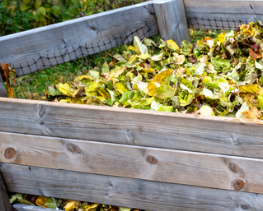
Turn over a new leaf by turning leaves into compost.

Gardeners are encouraged to compost leaves this fall to improve soil health. With plenty of leaves, grass clippings and garden debris available, residents can create compost piles that benefit the environment, recycle yard waste and nourish their gardens.

“Composting is a natural process that turns organic material into a dark, crumbly, earthy-smelling material called humus,” said Aaron Steil, consumer horticulture specialist with ISU Extension and Outreach. “It is an excellent soil amendment that improves soil structure, increases water-holding capacity and provides nutrients.”

Building and maintaining a compost pile

Effective composting requires a balance of carbon-rich “browns” (such as dried leaves and straw) and nitrogen-rich “greens” (like vegetable scraps and fresh grass clippings). The ideal carbon-to-nitrogen ratio is about 30:1. Steil recommends piles be at least three feet tall and wide to retain heat and should be turned regularly to maintain airflow and moisture.

“A three-bin system can work well with one bin used to stockpile materials until there is enough material to begin a composting batch,” said Steil. “The second bin is used for active composting and the third is used for the finished material to be stored until it can be used.”

Decomposition will still occur when the ratio of carbon to nitrogen is not perfect, but at a slower rate. “Compost created from fall materials, like fallen leaves and dead plant debris, is high in carbon and low in nitrogen. This means that special attention needs to be given to provide more of those green materials to create compost efficiently,” Steil noted. To accelerate the decomposition rate, gardeners can shred materials to increase the surface area for microorganisms to feed upon. Adding a small amount of nitrogen-rich fertilizer can also help. Regularly turning the compost helps introduces oxygen, keeping microbes healthy and growing. If the pile is dry, Steil advises adding water until it feels like a “wrung-out sponge.”

Steil recommends avoiding the use of meat, dairy products, pet waste, weed seeds and diseased plants in compost to prevent pests, pathogens and weeds. While heat is generated during the composting process, temperatures need to reach 150 to 170 degrees Fahrenheit to kill most pathogens and weed seeds, and most home compost piles do not reach this high a temperature.

“If a gardener does a great job of balancing the right ratio of browns and greens and provides the right amount of moisture while turning frequently, the pile will be warmer,” Steil said. “But even with the best of conditions, the pile may not be hot enough for long enough, so it’s best to avoid seeds and diseased plants.”

Using finished compost

After several months, compost should resemble rich, dark soil with an earthy aroma. This finished product can be used to top-dress lawns, mulch around trees or improve garden beds for spring planting. While compost can introduce some fertility to soil, its real benefit is introducing organic matter. Compost’s ability to improve soil structure and water-holding capacity improves aeration, supports the beneficial soil microbe population and helps the soil better hold and release essential plant nutrients. “This is why we sometimes call compost black gold!” Steil mentioned.

Soybean Farmers Invited to Second Annual Celebration

0

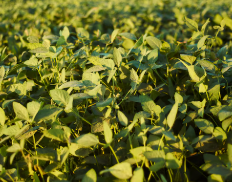
January once again marks the time of year that Kansas soybean farmers will gather to recognize good news in agriculture. Now in its second year, Kansas Soybean Celebration is set for January 30 in Salina and invites growers to join for an evening of awards and camaraderie.

“We were really pleased with the switch to Celebration from the traditional Soybean Expo in Topeka last year,” says Kansas Soybean Association President Brett Niebling, Highland. “It was an effort to better use resources, engage more with other commodities and serve farmers with a more central location, and we’re excited to see it pay off again this year.”

Following Kansas Commodity Classic and the KSA annual members meeting, Celebration is set to begin at 4:30 p.m. All Kansas soybean growers are invited to attend and enjoy a meal, an awards ceremony, organizational updates and a featured speaker.

Delivering the keynote address this year is Tyne Morgan, award-winning agricultural journalist and host of the U.S. Farm Report. Aside from raising two daughters with her husband in a rural Missouri community, what Morgan values most is sharing stories from across rural America that showcase the grit and tenacity that is hallmark to agriculture’s success.

The Kansas Soybean Celebration features recognition of KSA’s Friend of Soy and Meritorious Service recipients, honored farmer-leaders retiring from service and the results of the Kansas Soybean Yield and Value Contests.

Celebration is a free event coordinated by KSA and made possible by checkoff funding from the Kansas Soybean Commission. Registration, details and updates are available at www.kansassoybeans.org/celebration.

The Kansas Soybean Association, headquartered in Topeka, is the voice and advocate on local, state, national and international issues of importance to Kansas’ 16,000 soybean farms. Founded in 1973, its advocacy efforts are made possible through the voluntary memberships of farmers and industry supporters. It also is the primary, administrative contractor to the Kansas Soybean Commission.

The Kansas Soybean Commission, established in 1977, includes nine volunteer farmer-commissioners who are elected by their peers. They oversee investments of the legislated “soybean checkoff” assessment in research, consumer information, market development, industry relations and farmer outreach to improve the profit opportunities for all Kansas soybean farmers.

Winterizing roses and strawberries

0
K-State horticulture expert outlines steps to protect plants during colder months.

November’s temperatures in much of Kansas have proven to be unseasonably warm, but rest assured, the colder days of winter are not far away.

For gardeners, that means giving attention to garden plants in order to protect them from the inevitable freeze.

Kansas State University horticulture expert Cynthia Domenghini shared tips for protecting two popular plants – roses and strawberries.

Winterizing roses

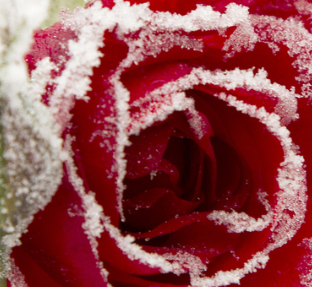
Most shrub roses are hardy through Kansas winters, but many hybrid teas and other modern varieties require protection, Domenghini said.

“It is important to winterize roses after several hard frosts have occurred, but before the ground freezes,” she said. “Winterizing too early keeps the stems warm and moist, which promotes the growth of mold. Winterizing too late risks damaging the sensitive graft union where the root stalk attaches to the above-ground growth.”

To prepare the plants for winter, clean up debris in the area surrounding the roses to prevent diseases from overwintering. Mound soil or compost 8-10 inches high around each rose plant. Domenghini said this is also a good time to bring in new soil – instead of soil around the roses – to avoid exposing and damaging the roots.

Once the ground has frozen, add a four-inch layer of straw, leaves, wood chips or other mulch over the mound, and cover with a layer of soil to hold it in place.

“This will help protect plants from the cold, but also prevent early budding during warm winter and early spring days,” Domenghini said. “As the mulch settles during winter, you may need to add more.”

Prune canes to 36 inches and remove weak or thin canes. Tie the remaining canes together loosely to keep them secure during windy weather. “If the canes are allowed to whip in the wind, it can cause damage to the crown and disturb the soil,” Domenghini said.

When the ground thaws next spring, remove the mulch and soil from the base of the plant to return the soil level to normal.

Winterizing strawberry plants

Mulch is necessary to protect strawberry plants from winter damage, regardless of whether they are young or established, Domenghini said.

“Sudden drops to freezing can kill fruit buds and injure roots and crowns,” she said. “When the soil freezes and thaws repeatedly, plants can be heaved out of the soil, exposing the roots.”

Domenghini recommends a three-inch layer of straw mulch for plants after they have been exposed to several frosts, but before the heavy freeze begins. In Kansas, this usually falls between Thanksgiving and Christmas.

More information on caring for strawberries is available online in a publication from the K-State Extension bookstore.

Domenghini and her colleagues in K-State’s Department of Horticulture and Natural Resources produce a weekly Horticulture Newsletter with tips for maintaining home landscapes and gardens.

Interested persons can subscribe to the newsletter, as well as send their garden and yard-related questions to [email protected], or contact your local K-State Extension office.