Tuesday, January 13, 2026
Home Blog Page 51

No nightmares: K-State expert shares tips for Halloween food safety

0

MANHATTAN, Kan. – Temperatures are dropping and leaves are falling which means Halloween is quickly approaching. While the holiday is not always thought to be overly risky in terms of food safety, any time perishable foods are left out can be a nightmare.

“Perishable foods such as meat and cheese trays, pasta dishes or finger sandwiches should be kept in a refrigerator until the party starts,” said Karen Blakeslee, Kansas State University food scientist and coordinator of K-State’s Rapid Response Center.

Blakeslee shared tips on how to keep party food safe to eat:

  • Arrange food on small platters so you can refrigerate and rotate food within two hours.
  • Use party tray lids as coolers by filling them with ice and setting the trays on top.
  • Store perishable treats. They should not be left out at room temperature for longer than two hours.
  • Wait until dough and batters are fully cooked before taste testing.
  • Beware of unpasteurized juice or cider, as it can contain harmful bacteria such as coli O157:H7 or Salmonella.

“Wash your hands before preparing food and keep raw meats away from ready to eat foods to prevent cross contamination,” Blakeslee said.

When planning a Halloween bash, keep in mind food allergies. To avoid allergic reactions, Blakeslee suggests asking guests beforehand if they have any food allergies. Keep in mind that sesame is now the ninth major food that can trigger allergic reactions, she said.

Trick-or-treating can be a sticky situation if candy is not thoroughly inspected. “Parents should examine the treats to avoid any tricks that may be in their bags. If any treats are damaged or open, discard them,” Blakeslee said.

When gathering treats to hand out, consider non-food items for kids with food allergies. For parents, Blakeslee had another piece of advice to make Halloween a treat – and not a trick.

“Give your goblins a meal or snack before trick-or-treating to fuel them through the fun,” she said.

Blakeslee publishes a monthly newsletter called You Asked It! that provides numerous tips on being safe and healthy. More information is also available from local extension offices in Kansas.
American Angus Association announces the 11 Kansas breeders who registered the most Angus

0

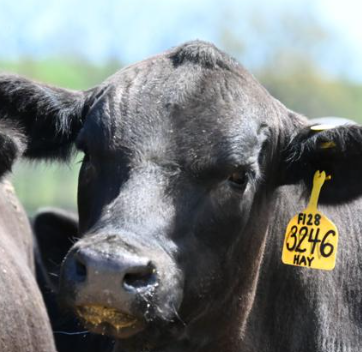
The 11 producers who registered the most Angus beef cattle in the state of Kansas recorded a total of 4095 Angus with the American Angus Association during fiscal year 2025, which ended Sept. 30, according to Mark McCully, Association chief executive officer.

The top 11 recorders in Kansas are:

• Gardiner Angus Ranch Inc, Ashland;

• Dalebanks Angus Inc, Eureka;

• Darrell & Frina Kaiser, Park;

• Gordon D Stucky, Kingman;

• Benoit Angus, Esbon;

• Flying S Ranch, Saint Francis;

• Schreiber Angus, Claflin;

• Ferguson Angus, Agra;

• Harms Plainview Ranch, Lincolnville;

• John Jay Mc Curry, Hutchinson;

• Oleen Brothers, Dwight.

Association members across the nation in 2025 registered 309,926 head of Angus cattle. “Angus breeders lead the way in innovation and genetic progress, giving their commercial cattlemen customers an advantage in the marketplace,” McCully said. “The diversity of the breed means that cattlemen across the country can find the right genetics – no matter their breeding objective.”

The American Angus Association is the nation’s largest beef breed organization, serving more than 21,000 members across the United States, Canada and several other countries. It’s home to an extensive breed registry that grows by more than 300,000 animals each year. The Association also provides programs and services to farmers, ranchers and others who rely on Angus to produce quality genetics for the beef industry and quality beef for consumers.

K-State researchers aim to reduce gluten allergenicity in wheat

0

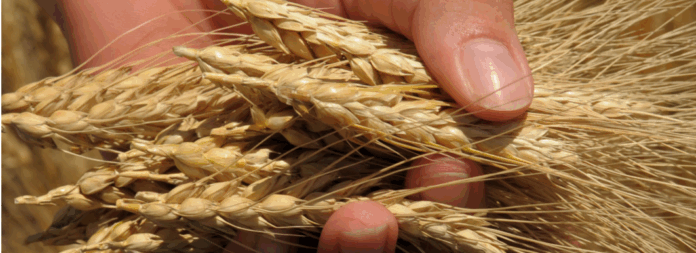
MANHATTAN, Kan. – Kansas State University researchers and the state’s farmers are putting their collective support behind a project to reduce the allergenicity of gluten in wheat, while maintaining the grain’s ability for bread and other products.

Eduard Akhunov, a University Distinguished Professor in K-State’s Department of Plant Pathology, said his team is identifying proteins in the wheat genome that trigger allergic reactions in people with celiac disease. The autoimmune disorder causes the immune system to react abnormally to gluten, a protein found in wheat, rye and barley.

Once they find the problematic proteins, the researchers will use a gene-editing technique known as CRISPR-Cas9 to target changes in the genome, which they hope will reduce or eliminate the allergic response in future varieties grown by U.S. wheat producers.

According to the Celiac Disease Foundation, the disorder affects 1 in 100 people worldwide, including about 2 million Americans. The Foundation notes that when people with the disease eat gluten, their immune system attacks the small intestine, damaging the small, fingerlike villi that help absorb nutrients.

“Our dilemma in doing this work,” Akhunov said, “is that in the past we have successfully reduced immunotoxicity in wheat by suppressing the expression of gluten-encoding genes. But, in most cases, this inevitably leads to the reduction of bread-making quality of that wheat.”

“We are working to develop wheat varieties that have a lower abundance of gluten proteins that cause allergic reactions, while at the same time maintaining bread-making quality.”

The three-year project began earlier this year and is funded by a $990,000 grant from the Foundation for Food and Agriculture Research. Project partners include K-State, University of California-Davis, the California Wheat Commission, the Celiac Disease Foundation and Kansas Wheat.

“Globally, the world is now consuming more than 800 million metric tons of wheat, and the United States mills almost 1 billion bushels of wheat annually into flour that produces wheat products,” said Justin Gilpin, chief executive officer of Kansas Wheat, which is funded by Kansas farmers through a checkoff program.

“I think it’s pretty exciting to see this work being done, especially with so much focus right now on wheat and health and consumers wanting to know more about their food.”

Aaron Harries, Kansas Wheat’s vice president of research and operations, said the organization has been working for many years to identify proteins most reactive for those with celiac disease.

“I give tours of our Wheat Innovation Center (in Manhattan) to farmers who have kids with celiac disease,” Harries said. “So, they’re growing wheat for a living, but at the same time they can’t have it on their dinner table. I just feel like there’s an obligation to try to do something about this.”

In 2023, K-State reported a breakthrough in developing wheat-based foods that contain lower amounts of gluten, while maintaining the quality of flour for baking. The current study will build on that work, further investigating the precise proteins that trigger gluten allergies.

Akhunov said gluten likely will never be completely removed from wheat since it is important for bread-making. Gluten provides the texture, flavor and moisture in such products as bread, bagels, pastries, noodles and more.

“We all know the benefits that whole grains play in a balanced diet, and yet there is a segment of the population that is trying to avoid those due to risk of an allergic reaction,” Gilpin said. “This is research that addresses a specific consumer need.

“It’s particularly positive for the wheat industry and, more specifically, wheat farmers. It’s exciting to have Kansas State as a partner on this project.”

Training for women landowners begins Oct. 21

0

Sessions will be held in Missouri, Kansas and Iowa

The Center for Regenerative Agriculture at the University of Missouri recently launched the Women Landowners Leading Regeneration (WLLR) project. It offers trainings and outreach activities available in Missouri, Iowa and Kansas.

WLLR project is designed to address the unique needs women landowners—those who own farmland but do not farm it themselves—by providing a supportive, peer-based environment to help them implement conservation practices on their land, said project co-leader Kelly Wilson, associate director of Center for Regenerative Agriculture.

“Women own roughly 25% of U.S. farmland—an estimated 354 million acres—but are often overlooked in traditional conservation outreach,” Wilson said. “Many women landowners want to steward their land in ecologically responsible ways but lack access to the information, networks and support they need. This project fills that gap.”

Wilson says WLLR is rooted in the Women Caring for the Land model, which uses a peer-to-peer learning circle approach proven effective in increasing women’s knowledge, confidence and ability to advocate for conservation outcomes on rented farmland. “About 70% of women who attend a Women Caring for the Land meeting will take an action to improve conservation on their land.”

The effort is about building bridges between women landowners and the conservation tools available to them, she says. “We’re not only seeing increased adoption of practices like cover cropping and reduced tillage, but we’re also witnessing women forming lasting networks of support that strengthen rural communities.”

“Through both in-person and virtual learning circles, we’re connecting women landowners with one another and with resource professionals who respect and understand their goals,” said project co-leader Olivia Caillouet. Caillouet says participants will become familiar with the learning circle model and learn about lease agreements that encourage regenerative farming. They’ll also learn about government-funded cost-share and incentive programs and about practices such as cover crops and conservation tillage.

The project is a collaboration of the University of Missouri, the Kansas Soil Health Alliance, E Resources Group, and the Women, Food and Agriculture Network. Partners include consultants Jean Eells and Rebecca Christoffel, who will lead trainings, and Jennifer Simmelink, executive director for the Kansas Soil Health Alliance.

Wilson and Calliouet recommend the training for conservation professionals, including extension staff and natural resource partners who work with women landowners.

Fall trainings

  • Missouri: Tuesday, Oct. 21, Lakeside Nature Center, 4701 E. Gregory Blvd., Kansas City.
  • Kansas: Wednesday, Oct. 29, Prairiewood at Blue Sage Barn, 1484 Wildcat Creek Road, Manhattan.
  • Iowa: Wednesday, Nov. 12, Madison County Historical Museum, 815 S. Second Ave., Winterset.

The WLLR project will continue into 2026 and 2027 with learning opportunities tailored directly to women landowners in Kansas, Missouri and Iowa, Wison said.

Learn more about WLLR, or contact Wilson at [email protected] or Caillouet at [email protected].

Have you an Owl in your Burrow?

0

I love birds of prey, especially owls. Among my top ten favorite life experiences has been sitting on my brother’s porch after dark, when he lived deep in the southeastern Ohio woods, listening to the sounds of the night. There are whippoorwills and coyotes and all the small croaking, twittering creatures of the dark, but the main attraction was always the owls. From the eerie whines of tiny screech owls, to the deep, bass moans of great horned owls, and the tell-tale “Who cooks for you, who cooks for you too” cries of barred owls, the night time woods always came alive with owl calls.

A little-known owl species here in Kansas is the burrowing owl, a medium sized owl that make their home in abandoned badger and prairie dog dens. I was introduced to burrowing owls a few years back during an opening day pheasant hunt near my home. We were a large group of 15 or so hunters and were trudging across an overgrown CRP field. As we walked, birds identified by the landowner (who was with us) as hawks began taking flight, one-at-a-time from out of nowhere. Looking back, I believe those birds were in fact burrowing owls being spooked by our presence from their dens that were probably old abandoned badger holes.

Studies show burrowing owl populations to be in sharp decline, easily imagined here in Midwestern farm country where badger dens are not welcome and are filled-in when possible, and where prairie dog towns as a whole are hard to come by anymore. They are listed as endangered in Canada, as threatened in Mexico, and as endangered, threatened or of special concern in 9 of the United States. Here in Kansas, they are listed as “vulnerable.” Burrowing owls are active both day and night and often live in colonies of several mated pairs. They drag all manner of stuff into their dens as nesting material, and I found numerous mentions of cow manure being a favorite. Researchers believe the manure somehow helps control the microclimate of the den, plus attracts insects which the owls feed on. Typical clutch sizes are from 3 to 12 eggs, and large families of chicks are often raised. Their main diet is mice and moles during spring and early summer when they’re still feeding hungry chicks, then mainly grasshoppers and beetles as long as they can still be found. Burrowing owls stand 10 to 12 inches tall when mature and have long, featherless legs and white eyebrows above extremely large, bright and beautiful yellow eyes. All birds make some sort of vocal sounds, and even though burrowing owl calls are not noteworthy at all compared to some of their vocal cousins, they do make a few cooing, chirping sounds, the most recognized being a 2-note sound reminiscent of a quail call.

We recently watched a TV documentary about swift foxes and burrowing owls living in suburban neighborhoods around Las Vegas. Since watching that documentary, we have found a couple dens of burrowing owls living in a sprawling prairie dog encampment near Walmart in Hutchinson. We can see their dens from a side street, so now every time we are in that part of town (which is way too often for me) we swing past, and if they are sitting at the entrance to their den, we stop and watch awhile. They are surrounded by active prairie dog dens and the dogs scurry about and graze as if the owls weren’t there at all. In fact, the little owls probably benefit from the prairie dog’s surveillance system. In an active prairie dog town there are always certain occupants designated as sentries whose job it is to keep watch for danger, and when intruders are spotted in the form of foxes, hawks or merely nosey humans, they sound an alarm by rising quickly up on their hind feet, stretching their heads skyward and emitting

shrill high pitched chirps of danger, sending all their brethren scurrying for cover and affording the owls a chance to dive into their burrows too.

One of these days I’m going to wonder around through the prairie dog towns around Walmart to see if there are signs of any other little owls there. I’ve always wondered if there are prairie rattlesnakes living there amongst the prairie dogs too. They are common inhabitants of abandoned prairie dog dens, although not quite as cordial as the owls, given that they often eat the landlords…. Continue to Explore Kansas Outdoors!

Steve can be contacted by email at [email protected].