Tuesday, January 13, 2026
Home Blog Page 56

My Cowboy Christmas

0
lee pitts

I’ve read all the articles telling the unenlightened, like me, about all the money we’re leaving on the table by not weaning our calves for at least 45 days. I don’t blame the feeders and stocker operators who don’t want to put up with sickly bawling calves either but some of us run on leased land and don’t have the facilities to wean our calves. For two years I attempted to put a long wean on our calves and I still have bad dreams about it.

We gathered the herd, sorted off the calves and thus began the nightmare. At the time we were living in a trailer house on the ranch within a stone’s throw from our weaning pens so we got to listen to the cacophony of calves all night. Even the bottle calves that never tasted their mother’s milk were bawling for their mommas long since gone. I tried everything from ear plugs to Tylenol PM but I didn’t sleep a wink. So I woke up grouchy… who could sleep through an earthquake. Her naturally cheery outlook started getting on my frayed nerves and by the end of breakfast I was already madder than a rained on rooster, only to look outside to see there’d been a jailbreak and half the calves were already back with their moms.

The problem was to reinforce a falling-down set of corrals where I intended to wean our calves I bought a load of cheap panels that I swear were welded together with the school glue you used in kindergarten. Those calves and their mad mothers made quick work of those panels so we had to gather the entire herd again to sort off the jailbirds. That meant the noise on the second night was even worse. Even grouchy couldn’t sleep so she took that opportunity to announce she was going to visit her sister. This meant I had to feed and doctor the sick calves all by my lonesome.

One thing all the articles fail to mention when weaning your calves are all the added costs involved. I’d already spent a small fortune on the panels and now I had to feed the calves 75 pound sacks of a starter ration I bought from a feed mill an hour from home. Then there was the chiropractor bill I paid to realign my back after lifting a truckload of 75 pound sacks all by myself because my wife was still at her sister’s place.

For some reason my calves have always been dumber than a fence post. They didn’t even know what a water trough was because they’d been drinking out of a creek their entire lives so I had to dig an artificial river through the weaning pens and run water through it from a water truck I had to rent. Then one day I had a brainstorm; I put on my swim trunks and frolicked in a water trough splashing water on the noses of the stupid calves until they figured out there was water in them there troughs. Then there’s the cost of all the vaccines my vet said my calves would need to satisfy the buyers and reap the big rewards. Add it all up over the 45 days that separates the premiums from the discounts and I think I’d have been better off if half the calves had died the day we kidnapped them from their mothers.

The next year we tried something called fence-line-weaning that must have been invented by someone with w-a-a-ay better fences than mine because after every jailbreak of fence crawlers I had to spend three days fixing fence all by my lonesome because my wife was on her now-annual visit to see her sister.

During the National Finals Rodeo every year in addition to all the rodeo action there are big trade shows they call Cowboy Christmas which I absolutely love. I mention it here only to say that my Cowboy Christmas occurred instead on the 45th day of weaning when I said good riddance to those little hell-raisers with not a tear in my eye.

And that’s why we went back to weaning our calves the same day we sent them to the auction market. It was either that or my wonderful wife was going to go stay with her sister on a more permanent basis.
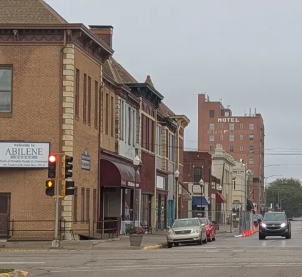

Ex-Kansas cowtown makes HGTV list of charming small-town downtowns

0

Dwight D. Eisenhower, who grew up in Abilene, Kansas, stayed so often at that city’s Historic Hotel Sunflower during his presidency that it became known as the “Little White House.”

A “presidential suite” was created on the building’s sixth floor, and redecorated and furnished before each Eisenhower visit, said the form submitted in 2001 to get that building placed on the National Register of Historic Places.

The eight-story, 94-year-old former hotel, now the site of Sunflower Apartments, is among attractions present in downtown Abilene, a city of about 6,400 people in north-central Kansas.

The home improvement network HGTV last month picked Abilene as having one of the 40 most charming small-town downtowns in the U.S. Abilene’s downtown was the only Kansas downtown to make the list.

Why did HGTV urge caution?

“Nothing charms like a small downtown that beckons visitors with historic architecture and boutique shops, or local culture and tree-lined streets,” HGTV said in a Sept. 17 article listing the cities involved.

“In creating this list of the best small downtowns in America (and it was tough to narrow this list to 40), we looked for vibrant towns that invite you in and encourage you to stay and explore,” HGTV said.

It added: “Caution: You may want to add all of them to your travel bucket list.”

Why was Abilene picked?

Abilene is “a place where vintage treasures, historic landmarks, and warm small-town hospitality come together to create an unforgettable getaway,” said the website abilenekansas.org.

“The small town of Abilene, Kansas, has received a boatload of accolades over the years, from coolest small town to most beautiful small town,” the HGTV article said. “There’s so much to love about the hometown of 34th President Dwight D. Eisenhower.”

More than 150 antique shops and booths are located throughout historic downtown Abilene, HGTV said.

“Ride on a 100-year-old steam engine on the Abilene & Smoky Valley Railroad, stand in awe as you watch a massive cattle drive and get a taste of the Old West during summer gunfight re-enactments,” it said.

Downtown Abilene is also the site of the former Abilene Union Pacific Railroad Passenger Depot, from which Eisenhower departed in 1911 to become a student at the U.S. Military Academy in West Point, New York.

What other U.S. cities made the list?

The following other 39 U.S. cities made HGTV’s list:

  • Athens, Georgia.
  • Bar Harbor, Maine.
  • Bastrop, Texas.
  • Bend, Oregon.
  • Breckenridge, Colorado.
  • Cape Charles, Virginia.
  • Carmel-by-the-Sea, California.
  • Charlottesville, Virginia.
  • Concord, North Carolina.
  • Conway, South Carolina.
  • Covington, Kentucky.
  • Dahlonega, Georgia.
  • Deadwood, South Dakota.
  • Fernandina Beach, Florida.
  • Franklin, Tennessee.
  • Galena, Illinois.
  • Greenville, South Carolina.
  • Harpers Ferry, West Virginia.
  • Ketchum, Idaho.
  • Lake Placid, New York.
  • Lewes, Delaware.
  • Lewiston, New York.
  • Livingston, Montana.
  • Marquette, Michigan.
  • Medora, North Dakota.
  • Middleburg, Virginia.
  • Montpelier, Vermont.
  • Mystic, Connecticut.
  • Pacific Grove, California.
  • Park City, Utah.
  • Portsmouth, New Hampshire.
  • Solvang, California.
  • St. Michaels, Maryland.
  • Taos, New Mexico.
  • Virginia City, Nevada.
  • Wickford, Rhode Island.
  • Fish Creek, Wisconsin.
  • Williams, Arizona.
  • York, Pennsylvania.

As reported in the Topeka Capital Journal

Kansas made itself part of the corn belt, but that may not be sustainable

0
Western Kansas has inserted itself into the corn belt, a region of the Midwest from Ohio to Nebraska that has dominated corn production. There might be better crop options for the Kansas climate, but huge industries and government subsidies help keep corn growing.

It’s harvest time in Kansas. Across the state, combines have begun shaving down and chopping up over 6 million acres of corn.

Isaac Yara is a truck driver, so he sees almost nothing but those corn fields hauling grain across the high plains. This season is a busy one for him.

“I would say the main thing that I haul the most would be corn,” Yara said as he parked his semi for the day.

Why are those signature corn fields so ubiquitous in rural America, including western Kansas where the crop relies on the shrinking Ogallala Aquifer to thrive?

That’s because in western Kansas, there is a huge demand for it. The major corn industry is connected to most of the jobs, like truck driving, the cattle industry and farming.

But the problem is, corn is not as well suited as other crops to this region. All of the economic infrastructure and pressure makes growing corn a simple choice for now, but in the long term it might not be a sustainable option.

The corn you see is generally not for human consumption. A lot of states, including Kansas, plant a shorter, starchier version called field corn.

This corn won’t taste good to us, but it’s perfect for cattle. It’s also good for producing biofuel in ethanol plants. But that main use is pressing that starchy corn into a softer, highly digestible, high-protein feed.

It starts out on the farm. Yara drives his truck out to a farmer’s field, gets loaded up with corn and takes it to feedlots. But not usually the feedlots across western Kansas.

“I’ll go pick up in Greensburg, Kansas, or around those areas,” Yara said. “I’ll pick up corn there and then I’ll just bring it down over to the Texas Panhandle.”

Yara described what the industry refers to as the southward flow of grain across the Plains. Despite Kansas being covered in millions of acres of corn, truck drivers and cattle feedlots will tell you a lot used here still comes from the original corn belt in Nebraska, Iowa or Illinois, not down the road.

“We take fertilizer up north to Nebraska or South Dakota, and we’ll bring back corn product, or corn itself,” Yara said.

Grain marketing economist Mark Welch at Texas A&M University said corn is the staple crop for the beef industry. It’s virtually always in demand, it’s also reliable, so a lot of farmers will plant some corn for a steady crop and good returns.

“In terms of dollars per acre, the return possibilities for corn are pretty attractive,” Welch said.

Over the years, hybrids have capitalized on irrigation to survive drier periods, and subsidies from the federal government have made corn common.

Since 1995, the federal government has paid out $21 billion in subsidies for corn to farmers nationwide, making it the most subsidized crop. Second place is wheat with about half of those subsidies.

Kansas corn planting has grown by an average of 50,000 hectares a year since the 1880s. But despite this increase, Kansas still rails in literal tons of corn from the original corn belt.

Welch said part of the reason is the current transport system has been fine tuned. The rails, grain elevators and systems are already in place. It can sometimes be cheaper for a feedlot or dairy to rail in corn from the northeast where high yields contribute to lower prices.

The other reason is cattle are fed a ration that is almost 80% corn, and the rest is a filler often including silage, a fermented grain. A lot of local Kansas corn is turned into silage.

“You’re not going to rail that in from Nebraska. It’s too bulky. It’s hard to maintain condition,” Welch said.

With silage, the entire corn plant is copped up.. Agronomists say silage is best suited for irrigated corn, as it needs to be wet. But shipping all that wet material wouldn’t make sense, financially. So it’s often made locally.

There are other crops that are more water efficient and can be used for silage, like sorghum. But in an industry this massive, the momentum corn already has, makes it hard to change to something else, even with the downsides of corn.

“The seed cost is higher. The fertilizer requirements are higher. If you’re going to irrigate it, you might spend more water on corn than you would grain sorghum,” Welch said.

And despite those costs, the demand means corn acres can generate more revenue for farmers compared to sorghum.

Brandon Depenbusch is the vice president of the cattle division at prominent cattle feeding company Irsik and Doll. He said some feedlots in the region have more than 35,000 cattle to feed, and each animal eats up to 30 pounds of corn a day.

Western Kansas is also home to mega feedlots, feeding up to 80,000 cattle a day. Even with the increase in Kansas corn acreage, it’s not enough.

“I would explain some of our feed yards as a city,” Depenbusch said. “We run a city, and the citizens are cattle. They got to have groceries to eat.”

Corn is a crop that yields much higher with irrigation. When irrigated, corn can yield almost 300 bushels an acre in Kansas. Without irrigation, it might be half of that in a good year. Corn is the most commonly irrigated crop in Kansas. More than a third of the 3 million irrigated acres in Kansas produce corn.

Kansas farmers have access to irrigation through the Ogallala Aquifer. But that access has been in danger after years of pumping for crops has resulted in the aquifer running almost dry in some places.

Given the water usage and the climate challenges in Kansas for the crop, farmers and industry leaders have had to take a hard look at whether corn is still worth it.

Depenbusch said that he believes in the beef industry and its ability to adapt. Maybe feedlots in the future will be able to transition to another high protein feed that can grow with less water nearby, like sorghum.

But feedlots and ethanol plants are set up to process corn kernels. A sorghum berry is smaller, and could take twice as long to process for a feedlot.

That’s just another example of how fine tuned things are for corn, making it harder to switch crops. But that doesn’t stop Depenbusch’s optimism.

“It’s just going to look different. But by God, it needs to look different. If we’re doing the same thing 20 years from now that we are today, that’s a dying industry,” Depenbusch said.

“We have to evolve, and we will,” he said.

Calen Moore covers western Kansas for High Plains Public Radio and the Kansas News Service. You can email him at [email protected].

Here are 7 places to enjoy breathtaking fall foliage in Kansas

0

It happens every year.

As the days grow shorter, trees prepare for winter by ceasing production of the chemical chlorophyll, which keeps their leaves green.

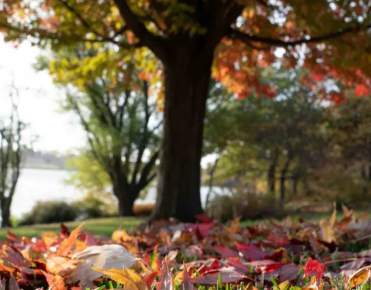
The results can be spectacular, as those leaves are transformed into brilliant tones of orange, yellow and red.

When will colors change in Kansas?

That annual spectacle is expected to begin the week of Sept. 29 along the Sunflower State’s western edge, says a 2025 fall foliage map published online by the National Park Service.

By the week of Oct. 12, leaves will be changing colors throughout Kansas, that map said.

It predicted the peak of color would come throughout most of the Sunflower State’s western half the week of Nov. 3, and throughout most of its eastern half the week of Nov. 10.

Following are seven of the best places in Kansas to enjoy the view.

Baldwin City

This community in Douglas County in northeast Kansas is so closely identified with fall foliage that since 1958 it has hosted the annual Maple Leaf Festival, which takes place this year Oct. 18 and 19.

Inspiration for the event comes in part from the “hundreds of beautiful maple trees, which form an umbrella of brilliant color over the city each fall,” said the leisure and sports website lasr.net.

The festival is one of the state’s largest autumn events and features “parades, quilt shows, street food, and pumpkin everything,” said the worldatlas.com website.

Native Stone Scenic Byway

The 75-mile Native Stone Scenic Byway, which runs through the Flint Hills, gets its color from the many groves and creeks along the route, said the travelks.com website.

“Fall is a festival of colors as the highway cuts through the rolling terrain — highlighting both the natural wonder of rock formations and the amazing craftwork of masons who built walls, bridges and buildings with native stone,” it said.

The byway’s beginning and ending points are eight miles south of Manhattan, at Interstate 70, exit 313, and at the intersection of K-highway and Glick Road, in western Shawnee County.

Ted Ensley Gardens

The view becomes particularly colorful each fall in the Woodland Garden just north of the Garden House in Ted Ensley Gardens at Topeka’s Lake Shawnee.

As visitors sit on a shaded stone bench in those gardens, “The colorful foliage of Painters Palette draws the eye to the north,” said a K-State Research and Extension website highlighting the Woodland Garden. “Do not miss the spectacular display of the wahoo tree in the fall as you continue to the seated arbor overlooking Lake Shawnee. From this vantage point, you can view our secret garden — a sunny spot where we have tucked away our latest Monarch Waystation.”

Frontier Military Historic Byway

The Frontier Military Historic Byway follows paths established by the Army in the 19th century while running 167 miles between Fort Leavenworth on the north to Fort Scott on the south, eventually reaching the Kansas/Oklahoma border.

It is the longest byway in Kansas, passing by “forts, museums and other historical gems,” and offers many places to pull off and enjoy the foliage, said the kstravel.com website.

“Pull on your comfy sweatshirt as you take in the colorful woodlands of the Marais des Cygnes Wildlife Refuge and Marais des Cygnes Wildlife Area,” that site said. It cautioned travelers to “Be on the lookout for deer!”

Chautauqua Hills Loop trail

“A fall foliage wonderland” is the description the onlyinyourstate.com website gave to the seven-mile Chautauqua Hills Loop trail at Cross Timbers State Park, about 12 miles west of Yates Center in Woodson County in southeast Kansas.

If you’re looking for fall foliage that’ll knock your socks off, Cross Timbers State Park is an excellent place for adventure,” that website said. “However, there’s one particular trail — Chautauqua Hills Loop — that takes fall foliage to the next level. Lace up your hiking boots and pack some trail snacks, because this adventure is one you’ll want to experience in person.”

Flint Hills National Scenic Byway

“Nature’s fiery color display is perfection on a mild autumn day on the Flint Hills National Scenic Byway,” said the kstravel.com website. “Stretching more than 47 miles across the Flint Hills of Kansas, the byway is a two-lane, paved road and a favorite fall foliage drive.”

The byway runs along K-177 highway from Council Grove in Morris County in central Kansas to Cassoday in Butler County in south-central Kansas, offering views of one of the last remaining stretches of tallgrass prairie and access to historic sites that include the Tallgrass Prairie National Preserve, which features a historic mansion and schoolhouse.

Alcove Spring

Fall brings colorful foliage to Alcove Spring, near Blue Rapids in Marshall County in northeast Kansas, said the touristsecrets.com website.

The site is known for the springs located there, an intermittent waterfall and its historical significance as a stop for Native Americans, fur traders and pioneers using the Oregon Trail, the “8 Wonders of Kansas Geography” website said.

The location was named by pioneers from the ill-fated Donner Party, who stopped there in 1846, then continued west before some of them resorted to cannibalism after they became snowbound in the Sierra Nevada Mountains.

As reported in the Topeka Capital Journal