Sunday, March 29, 2026
Home Blog Page 20

New Kansas bicycle maps now available

0

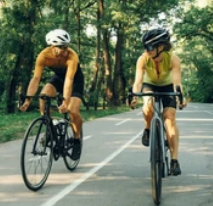
The new 2026-28 Official State Bicycle Map of Kansas is now available from the Kansas Department of Transportation. Whether riding a few miles or cycling across the state, this edition offers a variety of information to help active transportation users plan a short trip or a long ride.

State bicycle maps and educational flyers with bicycle safety tips are free and can be ordered on KDOT’s website at http://www.ksdot.gov/KSBikeMap.

“Rail-Trails and the U.S. Bicycle Route System maps are included in the publication and showcase historic and unique places to visit along these routes,” said KDOT’s Active Transportation Manager Jenny Kramer. “We want residents and visitors alike to experience a few of the many venues and sights Kansas offers by bike while participating in active lifestyles.”

The map features color-coded highways to help riders distinguish traffic levels and varying route widths to show where shoulders are paved and wider than 3 feet. For those wanting to avoid highways, county roads are also shown using the same color coding for traffic ranges and denote whether they are paved or unpaved.

Additional features include:

  • Rest areas and bike shops
  • State parks and scenic byways
  • Hospitals with 24-hour emergency care
  • Past Biking Across Kansas routes

In addition, details and contact information on the new Kansas Trails Inc. organization are available. According to the group, its mission is to provide the resources, support and community connections needed to make trails across the state accessible and sustainable for everyone.

For more information or to order maps, send an email to [email protected] or call Kramer at 785-296-5186.

Tax changes to senior income, car loan interest for 2025–28

0

New federal tax changes will affect some seniors and car buyers beginning in the 2025 tax year, providing potential deductions on income for seniors and certain vehicle purchases, according to Andrew Zumwalt, director of the University of Missouri’s Personal Financial Planning program.

Deduction for filers 65 and older

For taxpayers age 65 or older by the end of the year, the law allows a deduction of up to $6,000 for single filers and $12,000 for married couples filing jointly, assuming both spouses are age 65 or older.

“While this tax benefit is often referred to as ‘no tax on Social Security,’ it doesn’t have any connection to receiving Social Security, Zumwalt said.

The benefit phases out for single taxpayers with modified adjusted gross incomes above $75,000 and married couples filing jointly above $150,000. The deduction is in addition to the standard deduction and is in effect for tax years 2025 through 2028.

“Many seniors will see a reduction in their federal taxable income because of this change,” he said. “But it’s important to remember this doesn’t change Social Security payments themselves, and it doesn’t reduce state income taxes in Missouri.”

Deduction for qualifying car loan interest

The new law also provides a deduction for interest paid on loans for certain new vehicles purchased after Dec. 31, 2024, for personal use. Taxpayers can deduct up to $10,000 of interest per year. Eligible vehicles include cars, minivans, SUVs, pickup trucks and motorcycles. Vehicles must weigh less than 14,000 pounds, and final assembly must take place in the United States. Lenders must provide a statement of interest paid for tax filing purposes.

The deduction begins to phase out for single filers with incomes above $100,000 and married couples filing jointly with incomes above $200,000. Like the senior exemption, this deduction is “below the line” and does not affect state tax returns in Missouri.

Zumwalt emphasized that both changes are intended to simplify tax benefits while keeping them separate from state tax calculations. Taxpayers claiming these deductions should maintain proper documentation, including tax returns and lender interest statements, to support their filings.

Zumwalt discussed these and other changes to federal income tax law at a recent training for volunteers in the Volunteer Income Tax Assistance (VITA) program, in which IRS-certified volunteers discuss and prepare tax returns for free.

Kick-start spring by getting into the garden

0
K-State horticulture expert suggests gardening activities to kick the winter blues.

As the weather slowly begins to warm up, many Kansans are eager to get back to gardening. Kansas State University horticulture expert Cynthia Domenghini said work can begin on vegetables like peas and lettuce.

“If you are tired of winter and hunger for spring, try planting peas as soon as the soil dries and the temperature reaches 40 degrees Fahrenheit,” Domenghini said.

There are many varieties to choose from in Kansas. Domenghini suggests early maturing varieties with resistance to powdery mildew.

“Early maturing types allow us to harvest a crop before the hot weather arrives and stops production,” Domenghini said. She added that plant size should be a consideration when selecting varieties.

As for snow peas, commonly used in stir-fry, Domenghini suggests Dwarf Grey Sugar and Mammoth Melting Sugar.

Sugar snap peas share a resemblance with shelling peas but have a thick, fleshy pod that can be eaten like snow peas, pod and all. Sugar Bon, Sugar Ann, Super Sugar Snap and Sugar Sprint are recommended by Domenghini.

Domenghini said peas should be planted shallow, about one-half inch deep to encourage rapid germination and emergence, and seeds should be spaced 2 inches apart in a row.

“Many people plant two rows 6-8 inches apart so the floppy plants can support one another,” Domenghini said. “For some older varieties, this may not be enough. They may need trellising to support the growing vines. You might consider installing fence to keep rabbits away.”

Peas are not the only vegetable that gardeners can begin work on, Domenghini said lettuce can be started from transplants now.

“Though lettuce is most often planted directly from seed in late March to early April, it can be started from transplants,” Domenghini said. “Transplants allow lettuce to mature earlier so that it escapes heat that can lead to a strong flavor and bitterness.”

Domenghini and her colleagues in K-State’s Department of Horticulture and Natural Resources produce a weekly Horticulture Newsletter with tips for maintaining home landscapes and gardens. The newsletter is available to view online or can be delivered by email each week.

Interested persons can also send their garden and yard-related questions to Domenghini at [email protected], or contact your local K-State Research and Extension office.

K-State meteorologist advises Kansans on dangers of severe weather

0
Spring marks the peak season for dangerous storms, Redmond says.

Kansans are encouraged to review their severe weather plans during Severe Weather Awareness Week, set for March 2-6, with a statewide tornado drill scheduled at 10 a.m. CST (9 a.m. MST) Wednesday, March 4.

The annual campaign is designed to remind residents of the state’s wide range of weather hazards and the importance of preparation, said Chip Redmond, a meteorologist at Kansas State University.

“Severe Weather Awareness comes in a multitude of forms,” Redmond said. “In Kansas, we get pretty much every variety of severe weather.”

Spring marks the peak season. Heavy rain, flooding, tornadoes, hail, wind and lightning all become more frequent, especially in May. Activity typically increases in April and gradually declines through June and July, though severe weather can occur year-round.

“We’re slowly entering that time of the year where you need to know these hazards,” Redmond said. “You need to build situational awareness on what you’re going to do if these hazards do occur or are predicted.”

Kansas experienced an unusually quiet tornado year in 2025. According to the National Centers for Environmental Information, the state reported 30 tornadoes, well below the 1950-2020 average of 61 and sharply lower than the 69 reported in 2024. No fatalities or injuries were reported. The most active day was May 18, when 20 tornadoes touched down.

While tornadoes often draw the most attention, Redmond said they are only part of the severe weather threat.

On average, Kansas records nearly 300 reports of severe hail — stones at least 1 inch in diameter — each year. Larger hail, though rare, can be as destructive as a tornado. Damaging winds, including those associated with squall lines, can reach speeds up to 100 mph and affect large regions.

Heavy rain and flash flooding also pose significant dangers.

“Never drive through flooded roads. Turn around,” Redmond said. “You don’t know what’s underneath that water.”

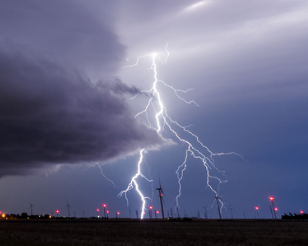
Lightning is another often-overlooked hazard. Nationally, lightning kills dozens of people each year, sometimes in groups seeking shelter under trees. Redmond said the safest option during a thunderstorm is to go indoors, avoid windows and stay away from plumbing and electrical appliances until the storm passes.

Preparation begins with reliable information, he said. The National Weather Service website, weather.gov, local news outlets and weather radios provide dependable updates. Smartphone apps can be helpful but may fail during power outages or if cell service is disrupted.

“Everyone’s got a cell phone now, and there’s many, many ways to get information,” Redmond said. “But you need to know their limitations as well.”

He recommends having multiple ways to receive warnings, including a battery-powered weather radio. Residents also should familiarize themselves with maps and radar so they can better understand where storms are in relation to their location.

Having a plan is equally important. The safest indoor shelter is a basement or a windowless room on the lowest floor, such as an interior bathroom. Families should practice drills and designate meeting places in advance.

An emergency go-bag should include a flashlight, snacks and a battery-powered radio with fresh batteries. Items to comfort children, such as games, also can be helpful.

Planning is especially important for those who may be away from home when storms develop. Redmond advises monitoring forecasts before traveling and identifying sturdy shelter options along the route.

“If it’s a really high-end severe weather day, you’re going to hear about it,” he said. “Have a plan and be ready to enact it.”

Severe Weather Awareness Week offers an opportunity to review those plans and take part in the statewide drill, reinforcing what Redmond calls the most important step: “Have multiple ways of getting severe weather warnings in Kansas and then be able to enact on them and take proper shelter.”

Putting On The Dog

0
lee pitts

The biggest change in the animal world during my 74 years has been our attitude towards dogs. It’s now a common sight to see dogs running around with people chained to them whose sole purpose is to pick up the dog’s poop.

You see more jet-setting dogs in airplanes whereas 60 years ago you often heard of pets flying in the baggage compartment and freezing to death. Today in order for a dog to fly it must be in a kennel that’s large enough for the dog to stand up, sit down, turn around and roll over. This is more space than the passengers get. After a tiring flight the dog can get an at-home neck and shoulder massage or acupuncture. It can even go to a spa (dogs are more spa oriented than cats). There’s now an entire industry of dog clippers who can make a poodle look like a topiary hedge in some billionaire’s botanical garden.

I have a friend who owns a chain of pet stores that offers self-service bathing facilities for dogs. I don’t think I’ve ever washed any of my dogs more than three times in their life and when I did it was probably because they tangled with a skunk. I never could see the point in washing a dog only to see it roll in a pile of cow manure afterwards.

It used to be that the social order of dogs was determined by how high on a fence post or utility pole they could pee, whereas now social status amongst dogs is determined by their name. Seventy years ago dogs were given simple monikers like Lady, Spot, Bear, Blue, Buddy or Bandit. Fido was the perfect name for a dog, Fido meaning ‘faithful’ in Latin. When’s the last time you heard of a dog named Fido? Nowadays they are more apt to have registration papers with names like Benjamin Rock-a-feller III or Queen Amanda of Omaha. Even common mutts are now called Britney, Brandy, Buffy or Snoop Dog.

Growing up I can’t remember seeing a dog being pushed in a baby carriage or in a doggie trailer pulled by a bicycle. Nor was I ever invited to a dog’s birthday party. You didn’t kiss your dog back then because you knew what your cowdog had been eating and that a dog’s mouth was one big Disneyland for bacteria. Now people take their dogs everywhere with them. It’s a common sight to see dogs in restaurants and I was shocked the first time I saw a dog in a grocery store. Dogs are even welcomed inside banks… just as long as they don’t leave a deposit.

It takes a lot more money now to raise a dog than it used to. I saw one estimate that said it cost $10,000 over the course of a dog’s life of 11 years. I bet I’ve had over 10 dogs in my life and I only paid cash for one of them. Dogs used to be given away and if yours had pups before you could get her spayed it was very hard to find homes for all the pups. Now a good cowdog can cost $12,000 and most dogs in the classified ads are offered for between $500 and $2,500.

You can’t let a dog like that sleep on an old tarp so now almost every dog has a bed that’s bigger than the one I had as a child. Another high cost of raising a dog is the special food they’re now fed. As a youngster we bought dog food in 50 pound sacks of Purina Dog Chow which was always stacked in the front of the grocery store. Now most folks buy dog food at stores that specialize in more expensive dog food and our pets are healthier and live longer as a result.

History is being repeated with these cute little purse dogs that sit on their matron’s lap. In the Victorian era in Europe it was a big status symbol for socialites to have the most expensive dog sit on the grand dame’s lap. This is where we get the phrase ‘putting on the dog’. Just once I’d like to see one of these high society snobs with a $16,000 snarling Australian Shepherd cowdog in her lap.