Monday, March 30, 2026
Home Blog Page 21

What it means for Kansas farmers that Congress may save Food for Peace

0

Congress may use the farm bill to save Food for Peace, a foreign food assistance program with a Kansas legacy that President Donald Trump’s administration largely shuttered.

Food for Peace program was a part of the U.S. Agency for International Development before Trump and billionaire Elon Musk started shutting down the agency in February 2025. At the time, Musk led the Department of Government Efficiency and called USAID “beyond repair” and “hopeless” before announcing “we spent the weekend feeding USAID into the wood chipper.”

A year later, Congress may take action to bring the program back by using the farm bill to transfer Food for Peace to the U.S. Department of Agriculture. A temporary agreement is allowing that work to start back up.

Nick Levendofsky, executive director of the Kansas Farmers Union, said the move would benefit sorghum farmers.

“It’s my hope that with Food for Peace coming back under the USDA now, that eventually we can build that market back up and get more grain sorghum out to people who need it all over the world,” he said.

“But it’s going to take time. It’s going to take a long time to get the logistics all straightened out and and build up all of the capacity that’s needed. It takes a lot of people, a lot of logistics, to get food from Kansas to a port and then on to wherever it needs to go, and everything that goes on in between and after the fact. It’s going to take lots of time to get to get back to where it was just a year ago.”

What is Food for Peace and its Kansas history?

Since the 1950s, Food for Peace has used America’s agricultural surpluses to fight world hunger, expand international trade and advance foreign diplomacy.

The idea started in 1953 with Cheyenne County farmer Peter O’Brien, who shared it at a local Farm Bureau meeting. Fellow Kansan U.S. Sen. Andy Schoeppel sponsored the legislation, which was signed by President Dwight D. Eisenhower, another Kansan, in 1954.

Another Kansan, U.S. Sen. Bob Dole, authored an amendment in 1966 where American farmers, dubbed the “Bread and Butter Corps,” would travel to developing countries to teach them skills for growing crops.

“This constructive use of U.S. farm abundance is one of the most inspiring activities ever undertaken by any country in world history,” Dole said in an undated quote, according to the Robert J. Dole Institute of Politics at the University of Kansas. “The program has helped the U.S. maintain its position as the world’s leading exporter of food and fiber and shares U.S. abundance with friendly peoples abroad, effectively supplementing world agricultural trade.”

Kansas grain sorghum farmers affected by Food for Peace

Under Trump and Musk, the Food for Peace program was largely shut down by the closing of USAID and reorganization of some components under the U.S. Department of State.

“Food for Peace has kind of still been ‘alive’ — I like to say it’s been on life support over at the State Department since it was cut a year ago,” Levendofsky said.

There was one big shipment a year ago, but “since then, though, those shipments have been few and far between,” Levendofsky told The Capital-Journal before traveling to Washington, D.C., as a State of the Union guest of U.S. Rep. Sharice Davids, D-Kansas.

“This has been an area of frustration because of the fact that this program is so important for so many Kansas farmers,” Davids said.

The loss of Food for Peace has especially affected farmers who grew grain sorghum, which is also known as milo.

“There’s piles and piles and piles of grain sorghum all over western Kansas because they’ve filled up all their storage and the next thing that they can do is just pile it up on the ground and maybe throw a tarp over it,” Levendofsky said.

Kansas is the leading producer of grain sorghum in the country, accounting for a little more than half of the harvest nationwide in 2024, according to the latest data from the Kansas Department of Agriculture. The 182 million bushels of production statewide that year — which was the third-most of any crop behind corn and wheat — had a value of $739 million.

“Grain sorghum was a major commodity that got shipped out of Kansas. … That was going to places like Africa, where it’s a staple of their diet, other places all over the world,” Levendofsky said.

Without the same volume of Food for Peace shipments, “The market then dropped significantly for grain sorghum.”

“Since then, the price for grain sorghum has hovered right around the $3 per bushel mark for about the last year,” Levendofsky said. “That’s not enough to cover the costs of inputs. It’s not enough to cover really anything.

“There have been some expanded markets for grain sorghum, primarily in the pet food industry, but I think at the end of the day most farmers would like to see a better price and a better market for that grain sorghum, and what better market than to send it to hungry people all over the world.”

He said India could be a good market for American sorghum, “but we’ve tried for 25 years to get our foot in that door and it’s not been easy.” China has been a major consumer, but “with the trade war there, they’re no longer purchasing as much grain sorghum.”

Congress has moved to save Food for Peace

Shortly after the Trump administration largely shuttered USAID and Food for Peace, members of Congress moved to save the international food assistance program.

U.S. Rep. Tracey Mann, R-Kansas, and U.S. Sen. Jerry Moran, R-Kansas, introduced legislation in February 2025 to move Food for Peace to the USDA. Neither Mann’s bill in the House nor Moran’s bill in the Senate got any traction as standalone legislation.

Mann told The Capital-Journal last year that the farm bill could be a route for saving Food for Peace.

“The concept of taking American grown — Kansas grown — ag products and sending it to mouths that otherwise aren’t able to eat in the world, it’s very important that we do that,” Mann said in a March 26 interview. “I support it. It’s good for our farmers, good for our shippers, good for the mouths that received it. It’s also very important for soft diplomacy.”


 

Kansas congressional delegation seeks federal aid for wildfire-stricken producers

0

Kansas’ U.S. senators and a member of the state’s congressional delegation are asking the federal government to step in with assistance for farmers and ranchers impacted by recent wildfires.

In a letter sent to U.S. Department of Agriculture Secretary Brooke Rollins, U.S. Sens. Jerry Moran and Roger Marshall, along with U.S. Rep. Tracey Mann, urged immediate action to support those affected by fires that swept across several Kansas counties.

“We write today to request that the U.S. Department of Agriculture take immediate action to support those affected by the devastating wildfires that recently swept through Kansas,” the delegation wrote.

According to the letter, wildfires burned thousands of acres across Clark, Comanche, Finney, Rawlins, Seward and Stevens counties. The fires destroyed fencing and hay supplies and led to significant livestock losses.

The lawmakers said the damage has placed “extraordinary strain” on farmers, ranchers and rural communities that were already facing economic challenges.

Kansas producers often rely on fencing to manage grazing operations and protect herds, and the loss of hay supplies can create immediate feed shortages. Lawmakers noted that livestock losses and forced sales at reduced prices can have long-term financial consequences for producers.

The delegation pointed to changes made following the 2017 wildfires in Kansas, when Moran worked to secure adjustments to USDA disaster programs. Those changes included removing payment limits for livestock losses and allowing compensation for animals sold at reduced prices due to disaster conditions.

The lawmakers are asking USDA to use existing disaster assistance authorities to provide relief and to ensure programs are implemented in a way that meets the needs of impacted producers.

No timeline for potential federal assistance has been announced.

New Kansas bicycle maps now available

0

The new 2026-28 Official State Bicycle Map of Kansas is now available from the Kansas Department of Transportation. Whether riding a few miles or cycling across the state, this edition offers a variety of information to help active transportation users plan a short trip or a long ride.

State bicycle maps and educational flyers with bicycle safety tips are free and can be ordered on KDOT’s website at http://www.ksdot.gov/KSBikeMap.

“Rail-Trails and the U.S. Bicycle Route System maps are included in the publication and showcase historic and unique places to visit along these routes,” said KDOT’s Active Transportation Manager Jenny Kramer. “We want residents and visitors alike to experience a few of the many venues and sights Kansas offers by bike while participating in active lifestyles.”

The map features color-coded highways to help riders distinguish traffic levels and varying route widths to show where shoulders are paved and wider than 3 feet. For those wanting to avoid highways, county roads are also shown using the same color coding for traffic ranges and denote whether they are paved or unpaved.

Additional features include:

  • Rest areas and bike shops
  • State parks and scenic byways
  • Hospitals with 24-hour emergency care
  • Past Biking Across Kansas routes

In addition, details and contact information on the new Kansas Trails Inc. organization are available. According to the group, its mission is to provide the resources, support and community connections needed to make trails across the state accessible and sustainable for everyone.

For more information or to order maps, send an email to [email protected] or call Kramer at 785-296-5186.

Tax changes to senior income, car loan interest for 2025–28

0

New federal tax changes will affect some seniors and car buyers beginning in the 2025 tax year, providing potential deductions on income for seniors and certain vehicle purchases, according to Andrew Zumwalt, director of the University of Missouri’s Personal Financial Planning program.

Deduction for filers 65 and older

For taxpayers age 65 or older by the end of the year, the law allows a deduction of up to $6,000 for single filers and $12,000 for married couples filing jointly, assuming both spouses are age 65 or older.

“While this tax benefit is often referred to as ‘no tax on Social Security,’ it doesn’t have any connection to receiving Social Security, Zumwalt said.

The benefit phases out for single taxpayers with modified adjusted gross incomes above $75,000 and married couples filing jointly above $150,000. The deduction is in addition to the standard deduction and is in effect for tax years 2025 through 2028.

“Many seniors will see a reduction in their federal taxable income because of this change,” he said. “But it’s important to remember this doesn’t change Social Security payments themselves, and it doesn’t reduce state income taxes in Missouri.”

Deduction for qualifying car loan interest

The new law also provides a deduction for interest paid on loans for certain new vehicles purchased after Dec. 31, 2024, for personal use. Taxpayers can deduct up to $10,000 of interest per year. Eligible vehicles include cars, minivans, SUVs, pickup trucks and motorcycles. Vehicles must weigh less than 14,000 pounds, and final assembly must take place in the United States. Lenders must provide a statement of interest paid for tax filing purposes.

The deduction begins to phase out for single filers with incomes above $100,000 and married couples filing jointly with incomes above $200,000. Like the senior exemption, this deduction is “below the line” and does not affect state tax returns in Missouri.

Zumwalt emphasized that both changes are intended to simplify tax benefits while keeping them separate from state tax calculations. Taxpayers claiming these deductions should maintain proper documentation, including tax returns and lender interest statements, to support their filings.

Zumwalt discussed these and other changes to federal income tax law at a recent training for volunteers in the Volunteer Income Tax Assistance (VITA) program, in which IRS-certified volunteers discuss and prepare tax returns for free.

Kick-start spring by getting into the garden

0
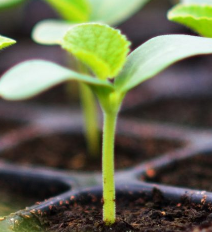
K-State horticulture expert suggests gardening activities to kick the winter blues.

As the weather slowly begins to warm up, many Kansans are eager to get back to gardening. Kansas State University horticulture expert Cynthia Domenghini said work can begin on vegetables like peas and lettuce.

“If you are tired of winter and hunger for spring, try planting peas as soon as the soil dries and the temperature reaches 40 degrees Fahrenheit,” Domenghini said.

There are many varieties to choose from in Kansas. Domenghini suggests early maturing varieties with resistance to powdery mildew.

“Early maturing types allow us to harvest a crop before the hot weather arrives and stops production,” Domenghini said. She added that plant size should be a consideration when selecting varieties.

As for snow peas, commonly used in stir-fry, Domenghini suggests Dwarf Grey Sugar and Mammoth Melting Sugar.

Sugar snap peas share a resemblance with shelling peas but have a thick, fleshy pod that can be eaten like snow peas, pod and all. Sugar Bon, Sugar Ann, Super Sugar Snap and Sugar Sprint are recommended by Domenghini.

Domenghini said peas should be planted shallow, about one-half inch deep to encourage rapid germination and emergence, and seeds should be spaced 2 inches apart in a row.

“Many people plant two rows 6-8 inches apart so the floppy plants can support one another,” Domenghini said. “For some older varieties, this may not be enough. They may need trellising to support the growing vines. You might consider installing fence to keep rabbits away.”

Peas are not the only vegetable that gardeners can begin work on, Domenghini said lettuce can be started from transplants now.

“Though lettuce is most often planted directly from seed in late March to early April, it can be started from transplants,” Domenghini said. “Transplants allow lettuce to mature earlier so that it escapes heat that can lead to a strong flavor and bitterness.”

Domenghini and her colleagues in K-State’s Department of Horticulture and Natural Resources produce a weekly Horticulture Newsletter with tips for maintaining home landscapes and gardens. The newsletter is available to view online or can be delivered by email each week.

Interested persons can also send their garden and yard-related questions to Domenghini at [email protected], or contact your local K-State Research and Extension office.