Tuesday, March 31, 2026
Home Blog Page 23

Road-kill rumination

0
Thayne Cozart
Milo Yield

The number of wild critters that become road-kill in America must be astronomical. Travel anywhere on a road and within a few miles you’ll be sure to see a dead critter carcass laying in the ditch or still on the roadway.

In the Fly-Over Nation of middle-USA, the most common critters to meet their demise by wheel, bumper or grill are squirrels, raccoons, possums, deer, rabbits and skunks, but others such as coyotes, foxes and badgers often join the carnage.

And, wild birds aren’t immune either. The feathered carcasses of hawks, buzzards, wild turkeys and pheasants also adorn our roadways, not to mention the too-little-to-see tiny songbirds.

And, this time of year, when the weather is transitioning from dead winter into early spring seems to be when critters most often display their death-wish. I don’t know why wild animals like to be in the middle of roadways during the night, but, judging from their road-kill numbers, they do. It’s commonplace to see multiple carcasses at the same place.

***

Such was the case recently when I overran a pair of skunk carcasses in the middle of the road. The stench caused me to recall a dead skunk song recorded decades ago by Loudon Wainwright III. (Songwriters: Loudon Wainwright III: Lyrics © Kobalt Music Publishing Ltd.) Here are a few of the lyrics to “Dead Skunk in the Middle of the Road.”


You got your dead skunk in the middle of the road

Dead skunk in the middle of the road

Dead skunk in the middle of the road

Stinking to high heaven

Take a whiff on me, that ain’t no rose

Roll up your window and hold your nose

You don’t have to look and you don’t have to see

‘Cause you can feel it in your olfactory


***

And, that song made me recall an uncomfortable skunk memory from my elementary school days. My sainted mother deemed it necessary that I perform in a youth talent show that took place a during the Old-Settler’s Labor Day celebration in the Uniontown, Kan., city park back in the 1950s. Furthermore, she decided for me that I’d sing a song entitled “Gee, It’s Tough To Be a Skunk,” and I’d wear a black and white skunk costume that she sewed for the occasion. Somewhere in an old family photo album is a faded black and white picture of me in that costume.

So, to round out this stinking “skunk” column, here are some of the lyrics to “Gee, It’s Tough To Be a Skunk.” (Note: Recorded by Vaughn Monroe; Words & music copyrighted by Murray Semos, Glad Robinson Youse, Ziggy Talent U Frank H. Stanton).


I met a porcupine one day, together we had fun.

We picked a lot of berries and we played out in the sun.

I said, “Your quills are very sharp, by gosh they really sting.”

He answered, “As for you, my friend, you’re not a breath of spring!

Gee it’s tough to be a skunk! Gee it’s tough to be a skunk!

I guess that porcupine was sharper than I really thunk.

Gee it’s tough to be a skunk! Gee it’s tough to be a skunk!

***

After spending all my life is the country, I’ve had a number of encounters with skunks. Once in my youth, I found a nest of tiny baby skunks in a hay manger. I tried to raise one with a baby bottle, but it croaked on cow’s milk. I do recall that the baby skunk didn’t have a skunky odor yet.

**Laugh Tracks*

Also, back when I was in the 8th grade, one Christmas vacation I decided to go full-bore mountain man and get rich as a fur trapper. I borrowed leg-hold traps from a neighbor and all went well for most of the vacation.

But, then one day when I checked my traps, I’d caught a skunk and it had gotten the trap wedged tight in a rock crack. By the time I’d extracted the trap, I stunk to high heaven. The horse I was riding was not at all happy to carry me home in the saddle carrying the dead skunk in a gunny sack.

Then, to make matters worse, my ol’ pappy, Czar E. Yield, insisted that I had to skin the skunk and sell the hide. That day nipped my budding fur trapping career in the bud. The next day, I returned all the traps and never looked back.

***

Back in my bird hunting days, I had Brittanys that would always try to tackle any skunk they encountered in the field. Sometimes they got sprayed so bad, I had to use my pliers to handle they with their collars.

***

If you’ve stomached this column this far, I’ll end it for you with these words of wisdom: “Things that happen to you as a kid that you think are horrible are just plain funny recalling them as an old-timer.” Have a good ‘un.


“The Not-So Silent Struggle of Sleep Apnea”

0

Take a moment to breathe. Close your eyes. Slowly inhale through your nose, pause, and gently exhale through your mouth. After a few steady breaths, you likely feel more relaxed and ready for the day.

Now imagine plugging your nose and trying to breathe with your tongue pressed against the roof of your mouth, blocking the airway. You would quickly feel stressed and uncomfortable. Now imagine that happening over and over again, all night long.

That is what occurs with obstructive sleep apnea.

Obstructive sleep apnea happens when relaxed throat muscles and soft tissues collapse and block the airway during sleep. These temporary pauses in breathing—called apneas—cause lower oxygen levels. The brain senses the drop and briefly arouses the body to reopen the airway. This cycle can repeat dozens, even hundreds, of times per night. The result is fragmented sleep, low oxygen, and a body that never truly rests.

Sleep is when the body resets and restores itself. It supports immune function, heart health, metabolism, memory, mood, and emotional regulation. When sleep suffers, so does overall health. Poor sleep increases the risk of high blood pressure, heart disease, stroke, diabetes, cognitive decline, and even dementia. People who are chronically tired are also less likely to make healthy choices.

The gold standard treatment for sleep apnea is CPAP—continuous positive airway pressure. A bedside machine delivers steady air through a mask, keeping the airway open during sleep. Some patients benefit from BiPAP, which provides different pressures when breathing in and out. When used consistently, these therapies can dramatically improve sleep quality, energy, focus, hormone balance, and cardiovascular health.

Other treatments may help in selected cases. Weight loss, dental appliances, side sleeping, and certain surgeries can reduce airway obstruction. For patients who cannot tolerate CPAP, hypoglossal nerve stimulation (often known by the brand Inspire) is an option. This implanted device stimulates the nerve controlling the tongue, helping maintain an open airway during sleep.

Although sleeping with a mask may not sound appealing at first, some people feel better quickly and do well with it. Others improve once they are used to it. It often takes patience—trying different masks, adjusting pressure settings, or adding humidification. With proper support and follow-up, most people adapt well.

The benefits of treating sleep apnea far outweigh the risks of ignoring it. Restful sleep improves energy, protects the heart and brain, and enhances overall quality of life.

If you or someone you love snores loudly, stops breathing during sleep, or feels tired despite a full night’s rest, consider visiting your medical provider. Restoring healthy breathing at night may be one of the most important steps toward better health.

Dr. Andrew Ellsworth is a Family Medicine Physician at Avera Medical Group Brookings in Brookings, SD. He serves as one of the Prairie Doc Volunteer Hosts during its 24th Season providing Health Education Based on Science, Built on Trust. Follow The Prairie Doc® at www.prairiedoc.org,Facebook, Instagram, YouTube, and Tik Tok. Prairie Doc Programming includes On Call with the Prairie Doc®, a medical Q&A show (most Thursdays at 7pm on YouTube and streaming on Facebook), 2 podcasts, and a Radio program (on SDPB, Sundays at 6am and 1pm).

Asparagus Soup

0

I cannot recall how long it has been since I ran this easy and delightful asparagus soup. I do know asparagus prices are becoming very tempting at the grocery store and this light soup fits well into many scenarios. Ervin and I have a road trip coming up in a few weeks and I will often prepare a meal for the road. This soup would fit perfectly inside a thermos to enjoy with a BLT or turkey club sandwich! As you review the recipe below ponder switching this method out to a broccoli soup instead of asparagus, it should work perfectly. Speaking of broccoli, I purchased some ‘organic’ broccoli that was totally different than the usual broccoli. It would work well in a soup because of how tender the broccoli was.

I mentioned taking our meal on the road, I don’t always go out of my way to do this, but my body seems to do a great deal better when I do. Also; we are leaving at 5pm on our upcoming trip and that means no stopping for a sit-down meal, which my husband, Ervin, really prefers.

This week we made one of our bigger splurges in life and purchased a very high end bed. Both of us are anxious to rest on a firmer more supportive bed. And…it came with a nice warranty. Ervin and I seem to go through mattresses faster than you can say, ‘Mother may I?’ For a while we also did this with vacuum cleaners. We’ve been married 27 years and I think we had gone through 4-5 vacuums. Watch, ours will probably break down next week!!! I’m sure many of you out there can relate with these issues.

This week I’m making a pecan pie for a dessert auction over in Cape

Fair, MO, one of my favorite communities. Also; where our son, Phillip & wife Paige reside. Our sheriff, Doug Radar, is the guest auctioneer. Then there’s all the extra eggs I have on hand, time for a batch of breakfast burritos and egg salad for our lunches.

I was supposed to be at a big Family NASCAR event on Sunday, but I wasn’t feeling up to par, so Ervin had to go alone. I stayed home resting and doing laundry, telling myself Monday would be a better day!

Let’s set the recipe and get moving on a great week! Simply Yours, The Covered Dish.

Asparagus Soup

1 lb. tender asparagus, divided

3 tablespoons butter, divided

6 small green onions

1 ½ tablespoons flour

2 ½ cups chicken broth

1 tablespoon lemon juice

1 cup milk

¾ cup light cream, I use half and half

Chopped Parsley for garnish

Seasoning salt or salt & pepper to taste

Wash and trim the asparagus. Trim 1-2 inches off the bottoms up to where the stalk is very tender, discard bottom pieces. Take about 1-2 inch pieces from the top stalk and set aside. Chop remaining into one inch pieces and sauté with the onion in 2 tablespoons of butter.

When tender sprinkle flour over the mixture, blending. Add stock, lemon juice and seasonings. Place lid on pot and cook for about 15 minutes, allow to cool so you can put the mixture into the blender.

After blending the asparagus mixture smooth put into a saucepan and begin to reheat, slowly add the milk, do not allow to boil.

Use the skillet implemented at the beginning to cook the finely chopped tips in the 1 tablespoon of butter. Slowly add the half and half to the saucepan and once tips are tender add to the saucepan to complete the recipe. Serve with fresh parsley over the top. ‘If’ I were to add any cheese to this it would only be a light amount of Parmesan. The recipe was written to be a light spring soup, not a heavy main course entree. Yields about 3 ½ cups of soup.

Options:

Use broccoli instead of asparagus, a small amount of garlic minced. Too much garlic and the asparagus flavor gets canceled. The addition of a ‘tad’ of cheese is also another option.

This recipe was first written in 2009. It was well received when I served it at the SDC culinary school. Enjoy-

Why measuring nitrate matters to water quality

0
Larry

Understanding how much nitrate is present in irrigation water is important not only for farm management decisions, but also for protecting the quality of drinking water, according to research from Kansas State University

Micah Cameron-Harp, K-State assistant professor in the Department of Agricultural Economics, and Matt Kirk, professor of geology, said recognizing nitrate contributions from irrigation water helps improve nutrient efficiency in crop production while also reducing the risk of excess nitrogen reaching water used by consumers.

“Many producers are not considering the amount of nitrate already being applied through their irrigation water,” Cameron-Harp said. “When you measure what’s there, you may be able to reduce fertilizer applications, which saves money and helps limit excess nitrate from moving into groundwater.”

Nitrate is highly soluble and moves easily with water through the soil profile. When more nitrogen is applied than crops can use, the excess can leach into aquifers — a primary source of drinking water for many rural communities.

The U.S. Environmental Protection Agency has established a maximum contaminant level of 10 milligrams per liter (mg/L) of nitrate-nitrogen in public drinking water systems to protect human health. At levels about 10 mg/L, nitrate can cause a condition known as methemoglobinemia, which prevents blood from carrying enough oxygen, causing bluish skin, headache, fatigue and difficulty breathing.

Kirk noted that groundwater monitoring across Kansas, shows variability in nitrate levels, making local testing essential.

“Every well and every water source is different,” Kirk said. “The only way to know how much nitrate is present in your irrigation water is to test it. Once you have that information, you can incorporate it into your nutrient management plan.”

Researchers emphasized that some neighboring states, including Nebraska, have more widely adopted irrigation water testing as part of routine nutrient management. In contrast, many Kansas producers have historically focused on soil testing without accounting for nitrate contributions from irrigation water.

According to Cameron-Harp, this overlooked input can represent a significant amount of applied nitrogen over the course of a growing season.

“If irrigation water contains measurable nitrate, that nitrogen still counts,” Cameron-Harp said. “Recognizing it allows producers to credit that amount toward their total crop needs, improving efficiency while advancing water quality goals.”

Producers interested in determining nitrate levels in their irrigation water can submit samples to commercial laboratories across the state or through Kansas State University testing services. Results can then be used alongside soil test data to fine-tune fertilizer recommendations.

Researchers highlight that proactive nutrient management benefits both farm profitability and community health.

“Protecting water quality doesn’t have to come at the expense of productivity,” Kirk said. “With good data and informed decision-making, we can support agricultural production while safeguarding drinking water for future generations.”

For more information on nitrate testing and nutrient management strategies, contact your local K-State Extension office.

Lettuce Eat Local: Oh My Gravy, It Was You All Along

0

Amanda Miller
Columnist
Lettuce Eat Local

Recently, I read an anecdote about a mother coming upon her young child gazing at one of the pictures in her Peter Rabbit storybook. Though she hadn’t described the drawing in detail, I was able to rifle straight to the familiar page — it has to be the one where the non-naughty sisters (they are girls, right? I’ve always assumed so) are gathered around their simple feast of bread, milk, and blackberries, while Peter is in bed with a dose of camomile tea. 

The mother asked her daughter if she knew the dear rabbits’ names, and she shook her head. But upon learning that they were in fact Flopsy, Mopsy, and Cottontail, the little girl’s rapturous grin could not be contained. She gasped out something about how she had always loved them, she had just not known it was them. 

I think the sharer’s point of the story was that it is such a delight to introduce children to literary characters that can be their lifelong friends. Sometimes they feel like meeting entirely new people, and sometimes it feels like you’ve just always known them somehow, without having met them yet. 

I’ve been reading since I was three, and while I didn’t start off with overwhelmingly interesting personalities (hello, Dick and Jane), I completely get that feeling of just meeting yet always having had known certain well-written characters. I just didn’t know that I knew them, or didn’t know their name, but now that I do, can’t imagine not having known them. 

When this baby arrives, I know from experience that it will likely feel the same way. Benson’s birth was traumatic enough that our introduction was different, but I remember seeing Kiah for the first time and thinking, “Oh, it’s you!” I’d known her, felt her kicks and squirms and hiccups for months, I just hadn’t known it was her. For both of the kids, we prayed for and loved deeply this baby inside, and then when they came out, we realized oh! it was you all along! I look forward to that moment with Green Bean. 

In a much smaller, and I mean infinitesimal, way, I had this sort of realization a short time ago in regards to tomato gravy.

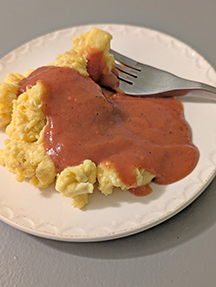
Hear me out. I was discussing with a friend how her time hosting lots of family had gone, and she mentioned how her grandkids clamber for and celebrate a traditional meal featuring toast, scrambled eggs, and tomato gravy. I would have believed it if people said they saw a lightbulb flash on over my head in that instant, because that’s really how I felt — oh! tomato gravy, it’s been you all along!

I kind of want ketchup with my eggs, but not really, and I kind of want salsa, but not really…because it’s tomato gravy that I want. Something sweet, and savory, and tomatoey, but not too much of any of those things: hello, tomato gravy.

In case you haven’t met this old friend yet, tomato gravy is exactly what it sounds like. Tomato, made into a gravy. My grandma had a special hankering for tomato gravy and fried cornmeal mush, and I think that’s the only way I’ve ever been served it. I don’t feel sheltered in my food experiences at all, but somehow I was never introduced to tomato gravy and scrambled eggs, though it’s apparently not a niche thing. 

I could write my own cottontail storybook page now, the one where I’m gathering my family around our simple feast of scrambled eggs and tomato gravy. Maybe someone else will gasp too: oh, I hadn’t known it was this, but I’ve always loved it!


Oh My Tomato Gravy 

I’m tempted to jazz up the idea of tomato gravy, but too much pizzazz and it isn’t itself anymore — Flopsy, Mopsy, and Cottontail didn’t have to dress up their blackberries and milk, so I don’t either. And what do you know, the Mennonite cookbook I found tomato gravy in listed serving it with scrambled eggs (although it was attached to a french toast recipe, so its credibility went way down). The internet shows some recipes using chunked tomatoes, but as a matter of principle I think I have to stay with tomato juice since that’s the only way I’ve ever heard of it.
Prep tips: my home tomato juice gets plenty of pepper and seasonings when it’s canned, so do what you need to to adjust what you have. 

1 cup thick, good-quality tomato juice

⅛ teaspoon baking soda

½ – 1 tablespoon sugar

salt, black pepper, and red pepper to taste

1 cup milk or cream

2 tablespoons cornstarch

optional: just a pinch of herbs, like rosemary, thyme, or basil 

In a saucepan, bring tomato juice, baking soda, sugar, and spices to a simmer. Stir the cornstarch into the milk, then whisk into the hot tomato juice until thickened. Adjust seasonings to taste and serve — over scrambled eggs of course, but also with biscuits, buttered toast, fried mush, or cheese grits.