Friday, January 16, 2026
Home Blog Page 4699

Wheat chlorosis

0

By Ryan Flaming, County Extension Agent, Agriculture & Natural Resources

Over the next month or two, wheat stands will hopefully become established over most of the state. Ideally, the wheat will take on a solid green color, form a secondary root system, and develop one or two tillers in addition to the main tiller. But sometimes there are problems. The most common symptoms of problems are discoloration, stunting, loss of leaves, or dying of emerged seedlings.

Causes of chlorosis or poor growth
If wheat is yellow or stunted and not growing this fall, what are the possible causes? Is it something producers can correct? Will it hurt yields? Some of the most common causes of yellowing and/or stunting in the fall are:

Nitrogen deficiency. Nitrogen deficiency causes an overall yellowing of the plant with the lower leaves yellowing and dying from the leaf tips inward. Nitrogen deficiency also results in reduced tillering, top growth, and root growth in the fall. The primary causes of nitrogen deficiency are insufficient nitrogen fertilizer rates, leaching from heavy rains, early-season denitrification or volatilization, and the presence of heavy amounts of crop residue, which can immobilize nitrogen. Topdressing the field during the winter can solve the problem, provided there is enough moisture to move the fertilizer into the root zone (and the ground isn’t frozen at the time of application).

Poor root growth. Chlorosis and stunting can also be due to poor root development, which can often result in nitrogen deficiency. If the plants have been emerged for several weeks or more, can be pulled up easily, and have only a couple primary roots visible, then the plants are yellow or stunted because the root systems are not extensive enough to provide enough nutrients. This may be due to dry soils, waterlogging, or poor seedbed conditions at planting time. If conditions improve, plants should develop secondary roots and the color should improve. If conditions do not improve and root growth remains stunted, the plants may winterkill more easily or may not be strong enough next spring to reach their full yield potential.

Aluminum toxicity (low-pH soils). Strongly acid soils may present several problems for wheat production. Aluminum toxicity is the most common problem associated with acid soils. Typical symptoms include thin stands and lack of vigor. High concentrations of aluminum will reduce development of the roots, giving them a short stubby appearance. The roots will often have a brownish color. In general, aluminum toxicity will reduce yield potential when soil pH levels get below 5.5 and KCl-extractable (free) aluminum levels are greater than 25 parts per million. When soil pH levels are 5.0 or less, yields start dropping off rapidly in most cases. Selecting adequate varieties for low pH conditions is essential. Applying phosphorus in the seed row at planting can also help. Liming to adequate pH levels following recommendations from a soil test can fix the problem long term.

Leaf rust. If leaf rust infects young seedlings in the fall, the plants may turn yellowish. Severe fall infections of leaf rust are not common in Kansas, but can occur. Producers will be able to see the small brown pustules on the leaves. Tan spot can also cause wheat to turn yellow in the fall. These seedling infections of tan spot are often associated with wheat sown into heavy wheat residue. Viral diseases, such as soil-borne mosaic, wheat streak mosaic, and barley yellow dwarf, can infect wheat in the fall. Some yellowing can occur in the fall but in most cases the severe yellowing symptoms do not show up until early spring. It rarely, if ever, pays to treat fields with fungicides in the fall for leaf rust or tan spot, even if those diseases do cause yellowing. Cold temperatures in the winter normally reduce the risk of problems.

Cold temperatures. When temperatures are quite cold at the time wheat emerges, it can result in yellow banding on the leaves. If this is the cause of the yellowing, symptoms should eventually fade away.

Greenbugs or bird cherry oat aphids. These insects most commonly infest wheat sometime after the first freeze and before Christmas. They can cause plants to turn yellow and be somewhat stunted. These symptoms can occur in the fall, but don’t usually show up until early spring. Often, greenbug and bird cherry oat aphid infestations occur in patches in a field, not uniformly distributed. Each of these patches infestations are usually initiated by one winged female landing on a susceptible wheat plant. That female starts to produce more females, which then produce more females, and so on. The resulting infestation often radiates out from the initial infested plant in a roughly circular pattern. Greenbug and aphid infestations in the fall can make the wheat more susceptible to winterkill under normal winter temperatures.
Hessian fly. Seedlings infested by Hessian fly in the fall are typically not yellow, but are often stunted. Affected plants usually have an unusually large, broad greenish leaf for about a month in the fall. Stem elongation is typically much shorter than normal.
Flea beetles. These tiny insects cause whitish streaks on the upper surfaces of leaves. If streaking is severe, plants may die.

Causes of seedling death or loss of leaves

If leaves are being lost, or the plants are sickly or have died, it is important to find out why before replanting. Some of the most common causes of seedling death, sickliness, or loss of leaves include:

Seedling blight. This is one of the most common causes of post-emergence seedling death or sickliness. The root system or coleoptile region may be diseased or dead in infected plants. Several fungi cause seedling blight, and these diseases are often worse on early-planted wheat. Seedling blight may not kill the seedlings outright, but can lead to later problems with common root rot, crown rot, sharp eyespot, and dryland root rot (also known as dryland foot rot).

Atrazine carryover. Wheat planted into soils with atrazine residue emerges then dies back from the tips of the oldest leaves first. Atrazine carryover is most likely to occur where there were high application rates, high soil pH, coarse-textured soils, and under dry conditions.

Fall armyworms and army cutworms. Where fall armyworms infest the wheat, leaves start looking ragged from the “windowpaning” effect. As the worms grow, they will chew off entire leaves, tillers, or whole plants. Fall armyworms can move across a field in a wave, starting on one side of the field. Army cutworms may also damage wheat, much like fall armyworms. Army cutworms may successfully overwinter and continue feeding during mild spells throughout the winter and spring. Fall armyworms won’t overwinter, thus they’ll only be a problem until the advent of cold weather.

Grasshoppers. Grasshoppers can be a problem along the edge of a field, where severe feeding can occur as other foliage turns brown. Three to four passes, as needed, from a sprayer with an insecticide along the edge of a field can usually minimize damage from this pest.

False wireworms. These insects typically feed on seeds or seedling roots, and can cause death.

White grubs. If young plants are dying, with no aboveground symptoms evident, white grubs may be the cause. Check to see if roots are pruned.

If you notice any problems with your wheat fields this fall, give me a call at the Extension office (316) 284-6930 and I will be happy to come out and help you with your questions.

Win looks good for Barton Volleyball in 3-1 defeat of Dodge City

0
barton cc

Having lost consecutive five-set matches last week, the Barton Community College volleyball team will take any win it can earn as the Cougars defeated Dodge City Community College Monday night at the Barton Gym 25-19, 25-27, 25-19, 25-21.   The Cougars hit a season low .124 efficiency in a win but countered with nineteen blocks and seventy-seven digs to snap the two-game losing streak.  The victory, the ninth consecutive against the Conquistadors, improves the Cougars’ Jayhawk mark to 5-8 and 7-22 overall while keeping Dodge City winless in conference at 0-13 and 4-28 on the season.
Tahje Ochs led the attack with twelve kills and recorded her fifth double-double of the season as the sophomore from Larned also recorded eleven digs. The Cougars had four players knock down seven a piece as nine players recorded at least one kill.

For the third straight match the setter duo of Casey Friesen and Lakyn Rowden recorded double-double performances.  Friesen put up 20 assists with 11 digs for her tenth double-double of the season while Rowden led the Cougars with 22 assists to go along with 12 digs.  Mykela Riedl again led the team with a career high 30 digs, the eight time this season the sophomore from Hoisington has recorded twenty or more.

The last home match is drawing near for the sophomore group as Barton will conclude its home portion of the schedule on Friday in a 6:30 p.m. first serve match against Butler Community College.  The Cougars, sixth in the conference standings, defeated the seventh place Grizzlies 3-2 earlier in the season in El Dorado.  Butler, 3-9 in the Jayhawk and 10-18 overall, will have a Wednesday home match against Seward County Community College, before coming to Great Bend on Friday for the Cougars’ home finale.

Ten ways to reduce health care costs

0

Gail Carlson, MPH, Ph.D., former State Health Education Specialist, Nutritional Sciences, University of Missouri Extension

Good consumers take the time to understand the products and services they are buying. Whether you are talking about buying a house, car or health care, the quality and value of your purchase should be an important consideration. In the case of health care, higher cost does not necessarily mean better quality. Health care costs can vary greatly depending on type of procedure, where the care is provided (emergency room, outpatient clinic or doctor’s office), and where you live and receive care.

The following are 10 ways to reduce your health care costs while adding value to the quality of your health.

  1. Take good care of yourself. Eight out of 10 health problems are treated at home. By doing a good job of self-care you can reduce your health care costs. By maintaining a healthy lifestyle, you will save money on health care and treatment now and in the future.
  2. Practice self-examination and get appropriate health screenings. Work out a schedule with your health care provider for preventive health screenings that are appropriate for your age and gender.
  3. Become aware of the health risks of different lifestyle choices like alcohol and drug use, home and driver safety, and eating habits. The riskier your lifestyle, the more likely you are to have health problems.
  4. Know what your medical benefits cover. You need to know what your benefits are before you can use them appropriately.
  5. Take an active role in health care decision making. Take the time to build a good relationship with your doctor. Making sure that your doctor understands your expectations and needs can result in a more effective treatment plan.

For the complete list of 10 ways to reduce health care costs, view the full version of this article at http://missourifamilies.org/features/healtharticles/health38.htm

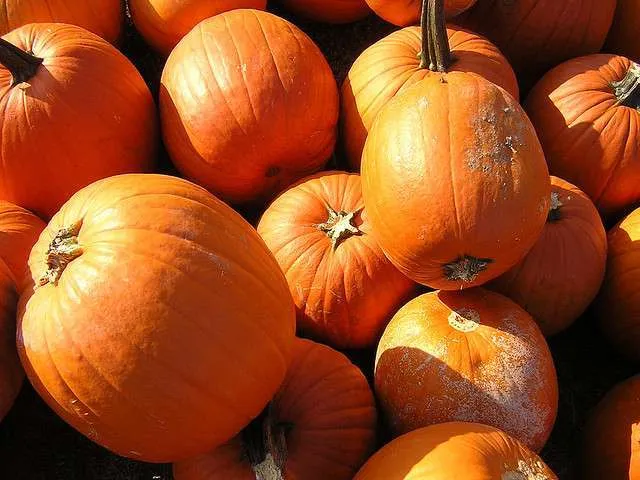
Many uses for pumpkins

0
Photo Credit: Rich Bowen
Photo Credit:  Rich Bowen
Photo Credit: Rich Bowen

Tammy Roberts, MS, RD, LD, Nutrition and Health Education Specialist, Bates County, University of Missouri Extension

The most popular use of pumpkins this time of year is for jack-o-lanterns and fall decorations. But pumpkin is healthy and versatile, so we could be preparing and eating it in a variety of ways as well. Pumpkin provides fiber, vitamins A and C, potassium and protein.

Here are some guidelines when choosing a pumpkin for cooking:

  • Choose a small pumpkin that weighs between two and six pounds.
  • “Pie pumpkin” or “sweet pumpkin” is a good choice, but the jack-o-lantern variety also works just fine for eating.
  • Look for a pumpkin that has one or two inches of stem left. Pumpkins with shorter stems decay more quickly.
  • Choose a pumpkin that has a rich orange color with skin that cannot be easily broken or scratched by your fingernail.
  • For every pound of whole pumpkin, you can expect to get one cup of pumpkin puree.

If you want your pumpkin to have multiple uses, you can first paint a funny face on it for a decoration using non-toxic paints. After the holiday, you can wash and cook it.

To use the pumpkin for maximum benefit, don’t throw out the seeds — they can be roasted and eaten.

For instructions on roasting the seeds and preparing the pumpkin to make puree, view the full version of this article at http://missourifamilies.org/features/nutritionarticles/nut199.htm

Know the basics when choosing a health insurance plan

0
Jasleen Kaur

Adapted from MU Office for Financial Success Finance Tip of the Week blog post by Graham McCaulley and Brenda Procter, Personal Financial Planning, University of Missouri Extension

Whether you get insurance through your work or buy it on your own, most people have some level of choice in the type of plan they have. Health insurance, which has a language all its own, is a contract that requires your health insurer to pay some or all of your health care costs in exchange for a premium. As you make health insurance choices for you and your family, understanding some basic terms will help you know what your costs will be for certain health care services. Understanding how health insurance works can also help you decide which type of plan is best for you and your family.

Basic health insurance terms and how they work together

Premium – The fee you must pay for you or your family to have a health insurance plan.

  • Is usually paid once a month.
  • Must be paid to keep your coverage, whether you use it or not.
  • Can vary greatly in amount.

Out-of-pocket costs – The dollars you pay out of your own pocket for health care services.

  • Does not include monthly premiums.
  • Usually includes deductibles, copayments and coinsurance.
    • Deductible: The amount you owe for covered health care services before your health insurer or plan begins to share expenses with you.
    • Copayment: A fixed amount (e.g., $15) you pay for a covered health care service, usually paid at the time of service. The amount can vary by the type of covered health care service you receive and whether the service is in-network or out-of-network.
    • Coinsurance: Your share of the costs of a covered health care service. The amount you pay is a percentage (e.g., 20%) of the charge for the service.
    • Out-of-pocket maximum: A dollar limit on the amount you will pay each year toward your medical care.
      • Your out-of-pocket costs (deductibles, copayments and coinsurance) count toward your out-of-pocket maximum, but monthly premiums do not.

In general, less expensive premiums mean more out-of-pocket costs, and more expensive premiums mean fewer out-of-pocket costs. Different health insurance companies will charge different premiums for different types of plans. You may pick the least-expensive premium to be able to save money each month, but that could cost you more in the long run depending on how you use your insurance. Also, you may have different in-network and out-of-network levels of coinsurance, which affect your out-of-pocket costs. Plan networks vary considerably, and it is critically important that you find out which facilities, health care providers and suppliers are in a plan’s network before making a final decision, especially in rural areas.

For important tips on choosing the plan that is right for you and your family, read the full version of this article at http://missourifamilies.org/features/financearticles/healthins.htm