Thursday, February 26, 2026
Home Blog Page 596

KU News: Jayhawks to compete for Rhodes, Marshall, Mitchell, Churchill scholarships

0

From the Office of Public Affairs | http://www.news.ku.edu

Headlines

Editors: KU nominees are from Eudora, Lawrence, Olathe and Wichita.

Contact: Erin Wolfram, Academic Success, 785-864-2308, [email protected]
Three KU seniors, one alumna to compete for Rhodes, Marshall, Mitchell, Churchill scholarships
LAWRENCE — Three current University of Kansas seniors and a recent graduate have been endorsed for prestigious fellowships for study in the United Kingdom and Ireland with the support of the University’s Office of Fellowships.
Current seniors Sivani Badrivenkata and Kat Balke have been endorsed for the George J. Mitchell Scholarship, which provides funding for one year of study in Ireland. Badrivenkata and Balke are joined by senior Joshua McGhee and recent graduate Lily Nguyen in being endorsed for the Marshall Scholarship, which provides funding for graduate study at any university in the United Kingdom. Balke, Badrivenkata and Nguyen were also endorsed for the Rhodes Scholarship, which provides expenses for one to three years of study at the University of Oxford in England. Additionally, Badrivenkata and McGhee were endorsed for the Churchill Scholarship, which provides funding for one year of master’s study at Churchill College at the University of Cambridge in England.
Regional panels review applications for both the Rhodes and Marshall scholarship programs. The Mitchell scholarship has a first-round video interview before finalist interviews in November. Finalists for the Rhodes and Marshall are invited to participate in interviews in November. Only U.S. citizens can apply for the Marshall, Mitchell and Churchill scholarships, while the Rhodes Scholarship has 20 constituencies around the world, including the United States and Canada, and a new Global Rhodes Scholarship program.
The Office of Fellowships, a unit of Academic Success, coordinates KU’s endorsement process and supports candidates through the application process. Students interested in applying for these awards are encouraged to contact the office by email at [email protected]. Depending on other eligibility requirements, students may apply for these awards as graduating seniors or recent graduates. The next campus application deadline for these awards will be in May 2024.
KU students have previously won two Mitchell Scholarships, nine Marshall Scholarships and 27 Rhodes Scholarships.
Sivani Badrivenkata, from Lawrence, is the daughter of Dayakar Badri and Haarisa Valasa and a graduate of Free State High School. Badrivenkata is majoring in pharmacy and plans to pursue a doctorate in pharmaceutical chemistry to teach and conduct translational research in academia with a focus on integrating biologics in formulations to address global health needs. She currently conducts research in the lab of Michael Hageman, Valentino J. Stella Distinguished Professor in the Department of Pharmaceutical Chemistry, to assess the viability/efficacy of lactoferrin to treat vaginal E. coli infections in pregnant patients to prevent neonatal sepsis. Badrivenkata is a recipient of a spring 2023 Undergraduate Research Award, presented at the 2022 Kansas Pharmacists Association’s annual meeting and tradeshow, and participated in the 2022 summer Undergraduate Research Program within the KU pharmaceutical chemistry department. She is also the president of ResearchRx, a KU School of Pharmacy student organization that promotes scientific literacy, research involvement and careers in pharmaceutical research. Badrivenkata currently works at Sigler Pharmacy and previously served as a speech and debate assistant coach at Free State High School. In summer 2021, she was a research intern for a prostate cancer clinical research project through KU Medical Center. Additionally, she is a KU Global Scholar and a member of the University Honors Program, for which she serves as a program ambassador and previously served as an honors seminar assistant. Badrivenkata has written poems that have been published in Kiosk Magazine, hosted an art exhibition at the Kansas Union Gallery in fall 2021 and had five paintings displayed in KU campus libraries through the 2022-2023 academic year. In 2023, she was also a KU nominee for both the Goldwater and Truman scholarships.

Kat Balke, from Eudora, is the daughter of Dr. Jennifer and Bruce Balke and a graduate of Blue Valley High School. Balke is double majoring in English and Italian and aspires to earn a doctorate in English with a concentration in British medieval literature, become an English professor and run a campus women’s center to support, advocate for and provide a safe space for abuse survivors. Balke transferred to KU from DePauw University. In her role as the vice president of equity and justice within student government, she successfully drafted legislation naming the new first-year residence hall Vernon E. Jordan Jr. Hall after DePauw’s first African American graduate. At KU, in collaboration with Jonathan Lamb, associate professor of English, Balke researched ecofeminism in William Shakespeare’s “As You Like It” and presented the research at the National Conference on Undergraduate Research. She also earned an Undergraduate Research Award for fall 2023. Additional research areas for her English and Italian theses include medieval feminisms and the #MeToo movement and the women of Boccaccio’s “The Decameron.” Balke has participated in four study abroad programs: British Summer Institute, Costa Rica Travel Writing, London Review and Florence Language Institute. She also serves as a peer consultant and workshop facilitator for the KU Writing Center and is a student representative on the KU Core Curriculum Committee. Balke is the recipient of numerous awards, including the Helen Rhoda Hoopes Award for best English undergraduate essay written by a woman. She currently serves as the president of KU’s Italian Club.

Joshua McGhee, from Olathe, is the son of Mark McGhee and Dorice McGhee and a graduate of Olathe Northwest High School. He is a biochemistry major and Spanish minor and plans to attend medical school and become a doctor of osteopathic medicine. Before entering KU, Joshua earned his associate degree at Johnson County Community College on a Presidential Scholarship. He is a member of Maximizing Access to Research Careers, Delta Epsilon Mu, Phi Beta Kappa Honors Society, KU Glee and the Unity Dance Team. He is also involved in research in the KU Department of Pharmacology & Toxicology, and in summer 2023 in Dr. Navneet Dhillon’s lab at the KU Medical Center, he researched the effects of HIV in tissues affected by pulmonary hypertension and vascular remodeling. Previously McGhee conducted research on hyperactivity in early Alzheimer’s disease across brain regions and served as a patient care technician at Olathe Medical Center. Since May, McGhee has volunteered at the JayDoc Free Clinic in Kansas City, and he is a longtime volunteer and music director at his local church.

Lily Nguyen, from Wichita, is the daughter of Dai and Mai Nguyen and a graduate of Kapaun Mt. Carmel Catholic High School. She graduated from KU in 2022, receiving bachelor’s degrees in global & international studies and East Asian languages & cultures and a minor in political science. She currently works as an English teacher in rural Japan through the Japanese Exchange Teaching Program, promoting grassroots diplomacy through cultural exchange events. Recently she was elected as vice chair of the National Association for Japan Exchange Teaching and was nominated to serve as the Amakusa Region, Kumamoto Prefecture area leader. Outside of the classroom, she translates local news stories from Japanese into English and volunteers as an English language television newscaster. While at KU, she interned with the U.S. Department of Veterans Affairs and collaborated with researchers and writers to complete the 2020 Congressional Outreach Report. Nguyen received the ExCEL Award — Excellence in Community, Education and Leadership — for her university service and engagement with a diverse set of communities, including serving as a University Honors Program assistant, leadership roles at St. Lawrence and her volunteer work with international students. Her research on nationalism and patriotism within Chinese hip-hop has been published in the Aisthesis Honors Journal and received the KU A.C.E. Talk Award.

-30-

————————————————————————

KU News Service
1450 Jayhawk Blvd.
Lawrence KS 66045
Phone: 785-864-3256
Fax: 785-864-3339
[email protected]
http://www.news.ku.edu

Erinn Barcomb-Peterson, director of news and media relations, [email protected]

Today’s News is a free service from the Office of Public Affairs

Wheat Scoop: Kansas author explores link between Mennonites, wheat and threshing stones

0
Kansas Wheat

Contact: Marsha Boswell, [email protected]

For audio version, visit kswheat.com.

Kansas author Glenn Ediger left no threshing stone unturned as he embarked on a historical treasure hunt for the tools used by the Mennonites who settled in and around central Kansas. From his own front yard to Threshing Days in Gossel, he uncovered the unique set of events that brought some of the most innovative farmers in the world to Kansas and established hard red winter wheat as a Kansas staple. He recently shared what he learned with listeners of the “Wheat’s On Your Mind” podcast.

“Probably no year holds more significance to the wheat industry in Kansas than 1874,” said Aaron Harries, host of the “Wheat’s On Your Mind” podcast and Kansas Wheat vice president of research and operations. “That was the year Mennonite immigrants from Ukraine came to Kansas to escape the loss of their religious freedom.”

“They came at the invitation of the state of Kansas and the Santa Fe Railroad to develop the prairie into a rich and productive agricultural economy. These groups of families brought with them Turkey Red winter wheat, and as they say, the rest is history. But there’s so much more to this story.”

An invitation and an escape

From the establishment of their religion, the Mennonites had a reputation for being good, industrious farmers. As a result of this reputation and their continued pursuit of religious freedom, their communities moved from their origins in the Netherlands to Prussia (what is now Poland) to develop lands for farming. Later, when religious freedoms in the country were curtailed, the Mennonites took the invitation of Catherine the Great to relocate to western Russia (what is now Ukraine) in the late 1700s and early 1800s. That included Ediger’s ancestors, who moved to Russia in 1810 and farmed there for roughly 60 years.

“They did create a fertile farming culture with a lot of innovations — what types of crops to grow and how to better preserve crops and how to influence better growth with things like fertilization and summer fallow,” Ediger explained. “They really advanced that with creating and developing alternative hard winter wheats that were quite successful in that community.”

Recruitment by the railroad

Around this time, Kansas was being marketed as the crown jewel for agriculture in the United States, driven by the construction of the railroad. But, the region needed more people and more commerce, so the Santa Fe railroad drove a campaign to recruit more settlers from other countries to move to Kansas, including the Mennonites. Those efforts included Carl B. Schmidt, who was an implement dealer recruited by the railroads to encourage the Mennonites to move to the United States.

“C.B. Schmidt was an implement dealer; he spoke German; and Schmidt is a common Mennonite name, even though he was not Mennonite,” Ediger said. “There was competition to get the Mennonites to the United States all through the Midwest, from Canada down through Oklahoma. So Carl went to Ukraine and talked to local Mennonites and convinced them how wonderful Kansas was.”

The railroad also paid for ambassadors from the Mennonites to come to tour the Central Plains, including surveying different properties. In the end, Kansas had the most appealing set of laws (religious freedoms and the promise of not being conscripted into the military), availability of land they could afford, fertile ground and climate similar to where they were currently farming. The railroad made the deal even sweeter by building homes for early immigrants and supplying seed for the first wheat crops planted.

Planting the seed for Turkey Red wheat

And so Mennonites came to Kansas and brought with them their agricultural innovations and their hard red wheats, including hand-picked seeds packed into large jars and sacks. This Turkey Red wheat was a hardy variety, was planted in the fall and could withstand Kansas’ cold and dry winters. The new wheat could take advantage of the moisture that arrives in the winter and early spring and then be harvested in early summer. While the adoption of this new class of wheat took time, its introduction revolutionized the wheat industry in Kansas, and Turkey Red wheat is now the ancestor to all hard red winter wheat varieties grown across the plains today.

“Part of that slow adoption was that the milling industry was just not ready for it; their technology was targeted towards soft wheat,” Ediger said. “But over time they found out that the hard winter wheat was much better quality.”

“It took many years to get the acreage developed, but it really then did become the most desirable wheat in the world. There was nothing like it at that point in time.”

Perfecting agricultural practices

Along with Turkey Red wheat, the Mennonites also brought game-changing farming practices, including leaving fields fallow in between planting cycles, applying fertilizer to fields and using large threshing stones to separate the wheat kernels from the stalks that enveloped them. The basic process of threshing wheat is the same today as it was thousands of years ago, as Ediger explained.

“Back then, they would grab a stack of heads and beat it against a rock to thresh the wheat. And then you had to separate the chaff from the wheat,” Ediger said. “That’s the same process that the modern combine does technically — cut the wheat, thresh to break the grain out of the heads, and then separate the grain from the chaff.”

The process is the same whether someone takes a stalk of wheat out of the field and rubs it in their hand, uses a flail to beat out the wheat kernels or has horses trot over wheat piles to remove the grain — all of which have been done around the world.

Or one can use a threshing stone. A threshing stone is a stone, usually limestone, that is rolled over the grain to thresh the kernels out. It is a big piece of stone, 30 inches long and 24 inches in diameter with seven grooves carved around it, giving the appearance of a gear, and weighing between 400 and 800 pounds. In the middle, there’s a hole drilled that would go through for an axle, which would be supported by two wooden or steel beams that could come around the front so it could be hooked up to horses. The horses could go around in a circle pulling the stone over the grain.

This process takes place on a threshing floor, which would be hard-packed dirt in Kansas or Ukraine. Threshing could take a long time. The wheat would be piled up and this stone would be pulled in a circle of the pile and the grain would fall to the bottom of the floor. People with pitchforks and rakes would keep stirring the straw, and the straw would be thrown to the outside so the grain drops to the floor and would be scooted and shoveled toward the center. Then they had to blow away the lightweight chaff to keep the grain there. Farmers would use the wind.

“On the right day, you’d take a shovel and throw the wheat and the chaff up in the air and the wind would blow the chaff and the wheat would fall to the ground,” Ediger said. “That’s the final step of threshing.”

The threshing stone was not exclusive to Mennonites, having been used by the Romans, Chinese and Australians, but they perfected it, especially since Kansas limestone quarries — like that in Chase County — provided perfectly suited stones.

A stony Kansas treasure hunt

While useful, the threshing stones became obsolete rather quickly in Kansas due to the development of threshing machines, which were horse-powered and later steam-powered. This makes finding threshing stones in Kansas relatively difficult.

After his wife inherited a threshing stone from his family, Ediger decided to see what research had been done into their background. He discovered not much research had been conducted other than general basic knowledge, so he set off on a treasure hunt to find as many as he could in order to photograph and document them. That included going to community events, like the Threshing Days festivals in Gossel, and other places where people gathered to celebrate the threshing process.

He was surprised to find most of the stones in a four-county area of Marion, McPherson, Reno and Harvey counties — Mennonite turf. He discovered the threshing stone was even adopted at one time as the mascot for Bethel College. Eventually, he compiled his learnings into the book, “Leave No Threshing Stone Unturned,” which shares the history of the Mennonites and their threshing stones.

Today, threshing stones have been replaced by combines. The remaining stones are now used for yard decorations, others are used for salt licks for cattle, some are even bases for lamps or flags. But their influence on the wheat industry — along with the Mennonites who still farm in central Kansas — remains as steadfast as stone.

Learn more about the history of Mennonites and threshing stones in Kansas and other topics by exploring all episodes of the “Wheat’s On Your Mind” podcast at wheatsonyourmind.com.
###

Written by Julia Debes for Kansas Wheat


Lovina and Her Family Prepare for Cold Weather

0

Lovina’s Amish Kitchen
Lovina Eitcher,
Old Order Amish
Cook, Wife &
Mother of Eight

This October week is bringing us cold, rainy weather. Today, the temperature was a high of 55 degrees and a low of 41 degrees. We have been burning our gas lights (propane) to help take the chill out of the house. Joe is getting the coal stove in the basement cleaned and ready for this winter’s use. We burn hard coal in the coal stove in the basement, and it has a jacket around it to help the heat come up through a floor vent. I dry all our laundry in the basement during the winter months. The coal stove heats all three stories of our house. 

The leaves are starting to fall, and the colorful leaves are scenic.

On October 8, son-in-law Dustin had his 29th birthday. Dustin, Loretta, and sons; Tim, Elizabeth, and four children; and Ervin, Susan, and five children came yesterday for an early supper. Joe and I were alone all day, so we enjoyed their company. We put chicken on the grill and had a casserole, steamed green beans, cheese, pickles, etc., and blackberry shortcake and ice cream for dessert. 

Recently, we had a nice surprise visit from another Uncle and Aunt. My dad’s brother Amos and Gyneth drove the two hours to visit us. Amos is the youngest of the 13 siblings and is 76. My dad was the second oldest of the 13 and passed away 23 years ago at the age of 69. I have nothing but good memories of him. Gone but not forgotten! 

Friday evening, Joe and I, sons Benjamin and Kevin, son Joseph and his special friend Grace, daughter Lovina and her special friend Daniel, daughter Loretta and Dustin with Denzel and Byron all took supper to my sister Verena. The menu included grilled banana poppers along with a casserole and various other goodies. It was a nice evening spent together, although weather-wise it was rainy. 

Today, I did laundry and hung some on the lines outside and some on the porch. It dried between the showers we had.  

Another church family brought supper over. This was once again so much appreciated.

Tomorrow, I will go with son Kevin to the dentist for his cleaning. Then on Wednesday, I will go with son Benjamin to his two-week check-up at the doctor. This will be his first check-up since the surgery on his leg. We are hoping that all is healing nicely and that he can go back to walking without crutches in four weeks or so (and also back to work).

He appreciates all the cards and gifts and wants to thank everyone. God bless you for your kindness!

One day last week, many assisted niece Emma as she prepared to host church services this Sunday: daughter Elizabeth, Allison and Andrea, daughter Susan, daughter Verena, daughter Loretta, Denzel and Byron, sisters Verena and Emma, niece Elizabeth, nephew Benjamin’s wife Crystal and me. The other nine children came after school. They were all excited to be able to get off the bus there. 

It is now the next morning, and I am working on my cookbook until it’s time to leave with Kevin.

Daughter Loretta and sons came over around 6 a.m. Denzel, 15 months, is sleeping in the playpen and Byron, 9 weeks, is sleeping on Loretta in the recliner. It’s almost 7 a.m., and I’m enjoying a coffee. All is still quiet. Joe and son Joseph left before 5 a.m., and Benjamin, Lovina, and Kevin aren’t up yet. I decided it was a good, quiet morning to get some “brain work” done on the cookbook. It stays dark for quite longer and is dark earlier at night. It will be darker even earlier once we are off Daylight-Saving Time. 

Try this cabbage and beef soup if you have late cabbage from your garden yet or just want a good soup on a cold autumn night. 

God’s blessings to all!

Cabbage and Beef Soup

2 pounds ground beef, browned


1 teaspoon garlic salt

1/2 teaspoon garlic powder

4 celery stalks, chopped

1 (32-ounce) can kidney beans, undrained

1 medium head cabbage, chopped

1 quart stewed tomatoes

1 quart tomato juice

4 teaspoons beef base

fresh parsley

In an 8-quart kettle, brown ground beef. Add all remaining ingredients, except parsley. Bring to a boil. Reduce heat and let simmer, covered, for 1 hour. Garnish with parsley.

University feedlot works to find answers for the beef industry

0

As reported in High Plains Journal for generations, improvements in cattle handling equipment were based on guesswork. Livestock producers observed cattle behavior, and equipment manufacturers made adjustments, sometimes only to change them back.

At the Klosterman Feedlot Innovation Center, a state-of-the-art, commercial-scale feedlot research center under construction at the Eastern Nebraska Research, Extension and Education Center, researchers have the opportunity to attach data to those observations.

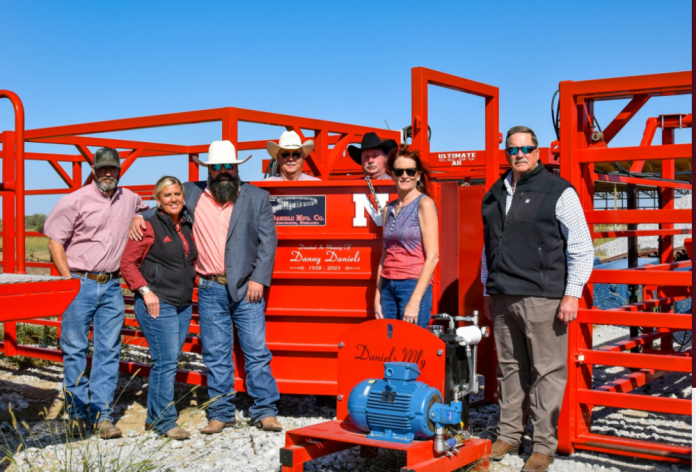
A Husker-red cattle handling system manufactured and donated by Daniels Manufacturing Co. in Ainsworth, Nebraska, the latest addition to the facility, is a “dream come true for many,” said Ruth Woiwode, assistant professor of animal behavior and well-being at UNL. Woiwode is part of the team that planned the facility and is charged with dreaming up the future of the research to be conducted there.

Those dreams are big.

The processing barn that will house the Daniels Manufacturing Co. cattle handling system will also feature a separate cattle handling system, donated by ArrowQuip, that will allow side-by-side studies of cattle handling facilities and methods. An elevated classroom with one-way glass will let students and industry stakeholders observe cattle handling without interfering with the process, and a wall of screens in the classroom connected to cameras throughout the facility will enhance those observations.

The processing barn reflects the facilities in feedlots where cattle are given vaccines and other health treatments.

In operations that work thousands of cattle every year, small changes in facility design or handling practices can mean big results in stress reduction, safety or efficiency for animals or humans.

The Daniels system includes a double alleyway and a Bud Box. The Bud Box is named after Bud Williams, a pioneer in low-stress animal handling who developed the system. The Bud Box is a rectangular pen that is positioned at a right angle to the entry point of the double alley leading to the squeeze chute where cattle are held for treatment.

“Both handling systems are designed to capitalize on an animal’s natural tendency to return to where they came from,” Woiwode said. “Some of those details come down to the actual layout and understanding, from a handler perspective, where they need to stand and move in relation to the cattle.”

The work UNL is planning at the Klosterman Feedlot Innovation Center will provide data that can be used to further streamline facility design.

“We can test concepts related to the number of animals and alley width, number of handlers, handler skill level, just to mention a few,” Woiwode said.  With two systems side-by-side, Woiwode says UNL can generate an enormous dataset that can be used to inform the design of working facilities, and best practices for cattle handling in the respective facilities.

When Woiwode and her team started planning this project, they thought it made sense to include Daniels Manufacturing Co., a Nebraska company with a 65-year history in the cattle industry. Dude Daniels started Daniels Manufacturing Co. in 1958, building autogates, gates and panels. “When Dude had an idea he would dive in head first and devote his time to building something the best way possible for the cattle and the user,” said Kade Blake, sales manager and design consultant for Daniels Manufacturing Co. “He started building the double alleyway back in the early ’90s, and the very first one is still in use today down in Oklahoma.”

Dude’s son and daughter-in-law, Danny and Teri, took over the company when Dude passed away. In 2001 they went to a Bud Williams cattle handling seminar and came home determined to figure out how those ideas could be used to improve their equipment. “Danny was the first person to manufacture and sell the Bud Box,” Blake said. “He worked with Bud and the Production Animal Consultation team to come up with the right size, and from there it took off.”

Woiwode had worked with Daniels Manufacturing previously and knew they were committed to finding the best solutions for cattle and handlers, and the future of the cattle industry.

“When Ruth approached us about this project and explained how they were going to focus on stockmanship and study the voluntary flow of cattle, Danny was very excited about that,” Blake said. “Our goal here at Daniels has always been building quality, long-lasting equipment that improves the life of cattle and the cattle handler. We focus on noise elimination, reducing sharp corners and edges, keeping our sides open so cattle can see the handler to use body placement to move the cattle, keeping our sides straight so cattle have a natural footing, and using the highest quality of steel to have equipment that gets used for generations.”

Danny Daniels passed away in April of this year, but before then, he and Blake drove to Lincoln to meet with Woiwode about her plans.
“On our way home, he told me that ‘these kids are going to need our equipment’ and he was so glad to be able to help them out,” Blake said.

Daniels and his contribution to the industry won’t be forgotten. There’s an inscription on the Husker-red alleyway, right below the Husker N and the sticker that says “Daniels Mfg. Co. Ainsworth, Nebraska.” It reads, “Donated in Memory of Danny Daniels 1958-2023.”

As drought continues to plague pastures, consider a couple things

0
KSU

As reported in High Plains journal “The best thing is what might be the hardest to do.”

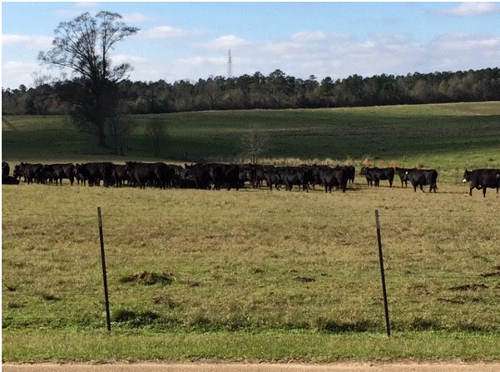
Jaymelynn Farney, associate professor of animal science at Kansas State University and beef systems specialist at the Southeast Area Research and Extension Center near Parsons, Kansas, said as forages are in short supply and other feed ingredients are expensive, some tough choices might have to be made by beef producers.

“The best thing for perennial grasses is to have a sufficient amount of biomass above ground to have an adequate amount of root growth below,” Farney said. “If we deplete the root supply of nutrients, then the plant won’t regrow when we have optimal weather conditions.”

She said producers need to examine appropriate stocking rates and test pasture soils before Mother Nature turns off the spigot and drought conditions start.

“Plan appropriate stocking rates—assuming the worst scenario,” she said. “If it goes to raining, then you can utilize stocker cattle to increase grazing pressure to most effectively utilize your land resource.”

When testing pastures, especially those that have had fertilizer applied, be aware of what the grasses need.

“During drought, appropriate soil pH is the best thing to help maximize utilization of any fertility options, and luckily lime is still reasonably priced as compared to the other main fertilizers,” she said.

Farney was asked if the “grass can be saved” and with current conditions she said the best practice is reduce stocking rates.

“Make sure you adhere to the ‘take half-leave half’ rule so that you do not apply undo stress on the plant reserves,” Farney said. “This is especially true of the warm season grasses. For the cool-season grasses come up with some flexible grazing strategies and be willing to de-stock if needed.”

Farney said some producers may not be able to keep their herd together if they rely on surface water.

“It is often easier to be able to purchase and bring in feeds than it is to provide and haul water, especially long distances,” she said.

Don’t forget about infrastructure changes that would have to happen in order to feed different ingredients when trying to stretch forage supplies.

When drought forces culling, Farney said those animals need to be prepared beforehand. Dry, pregnant cows are cheaper to feed than lactating ones.

“So if you haven’t weaned, that would be the first thing to do,” she said. “Depending on where you are located and the resources you have, daily cost of dry lotting cows may be more than what you have paid for grass grazing.”

If the cost is too high, continue to cull strategically and make sure investment is made in those animals who have the greatest potential to pay you back.

“Preg check before sending cows to the feedlot; old ‘shelly’ cows might need to be removed from your production system; cows that are higher strung (wilder) also might not be as fun to work with in the dry lot system, especially if you are building and utilizing pens that aren’t designed to hold large animals with lots of pressure,” she said.

There is added pressure to return to what producers consider normal once the drought breaks and Farney is encouraged by several studies showing native pastures after extreme droughts have managed to recuperate, especially if producers practiced smart grazing decisions during the dry periods.

“But even some of the pastures that were extremely overgrazed often ‘came out’ of the extreme drought,” she said. “Historically, the most extremely dry years have been followed by extremely wet years. During that first year post extreme drought there may be less desirable plant species—weeds grow fastest‚ but if you work on control and stock based on grass production, then those pastures can overcome quite a bit of adversity.”