Thursday, February 26, 2026
Home Blog Page 598

Hyllningsfest: Music

0
john marshal

LINDSBORG ‒ The festival schedule online opens with a photo, a section of the Smoky Valley Middle School marching band, youngsters in traditional Swedish costume. And there with the saxophone line is Jay Steinberg, wide smile and Swedish get-up, arm raised in a wave to the parade crowd.
Steinberg had been a fixture at Hyllningsfest for decades before he died in May 2015 after a long battle with cancer.
It has been ten years ‒ five festivals ‒ since Steinberg marched in the Hyllningsfest parade. He was a round, elfin-like man with boundless energy and a love of all things music, especially when it involved youngsters. Steinberg taught music in the Smoky Valley Schools for decades, and he became music’s definition for the schools, the community, for Hyllningsfest.
And as a celebrated musician, he was much a part of festival performances of the Smoky Valley Men’s Choir. Less is more, Steinberg seemed to say, or play. His clarinet or oboe came on in an elegant whisper, a lustrous accent for the Choir’s voice, polishing phrases like a soft cloth, bringing luster to a movement.
Steinberg was originally from New Jersey, landed here in the 1970s and never left. Steinberg was dean of the Smoky Valley Schools music faculty and an instructor at Lindsborg Middle School and Smoky Valley High School. He also taught at Wichita State.
As Hyllningsfest approached, Steinberg was up with the sun and the town knew it. Band members were in practice mode, marching up the streets, Steinberg at the students’ side, shouting above the drums, checking the lines, checking the lines again, and when the band began to play, he would step away and slightly back, still marching, as the students strutted crisply ahead of him. He wanted them in front. He wanted them and their music to be noticed first and always.
When those youngsters come marching this year, give them a wave – and a thought to Jay.
*
For more than a quarter-century, the Smoky Valley Men’s Choir has delighted audiences with superb evidence that music is a footing for this community. More is in store on Friday, Oct. 13, when the Choir performs at 6:30 p.m. at Bethany Lutheran Church. The Choir, under the direction of Leah Ann Anderson, was established in 1997; its members ‒ 45 this year ‒ come together only every two years for Hyllningsfest. They have been in two-hour rehearsals every Tuesday for two months.
In recent years the group has been in such demand that its performance schedule has continued into the Christmas holidays. On December 9 the Men’s Choir will perform at roughly 7 p.m. at the Swedish Pavilion in Heritage Square. The event is part of the Old Fashioned Christmas celebration at the Lindsborg Old Mill and Swedish Heritage Museum.
Praise for this Choir has been long and effusive. There are not enough superlatives to tell its magnetic resonance, its clarity and vigor and passion.
“This year we’ll present a lively variety, some new works and the traditional ones,” Anderson said. “We’ll have a lot of soloists, and some big pieces, and in the final section, spirituals, all exciting music ‒ and a little surprise, something I won’t divulge just yet.”
The Choir was the idea of Carroll Lindgren who at the time, in 1997, was a member of the Hyllningsfest Committee. Because of Sweden’s long tradition of men’s choirs, Lindgren believed it only fitting that one be established in Lindsborg.
Anderson is a retired choral music instructor at Smoky Valley High School and has taught at Bethany College. She has directed the Men’s Choir since it was founded and insists on preserving its heritage as a community choir, its concerts informal.
“We’re not a professional group,” she has said, “but we do have a lot of talent, and this enables me to raise the bar when choosing literature for the singers.”

 

Mixed-up times

0
Thayne Cozart
Milo Yield
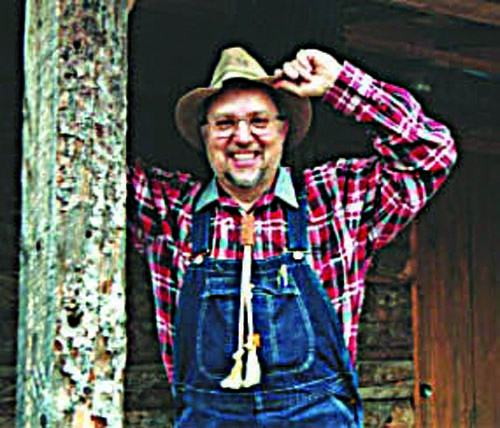
These are mixed-up times for me. I’m writing this column in advance of our anticipated move to our new home. So, that means, if all goes according to plan, that I’m writing this column before we move, but you will read it after our move.
This week we got most of our packing up ready for the move. The walls in our home are bare, as are most of the cupboards.
A lot of the furniture of the new owners is already sitting in our basement, and a pet aquarium snail belonging to the teenage daughter of the new owners is also living in our basement.
My latest encounter with wildlife at Damphewmore Acres is another hungry prairie falcon — most likely a fall migrator. Yesterday, it killed and ate a large portion of one of the hens that was going to the new owner. Between the foxes and the falcons, the new owner will be lucky to have any chickens left. So, for the next week, I guess I’ll have to keep “their” hens in the henhouse for protection.
***
I’ve been involved on the periphery of farming and ranching for decades — long enuf to have sorted through a bunch of agricultural truisms. The list of truisms, as it stands today, follows:
  • It never wise to make square bales of hay heavier than your wife can lift.
• Just for orneriness, it’s fun to always keep enough open cows in your herd to aggravate your veterinarian.
• It’s never wise to ever insist that your wife back up a gooseneck trailer to anything.
• It’s presumptuous to ever assume your dog will learn more than you can teach it.
• The smart move is to always let your wife drive the rig that is being pulled.
• Experience proves its never wise to expect much help from a cattle truck driver wearing new coveralls and ostrich boots.
• It’s a mistake to ever put anything you need on the north side of the shed in the winter.
• Be prepared: Always insist, if your check bounces, it’s your bank’s error.
• It’s wise to never build a wire gate tighter than your wife can open and close.
• Experience proves it’s never wise to expect a borrowed tool to return to its proper place promptly and in the same condition.
• It’s wise to always expect a machinery breakdown of some sort if a storm is approaching.
• It’s a given for your best bull to come down with trich or anaplasmosis.
• If it’s never rained for months, always expect a toad-strangling, water-gap-breaking rain when you’re on your long-put-off out-of-state vacation.
• It’s unwise to expect a cheery welcome home when you’re late for supper and the food is cold.
• The Law of Livestock dictates that the smallest heifer in the herd will have the largest calf and need expensive vet assistance.
• It’s unwise to expect to re-find the profit-assuring article in your favorite farm or ranch publication that you stashed away for future reading.
• You can be assured you will rip a hole in your new insulated denim jacket the first time you wear it.
• It’s the Law of Succession at work: Rest assured your teenage son will “know” more about farm management than his archaic dad and be plenty ready to explain it.
• When a windshield gets cracked on the gravel road, be assured it will always be on the family SUV, not on your ancient and battered beater of a feed truck.
• If you have two cats, one a house cat, the other a feral refugee, it’s a certainty that they both will efficiently kill song birds at your wife’s bird feeder.
I’m certain there are other aggie “truisms,” but those are the ones I could conjure up this week.
***
Two ranchers were confabbing in the middle of the road about happenings in their community. One rancher said, “Did you hear about old Billy. He got remarried at the age of 90. And his new wife is only 30 years old.”
The second ranchers replied, “We have a name for that kind of thing in my family. We call it a football wedding.”
The first rancher queries, “Just what is a football wedding?”
The second rancher replied, “She’s just waiting for him to kick off.”
***
My words of wisdom for the week relate to the above story:  “Anyone who marries for money eventually earns every cent of it.”
Enjoy the fall weather. Hope your harvest is better than you expected.
And, last but not least, “Have a good ‘un.”

Plant Identification Help 

0

We often receive questions related to identifying landscape plants. There are many smart phone apps available that can sometimes accurately identify plants through photos. Your local extension agency is a great resource, especially if you provide a complete plant sample for identification. Here are some items to consider as you prepare a sample for your agency whether for identification of the plant itself or to help diagnose causes of damage.

     Live Plant Sample:

  • For small plants, include as much as possible: roots, stems, leaves, flowers and fruits.
  • Gently shake loose soil from the roots but do not wash roots.
  • Prevent wilting by placing roots in a plastic bag and keep them moist.
  • Stems, leaves and other above-ground growth can be covered in newspaper, not plastic.
  • Harvest the sample as close to the day you will deliver it as possible.
  • For trees, shrubs and vines include a branch, approximately one- to two-feet in length, with several buds/leaves.
  • Store plant sample(s) in a box in a cool, dark location until it is delivered to prevent wilt.

    Photo Submissions:

  • Include a photo of the entire plant and growing site.
  • Include a photo of the leaves, stems, buds, fruit and flowers up close.
  • Show how large the plant parts are by including a scaling item, such as a ruler, next to the plant part(s).
  • Ensure photos are in-focus.
  • If plant has symptoms of disease or pest damage, include images of healthy and unhealthy plant material.
  • Include a photo of the plant against a solid background so the plant stands out. Examples of background could be a piece of paper or your hand.
  • Sending in photos to accompany a live sample is a great way to show the surroundings where the specimen is growing and can aide in identification. In general, include enough information in your plant sample, whether live or digital, to tell a complete story for the best chance of accurate identification.
  • Cynthia Domenghini, Extension Agent

 Fall is a Good Time for Soil Testing    

0
          

Soil tests are useful tools to evaluate the basic fertility of the soil. They do not provide information on soil composition, compaction, contamination or diseases and pests. Although each of these problems affect plant growth, establishing balanced nutrients in the soil is essential for a healthy lawn and garden.

Collect uniform soil from six spots within each area that needs to be tested. Uniform soil will have the same texture, color and history of growing and fertilization practices. Areas that are not similar should be tested separately. For example, soil from the lawn should be tested separately from soil in the garden. Use a soil probe, or shovel if probe is not available, to dig six- to eight-inches straight down into the soil. Shave a layer of the soil off the inside of the hole in each of the six spots and mix these collections thoroughly in a clean bucket, removing any debris. 

Scoop a total of 1.5 to 2 cups of mixed soil into a plastic container such as a resealable bag. Repeat this process for each unique area that needs to be evaluated. Label the samples with the location where they were gathered. Complete online paperwork as applicable for your extension office and include it with your sample delivery.

Soil testing in the fall allows you to sample the soil when it is less likely to be waterlogged. Additionally, more organic material is available to integrate into the soil in case the test results indicate this is necessary. Soil test laboratories are typically busier in the spring, so get a jump start on this task now to save yourself from delays next year.

Cynthia Domenghini, Extension Agent

Clean up Iris Beds this Fall   

0
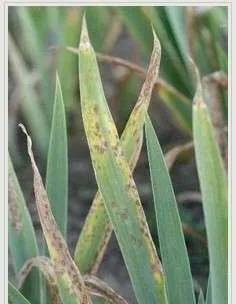
Photo courtesy: K-State Horticulture Newsletter

To prevent overwintering of iris borers and the fungus, iris leaf spot, remove and clean up dead leaves from iris plants now. Iris borer eggs and iris leaf spot survive in plant debris through the winter and reappear the next growing season. Removing debris from the garden is an effective control against these pests. Healthy iris leaves can be cut back to one-half their size.

Cynthia Domenghini, Extenison Agent