Friday, February 27, 2026
Home Blog Page 613

Bread Pudding

0


It’s been a weekend full of prep and cooking as my household has joined in to assist me with a wedding reception. At ten o’clock at night I often kick myself, and say: ‘What was I thinking?’ But, it’s been rather fun honing my entertainment skills to make someone’s day extra special. I can’t miss a beat, everything has to be perfect-o. When this wraps up it will be interesting to see if my family agrees to assist me ever again.

We continue this week with foods from the great depression. Folks should probably be paying some heed to this style of cooking. Nothing was wasted &
frugal was the name of the game. Many meals were meatless and achieved protein through different versions of beans. This past week I saw an article about the somewhat ‘gross’ things people ate during this time frame. One dish that has surfaced over and over, in my reading is peanut butter stuffed onions! In northeast Missouri where I was raised, I never heard a soul speak of this dish.

Bread pudding can be made with a variety of left over breads. One of my favorites was served at the KCI Marriott Hotel. I was working part time in the catering offices while teaching school. Often on Mondays, the employee cafeteria would have the most decadent bread pudding. I couldn’t stand it any longer, so I finally approached the chef and asked what his secret was. He actually told me! On Sundays they served a well-known breakfast buffet filled with croissants, bagels, muffins, donuts and delicious pastries. The chef used his ‘leftovers’ to make his exquisite pudding.

At home my favorite bread to use is cinnamon raisin bread and sourdough. The sauce of choice in my presentation is rum. My spouse, doesn’t like undertones of alcohol in his foods, so ‘sometimes’ I’ll switch to a plain vanilla sauce. (Interestingly enough he has a more adventurous palate than I do.) I have several dishes that rely upon the flavor of specific alcohols to make them sail. If I had to list the alcohols I use the most in cooking it would be: Sherry, rum, dry wines, merlots, and orange liquors.

As we look at some of the desserts from the depression era we stumble upon
dishes featuring farm standards like eggs, cream, milk, molasses, honey, some sugar. One thing I have noticed about cooks raised by depression era parents, is how they frequently use less sugar, specifically in their pies.

Alrighty, let’s take a look at this easy recipe. For the fall try adding pieces of apples and nuts. Simply yours, The Covered Dish.

Bread Pudding

1 loaf, stale French Bread
1 quart milk, cream or blend
4 eggs
2 cups sugar
1 teaspoon cinnamon
1/2 teaspoon nutmeg
2 tablespoons vanilla
1 cup raisins
2 apples, peeled and diced
1/4 cup butter

Pull the bread apart and mix with the milk. Beat eggs and add to bread mixture stirring well. Add remaining ingredients except for the butter. Melt the butter in a 9X13 inch pan on low on the top of the stove. Pour the bread mixture in on top of the melted butter. Bake about 50 minutes in a preheated 350 degree oven until firm.

Prepare topping while baking.

Topping:

1 cup brown sugar
1 cup white sugar
4 tablespoons flour
2 cups water
1 jigger of rum
4 teaspoons butter
1 teaspoon vanilla
Cook sugars, water, and flour until clear (high boil). Add butter, vanilla, and rum, stirring until the butter melts. This should be about pudding thickness. Even if it’s runny, it’s wonderful! Pour over the bread pudding. Serving both the pudding and sauce warm.



Some Like it Dry

0

Unless you have spent all this summer under a rock somewhere, you are aware of how dry this part of the country has been. Ponds I have never seen dry look like parking lots, and some stream and river beds could easily double now as roads. Drought affects all living creatures, animals included. I’m sure you’ve heard by now that fall turkey season has been suspended this year because of declining turkey populations over a large swath of the country, not just Kansas. “Declining production” is cited as the reason for that decision. Drought affects this too, as lack of green cover offers less concealment for young chicks and fewer insects for their sustenance. Drought is just bad news all around, but dry years can help hunters, fishermen and trappers.
Drought will obviously affect waterfowl hunting. Most of the McPherson Valley Wetlands near McPherson are dry, and the wetlands just outside Inman have water in perhaps only one-half the pools. There are several ponds along the 61 four-lane highway that are completely dry, as are many other ponds in this part of the state. Many of these ponds and water impoundments are favored by ducks and geese over the next couple months, so now all those birds will have to find other water in farm ponds, stock ponds and sand pits for example. There is just as much feed around for them this year as any year, so that will probably mean just as many ducks and geese will stop here for a spell as on any year. Putting two-and-two together means if you can get permission to hunt some of those otherwise overlooked and out-of-sight spots, the waterfowl hunting for you this year may be tremendous.
Whether big game, small game, winged or four footed, furbearers or predators, all critters need water, and even though dry spells don’t affect critter movement patterns much, it’s a no-brainer that more wildlife will be watering at the ponds, creeks and rivers that still hold water. Deer stands placed near water are good bets near dawn and dusk on any year, but this season hunting near a water source may be especially productive as more deer will be drinking from those spots. If your hunting property doesn’t have water on it, try hanging a stand or putting up a blind as close as you can get to the nearest water. Stock tanks and windmill tanks will probably be more popular watering spots this season for wildlife too, so, if possible, find some cover within shooting range of them. In short, this year water sources may be as big a draw as anything, so place you deer stands and blinds accordingly.
Although the properties I trap rarely have ponds on them, most predator trappers agree that pond dams are good spots to set traps for bobcats and coyotes, as they also need water and like to nose around on the dams. All pasture ponds will have cattle trails leading to and around them, and predators use those same trails too. Following the same thinking, since some of those ponds are dry this year, the ones still holding water might be better trap sites this year than usual, as more predators and furbearers will be traveling there to drink. Deep holes in creeks and rivers that still have water will also see more wildlife traffic that normal. I always wonder where all the beavers and muskrats go when ponds and drainage ditches go dry, and this year water sources still with water could see an influx of them too.
Fishing is affected by extended dry spells also as water levels drop in ponds, lakes, rivers and streams and fish become more concentrated around cover in the available water. I questioned a friend about this who is a tremendous fisherman and he confirmed my assessment. He also added that ice fishing is often great on years when water levels are low, as fish are easier to locate beneath the ice.
Jacques Cousteau once said “We forget that the water cycle and the life cycle are one.” Leonardo da Vinci saw that “Water is the driving force of all Nature.” Yes, it’s dry again and we need good soaking rains. It seems that all the native Kansans I know have long ago made peace with our states propensity to stay dry, but as a Kansas transplant, I still struggle with that. Nelson Mandela said “Let there be work, bread, water and salt for all.” I guess we can furnish the work, bread and salt, but only God can send the water. Even though it’s dry, use some of the above tips to Explore Kansas Outdoors!
Steve can be contacted by email at [email protected].


ALB launches new website for sheep industry

0

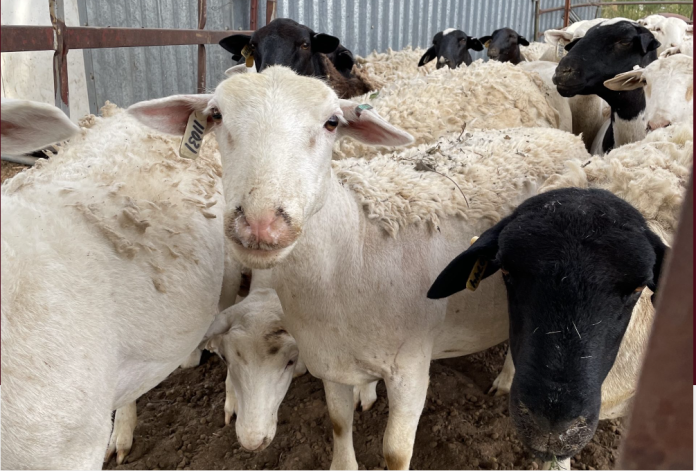
As reported in High Plains Journal, American Lamb producers can now turn to LambBoard.com for resources on checkoff production, promotion and other programs. The new American Lamb Board official website launched in early September.

“This is a totally new site all for the American Lamb industry—commercial and seedstock producers, feeders, direct marketers, sale managers, auction markets and processors. In addition to production and promotion resources, it’s also the home to everything about the American Lamb Board and the checkoff program,” says Peter Camino, ALB Chair, Buffalo, Wyoming.

A wealth of information is available on the new website, including best practices for sheep productivity and efficiency, lamb quality, recipes and premium items for local promotions in the ALB Store, free downloadable handouts, details on ALB’s cooperative funding program, the latest news and results of the American Lamb Checkoff’s activities, and even an online assessment payment tool.

Those who sell American lamb directly to consumers will want to check out toolkits on marketing to ethnic markets and other resources.

LambBoard.com replaces the previous industry website, LambResourceCenter.com. Information for consumers and chefs on American Lamb, such as cooking videos, recipes, sustainability and how sheep are raised in the United States is available at AmericanLamb.com.

Visit LambBoard.com today on your smartphone, computer or tablet.

Surprise dangers in harvest field food

0

As reported in High Plains Journal, Safety in the harvest field is often a priority, but food safety in those same fields can be easily overlooked.

Ashley Svaty, Extension specialist, family and consumer science at the Agricultural Research Center in Hays, Kansas, discussed simple and safe harvest meals at the Southwest Research and Extension Center’s Field Day Plus recently. She said every year an estimated one in six American’s get sick and 3,000 people die from food borne illnesses.

“People especially at a greater risk are those older than 65, children younger than 5, people with weakened immune systems and pregnant women,” Svaty said. “So, if you are in one of those categories, or if you know anybody in those categories when you are fixing them something to eat be especially careful.”

There are four basic steps for food safety—clean, separate, cook and chill.

“We always want to start with a clean surface, utensils and hands,” she said.

Wash hands for at least 20 seconds with soap and water. Svaty said always washing hands after handling uncooked meat, poultry, flour, and eggs, in addition to washing surfaces, utensils, countertops and starting with all clean surfaces is very important. The same goes for rinsing fresh fruits and vegetables before prep begins.

“All fresh fruits and vegetables—that includes cantaloupe and watermelon,” she said. “Because when you cut into that you’re cutting into the rind and anything on the rind—anything else that’s on there is slicing into your food.”

When bringing food out to the field, Svaty said there are a couple options for washing hands. A portable hand washing station is good to have.

“Get them (hands) as clean as you can,” she said. “Wet wipes, a bottle of water with soap, moist towelette. Work with whatever you’ve got.”

The next step, separating, means having separate utensils and cutting boards for fruits or vegetables and raw meat.

“Don’t use the same cutting board because those juices can transfer,” she said. “Don’t plate cooked food on a plate that you just brought raw chicken out to the grill. Don’t use that same plate without really washing it with hot soapy water to put your cooked chicken on.”

When thawing meat in the refrigerator, Svaty said it’s never a good idea to put thawing meat on the top shelf where juices could drip on items below it. A lipped container will help contain some of the liquids.

When it comes to cooking, Svaty said to use a food thermometer and know the proper temperatures for meats.

When chilling foods after they’ve been prepared, it’s important to get the food back into the refrigerator within two hours at room temperature.

“Because bacteria will multiply rapidly at room temperature and especially if temperatures are above 90 degrees,” she said. “So, if we’re at a cookout, everybody’s eating outside and it’s been an hour, you got to start getting that food back into the refrigerator.”

If the food’s not going to be thrown away be sure to get it back into the fridge in a timely manner.

“But that danger zone where bacteria rapidly multiply is 40 to 140 degrees,” she said. “So, your refrigerator should be at 40 degrees or below and your freezer should be at zero degrees or below.”

Leftovers that go into the refrigerator should be in a shallow dish—2 inches or shallower in order for it to cool correctly. If you cook a large pot of something and just put the whole thing in the refrigerator, it’s not going to get cooled down in time and bacteria can possibly grow.

Tips for choosing horse hay

0

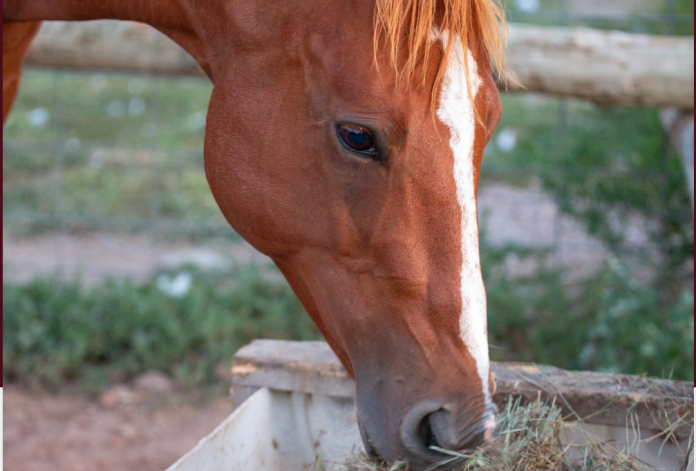
As reported in High Plains Journal, Kris Hiney has a list of maladies that will kill her horses, and when it comes to choosing the best hay for them, she’s got a couple things in mind.

Hiney is an associate professor at Oklahoma State University, animal and food sciences and an equine Extension specialist who has taught and produced educational materials related to equine nutrition, reproduction, health, and management.

There are some factors that come to mind when buying hay—blister beetles, irritants, cleanliness, and safety. In Oklahoma, blister beetles are a legitimate concern for horse owners.

“They are a threat. They’re real,” she said. “Like we’re not exaggerating about those, they will kill them. And so that’s why if they want alfalfa, I recommend it doesn’t come from Oklahoma.”

For those wanting alfalfa, supplements that are cubed or pelleted are a good alternative, and buying hay from out of state is a good solution. Some hay dealers will bring in out-of-state hay and that’s a good second choice for those wanting to feed alfalfa.

When considering horse hay, she is looking for major irritants—foxtail or other barbed weeds that can irritate and damage the horse’s gums or tongue.

“They really can create quite a bit of damage in the horse’s mouth,” she said. “Embedded gums, burrow into lips and tongues, and that can create a lot of behavioral issues.”

Horse quality hay should have less weeds in it, but those bales with little or no weeds are normally higher quality. Johnson grass is also included as something to watch out for in bales.

“Looking for weeds that are problematic versus just things that affect quality I think are pretty important,” Hiney said.

“Thinking about the difference between a horse and a cow—horses respiratory health is extremely important for us,” she said. “If we’re going to have this as an exercising animal, he needs to have full respiratory function.”

Any time a horse is inhaling or exercising particles getting into the lungs is going to be a concern. Horses, as monogastrics, are more susceptible to some mycotoxins, fungus and others because of their lack of rumen.

“The rumen is always a little bit more protective because it can do stuff to the hay prior to to where the sight of absorption is,” Hiney said. “So when I think about horse hay versus cattle hay, again, I go down my safety concerns first.”

As far as bale type goes, horse owners really should start with what they can handle.

“I always put it in the reality of the owner. What are you able to do?” she said. “If you’re really only able to pick up a square bale and move it around, then you should only buy small squares, right?”

Small square bales cost more, but so does the equipment to handle larger bales such as bale beds or forks, tractors or other equipment that moves round bales around. Ask yourself what you can handle with the tools you have on your farm.

Many areas of the country have been suffering the effects of drought conditions, some for more than a few years. Hiney said to be proactive and secure hay supplies in advance. It’s definitely going to be regionally dependent for areas of those with hay and those without it.

“Maybe even just being a savvy owner, like, ‘Oh, it’s raining in Oklahoma, maybe there’s some Oklahoma producers to contact,’” she said. “Always the buyer beware, right. There’s internet scammers that we want our horse owners to be aware of. Don’t ever give just money and expect something to happen.”

With the scarcity of hay over the last several years, Hiney herself has stocked up on hay for her own horses, and when drought conditions started last year, she contacted her hay supplier and bought all she could.