
The topic of Artificial Intelligence (a different kind of AI than we aggies are accustomed to) seems to be everywhere in the news these days.
I have trouble in my old mind grasping the whole concept of Artificial Intelligence when I see such a dearth of regular old common-sense human intelligence everywhere I look.
But, regardless of my opinion of AI, or acceptance or rejection of it, AI is going to become a bigger influence in my life and our lives.
Just this morning at the Old Geezer’s Breakfast Club breakfast I got an eye-opener about AI. The club’s “Breakfast Godfather,” ol’ Ike N. Cookitt, recently returned from a family vacation in Virginia. While there, a family member introduced him to some sort of public-use Artificial Intelligence program. So, Ike decided to put the AI program to a test.
He gave it the name of a club member and a scant bit of personal information about the guy and gave the program a directive to “write a poem” about the member.
Ike said within seconds the program spit out a two-page rhyming poem about the member that pretty much nailed it — hit the nail squarely on the head. Ike let us all read the printed version of the poem and marvel about the result.
***
To me, just contemplating AI is at once scary, hopeful, and funny. And, I’m not the only one who views the future of AI in our world with some trepidation. So do the titans of Silicon Valley who created AI and continue to fine-tune it.
I watched a “60 Minutes” tv program last week that focused on AI and the future. Without exception, it’s inventors say it’s best to proceed with caution, because the potential for negative results from AI use are looming and real.
But, that’s when the really scary part of AI’s future was revealed to me. It’s inventors said that the President and the U.S. Congress need to quickly draft, enact and codify legislation to rein-in and throttle-back the nation’s helter-skelter stampede toward implementing AI into our lives.
Now, that’s really concerning to me. Here’s why: Someone please point out any politician, bureaucrat, or political aide, who is a legitimate “AI Expert.” Who in the entire political sphere can digest the full potential impact of AI on our lives and craft legislation to protect us and proceed with caution?
Our politicians can’t work together to craft worthwhile “normal” legislation to address U.S. needs. Remember, politicians created the Department of Energy decades ago and today we are still reliant upon foreign energy sources and chasing unachievable energy goals.
Politicians created the Department of Education decades ago and today’s students are struggling more than at any time in the past. Also, the cost of higher-education is beyond the reach of too many would-be students.
Politicians created the Department of Agriculture decades ago and today our food supply is as much reliant upon aggie corporations as it is reliant on farmers and ranchers. Small rural communities have experienced a decades-long population exodus and are on life-support.
Politicians created the Department of Commerce and down through the decades the U.S. economy has yo-yoed between boom and bust.
Politicians created the Department of Transportation decades ago and today our roads and bridges are in bad shape, our railroads have frequent mishaps, air travel is a craps shoot, and the staffing level of the air traffic controllers is down by thousands.
Politicians created the Environmental Protection Agency, the U.S. Forest Service, and the Bureau of Land Management and today our environment is still polluted, our forests burn from lack of management, and our public lands suffer from politicized management.
Politicians created the Federal Reserve System more than a century ago and today the nation is mired in persistent inflation and has a national debt north of $32-trillion.
You get the picture? So, given the failed record of politicians in solving national problems, why should I, or you, have confidence that politicians can grasp all the important intricacies of enabling common-sense AI legislation that is simultaneously legal, protective, and productive?
I expect the AI melee to keep on to a convoluted ending none of us anticipate.
***
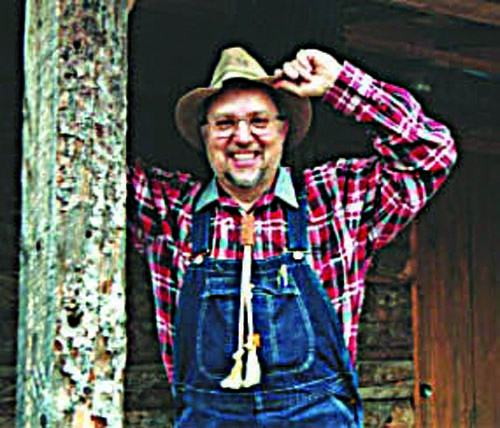
However, the funny-side of AI got revealed to me today. I asked ol’ Ike N. Cookitt, to have AI write a poem about Milo Yield. With a few inputs about my life as a aggie column writer, humorous speaker, ag journalist, and breakfast cook, the AI program spit-out a poem about me that I will reveal in next week’s column. Stay tuned.
***
Until next week, here’s an important summer vacation tip: It’s easy to have a marvelous vacation and still stay within your budget. You just have to do each in different summers, that’s all.
Have a good ‘un.
Artificial Intelligence
Abandoned
The world seems a fretful place these days: climate change, storms, wars, anger, unrest.
We once learned what was happening and why from daily newspapers, and what to think of it from their editorial pages. This continues at the big outlets in New York and Washington. Elsewhere, not so much.
In Kansas, the daily news in most places is left to word of mouth and the Internet. To be sure, specialists are at work online: The Topeka-centric Kansas Reflector surges with deep coverage of state government and politics, and Kansas News Service, also solid, offers an occasional bonus from farm country.
In most communities and small cities, the daily news is left to the wind. This month and next, cities, counties and school boards will outline taxing and spending plans for next year and estimate the money involved in budget proposals. Public hearings will be set. Votes will be recorded.
At best, reports on this are superficial, from Johnson City in the rural southwest to Johnson County in the metropolitan northeast. When it comes to one of our chief concerns ‒ taxing and spending ‒ valid local reporting goes begging. Rumor or speculation may surface on Facebook or Twitter but such posts are usually from the ill-prepared or uninformed or, at times, the malicious.
*
Most daily newspapers in Kansas are owned by giant corporations or hedge funds; these component cousins mirror each other; one design fits all, in print or online. News coverage and advertising are reduced sharply. The circulation “department” for the Salina Journal is in Augusta, Ga.
Many publications have abolished their editorial pages or cut them to a few days each week. Hedge fund journalism sees opinion pages as a waste; thoughtful examination of important matters – our schools, cities and counties, our state, our lives – is a lug on readers’ time and a drain on the company ledger.
But the news today is often complicated, matters that even experts have trouble unraveling. Local taxes, government finance, infrastructure and social issues are among the elaborate and mazy knots in our lives. In better times, editorials and editorial pages sought to help readers understand difficult facts and reach conclusions about them.
Traditionally, editorials had three goals: To persuade, or to analyze and inform, or to entertain. These purposes aren’t mutually exclusive. An entertaining editorial, well-crafted, can be more persuasive than a clubbing from the Daily Bugle.
In recent years, the daily newspapers were corroded by “managers” who only posed as editors or publishers. Lacking editorial sense, new bosses fell to the clutches of survey results and policy training. They were more inclined to shove a predicament onto a focus group or a “business model” than to find out what was wrong (or right). They might have understood the numbers in a bond proposal, but little of the thinking or the history that had led to it. It made them easy prey for technology’s siren chorus.
In the face of complexity they established “policy,” bane to the thoughtful, resourceful editor. Policy can throttle creativity and invention; it stifles ingenuity, talent, productive thought.
*
Corporate newspapers publish the infrequent editorial page, or no opinion page. Instead we have the “guest opinion” or syndicated column and for “balance,” the faceoff: a screech from the far right against howls from the far out. (Symmetry is important, lest readers think an opinion page is biased.)
The best opinion pages were never about bias versus balance. They were about helping people think. Editorials and cartoons may not persuade readers to act, and they seldom persuade them to act in the way an editor hoped. But if they stimulate thought on a particular problem, if they prompt reexamination of attitudes toward the world around us and the people who live in it, then the page served a purpose.
In America’s growing news deserts and opinion wastelands, citizens are left to themselves with no editorial compass, abandoned to gathering storms and the Internet.
Rodeo Changes Life For Renowned Clown Headed to Dodge City Roundup

There’s a great deal about Robbie Hodges’ job as a rodeo clown that he adores, but there’s one thing that stands out.
“I just love being in that barrel and being the one bull riders can count on,” Hodges said.
“To me, not focusing on the barrel is a disservice to all the other generations that worked the barrel so well. If I could back up time, I would have loved to work with Ted Kimzey or one of those other guys.”
He’ll have his chance to showcase not only his life-preserving skills in a custom-made aluminum barrel, but he will also display his down-home, comedic talents during Dodge City Roundup Rodeo, August 2-6. Dodge City Xtreme Bulls is Tuesday, August 1.
It will be his first-time working Roundup Rodeo, an event that was inducted into the Pro Rodeo Hall of Fame in 2012. It’s the largest event of its kind in Kansas, and it celebrates the community’s Western heritage while also showcasing how the sport is played in today’s society.
“First of all, you’ve got the stock contractor of the year with Frontier Rodeo, and you’ve got an announcer the caliber of Boyd Polhamus,” said Hodges.
“It’s ridiculous that a rodeo that’s only been going since 1977 is so well known and has the same status for rodeos that are twice as old.
“You’re not a rodeo guy if you haven’t been to Dodge City.”
Hodges is an 18-time nominee for various end-of-the-year awards like Clown of the Year, Comedy Act of the Year, and the Coors Man in the Can.
Rodeo is what took Hodges from being a passive child to someone who stands out in a crowd. It’s a reflection of how he came to be “Rockin’ ” Robbie Hodges, a comedian, a battle-tested barrel man, a musician, and a doting father.
“I’d say my comedy is non-traditional,” Hodges said. “Me being a non-traditional rodeo clown, I wear a jersey and shorts instead of baggies. My No. 1 deal is working that barrel, which has got me everything in this business. I would rather have the respect of my friends or my peers than anything.”
Even in his 50s, Hodges is agile and can move in a barrel better than some folks his age move without one. He not only positions himself in the arena during bull riding, but he will throw himself and his barrel into the fray of a wreck in order to save the bull riders and bullfighters if the situation arises.
It comes from a variety of ways, but a big part of what makes Hodges so good is his understanding of the rodeo production process. He began as a competitor, riding bareback horses for a living. Ever the entertainer, he easily made that transition to the other side of the rodeo spectrum. All that history helps him do a better job.
He’s been recognized for it. In addition to his nominations, he was selected to be the barrel man at the National Finals Rodeo, the sport’s championship.
“Doing the NFR was amazing and the greatest achievement of a picked-on kid from Georgia,” Hodges said. “That was back when the bull riders voted for the barrel man like they do the bullfighters, so that made it pretty special.”
It’s an honor to work Pro Rodeo’s grand finale, whether it’s by a vote of the contestants or being hired by the organizers.
“Robbie’s been around, and we thought he’d be a good fit for Roundup,” said Dr. R.C. Trotter, president of the Roundup committee. “We love bringing fresh faces to our rodeo, because they add a lot of their own personalities to what we do every year, and that’s what we expect with Robbie.”
Hodges has a distinct personality, and it’s worked in his favor. He’s a renowned rodeo clown, has been involved with NASCAR, and loves to play music, even recording some of his work for all to enjoy. Through each piece in the puzzle that makes up his life, he has always leaned on rodeo.
“Rodeo got me out of being a bullied kid,” Hodges said. “From the third to the eighth grade, I was bullied, then I started riding broncs, and that got me out of that. I have a well-rounded life from what I’ve gotten to enjoy. I’ve been able to do so much, and it’s all because of rodeo.”
+++30+++
Suntan Lotion Is Important.
“The sun is both a healing agent and yet can be very harmful to the skin.”
Speaking from experience, protecting the skin from the sun’s rays is essential.
For decades, jeans, t-shirt and cap were common summer attire riding horseback in the hot sun.
No consideration was given to protection from the dangerous rays that the sun generously distributes but it did catch up.
Visits to the dermatologist (skin doctor) verified pre-cancerous spots on the face several times. There wasn’t too much concern as the doctor treated each spot with a killing freezing medication.
Return visits to the doctor every three months showed that the previous treatments were effective. However, each time new pre-cancerous spots appeared and received freezing agent squirts.
Then worst news on the next visit. “Skin cancer is so severe on your left ear that surgery is essential to remove the ear lobe.”
Fortunately, the doctor could remove the cancer and did reconstructive surgery so there has not been an ear cancer problem.
However, in another appointment, cancer was found in the lower left lip requiring surgery removal.
That was more serious, necessitating a different doctor’s appointment for reconstruction surgery and lengthy healing time. Scars do remain but are not generally noticeable when conversing with others as most are inside the mouth.
A few months later, the skin doctor found serious cancer in the lower right lip requiring surgery removal. It was another ordeal like the first time and fortunately ended up with the same positive outcome.
Scheduled appointments to the skin doctor are followed stringently and pre-cancerous spots are always found and treated. There have not been additional skin cancers requiring removal by surgery.
Now, sunscreen, the modern term for what was known as suntan lotion, is applied whenever going out in the sun. Despite what might seem hot to many others, jeans, long sleeved shirts, hats, gloves, and sunglasses are always worn.
“The damage has already been done,” the doctor insisted when telling him that precautionary efforts to prevent more cancer are being taken.
Regular skin cancer checkups are essential, and everybody is advised to take defensive measures to help prevent skin cancer.
With its hazards, the sun is still God’s most natural healing agent.
Reminded of Matthew 5:45: “God made the sun the good and bad, the nice and nasty.”
+++ALLELUIA+++
XVII–29-7-16-2023
Leaf spot on tomato plants

Tomato leaves will begin showing signs of leaf-spot diseases soon if they haven’t already, Kansas State University horticulture expert, Ward Upham said. Brown spots on the leaves indicate Septoria leaf and blight.
“Septoria leaf spot usually appears earlier in the season than early blight and produces small dark spots,” Upham said. “Spots made by early blight are much larger and often have a distorted “target” pattern of concentric circles.”
Upham said heavily infected leaves will turn yellow and drop, with older leaves being more susceptible than young leaves because the disease starts at the bottom of the plant and works its way up.
“Mulching, caging, or staking keeps plants off the ground, making them less vulnerable. Better air circulation allows foliage to dry quicker than on plants that are allowed to sprawl,” Upham said.
He recommends mulching to prevent water from splashing and carrying disease spores to the plant.
If you have room, rotate the location of the tomatoes each year to an area that has not had tomatoes or related crops (peppers, potatoes, eggplant) for several years, Upham suggests.
“In situations where these diseases have been a problem in the past, rotation is a good strategy,” Upham said. “Rotation is a good idea even if you have not had problems in the past, although many gardens are too small to make it practical.”
If rotation is not feasible, Upham said fungicides are often helpful. Be sure to cover both upper and lower leaf surfaces, and reapply fungicide if rainfall removes it.
“Plants usually become susceptible when the tomato fruit is about the size of a walnut. Chlorothalonil is a good choice for fruiting plants because it has a zero-day waiting period, meaning that fruit can be harvested once the spray is dry,” Upham explained.
Chlorothalonil can be found in numerous products including Fertilome Broad-Spectrum Landscape and Garden Fungicide, Ortho Garden Disease Control, GardenTech Daconil, Bonide Fungonil and others.
“Be sure to start protecting plants before these diseases are first seen if they have been a problem in the past. It is virtually impossible to control these diseases on heavily infected plants,” Upham said.
Upham and his colleagues in K-State’s Department of Horticulture and Natural Resources produce a weekly Horticulture Newsletter with tips for maintaining home landscapes and gardens. The newsletter is available to view online or can be delivered by email each week.
Interested persons can also send their garden and yard-related questions to Upham at [email protected], or contact your local K-State Research and Extension office.
Ward Upham, Extension Agent
