Thursday, March 5, 2026
Home Blog Page 684

Homemade Tick Repellent

0


I’ve written some interesting columns in the past 17 years, and today’s ‘share’ will definitely become a member of this prestigious group! I’ve featured soap recipes, detergent mixes, hand cream even deer repellent recipes. Here in the Missouri Ozarks we have habitats that provide the perfect elements for most Midwest ‘ticks’. In truth, for those working outdoors it can become a constant worry and health risk.

Probably the fastest way to protect one’s self from these pesky arachnidans (eight-legged) is to grab a commercial product from the local hardware or farm store. Remember I said the ‘fastest’ protection, not the safest. This week I would like to focus on healthy, safe ways to protect ourselves from the infest of ticks.

As a young girl, growing up on her grandpa’s farm, I watched my family take extra precautions in the fields, for a variety of safety reasons. The men would tuck the bottom of their pantlegs into their boots and wear long sleeve shirts. Light colors were also recommended so you could spot the ticks better. In more modern times they suggested putting your ‘dirty’ clothes in the dryer on high for 10 minutes.

As a farmer you can pick up ticks in every facet of farm life. My grandfather kept his pasture mowed for much the same reason as we mow our yards. To keep snakes at bay and to cut down on the infestation of specific bugs that would irritate the cattle and possibly cause disease. Keeping the cattle away from heavily wooded areas and fence lines with heavy shade is also a wise tactic.
Most ‘fly’ control methods will also help handle the tick populations. Remember the old dust bags hanging in the pasture?

So, my son begins his new career in HVAC this spring. As you can expect ‘newbies’ get the jobs others choose not to do! He is frequently found in crawl spaces, basements, and other outdoor areas where the tick infestation is abundant. For a while he came home with ticks continually. Then his significant other, Paige, got busy creating an all-natural repellent. Readers, it has worked!
He is no longer covered with ticks at the close of the workday!!! I asked for Paige’s recipe, so here goes:

Paige’s Natural Tick Repellent
Witch Hazel
Lemon oil
Citronella oil
Rosemary oil
Peppermint oil
Lavender oil
Notice there are no amounts. She tells me to start at the top, using the highest amount of witch hazel, and then the smallest amount of Lavender oil. Knowing cooks like I do, I’m not sure this is going to be exact enough. Let me make a few quick guidelines for you.

1/4 cup Witch Hazel
6 drops Lemon oil
6 drops Citronella oil
8 drops Rosemary oil
5 drops Peppermint oil
5 drops Lavender oil

I chose more Rosemary oil because of these facts: Rosemary is known as the G.O.A.T in essential oils. From skin & hair to the ‘earthy’ tone it gives foods this is a powerful product. The research I uncovered on skin benefits were outstanding.
I had no idea how powerful this oil could be on acne and breakouts of the skin. It can clarify clogged pores and basically decongests the skin. It provides antibacterial benefits and can be used as an antioxidant reducing puffy eyes. It helps with circulation and provides a serene and calming effect on the body.

It would take me about 3-4 pages to cover the benefits of all these wonderful natural oils. All of the oils presented are tick repellents. For many critters including ticks, the smell of peppermint, lemon and lavender is a strong deterrent. Other oils you may find in natural repellents may be cedar wood and geranium oil. Both of these are highly recommended as natural repellents. One guide for the oil amounts suggests doing a total of about 30 drops of essential oils. You can divide them down as you desire. If you use only 3 natural oils, do 10 drops each. If you use only 2 oils do 15 drops each, you get the picture. I also noted some folks put a ‘bit’ of water with witch hazel, ($4.00) for the base. When you get ready to go to work spritz yourself generously and consider re-applying it throughout the day, especially when you can’t smell it anymore. I picked up the small $1.00 sprayers located in the travel size aisle, within health and beauty at Walmart.

Lastly; what about the cost. The initial investment for Paige’s recipe will be about $31.00. Walmart sells the oils at 4.87 each. Thinking this is too much money, think again. You can get 15-20 drops from each ml. One third of an ounce of lavender oil has 10ml or roughly 200 drops! Once you make the investment you should have enough oil for 2-3 years of protection!

Alrighty, let’s eradicate those ticks! Simply yours, The Covered Dish.
Last minute thought: Make ‘take-home’ bottles of the product at your upcoming grandma camp. The kiddos can make it and use some as gifts, etc.
Go to the Walmart website and order your small bottles. Don’t forget to make a nice label. I would also make this for kids to use at all their summer camps.


KU News: KU invites developers to submit proposals for campus gateway project

0

From the Office of Public Affairs | http://www.news.ku.edu

Headlines

KU invites developers to submit proposals for campus gateway project
LAWRENCE – The University of Kansas is taking an important step in developing its new campus gateway at the intersection of 11th and Mississippi streets. KU today issued a request for proposals (RFP) inviting partners to bid on the project, which will include a conference center and additional mixed-use development opportunities, as well as the transformation of David Booth Kansas Memorial Stadium. Interested partners can visit the university’s procurement website to access the RFP, along with a financial feasibility and economic impact analysis for the project conducted by Hunden Partners.

Law professor writes that Supreme Court ruling allowing ‘self-intervention’ is in error, poses new problems
LAWRENCE — A University of Kansas law professor has published a new scholarly article arguing the U.S. Supreme Court ruled in error allowing states and other parties to intervene in their own legal cases. That 2022 ruling allows more than one entity — including officials not elected to represent states — to intervene in cases, split legal representation and ignore court precedent and the law, according to Lumen Mulligan, Earl B. Shurtz Research Professor of Law at KU.

KU Law’s moot court program ranks in top 10 for first time
LAWRENCE — The University of Kansas School of Law’s moot court program is 10th in the nation, according to rankings published recently by the University of Houston Law Center. This is the highest KU Law has ever been ranked and the first time the school has been featured in the top 10. KU Law has finished in the top 30 nationally for the past eight years.

Full stories below.

————————————————————————

Contact: Joe Monaco, Office of Public Affairs, 785-864-7100, [email protected], @UnivOfKansas
KU invites developers to submit proposals for campus gateway project

LAWRENCE – The University of Kansas is taking an important step in developing its new campus gateway at the intersection of 11th and Mississippi streets.

KU today issued a request for proposals (RFP) inviting partners to bid on the project, which will include a conference center and additional mixed-use development opportunities, as well as the transformation of David Booth Kansas Memorial Stadium. Specifically, the RFP invites master developers, mixed-use developers and venue operators to bid on relevant components of the project.

The RFP also calls for proposals from partners interested in providing concessions for all Kansas Athletics facilities.

Interested partners can visit the university’s procurement website to access the RFP, along with a financial feasibility and economic impact analysis for the project conducted by Hunden Partners.

KU first announced its plans for the new campus gateway in October 2022 and has since been working with architectural firms and other partners to develop plans, budgets and timelines. Earlier this year, KU was awarded a $50 million challenge grant by the Kansas Department of Commerce for the project. In April, crews began renovations to Anderson Family Football Complex.

“This campus gateway is a once-in-a-generation opportunity to transform our campus in a way that benefits students, faculty, staff and the broader region,” said Chancellor Douglas A. Girod. “In particular, this project will create a new gathering place for our campus community and guests, enable us to host conferences and events, and provide Kansas Football the facilities it needs to compete at the highest level. We are excited to share this request for proposals for partners to help us move this project forward.”

-30-
————————————————————————
The official university Twitter account has changed to @UnivOfKansas.
Refollow @KUNews for KU News Service stories, discoveries and experts.


————————————————————————

Contact: Mike Krings, KU News Service, 785-864-8860, [email protected], @MikeKrings
Law professor writes that Supreme Court ruling allowing ‘self-intervention’ is in error, poses new problems
LAWRENCE — The popular television show where people confront their loved ones to help address addiction is called “Intervention,” not “Self-Intervention.” Because an intervention requires other parties. Or does it?
A University of Kansas law professor has published a new article arguing the U.S. Supreme Court ruled in error allowing states and other parties to intervene in their own legal cases. That ruling allows more than one entity — including officials not elected to represent states — to intervene in cases, split legal representation and ignore court precedent and the law, according to Lumen Mulligan, Earl B. Shurtz Research Professor of Law at KU.
The article, titled “Self-Intervention,” was published earlier this month in the University of Colorado Law Review.
In North Carolina State Conference of NAACP v. Berger, the former party sued to challenge state voter identification law, arguing they violated the Voting Rights Act as well as the 14th and 15th amendments. As the state’s attorney general was defending the laws in court, North Carolina’s speaker of the House of Representatives and president pro tempore of the state senate sought to intervene in the suit, as they did not agree with the AG’s tactics. The Supreme Court ultimately ruled the speaker and president pro tempore could join the suit, even though the state was already represented by the AG.
That 2022 ruling is not only contrary to Federal Rule of Civil Procedure 24(a)(2), regarding who represents a state when sued, it presents numerous potential problems for how states can be represented in litigation at the state level and more, according to Mulligan.
“My position is that ruling is contrary to law. The fight is over who gets to be the state,” Mulligan said. “I argue the Supreme Court’s ruling is contrary to rule 24(a)(2) and the entire precedent of the court’s rulings. My position is that the attorney general and speaker of the house cannot both be the state.”
Mulligan summarized several other cases that played out in a similar fashion, with more than one party seeking to represent a state. He also reviewed the history of rule 24(a)(2) and how the SCOTUS ruling contradicts the 11th Amendment, which restricts the powers of individuals to bring action against states in court. Mulligan also examined how the Berger decision contradicts Ex parte Young doctrine, which operates as an exemption to the 11th Amendment, providing privilege to states not to be sued without consent in federal court.
Ex parte Young and its listing of specific government officials who can be parties in suits against the state is what Mulligan called “the most important Supreme Court case you’ve never heard of,” noting that it is debatably the second or third most important ruling ever handed down by the court. However, the Berger ruling contradicts that and presents numerous potential problems, especially at the state court level, he said.
“Ninety-eight percent of litigation happens in state courts. Now, states won’t be bound by Ex parte Young and for that reason shouldn’t follow the Supreme Court’s Berger decision,” Mulligan said.
Allowing more than one party to represent a state in contradiction of federal rules amounts to “self-intervention,” a term Mulligan coined to criticize the practice. By federal rule, attorneys general, elected on a statewide basis, are to represent states when sued. However, the Berger decision allows officials such as speakers of the house to join suits, which they tend to do when they have political disagreements with the AG. That presents myriad potential problems, Mulligan wrote, such as allowing politics, not law, to influence legal defense.
In states such as Wisconsin, where state officials such as the governor and AG are Democrats, but the statehouse is controlled by Republicans, that presents situations where others have sought to join suits when they disagreed with the AG’s politics and method of defense, Mulligan noted. While a problem in heavily gerrymandered states, it could also potentially be a problem within parties as well if a speaker of the house or state level representative felt the AG, a member of their party, was too liberal or too conservative. Additionally, it allows a state-level representative who only won one district equal footing with an official such as an attorney general who was elected by the entire state, according to Mulligan.
“It allows all sorts of folks who didn’t win statewide office to say, ‘I deserve to be here, too,’” Mulligan said. “It’s a mess of allowing multiple parties to argue they represent the state.”
The fallout could threaten state constitutions and create challenges to states defending their laws in courts at all levels, the author wrote. The solution would be for Congress, or one of its committees, which draft rules of federal procedure, to address the issues now presented by “self-intervention.” In the meantime, state courts should take caution not to repeat the same mistake as the Supreme Court, according to Mulligan.
“Neither the text, history nor practice under rule 24(a)(2) would allow self-intervention. The courts should not allow the Ex parte Young fiction to alter this approach. And finally, allowing legislative intervention as a matter of federal law obscures a functional separation-of-powers violation,” Mulligan wrote. “For these reasons, the courts should limit the impact of the Berger decision. The state supreme courts, exercising their independent interpretative authority over rules of procedure, should not replicate the U.S. Supreme Court’s errors. And the lower federal courts should cabin the Berger opinion as much as possible from impacting other non-corporeal entities.”
-30-
————————————————————————
Subscribe to KU Today, the campus newsletter,
for additional news about the University of Kansas.

http://www.news.ku.edu
————————————————————————

Contact: Emma Herrman, School of Law, [email protected], @kulawschool
KU Law’s moot court program ranks in top 10 for first time

LAWRENCE — The University of Kansas School of Law’s moot court program is 10th in the nation, according to rankings published recently by the University of Houston Law Center.

This is the highest KU Law has ever been ranked and the first time the school has been featured in the top 10. KU Law has finished in the top 30 nationally for the past eight years.

“We have had a strong moot court program for decades,” said Pam Keller, moot court program director. “In the last decade or so, we have had increased financial support from donors, allowing us to send more talented students to national and international competitions. I am grateful for that support.”

The continued support of donors and faculty alike contributed toward the success of this year’s season where KU Law brought home two national championship titles: the National Native American Law Student Association (NNALSA) Moot Court Competition and the Federal Bar Association’s Thurgood Marshall Memorial Moot Court Competition.

This year marks the third year in a row that KU Law has won the NNALSA Moot Court Competition and the third year in a row that recent graduate Emily Depew was a member of the winning team. She was recognized for her advocacy skills during this year’s hooding ceremony, receiving the Polsinelli Advocacy Award. Her partner this past year, third-year student Chris Birzer, plans to continue the tradition.

“I am grateful to the coaches and faculty for their dedicated instruction and support and to Emily Depew for being an excellent partner,” Birzer said. “The NNALSA competition gave me the opportunity to learn about Indian law and to think about novel legal issues. Next year, I plan to compete in the National Moot Court Competition with third-year student Maverick Edwards. I am looking forward to another competitive year for the KU moot court program.”
Recent graduates Ally Monson and Amanda McElfresh argued against the defending national champions in the in the final round of the Federal Bar Association’s Thurgood Marshall Memorial Moot Court Competition to clinch the win. McElfresh also won Best Oralist in the final round.

In fact, KU Law students performed at a high level in every competition they entered, making 2022-2023 the most successful moot court year ever.

Additional results from the competition season:
1. Karlie Bischoff and Hailey Reed progressed to the final round of the Wagner National Labor & Employment Law Moot Court Competition.
2. Emily Depew and Jessica Kinnamon made the final four of the Hunton Andrews Kurth Moot Court National Championship. Both students received a scholarship award for their semifinal finish, and Depew received an award for Third Best Oral Advocate in the competition.
3. Madeline Calcagno and Josh Sipp made the final four of the Wechsler National Criminal Law Moot Court Competition.
4. Caleb Hanlon and Maddy Tannahill made the final four of the Prince Memorial Evidence National Moot Court Competition.
5. Kat Girod and Helen Phillips won the Regional Bankruptcy Moot Court Competition, bringing home the Shapero Cup. Girod also received the award for Best Oral Advocate. They continued on to the 31st annual Duberstein Bankruptcy Moot Court Competition, where they advanced to the elite eight.
6. Rachel Henderson, Haley Koontz and Caitlin McPartland reached the quarterfinals in the National Environmental Law Moot Court Competition.
7. Jade Kearney and Alex Valin reached the elite eight at the NNALSA competition.
Most KU Law students who competed in national tournaments were the top finishers in the school’s in-house moot court competition during their second year of law school. Competitions generally consist of writing an appellate brief and presenting a mock oral argument before an appellate court.
Past KU Law rankings by the University of Houston Law Center:
1. 2022: No. 14
2. 2021: No. 13
3. 2020: No. 22
4. 2019: No. 14
5. 2018: No. 26
6. 2017: No. 17
7. 2016: No. 19.
-30-

————————————————————————

KU News Service
1450 Jayhawk Blvd.
Lawrence KS 66045
Phone: 785-864-3256
Fax: 785-864-3339
[email protected]
http://www.news.ku.edu

Erinn Barcomb-Peterson, director of news and media relations, [email protected]

Today’s News is a free service from the Office of Public Affairs

Media advisory: Media invited to Dole Institute to interview Stan Herd as he works on commemorative earthwork June 26

0

From the Office of Public Affairs | http://www.news.ku.edu

Media advisory

Contact: Maria Fisher, Dole Institute of Politics, 785-864-4900, [email protected]
Media invited to Dole Institute to interview Stan Herd as he works on commemorative earthwork June 26
LAWRENCE — Members of the media are invited to attend and interview renowned artist Stan Herd next week as he continues his work on a landmark earthwork at the Dole Institute of Politics at the University of Kansas. The piece will commemorate the 20th anniversary of the institute.
Herd and Audrey Coleman, Dole Institute director, will be available at the institute, 2350 Petefish Drive, from 10 a.m. until 3 p.m. Monday, June 26. The event will provide an opportunity to hear from the artist about his plans for the project, including the incorporation of artwork from students across Kansas into the final product.
This year marks the Dole Institute’s 20th anniversary and what would have been former U.S. Sen. Bob Dole’s 100th birthday.
For more information, contact the Dole Institute or visit www.doleinstitute.org/landmark.
The Dole Institute of Politics is dedicated to promoting political and civic participation, as well as civil discourse, in a bipartisan, philosophically balanced manner. It is located in KU’s West District and houses the Dole Archive and Special Collections. Through its robust public programming, congressional archive and museum, the Dole Institute strives to celebrate public service and the legacies of former U.S. senators Bob Dole and Elizabeth Dole.

-30-

————————————————————————

KU News Service
1450 Jayhawk Blvd.
Lawrence KS 66045
Phone: 785-864-3256
Fax: 785-864-3339
[email protected]
http://www.news.ku.edu

Erinn Barcomb-Peterson, director of news and media relations, [email protected]

Today’s News is a free service from the Office of Public Affairs

KU News: New book offers fresh take on Jewish political thought

0

From the Office of Public Affairs | http://www.news.ku.edu

Headlines

Contact: Rick Hellman, KU News Service, 785-864-8852, [email protected], @RickHellman
New book offers fresh take on Jewish political thought
LAWRENCE — Before and apart from modern Israel, the stateless, “wandering” Jew was and is a cliché. So how can there be a particularly Jewish form of political thought?
Proof of that can be found in a new book “The King Is in the Field: Essays in Modern Jewish Political Thought” (University of Pennsylvania Press), co-edited by Samuel Hayim Brody, University of Kansas associate professor of religious studies.
Named for the annual period of introspection before the High Holidays, when the heavenly king is said to be in the field among the laborers, the dozen authors take on such topics as German-Jewish political thought between the world wars, the effect of interwar American-Jewish philanthropy on the attitudes of non-Jewish Poles and the 16th century Messianism of the Israeli mystic Rabbi Hayyim Vital.
Of course, the world’s only Jewish nation is unavoidable in such a book, and so “The King is in the Field” has chapters that deal with Zionism, which is the belief that such a state is necessary for Jewish survival.
“Zionism is one form of Jewish thought that is a very significant one because it involves and applies to the operation of an actually existing state in a way that most Jewish political thought has not because of the thousands of years of exile,” Brody said. “But in this book, it’s not presented as the natural culmination of all Jewish political thought over time. It’s presented as an important and interesting site of the expression of Jewish political thought.
“So, for example, we have an essay on the way that one important justice saw the relationship between Israeli Supreme Court decisions and Jewish religious law. That’s an interesting topic. It doesn’t necessarily connect to the kinds of things that Americans like to argue about with respect to Israel, but it is an important aspect of Jewish political thought, and it’s deeper than the sort of arguments that people have about what’s mainstream, what’s legitimate criticism of Israel, what’s antisemitic.”
In his chapter, Shaul Magid compares and contrasts various forms of Zionism with the ideas of such back-to-Africa Black activists as Marcus Garvey and Kwame Ture (the former Stokely Carmichael), as well as U.S. white nationalists like Richard Spencer.
Lihi Ben Shitrit criticizes the Women of the Wall, a group of Jewish feminists seeking equal access to pray at the Western Wall, for failing to extend the same ethos of equality to their Palestinian Arab sisters.
And perhaps most controversially, Vincent Lloyd, Africana Studies professor at Villanova University, gives serious theological consideration to antisemitism and African American writer Alice Walker.
Brody said he and co-editor Julie Cooper, Tel Aviv University associate professor of political science, solicited essays from their cohorts in a 2016 symposium on the topic of Jewish political thought, sponsored by the Herbert D. Katz Center for Advanced Jewish Studies at the University of Pennsylvania.
Having just completed work on his 2018 book “Martin Buber’s Theopolitics” (Indiana University Press), Brody took on co-editorship of the project.
He echoed what he and Cooper wrote in their introduction.
“The book is a marker of what’s going on in the field at this point,” Brody said. “There used to be this anxiety to show that there was something called the Jewish political tradition, which is a single thing that runs like a thread through thousands of years of Jewish politics. It goes back to the Bible and continues in the medieval world, gets picked up in the modern world and culminates in the state of Israel or in America — whichever angle you’re coming from.
“And what we noticed here is that the field has now evolved to the point where, first of all, the scholars themselves are not necessarily working out their own identity issues. It includes non-Jewish scholars who choose to be interested in this topic. And second of all, the field has evolved to the point where people are no longer so anxious to demonstrate that everything fits into some sort of grand picture. It’s more relaxed and explorative. And so you can have things like we have in this book— for example, a study of the dreams of Hayyim Vital, the 16th century kabbalist, which I don’t think anybody would have previously thought to include in a study of Jewish politics.”
Brody said he is pleased that the book also contains chapters by two of the “senior figures in the field,” Michael Walzer (“Communal Organization in the Diaspora”) and Menachem Lorberbaum (“A Theological Critique of the Political”).
He said he is also pleased with the way the book is organized into three sections modeled on the thematic parts of the Rosh Hashanah (Jewish New Year) afternoon worship service. The Hebrew words and their translations are Malchuyot (regimes), Zichronot (remembrances) and Shofarot (Blasts of the Shofar). For editors Brody and Cooper, this reflects a “provincialism,” or Jewish specificity, that lends authenticity to the enterprise.
“All the political science categories we talk about — democracy and tyranny, for example — these go back to Aristotle,” Brody said. “What are the categories that are in Jewish sources? They’re not those. You don’t have any word for those things. … So what are the Hebrew terms for political things?”
-30-

————————————————————————

KU News Service
1450 Jayhawk Blvd.
Lawrence KS 66045
Phone: 785-864-3256
Fax: 785-864-3339
[email protected]
http://www.news.ku.edu

Erinn Barcomb-Peterson, director of news and media relations, [email protected]

Today’s News is a free service from the Office of Public Affairs

Waldo (Best Of)

0
“He was so learned that he could name a horse in nine languages; so ignorant that he bought a cow to ride on.” Anonymous
I refuse to call anyone a Doctor who does not use a stethoscope and an investment banker on a daily basis. If a Doctor doesn’t instruct his patients to say “ahh,” or “cough”,  he’s not a Doctor in my book.
I’ve always been intrigued by the fact that we refer to university professors as “Doctors” and that we invite them to conferences to air their lungs on the subject of how we should run our ranches. Although I’ve yet to meet one that could cut a lame cow from the shade of a tree. We often give these professors grants so they can tell us how to make our cattle bigger in order to sell them for less.
You know what gangsters did to guys who knew too much don’t you?
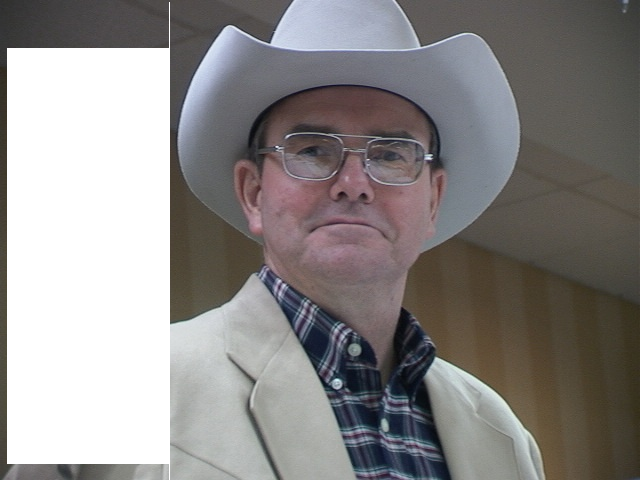
What got my dander up was a speech by one of these professors who showed up in a three-piece-suit and a newly purchased, never-shaped cowboy hat that looked like it had never seen the sun shine. His “research” called for two things. “As cattlemen we must form strategic alliances and become low cost producers,” the professor preached.
Well, I’m no PhD but don’t you think I would have strategically aligned myself with the  Rockefeller family, Warren Buffet or Exxon if given the opportunity? As for cutting our costs I went right home and canceled our around-the-world-cruise.
I’m kidding, of course. My wife reminds me constantly that our last vacation was in 1972. And even it was in conjunction with a bull-buying trip.
While listening to the professor’s speech I was reminded of a story told about Waldo Haythorn. The Haythorn family makes their home in the Sandhills of Nebraska and it is home to one of the largest herds of Quarter Horses in America. (If not the largest.) Good ones they are too!
Waldo Haythorn was the patriarch of the family and was a horseman from his boot heels to the top of his cowboy hat. Waldo recalled the time he was invited to speak on a panel at Cornell University. He was joined by three eastern PhDs, which in this instance stood for “Piled Higher and Deeper.”
And I’m not referring to the hay the horses ate but rather what came out their other end.
“What’s the youngest you ever saw a filly get bred, Mr Haythorn?” asked one of the professors on the panel.
“Six months of age,” replied Waldo. “The filly  got bred while  still sucking her mother.”
Another of the eastern professors scoffed and  contested Waldo’s answer, coming close to calling him a liar. “That is simply not possible,” he said.
Waldo was then asked about breeding a mare during the “foal heat” which occurs nine days after foaling. Waldo replied, “This is a very good time to breed a mare and usually results in conception.”
“Well, obviously you must have a great deal of problem with infection,” said another one of the  cocky eastern panelists.
“No, a lot of the time I don’t see our colts until they are two or three weeks old and we don’t have any problem with infection,” insisted Waldo.
Again his answer was disputed by a Cornell professor. “Obviously you have a lot of trouble with retained placentas.”
Waldo shook his head no, getting quite disgusted with the PhD’s. Finally losing his patience Waldo turned to them and said, ”Sirs, I’m sorry I am not a highly educated man, but out where I come from there’s a lot of green grass and good water and what I have told you is true. But unfortunately, God did not go to Cornell University.”
I heard Waldo got a standing O!