Saturday, March 7, 2026
Home Blog Page 701

How Healthy is My Tree?

0

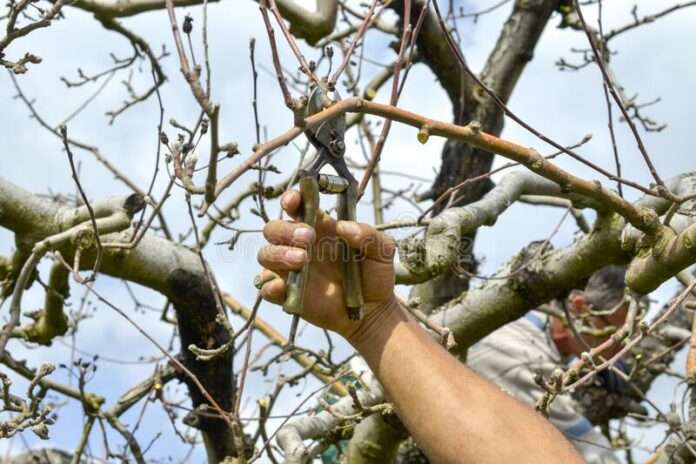
Determining the health of your trees is largely based on the amount of new growth each year. Observe the tips of the branches that are exposed (not shaded). A tree that grows less than 4 inches from the previous year is likely under stress and considered unhealthy.

Meristems are the part of the tree where new cells are formed and growth takes place. Apical meristems are at the branch tips. Growth here increases the canopy of the tree. New growth from these meristems is often identifiable by the color. The new twig emerging from the bud may be greener but the leaves are often a brighter shade as well. You’ll notice the leaves attached directly to these new stems rather than lateral branches. New growth may also look more compressed than growth from previous years.

Though evaluating the amount of growth can help you determine if your tree is healthy, it does not tell you what may be the cause of an unhealthy tree. The effects of stress accumulate year after year. A drought two years ago can have an impact on growth of a recovering tree. The root growth may have been stunted and roots could struggle to take in enough water to support the tree as temperatures rise. When possible, ensure trees are receiving water to a depth of 12 inches every couple of weeks during the summer either from rain or supplemental watering.

Cynthia Domenghini, Extension Agent

Don’t Over-fertilize Tomatoes

0

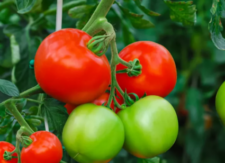
Too much nitrogen on tomato plants may result in vigorous plant growth without much fruit. Plants should be side-dressed with nitrogen three times during the growing season.

The first application should be applied one to two weeks prior to when the first tomato ripens. Two weeks after ripening, it’s time for the second application. The third round of fertilizer should be applied one month after the second. Basically, there should be one month of time between each application.

Common sources of nitrogen-only fertilizers include nitrate of soda, urea and ammonium sulfate. Blood meal contains primarily nitrogen but is not exclusive.  Apply one of the following fertilizers at the rate provided:

            Nitrate of soda (16-0-0): 2/3 pound (1.5 cups) fertilizer per 30 feet of row

            Blood meal (12-1.5-.6): 14 ounces (1.75 cups) fertilizer per 30 feet of row

            Urea (46-0-0): 4 ounces (1/2 cup) fertilizer per 30 feet of row

            Ammonium Sulfate (21-0-0): 0.5 pounds (1 cup) fertilizer per 30 feet of row

            Alternatively, lawn fertilizer, free of weed killer/preventer, can be used at a rate of 1/3 pound (3/4 cup) fertilizer per 30 feet of row. Choose a fertilizer that is about 30% nitrogen (the first number in the set of three).

Cynthia Domenghini, Extension Agent

Biden-Harris Administration Announces Over $700 Million to Connect People in Rural Areas to High-Speed Internet

0
Kansas Dept of Agriculture

U.S. Department of Agriculture (USDA) Secretary Tom Vilsack today announced $714 million in grants and loans to connect thousands of rural residents, farmers and business owners in 19 states to reliable, affordable high-speed internet. Connecting all communities across the United States to high-speed internet is a central part of President Biden’s Investing in America agenda to rebuild our economy from the bottom up and middle out by rebuilding our nation’s infrastructure, which is driving over $470 billion in private sector manufacturing investments and creating good-paying jobs.

“High-speed internet is a key to prosperity for people who live and work in rural communities,” Secretary Vilsack said. “Thanks to President Biden’s Bipartisan Infrastructure Law, we can ensure that rural communities have access to the internet connectivity needed to continue to expand the economy from the bottom up and middle out and to make sure rural America remains a place of opportunity to live, work, and raise a family.”

Under the President’s Investing in America agenda, the Bipartisan Infrastructure Law includes $65 billion to connect everyone to high-speed internet through the Internet for All initiative. USDA is connecting more people to high-speed internet in this fourth funding round of the ReConnect Program. Since the beginning of the Biden-Harris Administration, the Department has invested in 142 ReConnect projects that will bring high-speed internet access to 314,000 rural Americans.

Today’s announcement includes $714 million in USDA investments in Alaska, Arkansas, Arizona, California, Georgia, Idaho, Kansas, Kentucky, Minnesota, Missouri, Montana, New Mexico, Ohio, Oklahoma, Oregon, South Carolina, Tennessee, Utah and Washington. Some examples include:

In the South:

  • The Home Telephone Company is receiving a ReConnect Program grant to connect nearly 4,000 people, 49 businesses, 46 farms and two educational facilities to high-speed internet in Berkeley County, South Carolina.
  • The Decatur Telephone Company will connect 5,400 people, 257 farms, 74 businesses and four educational facilities to high-speed internet in Benton County, Arkansas.

In the West:

  • The North-State Telephone Co. will deploy a fiber-to-the-premises (FTTP) network connecting 1,490 people, 64 businesses and 43 farms in Wasco County, Oregon, to high-speed internet.
  • The Cal-Ore Telephone Company will connect 757 people, 45 businesses, 14 farms and four educational facilities to high-speed internet in Modoc and Siskiyou counties in California.
  • Both companies will make monthly internet service affordable by participating in the Federal Communications Commission’s Affordable Connectivity Program.

In the Midwest:

  • Missouri’s Goodman Telephone Company Inc. will connect nearly 7,000 people, 206 farms, 140 businesses and two educational facilities to high-speed internet in McDonald and Newton counties.
  • The Craw-Kan Telephone Cooperative Inc. in Kansas will connect 4,189 people, 821 farms, 149 businesses and three educational facilities to high-speed internet in Bourbon, Cherokee, Crawford, Labette and Neosho counties.

For more information, please view a full listing of projects from today’s announcement.

Background: ReConnect Program

Applicants to ReConnect Program funding must serve a rural area that lacks access to service at speeds of 100 megabits per second (Mbps) download and 20 Mbps upload. Applicants must also commit to building facilities capable of providing high-speed internet service with speeds of 100 Mbps (download and upload) to every location in the proposed service area. Additionally, to ensure that rural households that need internet service can afford it, all awardees will be required to apply to participate in the Bipartisan Infrastructure Law’s Affordable Connectivity Program (ACP). The ACP offers a discount of up to $30 per month towards internet service to qualifying low-income households and up to $75 per month for households on qualifying Tribal Lands.

Background: Bipartisan Infrastructure Law

President Biden forged consensus and compromise between Democrats, Republicans and Independents to demonstrate our democracy can deliver big wins for the American people. After decades of talk on rebuilding America’s crumbling infrastructure, President Biden delivered the Bipartisan Infrastructure Law – a historic investment in America that will change people’s lives for the better and get America moving again.

The Bipartisan Infrastructure Law provides $65 billion to ensure every American has access to affordable, reliable high-speed internet through a historic investment in broadband infrastructure deployment. The legislation also lowers costs for internet service and helps close the digital divide, so that more Americans can take full advantage of the opportunities provided by internet access.

To learn more about investment resources for rural areas, visit www.rd.usda.gov or contact the nearest USDA Rural Development state office.

USDA Rural Development provides loans and grants to help expand economic opportunities, create jobs and improve the quality of life for millions of Americans in rural areas. This assistance supports infrastructure improvements; business development; housing; community facilities such as schools, public safety and health care; and high-speed internet access in rural, tribal and high-poverty areas. For more information, visit www.rd.usda.gov.

This year’s Bike Across Kansas route runs through Partridge

0

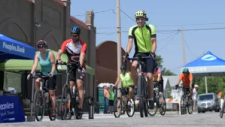
The 49th Biking Across Kansas event, the annual celebration cycling and the Sunflower State, will hit the highways and byways Saturday, June 10, through Saturday, June 17.

Overnight stops this year include Elkhart, Satanta, Spearville, Stafford, Newton, Eureka, Chanute and Garnett, with a celebration picnic in Pleasanton. Cyclists will pass through Hugoton, Sublette, Dodge City, Kinsley, Partridge, El Dorado, Coffeyville and Iola among others.

“We are geared up for this annual bicycle tour across the state of Kansas,” said David Rohr, BAK board president. “We and our 500-some riders are ready to experience the history and beauty of the Kansas landscape, and experience the warm hospitality of the Kansas towns and people.”

The route covers 540 miles in the span of a week. Riders pedal between 50 and 80 miles each day.

With this many cyclists on the roads, BAK organizers urge motorists to be vigilant and share the roadways, said Executive Director Stefanie Weaver, noting state and local law enforcement will be helping keep everyone safe. Riders may be in groups or alone, and they may be strung out over several miles.

“This is about the awesome experience of riding a bike, and the joy and freedom it brings,” she said. “Cyclists and drivers alike need to be alert and attentive to the rules of the road.”

Riders will represent a wide age span— from 1 to 87 — and multiple generational families. Entries are anticipated from 28 or more states, including as far away as New York, Pennsylvania, Florida, New Mexico, Washington and California. In addition, Biking Across Kansas will attract participants from countries outside the United States.

Starting with around 100 riders in the first year, as many as 800 participate most years now. So, BAK is a big challenge, and big economic boon, for the communities along the route.

Rare tick-borne disease found in southeast Kansas. What to know about heartland virus

0

Kansas health authorities announced Friday that a southeast Kansas resident has been diagnosed with a rare tick-borne disease that has slowly expanded its reach across the United States since being discovered in 2009.

The Kansas Department of Health and Environment said a Crawford County resident had been diagnosed with heartland virus, with the diagnosis coming late last month from local health care providers after confirmation from the Centers for Disease Control and Prevention.

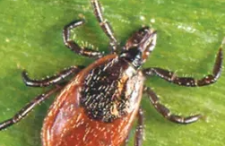
Heartland virus is spread by the lone star tick, the most common tick in Kansas, but it is relatively rare. KDHE said the Crawford County case was only the third such case in Kansas since the disease was discovered in 2009 in Missouri.

What are the symptoms of the tick-borne heartland virus?

Health officials nationally have seen the disease spread into new territory across the United States, though there still only have been 60 reported cases in the U.S. as of late 2022. Symptoms can include the following:

• Fever.

• Fatigue.

• Muscle or joint pain.

• Headache.

• Potentially, a rash.

Here is how to avoid exposure to heartland virus

KDHE is warning residents of the risks of tick-borne illnesses, including heartland virus, as residents spend more time outdoors and are more exposed to ticks.

• Wear long shirts and pants while spending time outdoors.

• Take a shower and check for ticks after potentially being in their habitat.

• Apply bug spray and, potentially, permethrin to clothing before hiking, camping or other activities.