
Kansas is one of the most tornado-prone states in the country.
The state averages 92 tornadoes annually, according to Victor Gensini representing the National Oceanic Atmospheric Administration.
There were 63 tornadoes in Kansas during 2022, Gensini said.
And 2023 is already shaping up to have higher-than-average tornadoes, he added.
Tornado season in Kansas typically runs April through June each year. In early spring, warm humid air from the Gulf of Mexico mixes with cool dry air from the North and warm dry air from the West, which combine to form tornadic conditions.
While Kansas can experience a twister outside of April, May, and June, residents should be well prepared for disaster to strike during these months.
With 112 tornadoes from 1950 to 2022, Ford County in western Kansas has experienced more twisters than any other county in Kansas. Sherman County has had 105, and Barton County had 103.
From 1997 to 2022, Kansas had an annual average of 86 tornadoes per year.
The month of May sees the most tornadoes in Kansas, followed by June, then April. November, December, January, and February see the least number of tornadoes.
Homeowners insurance in Kansas covers damage caused by tornadoes, including the wind, hail, and rain that accompany them.
However, water damage from flooding that occurs during a tornado would not be covered under the standard home insurance policy. Some Kansas homeowners have a separate windstorm deductible for tornado damage.
If a home is damaged in a tornado, the home insurance company may require payment of windstorm deductible. That’s separate from the standard homeowner’s insurance deductible and applies specifically to wind and hail damage.
Windstorm deductibles in Kansas are typically a percentage of a policy’s dwelling coverage limit, usually between 1-percent and 5-percent, according to the Insurance Information Institute. A higher deductible leads to lower insurance rates, and vice versa.
Advice has been given to prepare for the tornado season in Kansas.
Get the home ready for severe weather. This includes trimming tree limbs, removing dead trees, cleaning up heavy debris, and moving lawn furniture inside.
Make an emergency kit. Include water, non-perishable foods, can opener, towelettes, trash bags, batteries, flashlights, first aid kit, portable cell phone chargers, battery-powered radio, and whistle to signal for help.
Find a place to take shelter. While no place will be completely safe during a tornado, hunkering down in a basement or inside a windowless room on the lowest floor of the home is the safest bet. For even more protection, take shelter under something sturdy like a heavy table or workbench, cover with a blanket or mattress, and protect the head from flying debris.
Know the signs of a tornado. Be on the lookout for rotating, funnel-shaped clouds, low-lying clouds of debris, large hail, a dark or green-colored sky, and a loud roar that sounds like a freight train.
Sign up for severe weather alerts from the National Weather Service via text, email, or phone. In addition, many cities throughout Kansas have outdoor warning siren systems to warn residents to take shelter indoors during extreme weather conditions, including tornadoes.
Stay up to date on changing weather conditions via local news and radio stations or even through social media.
True tornado preparedness requires a plan. At home, make a family emergency plan and have a conversation with loved ones about the importance of being prepared.
At work, contact the Human Resources department to learn the safety procedures for tornados and other disasters. Or use guidelines from the Occupational Safety and Health Administration (OSHA) to create a tornado response plan for the business.
Practice the disaster response plans at least twice a year at home and at work. Regular drills help everyone learn the safety procedures for tornadoes, and they let you test and tweak your plan so you can be better prepared in a real emergency.
Preparedness can help keep the family safe if a tornado hits, but it may not be able to protect property against the strength of these devastating storms.
+++30+++
Spring Time Increases Possibility of Tornadoes In Kansas

Study: Rising temps, drought likely to increase incidence of aflatoxin in corn
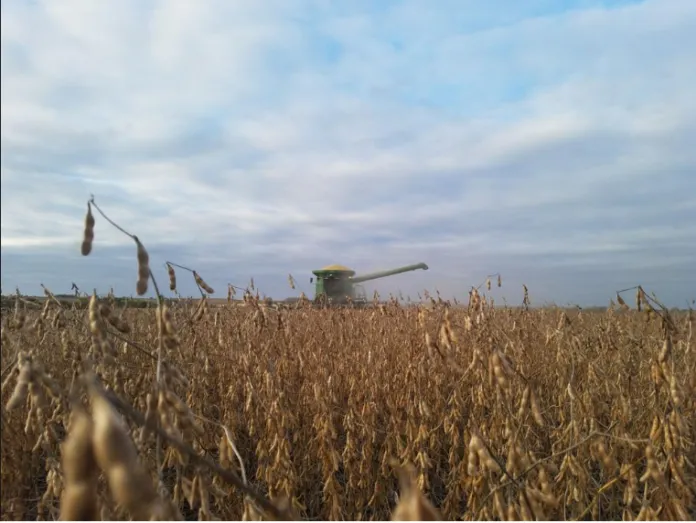
Researchers estimate losses to triple by 2040 under current trends
April 17, 2023
By Pat Melgares, K-State Research and Extension news service
MANHATTAN, Kan. – Researchers at four universities – three in the U.S. and one in China — say that increasingly warmer weather patterns in the Corn Belt could increase the growth of a toxin that would swell farmers’ losses and threaten an important food source over the next two decades.
Their study takes a look at the growing incidence of aflatoxin in corn grown in Indiana, Illinois, Iowa, Missouri, eastern Nebraska and eastern Kansas – a region traditionally known as the U.S. Corn Belt – as it relates to changing weather patterns in those areas.
Jesse Tack, an agricultural economist at Kansas State University and co-author of the study, notes that “the estimates correspond to a worst-case climate change scenario and thus are likely to be smaller than estimated if credible mitigation and adaptation strategies are leveraged.”
The researchers’ study – which has been recently published in the journal Environmental Research Letters – suggests that 89.5% of corn-growing counties in 15 states will experience increased aflatoxin contamination in 2031-2040 compared to 2011-2020.
“Assuming fixed corn prices and dollar values in 2021, overall losses (due to changing weather patterns) are expected to increase from $20 million to $63 million,” said study co-author Jina Yu, who is a lecturer in the Division of Business and Management at Beijing Normal University – Hong Kong Baptist University United International College.
Yu said that Kansas is among the states expected to experience “significant changes, with expected losses increasing from $3 million to $23 million.”
“The reasons for this change are higher temperatures, drought during the early stages of corn growth, and increased precipitation before the corn reaches maturity.”
Aflatoxin is the name given to a family of toxins produced by fungi that can grow in the soil where corn and other farm crops (among them peanuts, cottonseed and tree nuts) are grown. Aflatoxins are carcinogenic and poisonous to humans and pets, and thus are highly regulated by the U.S. Food and Drug Administration against inclusion into the food supply.
“Aflatoxin has rarely been a problem in the Midwest in the past because the cooler climate did not allow for fungi that produce aflatoxin to thrive there,” said study co-author Felicia Wu, a professor of food safety, toxicology and risk assessment at Michigan State University.
Wu noted that aflatoxin has been a perennial contaminant in corn grown in the southern U.S. due to hot, dry summer conditions in that region.
But, she adds, “the most general finding of our work is that aflatoxin risk will spread northward in the United States as a result of near-term climate change. This is extremely problematic from an economic perspective because most of the corn we produce in the U.S. is in the Corn Belt.”
Currently, what Midwest farmers can do to offset the potential impacts to their corn crop “is the million dollar question,” Tack said.
“It’s important to note that our research does not take future adaptation into account beyond the re-optimization of the growing season, which might mean changing planting and harvest dates,” he said. “Right now, we are simulating what would happen in the future under a business-as-usual scenario, aside from growing season changes.”
Tack adds: “We know that there will be adaptation; there always is in agriculture, and the evolution of plant genetics and on-farm management are powerful tools that can be leveraged. However, it is still not clear what the full menu of adaptation possibilities are, which of them will be most effective, and how costly they will be.”
Tack said the researchers hope their study – titled, ‘Climate change will increase aflatoxin presence in U.S. corn’ — can help to inform future discussion on adaptations. “Unfortunately, we haven’t solved a puzzle,” he said, “but rather added an additional piece to an existing one.”
The current study did not look at the occurrence of aflatoxin in grain storage systems; Tack said other researchers are taking on that question. Damaged corn usually does not make it out of the field and into storage, he notes, “and thus it wouldn’t typically be measured when assessing the overall damage that aflatoxin causes in the food system as a whole.”
“Agricultural biotechnology may offer solutions to the problem of increased aflatoxin risk in the face of a changing climate,” Wu said. “Our larger project found that controlling for climatic factors and grower practices, transgenic Bt corn offered protection against aflatoxin contamination because of its insect pest protection. We could also use biotechnological methods to improve corn’s resistance to heat and drought, which could in turn reduce damages from aflatoxin.”
David Hennessy of Iowa State University is also a co-author of the study.
Ark Valley Pheasants/Quail Forevr Annual Banquet
Ark Valley Pheasants/Quail Forever Annual Banquet, Saturday May 6, 2023, Cottonwood Court, Kansas St Fairgrounds, Hutchinson, KS. Doors open 5:00 PM, Early Bird tickets $50, Door Prices $60. For tickets 620-664-4219 or [email protected]
Corralling My First Kansas Turkey
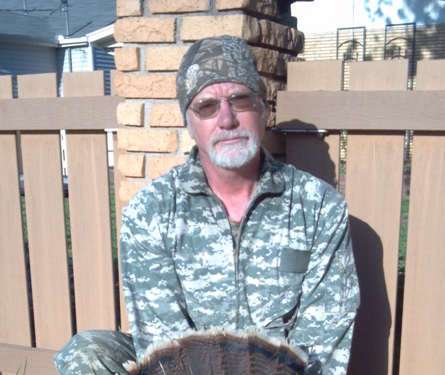
I didn’t hunt spring turkeys last year because I had just had my left knee replaced (I know, excuses, excuses!) And even though calling-in a Kansas wild turkey is easily in my top ten experiences ever, I find myself making excuses, again, not to go (I’m too unsteady on my feet these days, its cold, blah, blah, blah!) But whether I ever hunt spring turkeys again, I’ll never forget harvesting my first Kansas spring turkey several years ago.
The evening was hot and steamy, but as I remember, it was also the first windless night we had been given for awhile. I had nearly a quarter of a mile to walk, but thankfully it was an easy walk through a closely-cropped pasture. I had not hunted here before, but the landowner’s wife had described my destination as being a windmill surrounded by a corral, just out of sight from where I parked. After working an eight-hour day, and because of the heat, there was not much spring in my step as I trudged to along lugging my blind, a duffle bag containing decoys and a small camp chair plus my shotgun. Ten days remained, but because of upcoming vacation and other commitments, spring turkey season for me was nearly over. I also remember thinking I needed to adjust my priorities. The landowner passed me in his pickup, heading toward the windmill to turn off the water. On his return trip, he told me he had spooked five turkeys that were already in the corral rooting around for an evening snack. My steps grew a little more determined, figuring they would be back for the easy pickings around the feed bunks.
Our hunting blind works great, but being a camouflaged pattern, it works best when set up under or around trees or brush of some sort; there, however, my choices were limited. The best camouflage for the blind was either across a fence or not where I predicted the turkeys to appear. A spot caught my eye, and the blind was soon tucked in beside a cattle chute and a salt feeder, which sat just outside the corral opening, counting on those structures rather than foliage for camouflage. The decoys were set up at an angle in front of the blind to draw any turkeys past me for a shot. A slight breeze was welcomed as I settled into the blind and called a couple of times to attract the attention of any nearby toms.
My wait was short, as a hen appeared and began cleaning up after the cattle around the several feed bunks. She was less than forty yards away and seemed oblivious to me and the blind. “This is good,” I told myself, and my confidence grew. A tom soon appeared as if from nowhere as they often do, and began to follow the hen around the bunks. I “clucked” softly to him with the call, hoping to interest him in a little romance with the plastic “floozy” staked in front of me. As he ambled in her direction, his gait told me it was out of curiosity, and not for love. He circled the decoys, but I sensed the plastic “darling” had not done her job, and his pace quickened as he headed back toward the real hen. Although quite suspicious of the entire scene, he paused slightly to look in my direction; just the break I needed and my first Kansas turkey lay in the grass before me. He was probably a two- or three-year-old with an eight-inch beard, worn thin from breeding, and razor sharp one-inch spikes. His back feathers glistened with shades of blues and greens in the evening sun. He made me proud to be a Kansas Wild Turkey hunter!
I have shot turkeys from some peculiar places, even from 15 feet high in a deer tree stand. The irony in all this stems from the fact that I harvested my first Kansas whitetail deer from a cattle coral on Joyce’s uncle’s ranch, and now I’d just taken my first Kansas wild turkey from a cattle coral also. My wife’s first words when I walked in the door were “What is it with you and corrals!” I really don’t know, and I really don’t care, just don’t expect me to start hunting with a lasso just so I can continue to Explore Kansas Outdoors!
Steve can be contacted by email at [email protected].
Ethics fog(Second of three articles)

Kansas legislators, especially Republicans, have nursed a long and unsettled feud with the state’s ethics commission. Last year, Republicans were incensed that party officials were subpoenaed in an investigation of alleged campaign finance violations.
They plotted revenge. Bills were introduced to neuter the Kansas Governmental Ethics Commission and gut campaign finance and disclosure laws. Lawyers got involved. The governor’s chief of staff intervened and mediated an acceptable compromise, settling yet another eruption in the angst-ridden history of ethics laws in Kansas.
In 1973 and ’74, the furor of Watergate and declining American confidence in Washington moved the Kansas Legislature to restore confidence and trust in Topeka. New campaign finance, conflict-of-interest and lobbyist disclosure laws were adopted. A commission was created to enforce them, to shed light on the influence of private forces in public business.
Many legislators, however, soon grew annoyed. Only months after the Commission began its work, the chairman, who was president of Washburn University, resigned from the board after learning of legislative threats to the school’s programs.
A year later, in February 1975, Southwestern Bell Telephone Company admitted it had furnished free credit cards and unlimited long-distance telephone privileges to members of the Kansas Corporation Commission, which regulated the company’s business in Kansas.
That same month, the speaker pro-tem of the Kansas House said he supported plans to create a legislative-lobbyist “hospitality room” near the Capitol, funded on a “sliding scale” with lobbyists paying higher membership fees than legislators. The plan quickly disappeared.
*
Ethics has been a sticky issue in Topeka from the outset. Troubles in the beginning mirror the troubles today, all rooted in the messy task of regulating human behavior.
Over the summer of 1974, Lynn Hellebust, the Commission’s first executive director, was at more than a dozen meetings across Kansas to poke through a great vagueness: explaining new laws that touched on morality and ethics. The meetings were thorough and encouraging. Hellebust believed people saw the effort more as a way to certify honesty in government than a means to catch those who make mischief or worse.
But their legislators grew skeptical. They came to view the new laws with suspicion, laws they had warmly endorsed less than a year earlier. Some declared them a nuisance.
By early December 1974, a powerful coalition of Statehouse lobbyists and legislators had begun a sophisticated campaign to soften requirements that lobbyists report their monthly expenses. The campaign centered on complaints that the new law prevented them from serving on a state board and lobbying at the same time.
In reality, it didn’t. Critics were actually after the law that required them to disclose their food and liquor expenses for entertaining legislators and state employees. The law required little more than a list of expenses without naming names. There were no requirements ‒ and still aren’t ‒ to report salaries, office and staff expenses, travel, rent and other costs paid by the organizations behind the lobbyists.
But the first report, in 1975, was revealing: 560 lobbyists representing 678 interest groups spent $128,439 ( in today’s dollars, $718,208) on food, liquor and entertainment for legislators.
That news was startling on two counts: Lobbyists outnumbered legislators more than 3-1 at the Capitol; and the average expense for each of the 165 members of the House and Senate was $778 (today, $4,350).
The figures are a matter of record, but no legislator then ever admitted to being the beneficiary of nearly $800 in food and liquor. And the numbers kept going up. By 1988, more than 600 lobbyists spent $500,000 ‒ today’s dollars, $1.27 million ‒ an average of more than $3,000 per legislator ($7,629 today).
Today, the reports from hundreds of lobbyists run on for dozens of pages and hundreds of thousands of dollars; lobbyists are now required to name the legislator for whom they buy the food and drink. When the reports are out, Martin Hawver, dean of the Statehouse press, issues a “Golden Fork Award” to the legislator who accepted the most. The Award usually goes to legislators with the most power ‒ a speaker of the House, the Senate president, the chairs of influential committees.
Not much overall is changed, except that the Statehouse media, once more than a dozen fulltime reporters, has been cut to a handful. Few have time to analyze lobbying reports.
The original mission of the ethics board was not to catch crooks. If anything, it was the opposite ‒ to certify that state officials could comply with disclosure laws because they had nothing to hide.
(Next: Lobbying power)
