Friday, March 27, 2026
Home Blog Page 8

“Old Age, Only 10 Years Away”

0

Every year I ask my students, “How old is old?” The answers vary, but the most honest response I’ve ever received came from a patient who said, “Old is 10 years older than my age.” We all tend to push aging just out of reach, as though it belongs to someone else.

As a physical therapist, professor and researcher in aging, I see the consequences of that distance every day. When we mentally place older adults in a separate category, we give ourselves permission to speak and act in ways that quietly do harm. We call someone an “old lady” without pause. We dismiss a symptom as “expected at your age.” We offer the well-meaning but quietly deflating compliment that someone is doing well “for their age.” Each of these small moments narrows what we believe is possible for that person.

This is ageism. Generally unintentional, ever-present in our society.

The problem is not acknowledging that aging brings real changes. It does. Health conditions, pain, and mobility challenges become more common with age, but not in some uniform pattern that warrants focus on a number. The problem is when age becomes the answer rather than the starting point. When decline is the expectation, we stop asking about goals, we stop noticing strengths and we start designing lives around an assumed limitation.

Consider a common piece of advice: move to a single-story home as you grow older. It sounds reasonable. But research tells a more nuanced story. Studies have found that those living in homes with stairs showed less decline in physical function over time compared to those without. Climbing stairs is demanding, repetitive physical work for the legs and heart. Removing that daily challenge in the name of safety may quietly accelerate the very decline we hope to prevent.

This pattern holds more broadly. Research consistently shows that vigorous exercise, not just gentle stretching or slow walks, produces the greatest health benefits as we age. Higher-intensity activity improves strength, balance, heart health and cognitive function in people well into their 80s and 90s. When we steer older adults toward only the lightest, most cautious forms of movement, we deprive them of the very stimulus their bodies need. In trying to protect, we inadvertently take away opportunity.

Language works the same way. When family members, neighbors and health care providers speak as though decline is inevitable, we coach people toward caution, avoidance and withdrawal. Expectation shapes behavior, and low expectations are their own kind of harm.

The answer is not to ignore age or pretend it doesn’t matter. It is to treat aging as a human experience, seeing a person not as a number but as an individual with unique aspirations, interests and abilities.

None of us are exempt from aging. We are all just at different points on the same road. The assumptions we make about older adults today are the assumptions that may one day be made about us. That alone is reason enough to think more carefully about what we say, what we recommend, and what we decide is possible with each passing year.

Dr. Jordre is a professor of physical therapy in the School of Health Sciences at the University of South Dakota. She earned her Doctor of Physical Therapy degree from Duke University in 2002 and her Ph.D. in Health Sciences from the University of South Dakota in 2021. She is board certified in Geriatric Physical Therapy and is a Certified Exercise Expert for Aging Adults. Her research centers on healthy aging, with a

particular focus on athletes age 50 and older. Follow The Prairie Doc® at www.prairiedoc.org, Facebook, Instagram, YouTube, and Tik Tok. Prairie Doc Programming includes On Call with the Prairie Doc®, a medical Q&A show (most Thursdays at 7pm on YouTube and streaming on Facebook), 2 podcasts, and a Radio program (on SDPB, Sundays at 6am and 1pm).

Cheese Scalloped Carrots

0

As we forge ahead towards Easter weekend I’m bringing a ‘bunny food’ recipe to the table. Our Aunt Phyllis knew what she was doing with this recipe. For starters because it is baked in the oven the casserole stays hotter longer than it would if it were prepared on top of the stove. Let’s wander into a little discussion on keeping foods warm and cool at the dining table.

I’ve only had one friend in my lifetime who had a ‘warming drawer’. I did have one when I ran the culinary school at Silver Dollar City, but typically; you don’t find them in the majority of homes. There are so many different ways we can keep dishes hotter for a longer time. One easy way is to invest in the nice serving chafers that are electric. I like these because I don’t have to purchase fuel and keep track of how much I have on hand all the time. I got mine from JCPenney, when they went on sale for around $30-35 each. I sold my heaters

that ran on the fuel cans. Grandmother would sit her serving bowls as close to the stove top as she could, or fill the bowls with very hot water until the vegetable or side was ready to be served. I also own one of the largest heating pads you have ever seen, this too is another avenue to heating bowls ahead of time. If you own a double oven, this will aid in warming dishes in advance. ‘If’ there is any way to cook my sides in the oven for big events I prefer it, because of the fact things stay warmer, longer. Crockpots and roasters can also be a lifesaver. On the flip side remember to chill the salad plates before presenting a fresh green salad.

Also; remember the ‘little’ things you can do to make the dinner extra special. Put grandmother’s quilt on the table, serve the meal on antique mix-matched dishes, ask family members to bring things and don’t carry the load alone. Put a few blooming twigs in a vase. Bread doesn’t have be be homemade, Rhodes rolls are wonderful for dinners, they’re also great for those who are new working with yeast. If I want to please my son I’ll make a platter of asparagus with a creamed white sauce

over the top. My husband will want scalloped pineapple, me, deviled eggs! My daughter in law appreciates a second meat because she isn’t a huge ham fan. This too is good because we then have plenty of leftovers for meals to follow.

It’s funny how we all have these different expectations about our special family dinners and what’s served. After Christmas dinner I crave turkey sandwiches on homemade hot rolls. At Easter it’s Colby cheese and ham on the Easter rolls. A nice condiment tray is nice too with a few raw vegetables, pickles, olives, etc. When I boxed up my mother’s dishes I made sure to keep the official ‘celery’ dish that was always on the table at holidays.

Easter is a time of re-birth, new beginnings, change, growth. This past week a person reminded me to quit waiting until everything at home is perfect before I did things I enjoy. This is new for me, but I’m giving it a try. I was raised in a family where work always came first then pleasure, so this will be a part of my change as we embrace the

season of re-birth. Enjoy the carrot casserole, it’s different, yummy and the kiddos will love it as much as the adults. Simply yours, The Covered Dish.

Cheese Scalloped Carrots

12 medium carrots, cut ¼ – ½ inch thick

¼ cup butter

1 small onion, minced

¼ cup flour

1 teaspoon salt

¼ teaspoon dry mustard, could raise some

1/8 teaspoon black pepper, could raise some

¼ teaspoon celery salt

2 cups of milk

½ lb shredded sharp cheddar cheese

3 cups buttered bread crumbs

Pre heat oven to 350 degrees

Place carrots in a saucepan, cover with water and pre-cook for 15-20 minutes. Drain, grab a saucepan melting the butter and sauteing the minced onion until tender. Add flour, salt, pepper, celery salt and black pepper, followed by the milk cooking until you have a nice creamed sauce.

Some people add the celery salt and black pepper after the sauce is creamed, but I don’t see where it can matter all that much. In a 2 quart casserole dish lay down a layer of carrots, followed by sprinkled cheese, carrots, and then sprinkled cheese. Try to end with a layer of carrots on the top. Cover everything with the cream sauce and the buttered bread crumbs. Bake uncovered about 25 minutes in the oven until slightly brown and bubbly. I also think butter crackers would be good on top of this dish instead of the bread crumbs.

BOOR: Crabgrass preventers kill young plants, not seeds

0

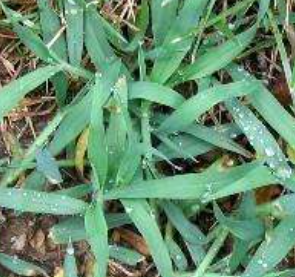
Crabgrass preventers are another name for preemergence herbicides that prevent crabgrass seeds from developing into mature plants. Many people have a somewhat foggy idea of how they work and assume they kill the weed seed.  Such is not the case. They do not kill the seed or even keep the seed from germinating but rather kill the young plant after it germinates.  Therefore, they do not prevent germination but prevent emergence.

Crabgrass preventers are just that – preventers. With few exceptions they have no effect on existing crabgrass plants, so they must be applied before germination. Additionally, preventers do not last forever once applied to the soil. Microorganisms and natural processes begin to gradually break them down soon after they are applied.

If some products are applied too early, they may have lost much of their strength by the time they are needed. Most crabgrass preventers are fairly ineffective after about 60 days, but there is considerable variation among products.

For most of Kansas, crabgrass typically begins to germinate around May 1 or a little later. April 15 is normally a good target date for applying preventer because it gives active ingredients time to evenly disperse in the soil before crabgrass germination starts.  Even better, base timing on the bloom of ornamental plants. The Eastern Redbud tree is a good choice for this purpose. When the trees in your area approach full bloom, apply crabgrass preventer. A follow-up application will be needed about eight weeks later unless you are using Dimension or Barricade.

Dimension and Barricade are the only two products that give season-long control of crabgrass from a single application. In fact, they can be applied earlier than April 15 and still have sufficient residual strength to last the season. Barricade can even be applied in late fall for crabgrass control the next season.

Dimension can be applied as early as March 1. Because of the added flexibility in timing, these products are favorites of lawn care companies who have many customers to service in the spring. Though Dimension is usually not applied as early as Barricade, it is the herbicide of choice if it must be applied later than recommended. It is the exception to the rule that preemergence herbicides do not kill existing weeds. Dimension can kill crabgrass as long as it is young (two- to three-leaf stage).

Dimension is also the best choice if treating a lawn that was planted late last fall. Normally, a preemergence herbicide is not recommended unless the lawn has been mowed two to four times. But Dimension is kind to young tall fescue, perennial ryegrass, and Kentucky bluegrass seedlings and some formulations can be applied as early as two weeks after the first sign of germination. However, read the label of the specific product you wish to use to ensure that this use is allowed.

Lawns established in the fall can be safely treated with Dimension the following spring even if they have not been mowed.

Alicia Boor is an Agriculture and Natural Resources agent in the Cottonwood District (which includes Barton and Ellis counties) for K-State Extension. You can contact her by e-mail at [email protected] or calling 620-793-1910.

Lettuce Eat Local: Don’t Feel Blue About St. Patty’s Melt

0

There are mint patties, hamburger patties, and cow patties — all appropriate in their own time and place. But in this time and place, we think mostly of St. Patty’s. 

St. Patrick’s Day comes every year on March 17. Immediately images of shamrocks and a green-robed red-haired man come to my mind, plus possibly some corned beef and a few suspect leprechauns. It’s my sister-in-law’s favorite holiday, so I know we’ll be rifling through the kids’ drawers to find them some green clothes. Family Sunday lunch before The Tuesday will be themed green, I have zero doubt. 

I like all these things. While green beer, dying the Chicago river green, and the idea of kissing people because they’re Irish might turn me a little green, moderate and intentional participation in holidays, especially ones recognized by the liturgical calendar, can be a valuable practice. 

And valuable not just because I’m planning on making a minty shamrock shake on the 17th — St. Patrick loved those, right? Valuable because grounding ourselves in history reminds us this present moment is not all there is, because honoring the legacy of people from the past can keep those ethics in sight for the future. 

Yet while I clearly love eating my greens, it’s apparently a little ironic that we put up the greenery for St. Patrick. 

First, it’s easy to forget that Patrick was not Irish. At least not by origin; he was in fact British, introduced to Ireland by the unfortunate and unpleasant means of being sold as a slave after being kidnapped by Irish pirates. Just a teenager at his abduction, Patrick spent six years as a shepherd for a Druid chieftain, during which time his parents’ faith in Christ became his own, obvious to such an extent that he was nicknamed “Holy Boy” by his fellow slaves. 

One night he had a dream that the ship to return him to Britain was waiting for him, so he escaped and walked the two hundred miles to the coast, where indeed a ship and crew accepted him aboard. Eventually Patrick made it back to his family, I assume with no plans of ever leaving again. 

But after several years, and studying to be a priest, he had another dream: this time of a man delivering a letter with “the voice of the Irish,” begging the “holy boy” to come back and walk with them again. Nobody thought it was a good idea for him to leave, especially considering his previous experience in the Emerald Isle and the torture typically imposed on Druids’ escaped slaves; the reception wasn’t exactly lucky charms upon his willing and selfless return to Irish soil, either. 

Though Patrick was often opposed in his travels across Ireland, from poisoning to imprisonment to enslavement, he continued to bravely teach people how to read and write, and about the light of the world. He shared Christ for about thirty years before his death on March 17, 461, during which time he established many monasteries, churches, and schools. 

Though never officially canonized as a saint by the Catholic church since he died before that process was established, St. Patrick is recognized as the primary patron saint of Ireland (and Nigeria, and engineers!). Though we don’t know if he actually used the shamrock as a way to teach the Trinity, or if he drove all the snakes out of Ireland, St. Patrick didn’t need to be Irish to bring light to Ireland. 

And, even if he had been, he wouldn’t have been all about the green. Blue was more a traditional Irish color than green until the last century, and there is no official country color; and in fact, there is a certain sky blue known as St. Patrick’s blue.

All that said…we’ll still be pulling out the green over here. 


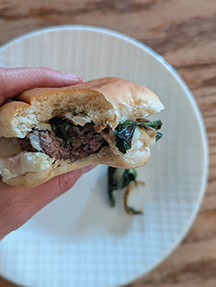
St. Patty’s Melts

Yes, I had to. Ireland is known for good dairy, so a good hamburger with a thick slice of cheese — topped with some green of course — seemed fitting, even beyond the name pun. The bread for a “real” patty melt is typically toasted rye or sourdough, but I know my family, and regular hamburger buns are preferred. Irish cooking doesn’t use so many spices, so these are simple, yet solid. I’m lazy about getting the grill out, and these are a quick and easy way to get burgers on the table, good too for this capricious winter/spring/wind weather we are in. 

Prep tips: pull in the Irish blue with the addition of crumbled blue cheese in the spinach bit. 

good butter

1 large onion, sliced

several handfuls fresh spinach

1 pound ground beef, formed into 4 thick patties

4 thick slices sharp white cheddar, preferably Irish of course

4 hamburger buns (or 8 slices toasted bread)

Heat the butter in a cast iron skillet, and add the onions with a pinch of salt, cooking until browned. Stir in the spinach until fully wilted, then remove from skillet. Add another knob of butter over medium-high heat, then arrange the patties in the skillet, pressing them down until about ½” thick. Season liberally with salt and pepper, and flip over once the bottom is nicely browned. Season the new top sides, top each with a slice of cheese, and cook to desired doneness (i.e. not very, if you’re Brian). Serve in the buns with plenty of the sauteed spinach.


Do Bobcats in Kansas Ever Breed With Domestic Cats?

0

Across Kansas, wildlife encounters are becoming more common as rural land, suburbs, and natural habitats increasingly overlap. One animal that sparks curiosity — and sometimes concern — is the bobcat. These medium-sized wild felines roam prairies, wooded river corridors, agricultural edges, and even the outskirts of towns. When sightings happen near neighborhoods, a familiar question often follows: Can bobcats breed with domestic cats?

The idea sounds dramatic. Some people report seeing unusually large cats and wonder if hybrids exist. Others worry about outdoor pets interacting with wildlife. Social media posts sometimes amplify the question, blurring the line between fact and folklore.

The scientific answer is clear but nuanced. While bobcats and domestic cats belong to the broader feline family, successful breeding between them in the wild is extremely unlikely. Understanding why requires exploring genetics, behavior, habitat use, and ecological realities specific to Kansas.

This detailed guide explains the science behind the question, addresses myths, and helps homeowners understand how to safely coexist with bobcats without unnecessary fear.

Bobcats in Kansas Today

Bobcats are long-established native predators in Kansas, and their presence across the state reflects their impressive adaptability. These wild felines inhabit a wide range of environments, from tallgrass prairie and agricultural landscapes to wooded riparian corridors and even suburban edges. Their ability to adjust to changing land use has allowed them to remain a stable part of Kansas wildlife despite ongoing human development.

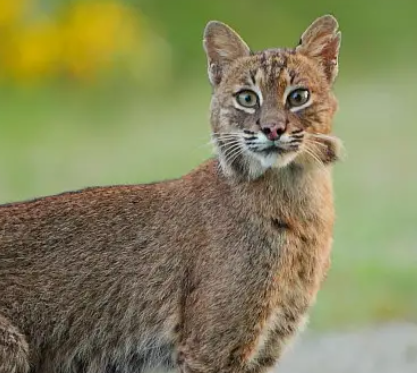
Unlike larger predators such as mountain lions, bobcats are medium-sized and highly elusive. Adults typically weigh between 15 and 35 pounds, though food availability, habitat quality, and genetics can influence individual size. Their spotted coats provide excellent camouflage, while their short “bobbed” tails and tufted ears give them a distinctive appearance once observers learn to recognize them.

Kansas wildlife surveys consistently indicate stable or slowly increasing bobcat populations in many regions. Conservation policies, habitat diversity, and abundant prey species contribute to their persistence. Most bobcats remain secretive and avoid direct human contact. Sightings usually occur at dawn, dusk, or nighttime when these cats are most active and human activity is lower.

Biological Differences Between Bobcats and Domestic Cats

Although bobcats and domestic cats belong to the same broader feline family, they are distinct species with significant evolutionary differences. Bobcats, scientifically known as Lynx rufus, evolved in North America as wild predators adapted to varied climates, terrain, and prey types. Domestic cats (Felis catus), by contrast, descended from African wildcats thousands of years ago through a long process of domestication alongside humans.

These separate evolutionary histories resulted in differences in genetics, reproductive biology, and behavior. Their chromosome structures are not identical, and their breeding cycles, communication signals, and social structures differ substantially. These biological differences act as natural barriers to successful interbreeding.

Even when two animals appear similar physically, genetic compatibility is not guaranteed. Many closely related species cannot produce viable offspring, and bobcats and domestic cats fall into that category under normal natural conditions.

Why Hybridization Is Highly Unlikely

Several overlapping factors make successful breeding between bobcats and domestic cats extremely unlikely in Kansas.

Genetic Incompatibility

Millions of years of separate evolution have created genetic differences that generally prevent viable offspring. While theoretical compatibility might exist at a superficial level, successful natural hybridization has not been reliably documented in North America.

Genetic barriers are often invisible but powerful. They prevent many interspecies breeding attempts from producing viable young.

Behavioral Differences

Bobcats are solitary, territorial predators. Their mating rituals, scent marking, vocalizations, and seasonal breeding behaviors differ significantly from those of domestic cats. Domestic cats, particularly pets, may lack the instinctive signals that wild bobcats recognize.

These mismatched behaviors reduce the likelihood of mating attempts.

Size and Physical Differences

Bobcats are typically larger, more muscular, and physically adapted for hunting wild prey. Domestic cats vary widely in size but are usually smaller. These physical differences further complicate potential breeding interactions.

Habitat Separation

Bobcats generally avoid human-dominated environments during daylight hours, while domestic cats remain closely tied to homes and urban areas. Limited habitat overlap reduces opportunities for sustained interaction necessary for breeding.

Taken together, these biological and ecological factors create strong natural barriers.

Why People Sometimes Think Hybrids Exist

Despite scientific evidence, reports of possible bobcat-domestic cat hybrids continue to circulate. Several common explanations account for this perception.

Misidentification

Certain domestic breeds, especially large long-haired cats or feral cats with muscular builds, can resemble small bobcats at a glance. Features such as tufted ears, spotted coats, or short tails can appear similar without indicating hybrid ancestry.

Brief sightings in low light conditions increase the likelihood of misidentification.

Juvenile Bobcats

Young bobcats sometimes wander into suburban areas while dispersing from their birthplace. Their smaller size can make them appear similar to large domestic cats, especially from a distance.

Natural Coat Variation

Domestic cats exhibit enormous variation in coat patterns, colors, and body shapes. Spotted tabbies, polydactyl cats, or cats with ear tufts may look unusually “wild” even without any bobcat ancestry.

Internet Amplification

Social media posts featuring unusual cats often spread quickly. Dramatic interpretations gain attention even without scientific verification. Repetition reinforces belief.

Human perception tends to favor compelling narratives over nuanced biological explanations.

Actual Interactions Between Bobcats and Domestic Cats

Although breeding is unlikely, interactions between bobcats and domestic cats can occur, particularly in rural or semi-rural Kansas areas.

In most cases, bobcats view small pets primarily as potential prey rather than mating partners. Hunting instincts drive these interactions, especially during periods of food scarcity or when young bobcats are learning to hunt.

Outdoor cats are most vulnerable at night when bobcats are actively hunting. Keeping pets indoors during evening and nighttime hours greatly reduces risk.

Bobcats generally avoid confrontation unless they feel threatened, cornered, or responsible for protecting young.

Understanding the predatory nature of these interactions helps owners take appropriate precautions.