
Comparatively higher grain markets and often well above average yields evidently hastened big farmers to buy equipment before year’s end.
Sales of four-wheel-drive tractors and combines were up in November, according to the Association of Equipment Manufacturers (AEM), Milwaukee, Wisconsin.
“While total sales markets are down, sales of larger ag-focused equipment continue to be strong,” said Curt Blades, AEM official.
The overall reduction in numbers is attributed to small tractor sales, which were experiencing unprecedented growth during the pandemic.
“However, with large tractor and combine efficiency, it’s easy to see why those segments continue to grow,” Blades evaluated.
Total farm tractor sales for November 2022 were down 14.5-percent from 2021. Year to date, 250,688 total farm tractors were sold through November 2022. That’s down from 293,099 a year earlier.
Sales for two-wheel-drive under-40-horsepower tractors in November were down 27.9-percent from 2021. There were 8,266 November sales, down from 11,470 the previous November.
Through November 2022, the Association of Equipment Manufacturers official said 163,105 tractors had been sold in the lower horsepower category. That’s down from 200,768 at the same time 12 months earlier.
November sales for two-wheel-drive 40 to 100 horsepower tractors were down 10.7-percent with 4,055 sales, and 4,542 in 2021.
Year to date, 60,969 of the mid-horsepower tractors had been sold, down from 68,316 a year earlier, Blades noted.
Sales for two-wheel-drive 100-plus horsepower tractors in November were up 6.2-percent, with 1,278 sales, compared to 1,203 the year before.
Through November, the Association of Equipment Manufacturers official said 23,665 big horsepower tractors had been sold. That’s up from 20,878 at the same time in 2021.
Sales of four-wheel-drive tractors were up 7.1-percent in November, with 165 sales, compared to 154 the previous November.
A total of 2,949 four-wheel-drive tractors were sold nationwide through November, down from 3,137 by the same time the previous year.
Sales for self-propelled combines were up 8.3-percent in November, with 314 sales, compared to 290 a year earlier.
The Association of Equipment Manufacturers reported 6,535 combines had been sold through November. That’s, up from 5,646 at the same time last year.
+++30+++
Large Farm Tractor Demand Expands With Overall Machinery Sales Down

Building A Winning Team Of Experts Improves Cattle Business Management
“Championship teams all have people with unique skills and expertise advising and coaching them.”
Likely against principles and thinking of many perhaps most farmers and ranchers, “You should have your team of advisors too.”
That’s according to Elizabeth Belew, who has a beef cattle nutrition PhD from the University of Arkansas in Fayetteville, Arkansas.
Michael Jordan, Babe Ruth, Joe Montana, Mia Hamm.
All four are considered some of the greatest athletes and champions in their respective sports.
“They also share a common thread in surrounding themselves with a team that took them to the next level,” Belew said.
“Farmers and ranchers can have a team that helps their cattle business win too,” the nutritionist repeated. “Working with a team of experts or advisors is beneficial to ensure farm and ranch cattle operation goals are met.”
The team roster would include nutritionist, veterinarian, Extension agent, banker, sale barn representative, and accountant.
“Each can individually focus on different components to get a farm and ranch cattle operation to the next level,” Belew emphasized.
Nutritionists can help farmers and ranchers capitalize on genetic decision using nutrition to optimize performance.
A veterinarian knows the proper health protocols for vaccines or wormers to utilize in each operation.
“Don’ forget about the value of the perspectives of other cattle producers you trust,” Belew reminded.
“For newcomers to the cattle business,” Belew said, “talk to somebody who has been in the business for a long time. Bounce ideas off them.
“Maybe they are specialized in another segment of the cattle business and can provide a different point of view.”
Taking steps to pool information gathering from a variety of sources can help optimize opportunity and reduce risk for an operation
Start looking for an advisory in the local area, the specialist suggested. “You may already have cultivated business relationship with several people,” she pointed out. “If you don’t know someone with specialization in herd health, nutrition, or finance, ask other producers for recommendations.”
Don’t be afraid to utilize experts from outside the local area. “Agriculture trade shows and conferences are places to network to meet new people who may have knowledge that can be utilized,” Belew said.
“Once you’ve built a team of advisors, consider talking with them quarterly,” she continued. “It doesn’t have to be a formal meeting with everyone all at once. Most discussions can happen through individual phone calls with questions and answers.”
It can be beneficial for the advisors to visit individual farmers and rancher during the year. “They might observe something in the management that is excelling or an area which needs improvement,” the specialist said.
Try meeting with the advisors once a year as a group, she advised. “Meeting together can be advantageous. They can share their expertise with one another to ensure all facets of the business are aligned,” Belew said.
For instance, a banker might gain further insight into what is happening in the cattle markets by speaking with a sale barn representative.
“The group meetings can be for supper at a local café, at the farm-ranch home, or even a conference all are attending together,” Belew said.
“Building a team won’t happen overnight,” she clarified. “It takes time to find the right people and build trust.”
Each advisor must have some understanding of the business situation and personal goals.
“Once they do, they can provide input that helps push the agriculture operation forward,” Belew emphatically stated.
+++30+++
CUTLINES
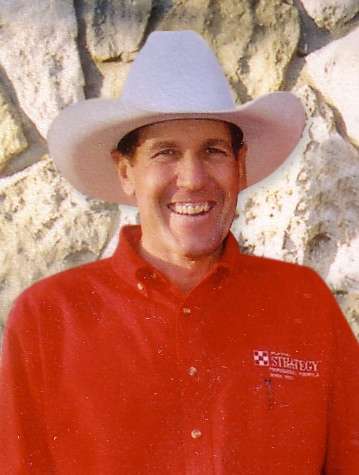
Elizabeth Belew has a doctorate degree in beef cattle nutrition from the University of Arkansas in Fayetteville, Arkansas.
Beef nutritionist Elizabeth Belew recommends “building a winning team” of advisors to improve cattle management.
Wheat Scoop: Will your recipe rise to the top? National Festival of Breads opens entries for the 2023 virtual contest
Contact: Marsha Boswell, [email protected]
For audio version, visit kswheat.com.
Whether it is a go-to recipe, a revamped family favorite or a combination of unique-to-you flavors, put your creativity to the test in the quest to become the Best of Breads Champion in the 2023 National Festival of Breads. Enter your favorite yeast bread or roll recipe now through February 13, 2023, for the chance to win prizes and share your tips and tricks with other amateur bakers across the country.
“The National Festival of Breads builds upon a rich tradition of grassroots support and is the nation’s only amateur yeast bread baking competition,” said Cindy Falk, co-chairperson of the event and nutrition educator for Kansas Wheat. “Our virtual contest offers expanded opportunities for competitors and for those at home to join us in celebrating the creativity of America’s home bakers.”
The eighth National Festival of Breads is sponsored by King Arthur Baking Company® and Kansas Wheat. Entries for the virtual contest are open now through February 13, 2023. Each eligible entry will be reviewed by a qualified panel of food experts and selected recipes will be test baked in the Kansas Wheat Test Kitchen, Manhattan, Kansas.
This year’s contest includes four categories:
Quick and Easy. Create a yeast bread or roll recipe using time-saving steps, techniques and ingredients for a busy lifestyle in four hours or less, including baking time. Any dough must be fully baked. A bread machine may be used.
Wholesome and Healthy. Revamp an old family recipe, heirloom recipe or a tried-and-true favorite using healthier ingredients. Explain why it is healthy.
Go Nuts. Create a yeast bread or roll recipe incorporating nuts in the dough or filling.
Say Cheese. Submit your original yeast bread or roll recipe using your favorite cheese(s).
The overall Best of Breads champion will be announced virtually on June 1, 2023. Each category winner will receive a baking bundle prize package and the overall champion will receive $1,000. A People’s Choice winner will also be selected from the category winners by online voters and will receive an additional prize package.
That’s the nuts and bolts, but what makes a winning recipe? Here are a few tips from Falk to help you earn a spot in the nation’s premier bread baking contest.
1. Recipes must be an original yeast bread or roll recipe. The possibilities are endless — try adding new flavor combinations (especially nuts and cheese this year!), change the appearance, explore your heritage or dig into those treasured old cookbooks to update a family favorite with modern or healthier options.
2. While the contest does award artistic flair, make sure your recipe follows the official rules to rise to the top. For example, the contest requires using at least 75% wheat flour, and the remaining amount may be other flour, which offers many options to mix up your recipe. Each recipe should also make one or more loaves of bread or at least one dozen rolls.
3. Accuracy is important, so proofread your recipe for every detail. Make sure you have provided the list of ingredients in the order that they will be used and have given accurate and concise step-by-step directions. Double-check measurements — including that they follow U.S. measurement standards (cup, tablespoon, teaspoon, etc.) — and do not forget the temperature of liquids like water or milk.
4. When you have tested and re-tested your recipe in your kitchen, show off that beautiful loaf or roll. A photograph is required with your entry; luckily taking a photo with your cell phone is a snap. Cut at least one slice or roll to show the inside and outside of your entry — this is also required.
Looking for more tips for a successful recipe submission? Check out https://festivalofbreads.com/tips/. Find more information on the 2023 National Festival of Breads, check out previous winners, and submit your original recipe and photo at festivalofbreads.com.
###
Written by Julia Debes for Kansas Wheat
KU News: Expert says lessons from Martin Luther King Jr. remain relevant to US democracy struggles

From the Office of Public Affairs | http://www.news.ku.edu
Media advisory
Contact: Rick Hellman, KU News Service, 785-864-8852, [email protected], @RickHellman
Expert says lessons from Martin Luther King Jr. remain relevant to US democracy struggles
LAWRENCE – Few observers are better positioned to comment on the significance of the forthcoming annual observance of Martin Luther King Jr. Day on Monday, Jan. 16, than University of Kansas scholar Randal Maurice Jelks.
Jelks, professor of African & African-American studies at KU, is an author an ordained Presbyterian clergyman. His fourth and most recent book, “Letters to Martin: Meditations on Democracy in Black America” (Chicago Review Press), was published in January 2022. It’s a heartfelt cry of concern about the state of American democracy, framed as a series of letters to MLK, and an attempt to provide some of his inspiration to today’s young generation. Read more about the book.
“We celebrate Martin Luther King Jr. Day not because of one person’s heroism,” Jelks said. “We celebrate this day to honor all democratic activists, like King, who have used their constitutional right to protest to build a more inclusive society through the right to vote; to empower working men and women economically in the creation of sustainable jobs, homes and wages; and to extend due process to anyone who stands before the branches of the United States judiciary in seeking fair adjudication before the courts of our land.”
Jelks is also the author of “Benjamin Elijah Mays: Schoolmaster of the Movement” (University of North Carolina Press, 2012), a biography of King’s philosophical mentor at Morehouse College in Atlanta.
To receive a review copy of “Letters to Martin” and/or to interview Jelks, contact Rick Hellman, KU News Service public affairs officer, at [email protected] or 913-620-8786 (mobile; leave message).
-30-
————————————————————————
KU News Service
1450 Jayhawk Blvd.
Lawrence KS 66045
Phone: 785-864-3256
Fax: 785-864-3339
[email protected]
http://www.news.ku.edu
Erinn Barcomb-Peterson, director of news and media relations, [email protected]
Today’s News is a free service from the Office of Public Affairs
WINTER VISITORS – White Winged Dove
This year we have a pair of new visitors in our yard. We have never had any of these come to visit and I had to get the Field Guide for Birds out to find out what they are. The book shows they are from Mexico and desserts of south west United States. They nest in mature citrus groves and saguaro-paloverde deserts.
These little ones (well they are 11″ beak to tail) must not have good navigational skills yet because they are a long way from their home in Texas and Mexico. They also love the peanuts chips that I put on the patio every day. I just looked in the book and it says their call is a soft rolling cooing call that sounds like who-cooks-for-you. So I have heard one softly cooing on the patio as it contentedly picks up the peanut chips.
I love to watch them walk. They have these cute pink feet and after watching them walk around the yard and patio I know where the saying Pigeon toed comes from. When they walk each foot crosses over the one on the ground and turns in as they step down. They don’t bob the head up and down as much as the morning doves that are normal for this part of the country but I love to watch the pigeon toed walk they have.
We have had regular doves around the yard and neighborhood for years and I love to hear them cooing in the trees. They also like to come and get the sunflower seeds or just eat the shells like the white winged doves. They are the clean up crew for our yard, but we don’t have enough of them around to keep up with the squirrels shelling and eating the sunflower seeds.
Over the years we have had strange birds in the yard that don’t belong here. One summer there was a little bird I had never seen before. He was from the East coast and Florida the book said. When he walked he looked like a ship bobbing on the waves with his body swinging forward and back. His head was bobbing all the time he was walking. He was good for a chuckle when he was in the yard.
We always have visitors from Canada in the winter. They don’t like the cold I guess and I can’t blame them. These little visitors are Juncos. Most are a really dark grey on the back and almost black and others are lighter and almost a brown tint to their backs.
The Juncos love to eat on the patio where I throw out peanut chips. I also put the peanut chips on the brick ledge under the patio window and the step below and they will come up there to eat and if there is nothing on the ledge they will look in the window to let me know they need food.
We also have Canadian sparrows which are bigger and have a black head and a different color pattern than our sparrows. We usually have about 30 of them at least in the yard all winter. We know that the first winter storm is on the way and winter has arrived when they show up in the yard. They must ride the storm winds in and then just decide to stay because there are 5 feeders in the yard with their favorite black oil sunflower seeds in them.
One year we had a turkey that lived mostly in the field across the road but would venture across Monroe Street now and then to check out the front yard under the two feeders out there. We named him Lonesome George because the other turkeys had shunned him. He had a bum left leg and had to hop to get around on the other leg. So we always made sure there was food in the corner of the field when he arrived or when he came into our yard.
We have always had lots of birds both in summer and then our winter visitors. Some times like this year I had to get out the bird book to find out what our new little visitors this year are. I have really enjoyed seeing this beautiful pair of White Winged Doves in the yard. What is it about our yard that brings in new birds every winter? Do they somehow spread the word that there is good food and always plenty of it and how to get there? But we are always glad to see the northern birds and now the Doves from Texas even if the Doves are way out of their normal area. To contact Sandy: [email protected].
