Monday, March 23, 2026
Home Blog Page 913

Insight: Waiting for Rain

0

Kim Baldwin, McPherson County farmer and rancher

The morning air has turned crisp, the temperatures have begun to drop, and the sun noticeably rises a little bit later every morning. It is definitely beginning to feel like fall on the farm.

Most evenings are also filled with a layer of dust in the atmosphere stirred up by the steady movement of the combines and tractors in the surrounding fields.

While we continue to bring the grain out of the fields during fall harvest, we have also turned our attention to the fields that will soon have green shoots growing. It’s time to start sowing wheat.

After missing rain showers practically all summer, we recently received some much-needed moisture. The slow, steady rain provided us assurance that it does, in fact, still rain on occasion.

But it also provided our soil with enough moisture to ensure a good start for most of our wheat. The hard red winter wheat we place into the ground every fall has proven time and time again it can handle a lot of extreme weather conditions throughout the year. From arctic blasts in the winter, late freezes and hailstorms in the late spring, we know this crop is hardy.

But one thing the wheat absolutely needs to ensure a good start is moisture in the ground.

For many months we’ve waited for it to rain. We’ve looked really hard for signs that a rain could be coming.

We’ve been teased with chances of precipitation all summer to only see those chances dissipate to nothing within 10-day forecasts.
We’ve prayed for it to rain.

And we breathed a sigh of relief and gave thanks when the small rain finally came.

It’s amazing how something like a rain shower can completely alter our outlook. It’s as if a rain can wash away any doubt that might have settled in our minds.

It’s cleansing and provides the rejuvenation of faith we all need to begin a new season.

It encourages us to firmly believe many seeds can and will be produced from one tiny seed planted into the ground.

As primarily dryland farmers, a rain shower is life-giving for our present and future crops alike.

As we continue to sow the wheat into the soil this month, we know that we’ll need more rain to get to a successful harvest. And while the forecast doesn’t show any chance of precipitation in the near future, we’ll sow anyway.

We’ll continue the tasks on the farm this fall and plan for a successful wheat crop this summer – all while patiently waiting on a rain.

“Insight” is a weekly column published by Kansas Farm Bureau, the state’s largest farm organization whose mission is to strengthen agriculture and the lives of Kansans through advocacy, education and service.
Copyright © 2022 Kansas Farm Bureau, All rights reserved.
News from Kansas Farm Bureau

Sniff, sniff, sniff. That darned runny nose.

0

When your nose runs, although it may not slow you down, it can be annoying. This time of year it’s difficult to know if your runny nose is from a cold, allergies, or another reason.

Rhinitis can be broadly defined as inflammation of the nasal membrane.

Sometimes a runny nose is from allergies, caused by allergens in the air, such as trees, grass, weeds, molds, dust mites, or pet dander. Allergy symptoms often include sneezing, an itchy or runny nose, and itchy, watery or red eyes.

A runny nose can also be caused by a virus, like a cold. As the weather changes and with school back in session, people tend to spend more time indoors which allows airborne viruses to spread more easily. Cold symptoms may include a runny nose, as well as sneezing, sore throat, cough, and congestion.

Be careful with nasal decongestants. While sprays may temporarily treat rhinitis, regular use of them can cause a rebound effect called rhinitis medicamentosa. Subsequently, a person may use the sprays more, causing a vicious circle. To avoid the rebound effect, try to limit the use of decongestant sprays to less than five days.

Sometimes a runny nose will not ever seem to go away. If allergy pills, steroid nasal sprays, or a change in environment do not help your chronic runny nose, it may be time to consider other causes.

For many of these causes, your primary care provider can help you sort them out and come up with a treatment plan. There are other treatments beyond avoidance and steroid nasal sprays, such as certain inhalers. As always, talk with your doctor to determine if other factors such as polyps, tumors, or a systemic disease could be causing your condition.

Accounting for more than half of all non-allergic rhinitis is vasomotor rhinitis. Vasomotor rhinitis is an exaggerated reaction to irritants such as air pollution, perfumes, or temperature changes, especially cold, dry air.

Cigarette smoke, alcohol, cocaine, and occupational exposures may cause a runny nose along with different medications, such as aspirin or some blood pressure pills. Certain conditions such as pregnancy, acid reflux, as well as the use of your CPAP machine for sleep apnea have been known to affect the nasal membranes.

Personally, I know that if I eat something spicy or hot in temperature, I am going to need a Kleenex, for my gustatory rhinitis. While there might not be a cure for your runny nose, sometimes it is just nice knowing the cause, because I am not going without my favorite pad Thai meal.

Andrew Ellsworth, M.D. is part of The Prairie Doc® team of physicians and currently practices family medicine in Brookings, South Dakota. Follow The Prairie Doc® at www.prairiedoc.org and on Facebook featuring On Call with the Prairie Doc® a medical Q&A show celebrating its twentieth season of truthful, tested, and timely medical information, streaming live on Facebook most Thursdays at 7 p.m. central.

Wheat Scoop: Kansas wheat farmers take to Capitol Hill during fall NAWG fly-in

0
Kansas Wheat

Contact: Marsha Boswell, [email protected]

For audio version, visit kswheat.com.

Three Kansas wheat producers stepped out of the tractor and onto Capitol Hill in mid-September to share their on-the-ground perspective of the major issues impacting agriculture and present potential policy solutions in preparation for the next Farm Bill.

“Getting farmers on the Hill allows Kansas legislators and their staff to ask farmers questions directly on issues they are discussing,” said Shayna DeGroot, Kansas Wheat director of membership and government affairs, who accompanied the group. “Farmers can tell legislators directly what’s going on in farm country and fill in knowledge gaps. These face-to-face conversations are beneficial and productive with both sides presenting new ideas and solutions. It’s much more personable and more joyful to shake each other’s hands.”

The delegation representing the Kansas Association of Wheat Growers was part of the larger fall fly-in organized by the National Association of Wheat Growers, which arranged for morning briefings with USDA agency representatives on September 13 and 14.

During the afternoon each day, the Kansans – including Chris Tanner from Norton, Clay Schemm from Sharon Springs and Kyler Millershaski from Lakin – met with elected officials and their staff with the U.S. Senate and the U.S. House of Representatives. The KAWG delegation also had the opportunity to attend a reception with the biennial Agricultural Trade Goodwill Mission from Taiwan, ahead of the delegation’s visit to the Kansas Wheat Innovation Center in Manhattan, Kansas.

“I always feel fortunate when we go to DC that all of our offices are receptive and know that agriculture drives the Kansas economy and have our back,” Tanner said. “If you come to DC with an issue, you’ll be greeted with folks willing to hear your concerns and wanting to do something about them to make them better in Kansas. We have good leadership in DC and very ag-friendly staff.”

During the Hill visits, the KAWG crew walked legislators through the 2021-2022 growing season. With drought impacting most of the state, average yields decreased significantly from the previous year – 38 bushels per acre in 2022 compared to 52 bushels per acre in 2021. Despite the drop, Kansas continued to hold the title as the leading producer of winter wheat in 2022 at 260.3 million bushels, followed by Washington, Oklahoma and Montana.

While legislators cannot control the weather, they can assist Kansas farmers with other items on an expanding list of concerns, including the high cost and limited availability of fertilizer, high crop insurance premiums, shortages in farm labor and continued drought and wildfires. The KAWG crew outlined how leaders can help farmers, including by promoting agricultural exports, advocating for crop insurance programs, reducing regulatory costs and supporting agricultural research.

Tanner highlighted discussions on the practicality of regulations like commercial driver’s license requirements for on-farm use, especially in remote areas of western Kansas. He also took the opportunity to discuss how potential adjustments to crop insurance practices could better reflect how crop rotations can wildly impact insurance adjustments and serve as a more effective safety net.

“All the offices were very receptive to the issues we brought up and aware of current issues Kansas farmers are facing,” DeGroot said. “We have a delegation that serves on multiple committees that pertain to agriculture – from the ag committee to transportation, ways and means and others. Across the board, they all end up impacting agriculture.”

The trio of farmers is back in Kansas and back to work for the fall fieldwork season. Likewise, DeGroot pointed out that the policy work is also far from done. The fly-in’s discussions garner a whole after-action to-do list to follow up on conversations, answer questions and make sure legislators and board members alike have the information they need to enact solutions. That’s the role of KAWG – continue the work to advocate on behalf of Kansas wheat farmers and plan and prioritize engagement on the policies and programs impacting their farming operations.

Learn more about the benefits of joining KAWG and share your top concerns for the next Farm Bill at https://kswheat.com/advocacy-for-kansas-wheat-growers. To see the handout including this year’s production numbers, current issues impacting the Kansas wheat industry, and suggestions for legislators check out this PDF.

###
Written by Julia Debes for Kansas Wheat

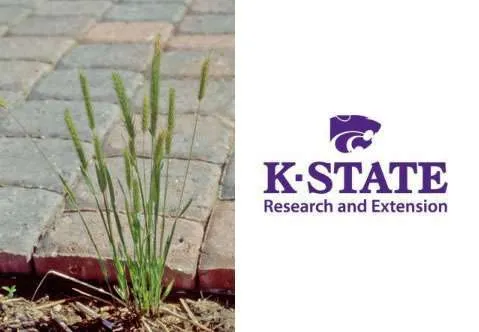
Lawn Grass isn’t just for being green and mowing!

0
Photo courtesy: K-State Horticulture

Lawn Grass isn’t just for being green and mowing! Turfgrass is so common in everyday life that people may not appreciate its value. Research continues to uncover environmental, economic, health, and safety benefits of natural turfgrass found in lawns, athletic fields, parks, and roadsides.

Healthy soil
Populations of beneficial organisms thrive within the root systems of healthy grasses, turning dead plants and organisms into healthy soils.

Water filtration
Pollutants bind tightly to the roots and thatch layer of grass systems. Microbial organisms work with the thatch layer to keep surface and groundwater clean. Grass buffer strips located in and around farm fields, streams, and waterways filter soil and remove chemicals before they enter surface and groundwater. In urban areas, grasses filter water that contains contaminants from oil, grease, and other household and industrial wastes.

Erosion control
Grass reduces soil erosion caused by water and wind. Grass develops a thick root and shoot system forming a wall that prevents soil erosion. For example, with new road and home construction, sod is laid next to the curb to prevent soil erosion and act as a buffer strip. The strip filters runoff water before it enters the street and storm water drains, which lead to nearby streams and surface waters. Regular mowing increases shoot density and root mass, which improves soil stability. Grass prevents water and wind erosion by slowing down the flow of water and holding soil in place. Research shows that sediment loss from grass is negligible under normal rainfall conditions.

Noise reduction
Grasses planted along a roadside will decrease the noise level by 40 percent compared to hard surfaces.

Natural air conditioning
Urban areas with fewer grasses and landscape plants are 10 to 15 percent warmer than their rural neighbors. Water evaporates through the stomata, the tiny openings in the grass blades, cooling them and the surrounding environment. During the summer, lawns are 30 percent cooler than asphalt and 14 percent cooler than bare ground.

Reduces glare
Variation in the size, shape, and angle of individual grass blades disperses sunlight. This reduces glare and improves visibility in sunny conditions.

Pollution control
A healthy lawn produces an abundance of leaf tissue to trap dirt and dust particles and protect air quality. About 12 million tons of dust is released into the atmosphere each year in the U.S., and much of it is trapped by grass.

Emotional and physical well-being
Vegetated landscapes not only enhance the environment, but they improve mental, physical, and emotional health. Hospital patients recover faster when their rooms face areas with grass and landscape plants.

Absorbs carbon dioxide, releases oxygen
During photosynthesis, grasses remove carbon dioxide and add oxygen to the atmosphere. Healthy turf areas give off abundant oxygen, which humans need to survive. Over the course of a year, a 2,500 square-foot lawn absorbs enough carbon dioxide to produce oxygen for a family of four.

Conditions soil
Grass roots grow continuously — dying, decomposing, and regrowing. This builds humus, which keeps soil biologically active and improves physical and chemical properties. The best, most fertile soils in the world were created under grasslands.

Keeps pollen in check
Healthy lawns have few weeds, which reduces pollen levels. Regular mowing also prevents grass plants and weeds from producing pollen-bearing seedheads and flowers.

Discourages small pests
Small pests (snakes, mice, and rats) and insects (chiggers and mosquitoes) live in tall grasses. Regular mowing keeps these undesirable pests away.

Improves community health and safety
Most outdoor recreational activities take place on grass. There are fewer injuries and they tend to be less severe when athletes play on natural grass compared to synthetic turf athletic fields. Adding turf to city parks has been shown to improve community relationships and emotional well-being, and to reduce crime. Parks and golf courses provide natural habitat for plants and animals in places that would normally be used for industry or housing. Many golf courses are certified as bird and wildlife sanctuaries by the Audubon Society.

Horticulture 2022 Newsletter No. 39

0
KSU horticulture

https://hnr.k-state.edu/extension/horticulture-resource-center/horticulture-newsletter/documents/2022/220927-Newsletter-39.pdf

Blog Post: http://www.ksuhortnewsletter.org

Video of the Week: Storing and Preserving Peppers
https://kansashealthyyards.org/all-videos/video/storing-and-preserving-peppers

EVENTS
Kansas Forest Service Tree, Shrub Seedling Sale, September 1 – October 15
https://www.kansasforests.org/conservation_trees/

Kansas Turf & Landscape Conference
The 72nd Annual Kansas Turf & Landscape Conference will be held on Wednesday, November 30 and Thursday, December 1 at the Hilton Garden Inn, Manhattan. The conference is an excellent way to learn about turf and landscape management, visit with old friends, network with new ones, and see all the latest products and supplies from local and national vendors.
The conference has been approved for commercial pesticide recertification hours:
1 Core hour
3A – 7 hours
3B – 7hours
GCSAA education points and International Society of Arboriculture CEUS will also be available by attending the conference.
For more information, go to https://www.kansasturfgrassfoundation.com/

REMINDERS
• Add organic matter to vegetable garden this fall.
• Bring houseplants in if you haven’t already.
• Dig sweet potatoes

VEGETABLES
Fall Planting of Asparagus & Rhubarb
We sometimes receive questions as to whether asparagus or rhubarb can be moved in the fall. Though these crops are traditionally transplanted in the spring (mid-March to mid-April), a fall move can be successful. Wait until the top has been browned by frost and then cut back to the ground.
Prepare the soil and fertilize as you would in the spring. See http://www.bookstore.ksre.ksu.edu/pubs/mf319.pdf for more detail on asparagus and http://www.bookstore.ksre.ksu.edu/pubs/ep99.pdf for more information on rhubarb.

Water well after planting to ensure good root/soil contact. Mulching would be helpful on the rhubarb to prevent the plant from heaving out of the soil during the winter but asparagus requires no such treatment as it is planted much deeper. (Ward Upham)

Last Tomatoes of the Season
Cooler nights are increasing in frequency now that we are nearing October. If you have tomatoes, you may have some that are approaching maturity. Leave them on the vine until mature or until a frost is forecast. Tomatoes will ripen off the vine but must have reached a certain phase of maturity called the ‘mature green stage.’ Look for full-sized tomatoes with a white, star-shaped zone on the bottom end of the green fruit.
When harvesting fruit before a frost, separate tomatoes into three groups for storage: those that are mostly red, those that are just starting to turn, and those that are still green. Discard tomatoes with defects such as rots or breaks in the skin. Place the tomatoes on cardboard trays or cartons but use layers of newspaper to separate fruit if stacked. Occasionally a tomato may start to rot and leak juice. The newspaper will keep the juice from contacting nearby or underlying fruit. Store groups of tomatoes at as close to 55 degrees as possible until needed. (Ward Upham)

Peppers from the Garden
Peppers are able to be stored fresh much longer than tomatoes. They can usually keep in a crisper drawer of a refrigerator for several weeks if kept moist but not wet. For longer storage, freezing works well. Though mushy when thawed, the flavor still comes through in cooked foods. Try dicing them into small pieces and then freezing on a cookie sheet. The frozen pieces can then be poured into a plastic bag for later use. Measuring is much easier as the pieces are not frozen together in a clump. This methods works just as well for hot peppers but be sure to wear gloves when handling. (Ward Upham)

TURFGRASS
Should You Let Turf Grow Tall in the Fall
Sometimes you will hear people say to let the grass grow tall right before winter sets in. Their reasoning is that the extra foliage will insulate the crown of the plant from the extreme cold of winter. Although this may sound reasonable, in practice it probably does little, if anything, to increase winter hardiness. On the contrary, a canopy that is too high during the winter may lay over and become matted down, leading to an increased incidence of winter-diseases such as snow mold.
Turfgrass species vary genetically in their cold tolerance, with warm-season grasses such as bermudagrass, zoysiagrass and buffalograss being less cold tolerant than the cool-season types such as tall fescue and Kentucky bluegrass. Given these differences, cold tolerance is improved by increasing the health of the plants going into the winter, and healthy plants are a result of a sound management program (fertilizing, watering and mowing) during the spring, summer and fall.
The lawn will benefit more from continuing to mow at the recommended height than from trying to gain some insulation against winter cold by allowing it to grow tall.
Here is a list of the recommended mowing height ranges (in inches) for home lawns in Kansas:
Tall fescue: 2.5 -3.5
Kentucky bluegrass: 2-3
Buffalograss: 2-3
Bermudagrass: 1-2
Zoysiagrass: 1-2
(Note: Mowing at heights below 1.5 inches requires a reel mower).

There may be some benefits gained by adjusting mowing heights WITHIN the recommended range at times. For example, it is a good practice to mow warm-season grasses at the higher end of recommended heights during late summer and early fall because this practice should help them store more carbohydrate reserves for the winter, and it may reduce the incidence of certain cool-weather diseases. But the rule to remember is to stay within the recommended height range for your species. (Ward Upham)

MISCELLANEOUS
Amending Soils with Sand
Sand is sometimes suggested as an amendment material for clay soils. However, there is good reason to be cautious about using sand. In order for sand to be effective in breaking up a clay soil, sand grains must touch one another so there are pore spaces between grains that can hold air and/or water. If the grains do not touch, the clay fills in all the voids between the sand particles leaving no room for pores. This is the same principle used to make concrete and the result is somewhat the same. You end up making a bad situation worse. So how much sand does it take for it to be effective? Normally, we consider about 80 percent sand to be sufficient. In most cases this makes the use of sand impractical. The addition of organic matter is a much better choice. (Ward Upham)

Work Garden Soil in the Fall
Fall is the preferred time to prepare garden soil for next spring’s vegetable garden. Spring is often wet making it difficult to work soil without forming clods that remain the rest of the season. Fall usually is drier allowing more time to work the soil when it is at the correct soil moisture content. Even if you work soil wet in the fall and form clods, the freezing and thawing that takes place in the winter will break them down, leaving a mellow soil the following spring.
Insects often hide in garden debris. If that debris is worked into the soil, insects will be less likely to survive the winter. Diseases are also less likely to overwinter if old plants are worked under. Also, the garden debris will increase the organic matter content of the soil. Working the debris into the soil is often easier if you mow the old vegetable plants several times to reduce the size of the debris.
Fall is an excellent time to add organic matter. Not only are organic materials usually more available in the fall (leaves, rotten hay or silage, grass clippings) but fresher materials can be added in the fall than in the spring because there is more time for materials to break down before planting. As a general rule, add 2 inches of organic material to the surface of the soil and till it in. Be careful not to overtill. You should end up with particles like grape nuts or larger. If you work your garden into the consistency of dust, you have destroyed the soil structure. (Ward Upham)

Spring-flowering Plants Blooming in the Fall
Whenever we have a summer that puts a lot of stress on plants, bloom may appear on ornamentals that normally flower in the spring. This stress is usually caused by hot, dry periods but may be caused by other factors that stress the plant. Iris that are blooming now are probably reblooming varieties that normally bloom twice a year.
Fall flowering of plants is normally sparse and does not appreciably affect the amount of bloom the following spring. (Ward Upham)

Contributors: Ward Upham, Extension Associate

Department of Horticulture and Natural Resources
1712 Claflin, 2021 Throckmorton
Manhattan, KS 66506
(785) 532-6173

For questions or further information, contact: [email protected] OR [email protected]
This newsletter is also available on the World Wide Web at:
http://hnr.k-state.edu/extension/info-center/newsletters/index.html
The web version includes color images that illustrate subjects discussed. To subscribe to this newsletter electronically, send an e-mail message to [email protected] or [email protected] listing your e-mail address in the message.

Brand names appearing in this newsletter are for product identification purposes only. No endorsement is intended, nor is criticism implied of similar products not mentioned.

K-State Research and Extension is committed to making its services, activities and programs accessible to all participants. If you have special requirements due to a physical, vision or hearing disability, or a dietary restriction please contact Extension Horticulture at (785) 532-6173.

Kansas State University Agricultural Experiment Station and Cooperative Extension Service K-State Research and Extension is an equal opportunity employer. Issued in furtherance of Cooperative Extension Work, Acts of May 8 and June 30, 1914, as amended. Kansas State University, County Extension Councils, and United States Department of Agriculture Cooperating, Ernie Minton, Dean.