Saturday, March 28, 2026
Home Blog Page 954

Gomer (Best Of)

0
lee pitts

If I could speak “cow talk” the animal I would most like to interview would be Gomer. I imagine the interview would go something like this:

Me: Gomer is an unusual name, how did you get it?

Gomer: A “Gomer” is a bull that has had his plumbing rearranged. He has all the right equipment it has just been redirected out the back end.

Me: That seems like cruel and unusual punishment. What kind of a sick person would do such a thing?

Gomer: A veterinarian. They are all a bunch of perverts if you ask me.

Me: Why would a person do such a thing?

Gomer: It is my job to spot cows that are in heat so that a technician can then breed them artificially.

Me: So despite the fact that you are an intact bull it is physically impossible for you to breed a cow.

Gomer: That is correct. Unless I just happened to back into one.

Me: Since you have already gone to all the trouble wouldn’t it be easier and cheaper if you just went ahead and bred the cows?

Gomer: Most ranchers do not appreciate my Holstein upbringing?

Me: Is your job very difficult?

Gomer: Of course. Just ask yourself, what is the best way to spot a cow that is in heat?

Me: They are usually very nervous.

Gomer: That’s right. But what cow in her right mind wouldn’t get a little nervous when she saw me coming? She doesn’t know if I’m a bum steer or what. That makes my job very difficult.

Me: What have been some of the highlights of your career?

Gomer: Certainly the time I was offered for sale at the auction market sticks out in my mind. A bull trader thought I was a normal bull and bought me thinking he was getting a real bargain for only six cents above market price. After the auctioneer said “sold” I answered nature’s call right there in the sale ring in my rather unorthodox way.

Me: That must be a strange sensation for you? To pee out the back end like that in front of a crowd.

Gomer: You think? Of course it was but it wasn’t near as strange for me as it was the bull trader.

Me: Why, what happened to him?

Gomer: That bull trader got kind of a puzzled look on his face. He didn’t know what he had bought. The bull trader spent two years trying to sell me to somebody as unsuspecting as him. Finally, he sold me to a purebred breeder who needed me to spot horny Angus cows. I immediately impressed my new owner and remained there for years.

Me: How did you impress him?

Gomer: He turned me out with his good cows. He had placed heat detector strips on the tailbone of each cow. I mounted the cow if she was in heat and the pressure made her strip turn red. All the rancher had to do was come out the next morning, gather up the cows whose markers had turned red and breed them artificially.

Me: Sounds like a good theory.

Gomer: Sounds good in theory but the first morning every cow in the pasture was red. It seems they’d been rubbing under trees all night. Of course, I didn’t tell the owner that. I just acted real tired.

Me: Are there hazards in your line of work?

Gomer: A good Gomer just needs to make sure the other bulls know he is one of them.
 

Into the trenches

0
john marshal

In early July, Heath Hogan began making the rounds. The new Smoky Valley Schools Superintendent has wasted no time meeting people, attending and speaking at events, letting people know he’s done his homework.
At the Lindsborg Kiwanis Club recently, Hogan had the crisp casual assurance of someone who knows what he’s talking about, where he’s headed. He spoke of his family’s deep history in agriculture, his 25 years in education, all with the Garden City district (enrollment, 7,200), where he had been deputy superintendent for seven years. Among the questions, one or two about the state legislature and its scrutiny of public schools.
“There will be a war on public education,” he said. State funding for public schools is again a prime target for budget cuts. Public finance of private schools is on the rise. New legislation allows students to attend in any district in Kansas. The threat is “serious,” he said. “We have to stand up for ourselves.”
*
The Kansas Legislature, dominated by Republicans, has put local schools in the cross-hairs since the dark Brownback years. In 2015 there were attempts to abolish the school finance act and slash education funding. Teacher pensions were targeted, in an attempt to backfill a $400 million state budget deficit – a result of tax cuts for corporations and wealthy individuals.
Model legislation drafted by far-away cause lobbies became Republican marching orders at many state Capitols, including Topeka. Examples:
– Educators using material viewed by others as “harmful” to minors could be charged with a crime. The legislation was vague, leaving such terms as “obscene” and “harmful” to the imagination.
– Teachers’ and state employees’ pensions would be raided to fill part of the budget hole. To recover the money, $1 billion in bonds would be issued, the money advertised as “aid for schools.” Bond proceeds would be invested in the stock market. In truth it was a Ponzi scheme, history’s first margin call on what had been a teacher retirement fund.
– Lawmakers tried to forbid job-related paycheck deductions, a way to cancel payroll contributions for (teacher) union dues. The measure affected a long list of deductions for other purposes, including charitable and non-profit contributions.
– Bills were introduced to require that school district employees be fingerprinted and submit to criminal background checks every five years.
The teacher shortage grew. By 2015, more than 3,700 teachers had left Kansas, retired or taken jobs outside education after that school year. Between 2013 and 2015, roughly 15 percent of the state’s 24,000 teachers had gone away. Many said that, given the opportunity, they would follow colleagues who had left to teach in another state, or leave the profession.
*
The 2022 Legislature piled on. One bill created bigger “educational savings accounts” by sending more public money to private schools. It also sidestepped the Supreme Court and enforcement of equity in public school finance.
Another measure included a ‘parents bill of rights’ requiring teachers to post online every piece of material they use and to give parents more say about what goes on in the classroom.
The state’s obscenity law was to be changed. Teachers using material which depicts “homosexuality” could be charged with a class B misdemeanor.
Legislators have also pressed to weaken student vaccination programs, denounce or fire teachers for using “offensive” materials, ban from libraries any materials considered obscene by a measure of “community standards.”
Gov. Laura Kelly, a Democrat, has resisted when possible.
*
A recent study by the Rand Corporation said that nearly a third of Kansas teachers and principals were likely to leave their jobs by the end of the school year. The covid pandemic and teachers’ heightened stress and burnout has taken hold.
The Rand study found that many teachers, principals and superintendents felt threatened and were dispirited. They are leaving, retiring or headed for other jobs. Kansas now faces a growing teacher shortage. According to the Rand study, 1,400 teaching jobs (roughly four percent) are unfilled.
Heath Hogan is assured, assertive. He said the teacher shortage in Kansas is real and growing. Garden City, he said, begins the school year with 60 substitute teachers.
“The Smoky Valley schools so far do not have a teacher shortage,” he said. “We have every position filled but for a couple of paras. But that (a shortage) is bound to happen as people age out and retire. We need to be proactive about this,” he said. “Smoky Valley has fine teachers and administrators and a lot of very good and welcoming people. We have great schools here. I don’t want that to change.”


Black Cowboys Legacy Recognized In Youth Programs

0

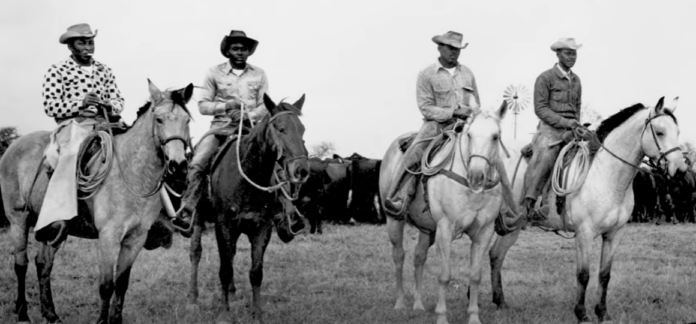
During the 1870s and 1880s, African-American cowboys made up approximately 25 percent of the 35,000 cowboys in the Western frontier.
“The Federation of Black Cowboys (FBC) was created to promote knowledge of the Black West,” said Ed Dixon, FBC president.
Headquartered at Cedar Lane Stables in Howard Beach, Queens, only a white fence separates FBC from New York City streets.
Started in 1994, the Federation of Black Cowboys honors the black cowboy legacy through youth programs, rodeos, and school visits.
“Seeking to create greater understanding of African-American heritage, we provide educational opportunities for New York’s young people,” Dixon said.
“Our primary goal is to expose youth to horses and skills required to care for a horse,” Dixon said. “We use horsemanship to teach life skills such as patience, kindness, and tolerance.”
Many of the slaves in the 17th and 18th centuries were familiar with cattle herding from their homelands of West Africa. “This brings historians the question of the name ‘cowboy,’ whether it was derived from slave cow herders,” Dixon pointed out.
“Life of the black cowboy was tougher than most,” Dixon said. “It was the black cowboy who broke the horses and herded the cattle across the rivers. They took on the toughest jobs.
“Still, it was better to be a black cowboy on the ranch than a plantation slave picking cotton,” Dixon emphasized.
For the first half of the 20th century, black cowboys were not allowed to compete against white cowboys in rodeos. Nor were they allowed to work in motion pictures
“However, since most of the cowhands were black, their skills could not help but be showcased to audiences,” Dixon said.
When a rider got hurt, black cowboys were offered the opportunity to do an exhibition ride for ten dollars.
Ben “Tex” Miller, born in 1912 in South Carolina, like most African-American cowboys, did not have that kind of cash.
“But people with financial assets sponsored black cowboys whose skills they admired by paying the competition entry fees. Needless to say, Tex Miller had lots of sponsored rides,” Dixon said.
Walls of Miller’s home in Harlem are decorated with awards recognizing his accomplishments to the heritage of the African-American cowboy. Among them are a letter from New York City Mayor Bloomberg and a citation from Gene Autry.
“With the Great Depression, many Americans could no longer afford rodeo tickets, but they did go to movies,” Dixon said.
“Little to no attention was given by Hollywood to the black cowboys who made their mark in western history,” Dixon continued. Riders like Tex Miller, Bill Pickett, Nat Love and Bass Reeves were among the most famous.
Documentary filmmakers John Ferguson and Gregg MacDonald have created “The Forgotten Cowboys.” It follows the contemporary black cowboys of today while also reflecting on the black riders in the past, Dixon noted.
Life and legacy of black cowboys is still alive through the Federation of Black Cowboys. “The organization takes inner city kids off the street and teaches them life on horseback,” Dixon said.
Opportunities young people learn through the Federation of Black Cowboys gives them hope for bright futures.
“It’s something many of them may not have had in their crime-ridden and drug-infested surroundings,” Dixon reiterated. “Each child learns responsibility before being given the privilege to ride.” They must learn to completely care for the stables.
“We join with civic and community groups, in work release programs, prison visitations, parades, lectures, and block parties,” Dixon explained. The group sponsors rodeos, horse playdays and every summer hosts a prayer breakfast.
“Long-term goal for the Federation of Black Cowboys is to purchase land to build a national headquarters,” Dixon said. “It would include a museum, an indoor riding arena, as well as a library and learning center.”

CUTLINES

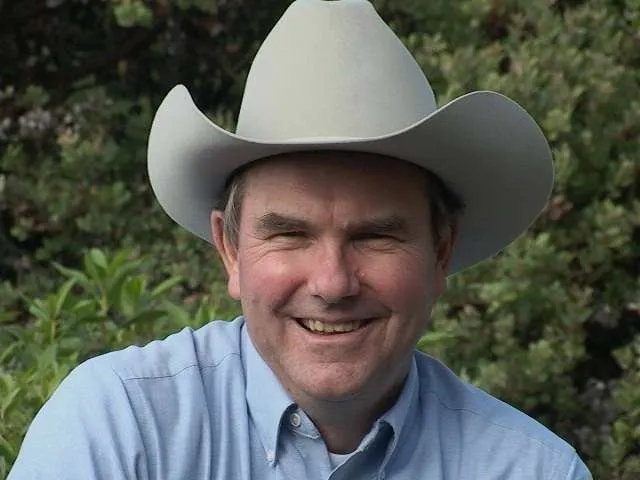
Ed Dixon serves as president of the Federation of Black Cowboys (FBC) which was created to promote knowledge of the African-American in the Western frontier. (FBC photo)

Ben “Tex” Miller, born in 1912 in South Carolina, was a rodeo champion in the 1930s. Walls of Miller’s home in Harlem are decorated with awards recognizing his accomplishments to the heritage of the African-American cowboy. (Federation of Black Cowboys photo)

Started in 1994, the Federation of Black Cowboys (FBC) honors the black cowboy legacy through youth programs, rodeos, and school visits. (FBC photo)

Primary goal of the Federation of Black Cowboys (FBC) is to expose youth to horses and skills required to care for a horse. (FBC photo)

Old Doughnuts Ration Pushes Iowa’s Big Boar To 1,300 Pounds

0

Hogs were long considered farm mortgage lifters and most farmers produced some hogs.
Corporations now dominate the business produce hogs by the multi-thousands annually, so very few farmers raise hogs.
When farmers did have sows to raise pigs to grow into market hogs there was strong demand for breeding boars. Purebred seedstock producers specialized in raising and marketing quality boars with breed preference varying from farm to farm.
Almost unheard about today, among common hog breeds were Duroc, Hampshire, Chester White, Poland China, Spots, Landrace and more. Generally, breeds were crossed with each other to increase efficiency for pounds of gain
There have been other transitions within the swine industry as well with market hog weights going up through the decades. While a 220-pound butcher hog sold for top price days gone by, now hogs weighing 300-pounds are not uncommon.
Spring pig prospect shows remain popular, but county fair hog entries are lower, and state purebred hog shows are smaller.
One hog competition never heard much about has been an annual highlight for one state.
That is the Iowa State Fair’s Big Boar Contest. While interest in it has also declined, there is still a certain enthusiasm among limited hog men.
Usually attracting a dozen boar entries, there were only two this year, according to the swine superintendent Ernie Barnes.
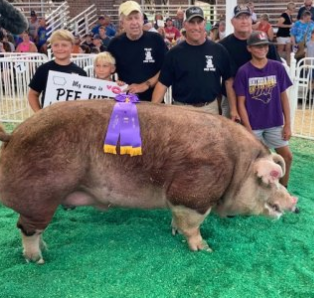
And the winner was Pee-Wee tipping the scales at 1,300 pounds, well ahead of Purdy Boy’s 1,156 pounds. Both boars are said to be six years old, according to Jared Strong of the Iowa Capital Dispatch.
The champ, looking to be of the atypical Hereford breed, was about 35 pounds short of the all-time record. Despite the lack of competition, his girth was sufficient to win most years
Marv Rietema, 73, Sioux Center, Iowa, had to change Pee-Wee’s ration to keep him eating and gaining.
Rietema picked up a load of old doughnuts that were to be tossed out at Casey’s Bakery. He had found a meal for the pickiest of pigs: cream-filled long johns.
The boar’s appetite for the sweets swelled such that Rietema had to seek an additional source of stale doughnuts. A worker at a Hy-Vee obliged and at times was fetching up to 25 pounds of them from the store.
Purdy Boy, the other contender apparently a crossbred, favored ground corn and soybeans. John Sweeney, state veterinarian in Iowa, owned the second largest boar in partnership with longtime friends.
The pig’s name recognizes Brock Purdy, quarterback for Iowa State University, where most of the partners are alums.
One of their previous boars dubbed Fred Hoiboar, referencing basketball coach Fred Hoiberg, lost to the record-setting 1,335-pound 2012 winner. However, the partners’ 1,273-pound entry called Peabody won in 2014.
Sweeney estimated it cost about $6,000 to ready their boar for the contest, nearly double that of previous years.
He said high costs and sweltering heat were likely contributors to less competition for the biggest boar title.
“There might have been other boars trying to come,” Sweeney said. “But with the heat, maybe they weren’t able to gain weight.”

CUTLINE
The six-year-old boar owned by Marv Rietema, Sioux Center, Iowa, weighed 1,300 pounds to win Iowa’s big boar contest. (Jim Obradovich Photo)