Saturday, March 28, 2026
Home Blog Page 955

Horticulture News

0
Source: Kansas Turfgrass Foundation

It’s hard to believe we are actually close to the time of year when the temperatures starts to cool down. The good thing is the cool temps are what tall fescue thrives in! So, if your tall fescue lawn has thinned out over the years fall is a great time to overseed. Use the following information if you plan to overseed this fall.

• Mow the lawn to 1 1⁄2 inch height.
• Core aerate if the soil is compacted.
• Power rake, using spring tines or thin blades.
• Remove debris with hand rake or lawnmower and catcher.
• Sow seed uniformly. Use 6 to 8 pounds per 1,000 square feet if repairing large, dead areas. Use a half-rate (3 to 5 pounds) if trying to thicken a thin lawn.
• Fertilize with 1 pound nitrogen per 1,000 square feet.
• Water in the seed and fertilizer.
• Do not use crabgrass preventers, except siduron (Tupersan) or mesotrione (Tenacity), until grass is well established.


Power Of The Past Antique Engine And Tractor Show At Ottawa

0

“Plan now to attend the 27th annual Power of the Past Antique Engine & Tractor Show, September 9-11, at Ottawa.”
That’s the welcome from Bob Eichenberger, Pomona farmer, Big Iron representative and longtime show promoter.
“Home of Warner Manufacturing and Union Foundry, Ottawa is the place to see farm implements of the past,” Eichenberger said.
At Forest Park in Ottawa, the show is cosponsored by the Franklin County Convention & Visitors Bureau and Integrity Insurance Agency.
Kansas Chapter Three IH (International Harvester) Collectors will host a display featuring IH Farmall tractors and engines. “However, all brands of tractors and engines are welcome to be displayed,” Eichenberger emphasized.
“This show is much more than a gathering of gas engine and tractor enthusiasts,” Eichenberger clarified. “Still, those are pretty amazing when all of the engines are chugging at the same time.”
With the passage of time, many of the younger generation have never seen or experienced farm life in its heyday. “This show creates a learning experience where the future meets the past,” Eichenberger said.
“We say to senior citizens, come out and see the farm equipment of your youth,” Eichenberger continued. “To the younger generation, we say observe an experience of the ‘pre-computer age.’ Everyone should see the Power of the Past.”
Breakfast kicks off each day at 7 o’clock, with the national anthem at 8 o’clock. Music will be on the grounds with homemade ice cream and a petting zoo throughout the show.
Daily features include craft show, flea market, threshing, hay baling, silage blowing, rock crushing, operating sawmill, rope making, and more.
“There will be a Parade of Power every afternoon at 2 o‘clock,” Eichenberger said. A kiddie corner is Saturday afternoon followed by the ladies’ shoe throw/skillet toss.
Church is Sunday morning at 8:30. The garden tractor pull is Sunday starting at noon.
Climax of the three-day affair following the Sunday parade will be raffle drawing for the Farmall tractor and other tools.
Complete schedule and other details can be found at www.PowerOfThe Past.net.

CUTLINE
An antique Farmall tractor will be awarded in a raffle drawing climaxing the Power of the Past, September 9-11, at Ottawa.

KU News: Kansas Law Enforcement Training Center graduates 297th Basic Training Class

0

From the Office of Public Affairs | http://www.news.ku.edu

Headlines

Kansas Law Enforcement Training Center graduates 297th Basic Training Class
HUTCHINSON — Nineteen new law enforcement officers graduated from the Kansas Law Enforcement Training Center (KLETC) on Aug. 19 at a ceremony held in the KLETC Integrity Auditorium. The officers represent law enforcement agencies in Allen, Barton, Butler, Cowley, Dickinson, Ellis, Ford, Geary, Harvey, Leavenworth, Pratt, Reno, Riley and Shawnee counties.

KU Legal Aid Clinic, Douglas County DA’s Office and Lawrence Public Library to host criminal record expungement clinic
LAWRENCE — The University of Kansas School of Law’s Legal Aid Clinic will host a Clean Slate Criminal Record Expungement Clinic, which will take place from noon to 3 p.m. Sept. 12 in the Lawrence Public Library Auditorium. An expungement seals an arrest record, diversion or conviction from public view, with certain exceptions. The Legal Aid Clinic will provide free legal representation to eligible individuals seeking to expunge records in Douglas County District Court and/or Lawrence Municipal Court.

Full stories below.

————————————————————————

Contact: Jason Levy, Kansas Law Enforcement Training Center, 620-694-1400, [email protected]
Kansas Law Enforcement Training Center graduates 297th Basic Training Class

HUTCHINSON — Nineteen new law enforcement officers graduated from the Kansas Law Enforcement Training Center (KLETC) on Aug. 19 at a ceremony held in the KLETC Integrity Auditorium.
Kalaeb Bratton, game warden with the Kansas Department of Wildlife and Parks, was the graduating class president. The speaker for the ceremony was Todd Ackerman, director of the Augusta Department of Public Safety. Michael Satterlee, KLETC senior instructor of police, was the class coordinator for the 297th Basic Training Class.
Bratton was named to the Director’s Honor Roll and given the Larry Welch Academic Award for having the highest total average on the written exams within the class. His final average was 95.7%. Officer Mitchell May of the Hutchinson Police Department was recognized during the ceremony for his firearms proficiency as the class “Top Shot.”
Graduates receive certificates of course completion from KLETC and Kansas law enforcement certification from the Kansas Commission on Peace Officers’ Standards and Training, the state’s law enforcement licensing authority. The training course fulfills the state requirement for law enforcement training. Classroom lectures and hands-on applications help train officers to solve the increasingly complex problems they face in the line of duty.
Established by the Kansas Legislature in 1968, KLETC trains the majority of municipal, county, and state law enforcement officers in Kansas and oversees the training of the remaining officers at seven authorized and certified academy programs operated by local law enforcement agencies and the Kansas Highway Patrol.
About 300 officers enroll annually in KLETC 14-week basic training programs. KLETC offers continuing education and specialized training to over 10,000 Kansas officers each year. KLETC is located one mile west and one mile south of Yoder, near Hutchinson, and is a division of the University of Kansas Lifelong & Professional Education.
The graduates, who began their training in April 2022, represented multiple municipal, county and state law enforcement agencies from across Kansas. Graduates are listed below by county and agency:
Allen
1. John Walker, Allen County Sheriff’s Office

Barton
1. Derrick Brown, Ellinwood Police Department

Butler
1. Nicklas Cline, Rose Hill Police Department
2. Samantha Cosby, Augusta Department of Public Safety
3. Blake Elsen, Andover Police Department
4. Tyler Smith, Augusta Department of Public Safety

Cowley
1. Jeni McGee, Arkansas City Police Department

Dickinson
1. Matthews Asmus, Dickinson County Sheriff’s Office

Ellis
1. Brevin LaBarge, Hays Police Department

Ford
1. Michael Imel, Dodge City Police Department

Geary
1. Jared Johnson, Junction City Police Department

Harvey
1. Charles Jefferis, Newton Police Department

Leavenworth
1. Alexis Solis, Leavenworth County Sheriff’s Office

Pratt
1. Kalaeb Bratton, Kansas Department of Wildlife and Parks

Reno
1. Mitchell May, Hutchinson Police Department
2. Pearson Schrag, Hutchinson Police Department

Riley
1. Michael Riffelmacher, Kansas State University Police Department

Shawnee
1. Cody Frost, MTAA Police & Fire Department
2. James Hubbard, MTAA Police & Fire Department.

Learn more about the Kansas Law Enforcement Training Center.

-30-
————————————————————————
The official university Twitter account has changed to @UnivOfKansas.
Refollow @KUNews for KU News Service stories, discoveries and experts.


————————————————————————

Contact: Sarah Pickel, School of Law, 785-864-5648, [email protected], @kulawschool
KU Legal Aid Clinic, Douglas County DA’s Office and Lawrence Public Library to host criminal record expungement clinic
LAWRENCE — The University of Kansas School of Law’s Legal Aid Clinic will host a Clean Slate Criminal Record Expungement Clinic in partnership with the Douglas County District Attorney’s Office and Lawrence Public Library. The clinic will take place in person from noon to 3 p.m. Sept. 12 in the Lawrence Public Library Auditorium, 707 Vermont St.
“We are so excited to partner once again with the District Attorney’s Office and, for the first time, to partner with the Lawrence Public Library to offer this streamlined expungement process to the community,” said Melanie Daily, director of the Legal Aid Clinic at KU.
An expungement seals an arrest record, diversion or conviction from public view, with certain exceptions. The Legal Aid Clinic will provide free legal representation to eligible individuals seeking to expunge records in Douglas County District Court and/or Lawrence Municipal Court.
“For those who are eligible, expungement can have life-changing consequences. Individuals who achieve expungement can apply for better jobs, volunteer their time, obtain better housing and participate in our community in so many more productive ways once their records are cleared to reflect who they are now, rather than what they did long ago. Working together with the DA’s office allows us to counsel and represent more people, more efficiently, so people can get through court and move on with their lives,” Daily said.
The clinic can accept clients with income up to 250% of the federal poverty level. Clients who qualify for Legal Aid Clinic representation but who do not qualify for a waiver of the court’s per-case filing fee will need to pay that court fee, but no attorney’s fees, as long as they are eligible for services. After the intake clinic day at the library, clients will need to attend one additional appointment and any required court hearings with their Legal Aid attorney.
“This expungement clinic is a meaningful opportunity for those with criminal records to get a true second chance,” said Suzanne Valdez, Douglas County district attorney. “We are fortunate to be able to partner with the Legal Aid Clinic to help make our communities safer and stronger by supporting those who have committed themselves to change.”
For any questions regarding the clinic and expungement eligibility, contact the Legal Aid Clinic at 785-864-5564.

-30-
————————————————————————

KU News Service
1450 Jayhawk Blvd.
Lawrence KS 66045
Phone: 785-864-3256
Fax: 785-864-3339
[email protected]
http://www.news.ku.edu

Erinn Barcomb-Peterson, director of news and media relations, [email protected]

Today’s News is a free service from the Office of Public Affairs

KU News: Measure to teach students self-determination translated to American Sign Language

0

From the Office of Public Affairs | http://www.news.ku.edu

Headlines

Measure to teach students self-determination translated to American Sign Language, shown to be effective with deaf youth
LAWRENCE — A research-based assessment of self-determination is effective with deaf youth and speakers of American Sign Language, a new study from the University of Kansas and the University of Texas at Austin has shown. Promoting self-determination is a way to give young people agency in their education and goals for their future, and the research highlights how self-determination assessment can be used to support deaf youth to communicate about their self-determination and have better educational, career, health and life outcomes, according to researchers.

KU Libraries to present new exhibition highlighting disability studies
LAWRENCE — The University of Kansas Libraries’ newest exhibition, “Expanding the Canvas of Disability,” will open Sept. 22 in Watson Library’s Haricombe Gallery. The exhibition highlights the research and creative work of disability scholars across disciplines at KU, and it ties in with the 2022-23 KU Common Book. The opening reception will take place at 5:30 p.m. in Watson Library 3 West.

Creativity, scholarship will be on display for Paper Plains Zine Fest
LAWRENCE – The Emily Taylor Center for Women & Gender Equity at the University of Kansas is partnering with multiple local organizations to host an event that allows attendees to explore written works meant to inform, inspire and instruct. The Paper Plains Zine Fest will take place from 11 a.m. to 5 p.m. Sept. 3 at Van Go.

Ancient aqueducts offer lessons for future
LAWRENCE – Since her days as an architecture student when she first encountered them, Nilou Vakil has been fascinated by the ancient underground aqueducts that make the harsh Iranian desert bloom. The Persian qanat system is the subject of a chapter by the University of Kansas associate professor of architecture in a new book, “The Routledge Handbook of Cultural Landscape Heritage in The Asia-Pacific.”

Full stories below.

————————————————————————

Contact: Mike Krings, KU News Service, 785-864-8860, [email protected], @MikeKrings
Measure to teach students self-determination translated to American Sign Language, shown to be effective with deaf youth
LAWRENCE — A research-based assessment of self-determination is effective with deaf youth and speakers of American Sign Language, a new study from the University of Kansas and the University of Texas at Austin has shown. Promoting self-determination is a way to give young people agency in their education and goals for their future, and the research highlights how self-determination assessment can be used to support deaf youth to communicate about their self-determination and have better educational, career, health and life outcomes, according to researchers.
The Self-Determination Inventory: Student Report, known as the SDI:SR, developed at KU, is an assessment to help young people identify their self-determination skills and abilities, informing their ongoing learning. While the SDI:SR has been used by students with disabilities in numerous studies, the current study is among the first to look at the SDI:SR ASL version with deaf youth who use American Sign Language. KU researchers partnered with colleagues at the National Deaf Center on Postsecondary Outcomes at the University of Texas at Austin to translate the Self-Determination Inventory into ASL, then to test its use with that population. Results showed the SDI:SR ASL is as valid and effective as the original SDI:SR in American English.
Researchers gave the Self Determination Inventory: Student Report to a sample of 3,309 young people, including 392 deaf youths who used the ASL version.
“We found the Self Determination Inventory is a valid, useful assessment for those who use ASL and can be another tool for educators, schools and others who work with deaf youth to support them to gain ownership of their education, careers and lives,” said study co-author Karrie Shogren, director of the KU Center on Developmental Disabilities and professor of special education. “This translation provides access to the SDI for ASL users.”
The study, published in the Journal of Deaf Studies and Deaf Education, was written by Shogren, Daria Gerasimova, Jesse Pace, Tyler Hicks and Kaitlyn Millen of KU; and Carrie Lou Garberoglio, Jeffrey Levi Palmer, Paige Johnson, Claire Ryan, Jennifer Higgins and Stephanie Cawthon of the University of Texas at Austin.
The Self-Determination Inventory has several forms, including the Student Report, which was used in the current study, as well as a Parent-Teacher Report and Adult Version. It has also been translated into Spanish as well as ASL, and all versions are available for students, educators, family members and others at selfdetermination.ku.edu.
The study compared outcomes of the deaf youths who took the SDI:SR ASL with those of youths with and without disabilities who took the SDI:SR. Results showed the deaf youths scored more similarly to those without disabilities than those with disabilities. That may be because deaf youth have to overcome challenges throughout life resulting from an inaccessible society and inherently practice self-determination, researcher said. The authors noted that “deaf gain,” or benefits that emerge among deaf people and deaf communities that are related to the experience of being deaf, could help explain the finding.
“This is very telling. Deaf youth have self-determination skills and abilities that they use in their day-to-day lives. And when they are able to use their language and have access to the supports they need to express their self-determination, they show they are making things happen in their lives,” Shogren said.
“At the National Deaf Center, we talk with teachers, families and school administrators across the United States who have told us about the importance of self-determination for deaf youth. They’ve seen it – deaf young people who are prepared to advocate for themselves when facing challenges are better prepared for life after high school, where the barriers for deaf people are deeply embedded in the systems which they navigate,” said Garberoglio, co-director of the National Deaf Center on Postsecondary Outcomes, assistant professor of practice at the University of Texas at Austin and lead author.
The results show that not only can the SDI:SR ASL version be an effective way for deaf students to communicate about their self-determination, it can also support teachers, families and others to understand how to support deaf youth to take leadership in their own education and life, which has been shown to result in higher academic achievement, better health outcomes, higher-paying careers and higher life satisfaction. Shogren noted the importance of culturally relevant translation and the partnership between the National Deaf Center and KU. ASL, like any other language, has its own syntax, grammar and nuances that are vital to any translation.
Researchers will continue gathering data on the experiences of ASL speakers and deaf youths who use the SDI:SR to make sure it is as effective as possible. In the future, they hope to translate SDI to additional languages, beyond the English, Spanish and ASL versions available now, to support students and others who could benefit from understanding more about their self-determination abilities.
“We’re hopeful to eventually have as many languages available as we can so that all people can access the SDI,” Shogren said. “We think self-determination has universal relevance and can make a difference across the world.”
-30-
————————————————————————
The official university Twitter account has changed to @UnivOfKansas.
Refollow @KUNews for KU News Service stories, discoveries and experts.


————————————————————————

Contact: Alicia Marksberry, KU Libraries, [email protected], @kulibraries
KU Libraries to present new exhibition highlighting disability studies

LAWRENCE — The University of Kansas Libraries’ newest exhibition, “Expanding the Canvas of Disability,” will open Sept. 22 in Watson Library’s Haricombe Gallery. The exhibition highlights the research and creative work of disability scholars across disciplines at KU.

“Expanding the Canvas of Disability” was created in conjunction with the 2022-23 KU Common Book, “Disability Visibility: First-Person Stories from the Twenty-First Century,” edited by disability activist Alice Wong. Reyma McCoy Hyten, disability activist and contributor to “Disability Visibility,” will present “Out of the Margins: Storytelling as a Pathway to Disability Visibility” at the opening reception. An online livestreaming of the event will be available for those who wish to attend virtually.
“We want to be a part of the scholarly conversations currently underway across campus concerning disability,” said Sarah Goodwin Thiel, faculty & community engagement librarian and coordinator of the Haricombe Gallery. “We feel ‘Expanding the Canvas of Disability’ will be a rich addition to the multiple Common Book activities and events being planned for the coming year.”
The exhibition, on display in the recently updated Haricombe Gallery, will include a virtual exhibition story map, learning module and project display, all of which will be made available Sept. 22 on the Haricombe Gallery website.
Haricombe Gallery exhibitions serve to highlight the broad range of creative work and research generated by KU and community scholars. “Expanding the Canvas of Disability” will showcase projects and scholarly work from some of the many schools and departments engaging in this work, including from KU Medical Center, the School of Education & Human Sciences and the Department of Theatre & Dance.
“We are very excited to showcase the many scholars on campus and in our community who are centering disability in their research,” Goodwin Thiel said. “I hope this exhibition and related events will resonate with viewers both on and off campus.”
The opening reception will take place at 5:30 p.m. Sept. 22 in Watson Library 3 West. McCoy Hyten will begin her presentation at 6:15 p.m., followed by a Q&A session. Register for the event online. For more information about the exhibition, please email Sarah Goodwin Thiel.

-30-
————————————————————————
Subscribe to KU Today, the campus newsletter,
for additional news about the University of Kansas.

http://www.news.ku.edu
————————————————————————

Contact: Megan Williams, Emily Taylor Center for Women & Gender Equity, [email protected], @KUETCWGE
Creativity, scholarship will be on display for Paper Plains Zine Fest
LAWRENCE – The Emily Taylor Center for Women & Gender Equity at the University of Kansas is partnering with multiple local organizations to host an event that allows attendees to explore written works meant to inform, inspire and instruct.
The Paper Plains Zine Fest will take place from 11 a.m. to 5 p.m. Sept. 3 at Van Go, 715 New Jersey St.
A zine is a short, self-published booklet. As described on the Paper Plains Zine Fest website, zines have long been a favored medium of creative expression as well as a means of accessing power and agency for artists working outside mainstream culture, either due to systemic oppression or by choice. Zines inform, inspire and instruct, exploring a diversity of topics and genres, including art, design, illustration, poetry, personal narratives, politics and subcultures.
At the Paper Plains Zine Fest, participants will exhibit, sell and trade their independently published zines, pamphlets, comics, books and other works. According to organizers, the zine fest will host over 80 local and regional artists, including those who are Black, Indigenous or people of color, woman/femme and LGBTQIA+ as well as zinesters with disabilities.
The free public event will feature programs such as a mini zine-making workshop for children hosted by the Lawrence Public Library, a panel on self-publishing and a roundtable discussion with KU instructors who use zines in their classrooms. The Emily Taylor Center will release “Queer Futures,” a zine collaboration with KU’s Center for Sexuality & Gender Diversity, and host a discussion with its contributors. The day will also feature a keynote from Imani Wadud, KU doctoral student in American studies.
Programming will take place indoors, where masks will be required.
Planning committee member Megan Williams, assistant director of the Emily Taylor Center, said making zines is a way of practicing feminism and creating community.
“I am thrilled to partner with Wonder Fair and Van Go to feature the work of local zinesters and KU scholars while building a diverse zine community in Lawrence,” Williams said.
Paper Plains Zine Fest, originally planned for April 2020 in conjunction with Lawrence’s Paper Plains Literary Festival, is sponsored by Wonder Fair, the KU Emily Taylor Center and Van Go.

-30-
————————————————————————
Don’t miss new episodes of “When Experts Attack!,”
a KU News Service podcast hosted by Kansas Public Radio.

https://kansaspublicradio.org/when-experts-attack
————————————————————————

Contact: Rick Hellman, KU News Service, 785-864-8852, [email protected], @RickHellman
Ancient aqueducts offer lessons for future
LAWRENCE – Since her days as an architecture student when she first encountered them, Nilou Vakil has been fascinated by the ancient underground aqueducts that make the harsh Iranian desert bloom.
The Persian qanat system is the subject of a chapter by the University of Kansas associate professor of architecture in a new book, “The Routledge Handbook of Cultural Landscape Heritage in The Asia-Pacific.”

The book was co-edited and co-written by Vakil’s colleague Kapila Silva, professor of architecture.
Vakil said qanats are an archetypal example of a cultural landscape, as defined by United Nations Educational, Scientific and Cultural Organization since the 1990s – significant, deeply rooted built environments that may not rise high above the ground but which are uniquely worthy of preservation. UNESCO listed the Persian Qanat as a World Heritage Site in 2016.
Vakil said this type of canal system “spans a lot further than the ancient Persian region. It started from that region, but it goes from Spain all the way to parts of China.”
It is well-known in Middle Eastern desert environments, Vakil said, but not so much outside there.
Vakil said she wanted to bring knowledge of the qanat’s exquisite engineering, communal achievements and traditional methods of construction to a wider audience with her contribution to the new book. Essentially, qanats are networks of underground tubes that use gravity to convey groundwater far from their subterranean hillside sources. The ones in Iran date back as many as 3,000 years.
“I think the future challenge of our world is water,” Vakil said.
The qanat system, she said, offers a model of a complex cooperative, in which differing tribes work together for mutual benefit. Qanats could even provide the basis for future ecologically motivated tourism, Vakil wrote in the chapter’s conclusion.
“I was very interested in how communities come together — which is really the basis of my research, whether it’s in education or elsewhere — to do something that is bigger than them,” Vakil said. “Historically, you have several tribes of people coming together to create this huge infrastructure that their livelihood depends upon. So they were protected.”
The oases and irrigated fields at the outlets of gently sloping qanat tubes serve as sustenance and communal gathering places, according to Vakil. She said she believed the specialized tools and knowledge that generations of tunnel builders known as muqannis have used to create qanats deserve preservation.
Vakil cited several sources written in Farsi in her footnotes.
“I ended up buying a lot of books, and people have gifted me a lot of books on the subject,” Vakil said. “I was lucky enough to have a good collection published in my own language, so it was interesting to be able to read and translate them.”
Hundreds, perhaps thousands, of qanat systems were built across the ancient Persian region, Vakil said, but only a few remain intact and operating. But even qanats that have dried up due to modern drilling and pumping of their source groundwater can have value, Vakil wrote.
“The ones that are not functioning can create educational sites, in addition to just tourism,” Vakil said. “It’s not recommended for groups of people to go into a functioning water-distribution system because they can pollute the water. But if there are empty qanats, there is a way to preserve them for exploration. That’s also one of the pieces of the puzzle. What do you do with these sites next? Do you have a strategy to make them part of the historic preservation … the heritage of the country?”
Much like the monumental Iranian UNESCO World Heritage site Persepolis draws tourists from around the world, Vakil said, “There’s a beauty in the desert that could also be explored.”

-30-

————————————————————————

KU News Service
1450 Jayhawk Blvd.
Lawrence KS 66045
Phone: 785-864-3256
Fax: 785-864-3339
[email protected]
http://www.news.ku.edu

Erinn Barcomb-Peterson, director of news and media relations, [email protected]

Today’s News is a free service from the Office of Public Affairs
Horticulture 2022 Newsletter No. 34

0

https://hnr.k-state.edu/extension/info-center/newsletters/index.html

Blog Post: http://www.ksuhortnewsletter.org

Video of the Week: Fertilize for a Healthy Lawn
https://kansashealthyyards.org/all-videos/video/fertilize-for-a-healthy-lawn

REMINDERS
• Light pruning of shrubs and trees where 10% or less of the plant is removed can be done any time of year. Heavier pruning should be done in the spring if possible.
• Fertilize strawberry bed for added flower bud development and larger crop next year.
• Too late to spray for bagworms but can pull them off and dispose of them if practical.

TURFGRASS
Fall Lawn Seeding Tips
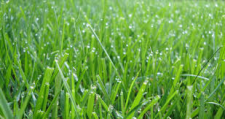
The keys to successful lawn seeding are proper rates, even dispersal, good seed to soil contact, and proper watering. Evenness is best achieved by carefully calibrating the seeder or by adjusting the seeder to a low setting and making several passes to ensure even distribution. Seeding a little on the heavy side with close overlapping is better than missing areas altogether, especially for the bunch-type tall fescue, which does not spread. Multiple seeder passes in opposite directions should help avoid this problem.

A more serious error in seeding is using the improper rate. For tall fescue, aim for 6 to 8 pounds of seed per 1,000 square feet for new areas and about half as much for overseeding or seeding areas in the shade.

Kentucky bluegrass has a much smaller seed so less is needed for establishment. Use 2 to 3 pounds of seed per 1,000 square feet for a new lawn and half that for overseeding or shady areas.

Using too much seed results in a lawn more prone to disease and damage from stress. The best way to avoid such a mistake is to determine the square footage of the yard first, and then calculate the amount of seed. Using too little seed can also be detrimental and result in clumpy turf that is not as visually pleasing.

Establishing good seed to soil contact is essential for good germination rates. Slit seeders achieve good contact at the time of seeding by dropping seed directly behind the blade that slices a furrow into the soil. Packing wheels then follow to close the furrow. The same result can be accomplished by using a verticut before broadcasting the seed, and then verticutting in a different direction a second time.

Core aerators can also be used to seed grass. Go over an area at least three times in different directions, and then broadcast the seed. Germination will occur in the aeration holes. Because those holes stay moister than a traditional seedbed, this method requires less watering.

If the soil that has been worked by a rototiller, firm the soil with a roller or lawn tractor and use light hand raking to mix the seed into the soil. A leaf rake often works better than a garden rake because it mixes seed more shallowly.

Water newly planted areas lightly, but often. Keep soil constantly moist but not waterlogged. During hot days, a new lawn may need to be watered three times a day. If watered less, germination will be slowed. Cool, calm days may require watering only every couple of days. As the grass plants come up, gradually decrease watering to once a week if there is no rain. Let the plants tell you when to water. If you can push the blades down and they don’t spring back up quickly, the lawn needs water. Once seed sprouts, try to minimize traffic (foot, mower, dog, etc.) seeded areas receive until the seedlings are a little more robust and ready to be mowed. Begin mowing once seedlings reach 3 to 4 inches tall. (Ward Upham)

Overseeding a Lawn
Tall fescue lawns that have become thin over the summer can be thickened up by overseeding during September. Start by mowing the grass short (1 to 1.5 inches) and removing the clippings. This will make it easier to achieve good seed-soil contact and increase the amount of light that will reach the young seedlings.

Good seed-soil contact is vital if the overseeding is to be successful. Excess thatch can prevent seed from reaching the soil and germinating. Normally we want 1/4 inch of thatch or less when overseeding. If the thatch layer is 3/4 inch or more, it is usually easiest to use a sod cutter to remove it and start over with a new lawn. A power rake can be used to reduce a thatch layer that is less than 3/4 inch but more than a quarter inch.
Once thatch is under control, the soil should be prepared for the seed. This can be done in various ways. For small spots, a hand rake can be used to roughen up the soil before the seed is applied.

A verticut machine has solid vertical blades that can be set to cut furrows in the soil. It is best to go two different directions with the machine. A slit seeder is a verticut machine with a seed hopper added so the soil prep and seeding operation are combined. Another option is to use a core aerator.

The core aerator will punch holes in the soil and deposit the soil cores on the surface of the ground. Each hole produces an excellent environment for seed germination and growth. Make three to four passes with the core aerator to ensure enough holes for the seed. Using a core aerator has the additional benefit of reducing the amount of watering needed to get the seed germinated and growing. Aeration also increases the water infiltration rate, decreases compaction, and increases the amount of oxygen in the soil.
Of the three methods, I prefer the slit seeder for obtaining good seed/soil contact. However, if watering is difficult, core aeration may be a better option. Regardless of method used, fertilizer should be applied at the rate suggested by a soil test, or a starter fertilizer should be used at the rate suggested on the bag. (Ward Upham)

Give Cool-Season Grasses a Boost
September is almost here and that means it is prime time to fertilize your tall fescue or Kentucky bluegrass lawns. If you could only fertilize your cool-season grasses once per year, this would be the best time to do it.
These grasses are entering their fall growth cycle as days shorten and temperatures moderate (especially at night). Cool-season grasses naturally thicken up in the fall by tillering (forming new shoots at the base of existing plants) and, for bluegrass, spreading by underground stems called rhizomes. Consequently, September is the most important time to fertilize these grasses.

Apply 1 to 1.5 pounds of actual nitrogen per 1,000 square feet. The settings recommended on lawn fertilizer bags usually result in about 1 pound of nitrogen per 1,000 square feet. We recommend a quick-release source of nitrogen at this time. Most fertilizers sold in garden centers and department stores contain either quick-release nitrogen or a mixture of quick- and slow-release. Usually only lawn fertilizers recommended for summer use contain slow-release nitrogen. Any of the others should be quick-release.
The second most important fertilization of cool-season grasses also occurs during the fall. A November fertilizer application will help the grass green up earlier next spring and provide the nutrients needed until summer. It also should be quick-release applied at the rate of 1-pound actual nitrogen per 1,000 square feet. (Ward Upham)

Power Raking and Core-Aeration
September is the optimum time to power rake or core-aerate tall fescue and Kentucky bluegrass lawns. These grasses should be coming out of their summer doldrums and beginning to grow more vigorously. This is a good time to consider what we are trying to accomplish with these practices.
Power raking is primarily a thatch control operation. It can be excessively damaging to the turf if not done carefully. For lawns with one-half inch of thatch or less, I don’t recommend power raking but rather core aeration. For those who are unsure what thatch is, it is a springy layer of light-brown organic matter that resembles peat moss and is located above the soil but below the grass foliage. Power raking pulls up an incredible amount of material that then must be dealt with by composting or discarding.
Core-aeration is a much better practice for most lawns. By removing cores of soil, core-aeration relieves compaction, hastens thatch decomposition, and improves water, nutrient, and oxygen movement into the soil profile. This operation should be performed when the soil is just moist enough so that it crumbles easily when worked between the fingers. Enough passes should be made so that the holes are spaced about 2 to 3 inches apart. Ideally, the holes should penetrate 2.5 to 3 inches deep. The cores can be left on the lawn to fall apart naturally (a process that usually takes two or three weeks, depending on soil-type), or they can be broken up with a power rake set just low enough to nick the cores, and then dragged with a section of chain-link fence or a steel doormat. The intermingling of soil and thatch is beneficial to the lawn. (Ward Upham)

ORNAMENTALS
Dividing Peonies
Peonies are a favorite perennial of gardeners because of their beauty and low maintenance. In Kansas, peonies provide a beautiful display of flowers each spring before Memorial Day. Though peonies can be left in place indefinitely, many gardeners wish to increase their plantings and use a process known as division to accomplish this. Keep in mind, however, that peonies often take about three years to return to full bloom and size after division.
Fall is the traditional time to divide these plants. Peonies are essentially dormant by mid-August even though the foliage is still green. The first step in division is to remove the foliage. Then dig out the entire plant. Shake and wash off as much soil as possible so that the pink buds or “eyes” are visible. Peony roots are tough, and a sharp knife is needed to cut the roots into separate pieces. Make sure each division has three to four buds. Make sure the location chosen for planting receives at least a half-day of full sun. However, the more sun, the better. Space the plants so that there is at least 2 feet between dwarf types and 4 feet between the standard types.
Follow the same rules for planting these divisions as you do for new plants. Make sure the pink buds are about 1 inch below the soil surface. If they are set more than 2 inches deep, flowering may be delayed or completely prevented. As you set the plants, firm soil often as it is added around the plant. If the soil is not firmed, it can settle and pull the plant down with it. Water in well after planting and water as necessary through the fall and winter to keep the soil moist.
It is often a good idea to add mulch to the new planting to protect it from heaving. The alternate freezing and thawing that commonly occurs during Kansas winters can “heave” weakly rooted plants out of the ground. Add a mulch of straw, leaves, compost or other material after the soil freezes. Remember, it is not the cold that harms these plants but the alternate freezing and thawing of the soil. (Ward Upham)

VEGETABLES
Preparing the Vegetable Garden for Next Year
If there are areas of the garden that are done producing, chop and shred residue in preparation for tilling. If soils are wet, wait a few days so the soil is no longer muddy. Tilling in residue allows plant material to decompose and helps reduce insect and disease problems for the next year.
Also consider using a cover crop to hold the soil and increase the organic matter content of the soil. Small gains such as wheat should be seeded at 3/4 to 1 pound of seed per 1,000 square feet from mid-September to late October. Spring oats can also be seeded until mid-September but the rate should be 2 to 4 pounds per 1,000 square feet. Spring oats will winter kill and can be tilled under in the spring.
Tillage radishes can also be a good choice. These are daikon radishes and have a very large taproot that can penetrate a hardpan. They are not winter hardy and die over winter leaving a large channel that loosens soil, retains moisture and can reduce erosion. However, they can give off a strong odor as they decompose.
Legume cover crops such as hairy vetch, alfalfa and sweetclover provide an additional benefit by ‘fixing’ nitrogen, thereby increasing fertility of the soil. Each of these should be seeded at about 1/4 to ½ pound of seed per 1,000 square feet of garden. Sweetclover should be seeded from August to early September and hairy vetch and alfalfa from mid-August to late September. (Ward Upham)

MISCELLANEOUS
Composting Tips
Following are some tips for having a successful composting experience.
• The compost pile will heat up and then cool. Turn the pile by moving material from the outside of the pile to the inside. The pile will again heat and then cool. The compost is ready once the pile has cooled a second time.
• The top of the compost pile should be dish-shaped so that water soaks in.
• Try to place the compost pile near a water source so water can be easily added.
• Shredding materials before adding them to the pile will speed up the composting process.
• Do not add fats or meat as this will attract wildlife.
• Do not add grass clippings that have been treated with crabgrass killers. If treated with crabgrass preventers or dandelion killers, the clipping can be added to compost after three mowings. (Ward Upham)

Contributors: Ward Upham, Extension Associate

Division of Horticulture
1712 Claflin, 2021 Throckmorton
Manhattan, KS 66506
(785) 532-6173

For questions or further information, contact: [email protected] OR [email protected]
This newsletter is also available on the World Wide Web at:
http://hnr.k-state.edu/extension/info-center/newsletters/index.html
The web version includes color images that illustrate subjects discussed. To subscribe to this newsletter electronically, send an e-mail message to [email protected] or [email protected] listing your e-mail address in the message.

Brand names appearing in this newsletter are for product identification purposes only. No endorsement is intended, nor is criticism implied of similar products not mentioned.

K-State Research and Extension is committed to making its services, activities and programs accessible to all participants. If you have special requirements due to a physical, vision or hearing disability, or a dietary restriction please contact Extension Horticulture at (785) 532-6173.

Kansas State University Agricultural Experiment Station and Cooperative Extension Service K-State Research and Extension is an equal opportunity employer. Issued in furtherance of Cooperative Extension Work, Acts of May 8 and June 30, 1914, as amended. Kansas State University, County Extension Councils, and United States Department of Agriculture Cooperating, Ernie Minton, Dean.