
“Be ready to go at 4:45 in the morning.”
That was the call from the pasture manager about gathering short-season yearlings for shipment to a feedlot.
Sure enough a half-dozen pickups and trailers were waiting at the pasture gate right on time. It was still pitch dark as two handfuls of cowboys and cowgirls unloaded horses and mounted up.
Across the highway dayworkers rode through three gates to another pasture with a catch pen.
Barely light enough to identify fellow riders, brief orders were given about the roundup. “Now spread out and go to the north, south and west. I’ll be in the timber to keep any strays out of there. We don’t want any trainwrecks.”
Sun peaking above the east horizon cowboys and cowgirls single and in pairs searched for cattle. Small groups of predominately black heifers could be seen from every direction in the still-lush-green Flint Hills.
Unlike television roundups, riders moved quietly at a slow pace as cattle were gathered into a substantial herd. When all were accounted for, the calm heifers which were used to horses moved toward the corral.
Occasionally, one heifer would put her head down to graze as easy-cowboy prodding moved her forward with mates. Always a couple troublemakers, one took off from the herd at a trot only to be guided back by three cowboys. Another such attempt was halted in even shorter order.
Along the south and up the east fences the herd walked with riders behind on into the catch pen. Cattle owners were waiting as call was made for the first of six double-decker semi-tractor trailers to load out.
Three dozen or so lighter heifers including a couple short-ears, another foot-rot, two watery-eyes were sorted from the herd. They were likely going to the sale barn.
Truck drivers ordered certain numbers for each trailer compartment as dayworkers efficiently sorted out the correct amount.
Cow horse and rider abilities at work were an amazing sight-to-see as not a heifer got back from where she was directed. Cutting horse contests are exciting fun but doing the true work when the need arises is really what it’s all about.
Wasn’t even mid-morning, still cool when the last loaded semi-tractor pulled onto Highway 4, headed to Nebraska.
Reminded of Isaiah 60:6: “Yes, a great roundup of the herd.”
+++ALLELUIA+++
XVI–31–7-31-2022
Flint Hills Summer Roundup
Busy St. George Family Life Centers Around Horses
“Horses are who we are and what we do. We’ve always had horses and our family and lives center around horses, the horse industry and horse people.”
That’s how Tara Mowry proudly described the Vince Mowry family of St. George including sons Cooper, Jacob, and Rylan.
Perhaps first and best recognized today as a farrier is Vince Mowry, serving horse owners throughout northeast Kansas.
Yet every member of the family is closely tied to working with horses and livestock at their Pottawatomie County farmstead.
“All I’ve known is horses,” Vince insisted. “I grew up horseback near Hoxie in Sheridan County helping Dad look after yearlings on wheat pasture and stalks.”
Competing in rodeos from Little Britches through high school, college, amateur and ranch competitions, Vince collected titles on all levels.
Still one of the accomplishments fond to Vince’s memory is the first horse he trained. “I started that mare as a two-year-old from scratch and really had her going great,” Vince said. “I had an offer to sell her as a four-year-old and finally gave in. Dad encouraged me to take the money and go on even though I didn’t want to.”
Confident in his heart of the young horse’s ability, Vince was pleased when two years later he saw her in professional rodeo competition. “I talked to the cowboy riding the mare, and he said she was the best he’d ever ridden. ‘Whoever started this mare did an excellent job.’ That really made me proud,” Vince remembered.
Looking to a future working with horses, Vince wanted to be a farrier.
“I was intrigued by Elden Boyington who did our shoeing when I was growing up,” Vince said. “I was always asking him questions and then attended a shoeing school. I started my own business to help pay my way through college.”
Vince had the desire to be a veterinarian specializing in equine health care.
“I took pre-vet courses at junior colleges in Colby and Dodge City before enrolling at Kansas State University,” Vince said. “My K-State animal science degree readied me for a livestock profession, even though vet school didn’t work out.”
With similar livestock interests, Tara (Poppe) grew up near Montezuma in Gray County.
“My family always had horses and I did ride horses but also showed cattle,” Tara said. “I was active in 4-H and was always interested in taking care of all the livestock alongside my Dad.”
Working at a local veterinary clinic during high school, Tara also envisioned her life’s profession as a veterinarian. “After graduation, I enrolled in pre-vet courses at K-State,” she said. “I then became burned out on school and decided to lay out a semester.”
Following relief from studies, Tara enrolled at Colby Community College before returning to KSU to complete an animal science degree in production management.
“Vince and I dated during college and were married in August 2004,” Tara said.
The couple had several job offers after college. But they decided that the Flint Hills was where they wanted to stay and raise a family.
“Vince already had a significant clientele built with his shoeing business,” Tara said. “I got promoted to office manager at the vet clinic, so we bought a place and stayed close.”
The operation is recognized for the Flying M brand on their horses’ hips. “We registered that brand after we were married. We wanted our own unique brand rather than our families’ brands,” Tara said.
“I put my farrier’s card in a dozen rural Manhattan mailboxes and got two responses,” Vince said. “It was a boost for the horseshoeing business that fortunately continued to grow.”
Working at the Lyons Angus Ranch for a time, Vince then became a welder for Travalong Trailers in Manhattan. “It worked well with my farrier trade sometimes helping increase my contacts with horse people,” he said.
“When our first son Cooper was born, I became a stay-at-home mom,” Tara said. “I was fortunate enough to be home for about 10 years while our other sons, Jacob and Rylan, came along.”
Farrier business and additional diverse professional abilities expanded such that Vince became fully self-employed supporting the growing family. Although Vince is first a professional farrier, his skills that all directly and indirectly relate to horses are most diverse.
“I ride some customer horses and train a few colts,” he said. “I also do cowboy daywork whenever there’s a call, especially when somebody needs a stray caught and with roundups.”
From experience gained working at Travalong Trailers, Vince is called upon regularly from a wide area to do trailer repairs. “I also custom-build fence and really can help ranchers with lots of repair work if they need assistance,” he said.
Similarly, Tara again went to work after the boys were all in school becoming general manager of Taussig Landscape.
“With my bookkeeping experience in veterinary clinics and appreciation for landscaping, it’s a perfect job,” she said. “Looking back to college days, now I think I should have majored in horticulture or accounting.”
Although not competing in rodeo much nowadays, Vince is called on to judge such events highlighted by officiating ranch rodeos.
“I’m Vince’s wife, but it’s true, there’s not much related to horses and ranches that Vince can’t do,” Tara credited.
Farrier work is sought from Vince by nearly 400 clients. “I work on more than 3,000 horses a year in at least 22 counties,” he said. “I put about 35,000 miles on the pickup annually.”
To be more efficient, the farrier sets his schedule to work in certain areas each day, “I was in the Eskridge community today and will be north of Wamego tomorrow,” Vince said. “I can usually work a couple dozen horses in a day; that’s trims and shoe sets.”
His daily record for trimming is 28 horses. The farrier has nailed on a dozen sets of shoes, that’s 48 new shoes, on horses in a day.
Of course, experience is the best training in any profession and perhaps even more important as a farrier.
“I have a forge and can make horseshoes to fit, but it’s more efficient to use keg shoes,” Vince said. “I’ve dealt with a wide range of feet issues and been able to make horses more sound with improved performance.
“I do recommend working with veterinarians when clients have horses with foot problems or lameness,” Vince continued. “However, I’ve found it interesting that sometimes veterinarians come to me for advice about horse feet and lameness issues.”
Being a farrier is much more than shaping a horseshoe and nailing it on. “Knowing how to handle the horses sometimes requires more ability than the farrier skills,” Tara inserted. “Vince’s background working with horses is an asset to handling the many different horses he’s called to trim and shoe.”
Vince quickly commented, “I really think the farriers’ schools should put more emphasis on horsemanship. They teach horse shoeing but usually don’t even talk about how to handle the horse being shod.”
All three of the Mowry boys are included in the family livestock work. “They have had cattle projects and have their own sets of chores to do,” Tara credited. “They all three ride horses, with Rylan and Cooper riding in local horse shows and doing quite well. Jacob doesn’t care for competition, but he’s a great supporter and eager to help the others.”
Keeping track of her four cowboys keeps Tara busy along with her fulltime profession.
“I do go trail riding with the family sometimes, but I really don’t ride that much,” she admitted. “I prefer to help where I’m needed and teach the boys more about horsemanship and showmanship.”
Loyal workers in their community and school district, Vince and Tara are also leaders in the BlackJack Saddle Club. “We want to do all we can to keep the family involved. The saddle club is a great learning experience for the boys,” Vince said.
Tara is also a leader for the Pottawatomie County 4-H Horse Project.
Their farmstead fits the horse-oriented family quite well. “We like having a little acreage to raise our family,” Tara said. “It gives the boys experiences some of their classmates don’t have.”
The Mowry family’s land operations in Sheridan County are now managed by Vince. “Since my parents have passed away, we rent the farm out, but still go there several times a year,” he said.
Days and years down the trail? “We may decide to expand our operations here in the Flint Hills, maybe develop a cowherd,” Tara said.
“With the toll on my body now, I don’t expect to be a farrier when I’m 70-years-old,” Vince said. “Whatever the future holds, horses will always be a part of our family. I expect it to continue into the next several generations like it has from Tara’s and my backgrounds.”
CUTLINES
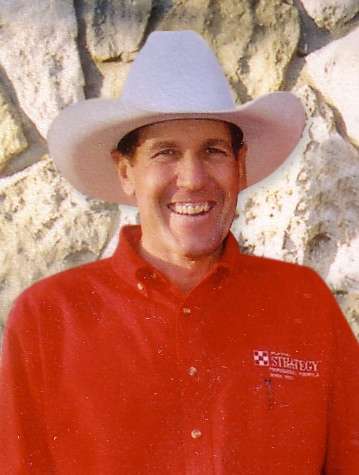
“Horses are who we are and what we do. We’ve always had horses and our family and lives center around horses.” Vince and Tara Mowry and sons Cooper, Rylan, and Jacob. (Photo from Mowry family.)
The Mowry boys; Jacob on Sis, Rylan on Lakota, and Cooper on Tuffy. (Photo from Mowry family.)
Rylan Mowry rode Sis to collect awards at the Pottawatomie County 4-H Horse Show last year. They were the junior performance champion, junior speed champion and received the overall junior champion buckle. (Photo from Mowry family.)
Vince Mowry, St. George, is demanded as a farrier and for horse foot care throughout northeast Kansas. (Photo from Mowry family.)
An all-around horseman best describes Vince Mowry, St. George, a farrier, trainer, and ranch day worker who also builds pasture fence, does trailer repair work, and assists ranchers with about whatever needs done in the Flint Hills. (Photo from Mowry family.)
YEARNING TO FLY
“YEARNING FOR THE SEEMING IMPOSSIBLE IS
THE PATH TO HUMAN PROGRESS.”
Bryant H. McGill
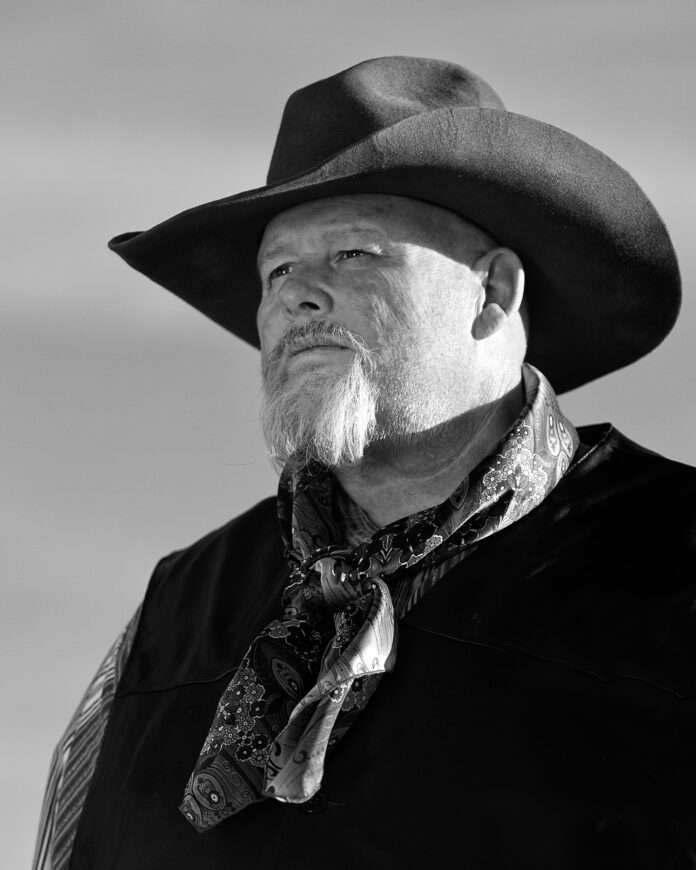
In my writing about Kansas and Kansans, I discover many stories of flying. One of my personal sayings is, “that those farm boys spending hours doing hard work said there is a better way to do this, and did it, and looked to the clouds, and went there. This ‘yearning’ that seems to drive the American spirit has been the seed that took us to be the Bread Basket of the World and the Air Capital of the World.
Since I was thirteen years old and wanted to join the Civil Air Patrol I have been looking to the clouds. I had a secret desire to do what many have done before me and wanted to design and build my own airplane. I fell in love with helicopters and remember the fenced in area beside the railroad tracks in Wichita downtown where the bodies of the recalled Cessna Helicopters sat derelict for years. How I wanted to haul one out of there to just save it. As it is Cessna only allowed one to remain and it is in the Air and Space Museum back east. Like didn’t they think that one should be in a museum locally?
The history of aircraft in Kansas is fascinating. In the 1920’s and early 30’s there were seventy two aircraft or aircraft component companies in Wichita alone. But I never wanted to work in the factories. The short time I spent in a factory was miserable. And besides, I have too many interests.
I have been waiting for a couple of envelopes to come in the mail so I can finish the last stories up for my next manuscript. So I have indulged in something that I have wanted to attend for years. I have been watching the live feed of the Experimental Aircraft Association Fly In, in Oshkosh Wisconsin.
Talk about a living history lesson, watching planes that I have been reading about in my research, planes that I have never seen in real life, and all flying in one place at the same time. The banner on the control tower reads THE BUSIEST CONTROL TOWER IN THE WORLD. No kidding! Just listening to the controllers running two runways is just crazy. One controller sounds like he is on the verge of a nervous breakdown. Then a lady controller comes on cool as a cucumber. Their speed of tongue sounds like an auction chant they are so fast.
What is so cool is that a Beach Bonanza, F-35, gyrocopter, A-10 Wart Hog, a Navy Tomcat, Navy Trainer, and German Messerschmitt are all seen within a few minutes and then a DC-3 and a U-2 Spyplane are thrown in the mix. Not to mention the thousands of brands, variants, and military planes that all come in.
We know here in Medicine Lodge what it takes to put on a major event. It takes 5000 volunteers to put on one Peace Treaty every four years. In Oshkosh it takes 5000 volunteers to put on the EAA fly in every year. WOW!
One of my old fire captains always took his vacation and went to Oshkosh and worked on their fire department. He was an airplane fanatic. It was a great way to go and help out, get free room and board, and overdose on airplanes.
I have always wanted to go myself but again there were too many interests and now my health would not allow me to go up and enjoy it.
But I will always have a yearning.
Peach Pie Filling, Frozen
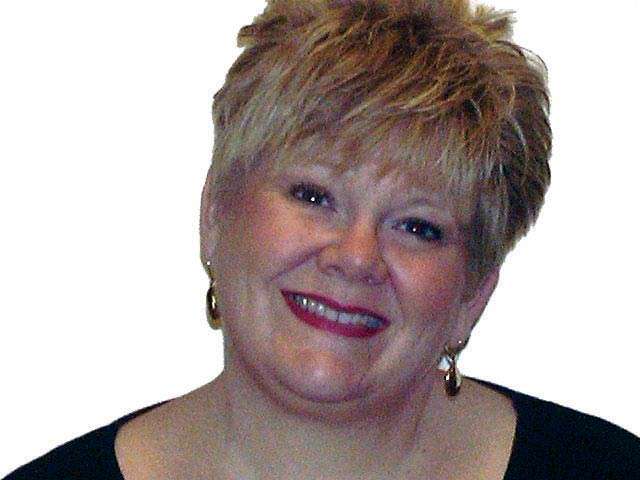
Last week when all our peaches arrived from Georgia I was thinking about how much work laid ahead. Well, after sharing 7-8 peaches at about 3 households it wasn’t quite so overwhelming! And, I ended up making 5 peach pies for the freezer and 1 cobbler from the remaining peaches. Plus we just ate a few!
These peaches were blemish free, perfect grade ‘A’ peaches. The peach skin was almost like a nectarine with no fuzz whatsoever. These comments are important as you read the directions for the frozen pie filling. There are some types of peaches that have an extremely thick skin and a great deal of fuzz.
In the old days I made the entire peach pie including the crust when I made them for the freezer. I like this new approach, takes up less space and it still saves a great deal of time.
Seriously I could have kept making the pie filling, it was so simple to do, and the outcome was just perfect. Now I just grab a pie crust, sit the filling inside, drop a few butter pats, put on the top crust and it’s like ‘poof’ peach pie ready for ice cream.
Some of you may still use lemon juice, or fruit fresh in your pies. I highly recommend the switch to ascorbic acid. The outcome may be quite pleasing for you. You can buy ascorbic acid in the canning section of many stores.
This pie doesn’t have to have a double crust either. Lots of folks enjoy a crumble top peach pie. With five of these in the freezer I may do both!
“IF” I run into any peaches for sale locally I may indulge again because I still haven’t canned any vanilla peaches. I need to do a few jars just so I can double check my recipe.
As I was researching about prize winning peach pies I found a simple trick that blue ribbon winners implement; they do not peel their peaches. It’s not so much for the pectin as it is the flavor. See if you agree when you try this recipe. One more tip about peaches, you cannot can white peaches. I won’t go into depth here but it has to do with scientific elements.
This year at Thanksgiving I won’t have to think twice about what pies to prepare, mine will be in the freezer ready to go!
Have a tremendous week, enjoy the fruits and vegetables of summer. If you’re traveling always take an ice chest. You never know what you will find on the journey, maybe more peaches!!!
Simply yours, The Covered Dish. www.thecovereddish.com
Making Frozen Peach Pie Filling
9 inch pie pans
Make each pie individually
6-8 average size peaches, blemish free, etc., washed*
1 tablespoon cornstarch
1 1/2 tablespoons ground minute tapioca**
(I run the tapioca through my cleaned coffee grinder!)
3/4 cup granulated sugar
1/8 teaspoon ground nutmeg
1/8 teaspoon ascorbic acid, (to prevent turning)
Before you begin slicing the peaches combine all of the dry ingredients in a bowl and blend well.
Butter, for baking time
Line a 9 inch pie pan with aluminum foil or saran wrap.
Leave the skin on the peaches and thinly slice into a large bowl. Disregard recipes saying to use 2 1/2 cups of peaches as this will not render any filling at all. Take the dry ingredients and sprinkle over the peaches, gently stir to blend. Pour into lined pie pan and take to the freezer immediately. In 24 hours remove the pie fill, allow them to set a few minutes, (mine was 25 min.) and then release them from the pie pans. Insert into gallon freezer bags.
When you’re ready for a homemade peach pie place a bottom crust into
a 9 inch pan leaving about 1 inch of dough overlapping the edge. Set the frozen peach filling into the crust. Place about 6-8 thin butter pats across the top. Put top crust on and prepare the outer edges.
If desired you can brush the crust with a little cream and sprinkle on decorating sugar.
Bake in a 425 degree oven for about 20 minutes, reduce heat and continue baking at 350 degrees until the thickening bubbles up through the slits in the crust. (I usually do a lattice top, but a solid crust with thin slits is just fine too. You could even decide to prepare a crumble topping instead of the 2nd pasty top! If the crust is browning too much cover the crusts with foil so the presentation/taste is perfect.
*Leave on the skins, it lends a great deal more flavor to the pie, and you’ll never know they were left on. The skin will also release more pectin which will help in the thickening of the pie.
**This is a really great tip. I started doing this a few years ago to several of my fruit pies thickened with tapioca. This guarantees there won’t be any pieces of ‘tapioca’ visible in the pie filling.
Adieu, sport
Color TV was the new thing when I was in college. Gasoline was 29 cents a gallon and football was grand, a sport knitted strong with community rivalries.
In my senior year, the Jayhawks finished 9-1 atop the Big Eight conference, ranked No. 7 nationally behind Arkansas and ahead of Georgia (Ohio State was No. 1). Our loss in 1968 was to Oklahoma (23-27) at Lawrence.
The Sooners finished 7-3, losses to No. 5 Notre Dame, No. 3 Texas, and Colorado, then lost the Bluebonnet Bowl to SMU in a squeaker 27-28. They finished 7-4, No. 11 in the AP poll.
Kansas had held a savage rivalry – a “border war” – with Missouri for decades. Hours before dawn on Nov.23, we piled into cars and headed east for the game at Columbia. Our seats were the great white rocks of the giant “M” at the north end of Faurot Field. We won, 21-19.
At a large December rally on campus we cheered as coach Pepper Rodgers announced the Jayhawks would play No. 2 Penn State in the Orange Bowl. At that time, four prestigious bowl games were televised on New Year’s Day, starting late morning with the Sugar Bowl in New Orleans. Then the Cotton Bowl (Dallas), Rose Bowl (Pasadena) and at night, the Orange Bowl in Miami. The final rankings depended on those games.
It was an era of college sports as a shared experience. Players, friends, families and fans were often well-acquainted. Bobby Douglass, the Jayhawks’ all-American quarterback, was a fraternity brother from El Dorado. We shared meals, study sessions, walks to class, gossip, even grief. Our freshman year, coach Jack Mitchell came to the fraternity house to tell Douglass that his father had died that day of a heart attack.
Many Jayhawk players were local, familiar. Among them, fullback John Riggins and brother Junior, a halfback, were from Centralia. John Zook (defensive end), was from Larned. John Mosier (tight end), another fraternity brother, was from Wichita. In high school I had played against Concordia’s Mike Reeves (halfback) and Keith Christensen (offensive tackle). Athletes were famous on Saturdays but not isolated, coddled. On campus they were at home away from home.
Big Eight rivalries were close among communities, home towns becoming home states in a conference that circled Kansas and Kansas State: Colorado, Oklahoma-Oklahoma State, Missouri, Iowa State, Nebraska.
Football was a challenge among neighbors. This is why they came from Norman to Lawrence; why we drove to Boulder; why the red hordes swept in from Nebraska. As ever, our guys against your guys.
In Miami before the Orange Bowl, we came to know a group from Penn State and made a wager: loser buys pizza for the winner. In the game’s final moments, KU scored a touchdown and two-point conversion to win, 16-15 – or so we thought. There were flags: 12 Jayhawks on the field. A second conversion failed and Penn State won, 15-14. The unfortunate12th man was a journalism school classmate.
We Kansans passed the hat to collect for 15 pizzas. We traded stories about Penn State and Kansas players, how we knew them, why they were special.
*
Today the Big Eight is gone, local rivalries consigned to memory. The Big Eight became the Big 12 in 1996, when Baylor, Texas Tech, Texas and Texas A&M joined. The conference lost four members between 2010 and 2013, replaced by two others (TCU and West Virginia).
Colorado has gone to the PAC-10, Nebraska to the Big 10, Missouri and Texas A&M to the Southeastern Conference. Texas and Oklahoma will leave in another year for the SEC. It’s hard to tell who’s who or where any more, and even harder to conjure a neighborly antagonism with mountaineers in West Virginia.
Today’s game, its players, the competition are about money. Athletic departments need big millions to lure talent, much of it from out of state, and to draw television audiences. Division I football is big business, a breeding ground for gambling dens and television contracts. The top tier SEC and Big 10 are the farm teams for professional football. Player-students are left to their transfer portals and advertising contracts.
We once held the notion that college sports had a moral and educational mission. The games, their regional rivalries, evoked a sense of discipline and citizenship. They held pride in collective endeavor and put community above selfish desires. Unrestrained commercialization has taken care of that. Schools jump helter-skelter from one conference to another, players transfer from one team and one advertising contract to the next.
The old rivalries and the old neighbors are gone. The familiar colors have disappeared. Interest in the sport is reduced to the numbers on a betting line.
