

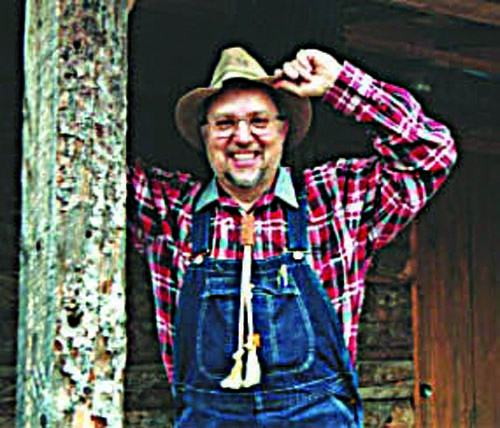
Roy Eugene Long, 81, of Windom, KS, passed away on August 1, 2022, at his home. Funeral arrangements are with Stockham Family Funeral Home, McPherson. (website: www.stockhamfamily.com)
Curiosity killed the geese
You don’t have to live out here in the hinterlands of the Flint Hills of Kansas to have interesting encounters with wild animals. To wit, here’s a true story that happened in the strictly urban neighborhood of my good friend and high school classmate, ol’ Canby Handy, from Platte City, Mo.
Canby and his wife live in a new home they bought a couple of years ago. Other folks have continued to build new homes near them. Well, Canby tells me that a couple of his new neighbors south of his home built homes on steeply inclined lots and one of them has been having trouble keeping his newly-laid rolls of sod properly irrigated.
The combination of hot weather, hard rains and a troubling sprinkler irrigation system caused the sod rolls to shift — necessitating a partial re-sodding of the upper part of the lawn, near the street in the front of the new home.
One part of the re-sodding effort was installation of an “erosion-control lawn mat” — which is a flexible two-layer fiber mat (mostly burlap, I think) with a mixture of wheat, rye, and lawn grasses sandwiched between the layers. The small grains and lawn grass seed emerge through the watered mat and eventually the mat decomposes into the soil and leaves an un-eroded soil covered by healthy new lawn grass.
Right after Canby’s neighbor had his new “lawn mat” installed and well-watered, he noticed that a flock of permanent resident Canadian geese, that lives on a nearby small suburban lake, had intelligently noticed that the new lawn mat and its seeds represented a bountiful breakfast. They somehow knew from urban experience that all they had to do is lift and flip the edges of the lawn mat up with their strong beaks and partake of a free smorgasbord of grains beneath.
Naturally, the neighbor didn’t appreciate the geese invasion threatening his expensive re-sodding effort. What to do? He couldn’t shoot the offending geese because that is illegal. He couldn’t physically stand in his new seeding and keep scaring the geese away.
Then he got an idea. He drove to a Cabala’s store not far away on the Kansas side and bought a realistic-looking plastic coyote decoy. When he got home in the evening, he placed the decoy coyote smack in the middle of the new lawn mat. Then the next morning he watched from a window to see what would happen when the marauding Canada geese came for their free breakfast.
First they flew over the coyote honking loudly. The coyote didn’t scare away. So, the entire flock lit nearby in the middle of the street and locked their eyes on the decoy coyote. They were clearly curious that the predator didn’t move, and were fixated on the decoy.
In fact, they were so fixated on the coyote decoy that a vehicle coming down the street didn’t get stopped until it had hit and killed four of the geese — leaving a blizzard of goose feathers in the street.
The neighbor’s new lawn wuz saved by a decoy coyote and an inattentive, or maybe aggressive, driver. However, Canby’s neighbor did have to bundle up the four dead geese from the street and dispose of the carcasses.
To me, the whole episode thereby proves that curiosity not only kills the cat, as the old saying goes, but also the geese.
***
While I’m on the subject of predator birds, my resident American Bald Eagle continues his, or her, regular predation on the channel catfish in my pond. It makes at least one daily pass around the edge of the pond and, often as not, catches and eats a channel cat weighing 3-6 pounds. It leaved nothing but the fish head with tight skin attached. Then the resident crows, or buzzards, clean up what the eagle leaves.
***
On the gardening front, I’ve got all three varieties of spuds dug and stored. I got a good, but not overwhelming harvest. Also, got the three varieties of onions pulled and stored. Again, a “meh” harvest. The peppers and tomatoes are beginning to produce regularly. The heat stalled, and probably finished, the green bean crop.
***
We’ve had a welcome change in the weather. The temp went from a high of 107 degrees to a low of 66 degrees two days later. And, we even got a welcome 2-tenths of an inch of rain early in the week and it wuz followed up with a full 1.3-inch rain last night and early this morning. The temp is delightfully in the low 80s today with a high humidity.
***
The Kansas primary election is just around the corner. At election times I’m prone to turning to the wisdom of the Founding Fathers. Since entrenched legislators, who make their careers and a fortunes in permanent politics, are too abundant in modern politics, I’m taken by the following words of wisdom about elections from none other than Benjamin Franklin, year 1787:
“It seems to be imagined by some that returning to the mass of the people is degrading to the magistrate. This is contrarian to republican principles. In free governments, the rulers are the servants, and the people their superiors and sovereigns. For the former, therefore, to return among the latter, is not to degrade them, but to promote them. And, it would be imposing an unreasonable burden on them, to keep them always in a state of servitude, and not allow them to become again one of the masters.”
***
Stay well. Have a good ‘un.
Common Mistakes People Make with Hostas

Hostas are a beloved go-to shade plant, but their care is often taken for granted. Here are some of the most common mistakes gardeners make.
Anyone with a shady spot to fill can attest to the value of hostas. They’ll happily grow where other plants fail. To ensure your hostas thrive, avoid these common mistakes:
Ignoring slug issues. Slugs and snails view hostas as an invitation to the buffet table. Thick-leaved hostas are more resilient, but damage can still occur. Fortunately, there are some simple precautions you can take to keep slugs and snails from attacking your hostas.
Overlooking protection from deer. Hostas have been called deer candy. Where deer are prevalent, the plants will need protection. You can spray them with an animal repellent or install physical barriers. Some people keep deer away with a perimeter of string or fishing line; when the deer run into it unexpectedly, it scares them and they run off. Just mark the lines so pedestrians see them and don’t trip.
Creating a plant museum. Planting one of each variety may please the plant collector, but it won’t please the visual senses. It’s not how nature operates, and the resulting artificial look appears unattractive at best, jarring at worst. Hostas (and many other plants) look more natural when grouped in odd numbers. Careful design will give your landscaping a cohesive look.
Going overboard with variegation. Too many variegated hostas make the garden look spotty. It’s better to plant in moderation and in small drifts rather than scattershot. For the best effect, surround the variegated hostas with more subtle-colored hostas of green and blue-green.
Pairing the wrong varieties. Planting hostas with white variegation next to hostas with gold variegation is a visual no-no. The two compete with each other and look unnatural together.
Dividing or transplanting at the wrong time. Hostas should be divided every four to five years. Spring is the best time to divide or transplant. Wait until plants are just starting to emerge (they’re easier to spot this way), then dig up, divide, and replant. Temperatures are cooler in the spring and the foliage hasn’t developed yet, so plants won’t be water stressed. Find out which vegetables take the least amount of time to grow.
Planting in an exposed location. Because hostas replicate so easily, some gardeners presume they can stick them anywhere. They shouldn’t. Planting in an open, exposed location can lead to tattered foliage. Try to find a spot with protection from wind. While you’re at it, if you have children or a dog, think about planting hostas where they’ll get protection from trampling, too. Check out some more gardening tips.
Planting in sun. Hostas are shade-loving plants. They’ll do well in full shade or where they get some morning sun, which is less harsh. Too much sunlight causes leaves to scorch and bleach out. Hostas like even moisture, too, which is another reason sunny spots don’t work—they tend to dry out faster. So if you’re looking for drought-tolerant plants, hostas might not be the right choice.
Overcrowding plants. Although it’s tempting to plant hostas closely for a mature look, it’s not good for them. Overcrowding impedes their growth, and reduced air circulation can lead to foliage problems. Space plants according to plant tag directions. And be prepared to divide hostas as needed.
Cucumber Salsa

This easy salsa is intensely packed with flavor and is the perfect healthy snack or appetizer. A blend of crunchy cucumbers, tomatoes, red onion, jalapeño, herbs and seasonings… it’s also a perfect addition to grilled fish or fish tacos.
A quick, healthy and refreshing salsa…
- 1 large English cucumber, peeled, seeded and diced (about 2 cups diced)
- ⅔ cup diced red onions
- 2 Roma tomatoes, seeded and diced (about 1 cup diced)
- 1 jalapeno, seeded and diced
- 1 heaping teaspoon fresh minced garlic
- 1 tablespoon olive oil
- 1–½ tablespoons fresh lime juice
- ¼ teaspoon ground cumin
- ½ teaspoon kosher salt
- ½ teaspoon freshly ground black pepper
- 1 tablespoon chopped fresh cilantro
- Tortilla chips
- Place all ingredients in a medium bowl and stir to coat evenly.
With transportation costs high, entrepreneur aims to fill grocery stores with Kansas-grown wheat

As transportation costs continue to rise, entrepreneur Charles Brodie aims to take Kansas wheat to grocery stores around Kansas and, eventually, across state lines.
Cimarron Trails Products, LLC, plans to work with Amish farmers and other local producers to purchase their wheat, transport it to two flour mills, Stafford County Flour Mills and Farmers Direct Stone Ground Mill, and put the product in stores across Kansas.
Brodie said Stafford County Flour Mills in Hudson is one of the top flour mills in the United States, while Farmers Direct in New Cambria produces stone-ground flour for specialty products.
Brodie plans to utilize his already established trucking company Red River Transport of Arlington, Texas, to transport the Kansas-made flour in and around the state.
“You have to have edges in business to survive,” Brodie said. “There are three edges that I’ve got — one is that this qualifies me as a local producer with the grocery chains like Dillons and Hy-Vee, which they call me.”
Cimarron Trails Products began with stationery items, but after witnessing flour shortages on Kansas’ grocery shelves, Brodie aimed to find a profitable solution.
Brodie said he began talking with local Amish farmers and other local producers to see if they were interested in participating and quickly found multiple business partners to purchase wheat. 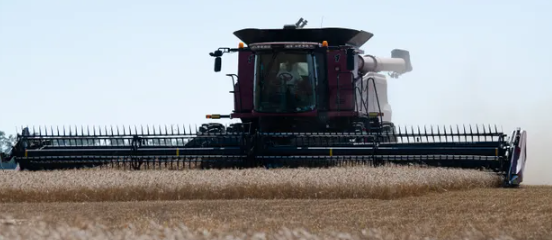
“I want everybody at the table happy,” Brodie said. “Everybody needs to walk away making money, feeling good about what they’re doing.”
He planned to purchase the local wheat at a premium price, about $4 per bushel this year and said the production in Reno County and surrounding rural areas could support his planned operations.
Brodie then contacted the two flour mills, Stafford County and Farmers Direct, to mill the flour and transport it back to his warehouse at 1302 N. Grand St., Hutchinson, for bagging.
At the warehouse, Brodie plans to employ 10 to 15 individuals, which he first offered employment opportunities to the Amish community in Yoder.
“Everybody wants in,” Brodie said. “When I offered, there were a lot of young women interested in working at the warehouse, which I plan to let them set their schedules and help with transportation from Yoder to Hutch.”
Today, Brodie has everything from producers to transport ready to go with the business but plans to search for more interest at a Startup Party on Aug. 18 at his warehouse in Hutchinson.
“I want to keep my price competitive on the shelf at the grocery store, but I want it to be the best flour you can buy in the Midwest, and it will,” Brodie said.
