Friday, January 23, 2026
Home Blog Page 176

Encountering Young Wildlife in Spring

0

By Monica Macoubrie, Wildlife Education Specialist

As I sit down to write this article, a blizzard is raging outside my window — 55 mph wind gusts and snow blowing sideways make it hard to imagine spring and newborn wildlife. But this is Nebraska, where unpredictable weather is just a part of life, even for the animals welcoming their young into the world.
From avoiding predators to surviving harsh early spring conditions, to finding food and even competing with siblings, young wildlife in Nebraska face countless challenges. Still, despite these challenges, human intervention is rarely necessary. Here are a few things to consider when encountering young wildlife this spring.
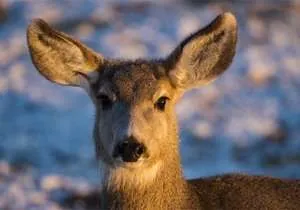
Deer Fawns – A Delicate Beginning
Spring is baby season for many of Nebraska’s mammals, a time that  gives young the best chance to grow strong through the summer and fall before the following winter. One of the most recognizable babies in the state are white-tailed deer fawns, which are born around six months after the rut, typically in late May to early June. First-year does normally give birth to a single fawn, while older does usually have twins and, occasionally, triplets. Bucks play no role in raising the young.
At birth, a fawn weighs around 6-8 pounds, and by its first winter, it will have grown to 60-70 pounds. After nursing, the mother will lead her baby, or babies, to a secluded area within her home range. If she has twins, she will separate them by about 200 feet. The doe then leaves them alone for extended periods, following this pattern for about three weeks. By this time, fawns are mature enough to keep up with their mother and can race away from real or perceived danger.
You’ve Found a Fawn – What to Do
If you’ve ever stumbled across a fawn lying perfectly still in the grass, you might’ve wondered if it was abandoned. But that stillness is a survival strategy — its spotted coat blends into the dappled sunlight, and its mother is never far away, returning only a few times a day to nurse and check in.
If you happen across a fawn, the best thing to do is immediately leave the area to avoid creating disturbances. Even if you think the fawn looks hungry, do not feed it. Young animals, especially mammals, have specific nutritional requirements, and improper feeding can make them sick or even lead to death.
Fawns are rarely abandoned. The doe will typically stay away from the area until the disturbance – you — has passed, after which she will return to find her fawn. Only if more than 24 hours have passed without the mother returning should the fawn be assessed by a wildlife rehabilitator, such as Nebraska Wildlife Rehab.
Birds – From Egg to Flight
Spring and early summer are busy times for Nebraska’s bird populations. Songbirds such as robins, chickadees and house wrens build nests and raise chicks that hatch featherless and helpless, relying entirely on their parents for food and warmth. If you’ve ever spotted a nest full of gaping beaks, you’ve witnessed just how demanding these young birds can be.
The songbird life cycle begins when a female selects a nest site, often hidden in trees, shrubs or even on buildings. After laying a clutch of eggs, she sits on them to keep them warm. Once hatched, the tiny chicks are entirely dependent on their parents, who work tirelessly to bring them insects and other food.
Over the next two to three weeks, the chicks grow rapidly, developing feathers and strengthening their wings. Eventually, they reach the fledgling stage, when they leave the nest but remain under parental supervision as they learn to fly and forage for food on their own.
Waterfowl, such as Canada geese and mallards, take a different approach. Their young are precocial, meaning they hatch with downy feathers and can walk and swim almost immediately. These ducklings and goslings follow their mothers closely, learning to find food and avoid predators. If you’ve ever seen a mother goose fiercely defending her young, you know they take parenting seriously.
Raptors, including red-tailed hawks and great horned owls, invest significant time raising their young. Their chicks stay in the nest for five to seven weeks, depending on the species, growing stronger until they are ready to fledge. Even after leaving the nest, these young birds rely on their parents for food and guidance until they’ve mastered the skills needed for survival.
You’ve Found a Baby Bird – What to Do
If you’ve spent any time outdoors, chances are you’ve come across a baby bird on the ground — one that seems unable to fly, or one you think might be lost or abandoned. Your first instinct is to probably try to help, but in most cases, they don’t actually need assistance. In fact, intervening often makes the situation worse. Here are a few guidelines to help you decide whether you should act.
First, determine if the bird is a nestling or a fledgling — most birds people find are fledglings. These are young birds that have just left the nest. They can’t fly yet but are still under the care of their parents. Fledglings are capable of hopping or flitting, and they’re usually fluffy with a tiny stub of a tail. Once they leave the nest, they rarely return, so putting them back will just make them hop out again. In most cases, there’s no need to intervene. If you do want to help, you can move the bird to a safer area and keep your pets indoors to protect it.
If the bird is sparsely feathered and can’t hop, walk or flit, it’s a nestling. The nest is most likely nearby, and if you can find it, you can place the bird back in the nest as soon as possible. Don’t worry — the parents won’t abandon the bird if you touch it, as they don’t recognize their young by smell.
If the bird is visibly injured, your best course of action is to bring it to a wildlife rehabilitator.
The early days are full of challenges for wildlife babies. While it’s tempting to step in and help, it’s often best to let these young animals be. It’s more likely they don’t need our help, and in fact, intervening can sometimes do more harm than good. Ultimately, the best way to support young wildlife is by respecting their process to learn and grow and giving them the space to develop on their own terms.
However, if you do find an injured or orphaned animal, don’t hesitate to reach out to a wildlife rehabilitator.

Doodlesocking

0

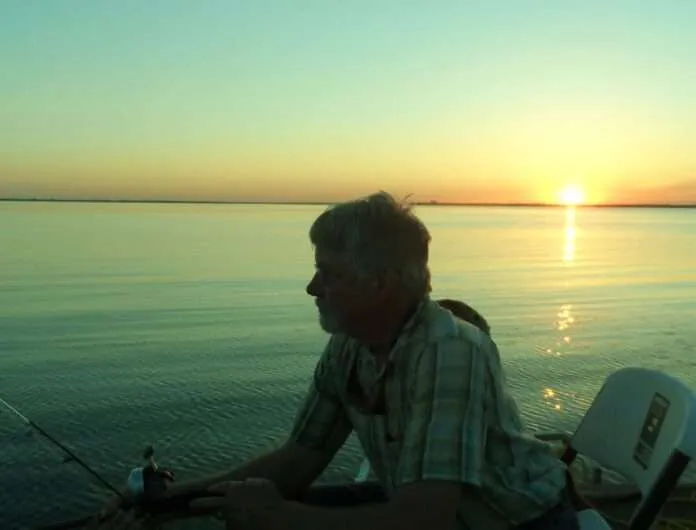
A few years back at the Outdoor Writers of Kansas spring outing at Beloit, Kansas, Joyce and I were paired with Chatt Martin for a half-day’s crappie fishing on Waconda Lake, just outside Glen Elder, KS. Since retiring, Chatt has turned his passion for Crappie fishing into a full-time Crappie fishing guide service called Crappie Time Fishing. Glen Elder is usually hot for crappies this time of year and we were hearing stories of fantastic “slab” crappies being caught. When Chatt and I made the final arrangements for that Tuesday morning, his only question for me was “Has Joyce ever fished with long rods?”

Long rods, indeed; as we pulled into the boat ramp parking lot the next morning, there was no doubt which boat was awaiting us, as ten food fishing rods towered above the center console of his boat. We loaded up and headed across the lake to the first of several spots that had been giving up nice crappies. Our guides favorite honey hole was along the causeway, a huge, high rock-laden embankment with a road atop it, that encloses the western end of the lake, but because the wind was forecast to be nasty early-on, we tried other spots. It seems everyone else felt the same, and our first stop, a cove cut far back into the bluffs along the southern shore, already sported several boats. No one was catching much, but a scan of the cove with Chatts high-dollar Lowrance fish finder showed some fish out front toward the opening. After an hour of trying most things known to man and only catching two fish, Chatt decided it was time to fight the wind in necessary and we headed across the lake to his hot spot along the causeway.

We slowly motored alongside a long stretch of dead, beaver chewed saplings and brush that ran for several hundred yards along the edge of the causeway. Chatt positioned the boat and told us we were about to learn the art of “doodlesocking.” Doodlesocking is an age-old, tried & true method created by bass fishermen years or possible generations ago for fishing in and around snags of any kind. It involves the use of a very long, stout pole with a bait or jig fastened to the end of a short length of heavy line. The idea is to dip or “doodle” the bait slowly into the water in and around tree limbs, etc, then wait for a fish to “sock” it. It works well because you’re fishing the bait straight up and down into pockets around weeds, lily pads, brush and stumps, instead of casting into them and trying to drag the bait through by reeling, which almost always results in getting snagged. Chatt rigged his extra long rods with jig heads of various colors and tipped them each with a live minnow that hung from two feet of line. The water was only a couple feet deep and the brush stretched ten to fifteen feet out from the base of the rocks. The three of us spaced ourselves along the same side of the boat and began dipping the jigs in amongst the brush as the electric trolling motor pulled us slowly along parallel to the shore. The crappies were just beginning to come up into shallow water to spawn, and in the first several yards Chatt and I landed three nice ones. The day before, Joyce had cleaned our clocks catching walleye, but that day she had not yet caught a fish. Suddenly she hauled upward on her rod which bent double toward the water as she hoisted a fat, feisty crappie into the boat.

Because of the wind and weather change the night before, we didn’t catch many crappies, but the ones we caught were in great condition. What I find ironic about the day was that we fished from a boat sporting fish-locator electronics costing as much as my pickup, with rods and reels each worth a couple days wages and yet we caught our fish using an age-old technique called doodlesocking that has been

around since fishing poles were sticks and string. But hey, to me and to a fishing guide it’s called doin’ whatever works! Continue to Explore Kansas Outdoors.

Steve can be contacted by email at [email protected].

Fescue that long green grass we love

0

There are many tall fescue lawns in Harvey County. Tall fescue gives you that long green season for the yard. For these lawns to be successful, there are tasks that need to be done at the correct times such as aerating, fertilizing, etc. Join us on May 6 at 6:30 PM to learn about how to really take care of your tall fescue lawn. This program is free but you must register by calling (316) 284-6930 or emailing [email protected].


Special Weed Problems: Sandbur is a warm-season annual grass weed that produces sharp, spiny burs. It is difficult to control and hard to recognize before the burs form. There is no satisfactory control after the burs form except hand removal.


Sandbur germinates a few weeks after crabgrass but to be safe, a preemergence herbicide should be applied at the normal time for crabgrass. Only a few preemergence herbicides are labeled for sandbur. Special label rates or repeat applications, or both, must be used for sandbur control. Pendimethalin (Scott’s Halts) is the best choice for preventative sandbur control.


This product must be watered in within 3 days after application using ½ inch of water or more.


Sandbur also can be controlled in the seedling stage of growth. Fenoxaprop-p-methyl should give over 90% control. This active ingredient is found in Acclaim Extra (commercial) and BioAdvanced Bermudagrass Control for Lawns (homeowner). Neither product can be used on warm-season grasses (buffalograss, Bermudagrass, Zoysia) as injury will occur. However, it is labeled for the cool-season grasses tall fescue, Kentucky bluegrass, and perennial ryegrass.


No product will make the burs disappear once they have formed. Burs formed in previous years remain on the soil surface, creating a nuisance. Again, hand removal is the only solution.

Ham Leftovers

0

By the time some of you read this column Easter will be over, and you’ll be looking at ways to wrap up the everlasting ham! Probably one of my all-time favorites would be scalloped potatoes or macaroni and cheese with chunks of ham. Served with a glorious side salad, is beyond perfection for this cook.

I remember my mom, Betty, would serve stuffed baked potatoes with a creamed pea and ham topping over a baked Idaho.

Nothing beats a good ham sandwich with your favorite mustard, good greens and leftover Easter Ham. They’re even better made on the extra dinner rolls with ample salad dressing or mayo. Here’s an idea that will make weekly lunches quite enjoyable: Macaroni salad with green onion, chopped ham, cheese and cold peas. Even a few other vegies would be good added to the mixture. This would make several main lunches for the week.

Omelets, breakfast casseroles, ham and eggs, frozen pieces ready to season summer green bean, you can’t omit pinto beans and ham, using the bone for great flavoring. Breakfast sandwiches made with thin slices of ham. Pfew….I think I’ve given you some pretty good ideas? Wait, wait, how about you re-create a shepherd’s pie using cornbread on the top. For the bottom I’d come in with carrots, peas or sugar snaps, fresh sauteed mushrooms, maybe celery. You could reach for a very quick meal by using canned soup like celery soup or cream of mushroom. If you sauté the vegies first you will enhance their flavor tremendously. OK, I think I’m going to have to make this one!

Now; the question remains what recipe do I share with you specifically? Probably one of the most useful will be my homemade scalloped potatoes, now, why? I grew up with no recipe for scalloped potatoes, mom didn’t have one, she just ‘knew’ how much of everything to use. That doesn’t work if you have never made scalloped potatoes before? So I played around writing scalloped potato recipes until I got it down. My version is based upon the way my mother prepared them with, flour, butter, salt and pepper and the tricky part, milk or cream, and cheese. Scalloped potatoes can also be made based upon a creamy white sauce. I have to be honest I usually stick with mom’s version. I use the creamy white sauce when I’m doing macaroni and cheese.

Below you will find my version of scalloped potatoes, they will be delicious. When my husband read my notes at the beginning of this column, he stated: ‘Well scalloped potatoes is a no brainier, no other way to go! On that note I’ll wrap up for the week and set the recipe. He is Risen, Simply yours, The Covered Dish.


Scalloped Potatoes

2 ½ lbs Yukon potatoes, skins left on

Wash & slice as thin as you can, I use #2 on my micro planer

3-4 tablespoons butter

Multi use seasoning spice black pepper

3 tablespoons flour, used 1 tablespoon at a time.

4 ounces of shredded sharp cheddar, split 3 equal amounts

1 cup half n’ half

2 ½ quart baking dish

Vegetable spray or olive oil spray

Wash, peel and slice potatoes, separate into 3 equal amounts,

Remove skins if desired, I do not.

Preheat oven to 375 degrees

Spray a 9 x 13 baking dish with the vegetable spray or olive oil, layer first group of potatoes evenly in the bottom. Sprinkle with seasoning spice & pepper, 1 tablespoon of flour, sprinkled evenly over potatoes, along with 1/3 of the shredded cheese. Cut one tablespoon of butter over the top. Now start the 2nd level, repeating the process.

Continue on to the third layer. Slowly pour the half and half over the top of the potatoes.

Put lid on pan or foil and bake covered for approximately 45-50 minutes.

Remove covering and continue cooking until potatoes are tender when poked with a paring knife. This usually takes 15 or 20 minutes, it’s at this time that you’ll see the liquid begin to thicken. If you desire more cheese over the top or a bit paprika, add it now.

Use your favorite cheeses instead of the sharp cheese. I enjoy Smoked Gruyere, Havarti or Muenster. A few green onions inside or on top of the dish would be a nice garnish.

Many will reach for a full 8 ounces of cheese in this recipe, again; your call.

“Zip Code Matter”

0

Those of us who make our homes in the rural Midwest understand that we face medical challenges our countrymen in more populated areas don’t. For example, there are two pediatric rheumatologists in the whole state of South Dakota. . . and they are both based in Fargo. In contrast, there are 10 in the Twin Cities with the University of Minnesota alone. In Winner South Dakota, you are nearly 150 miles away from emergency access to a neurosurgeon, assuming you can go by air. No matter where you are in Connecticut, that help is no more than 50 miles away.

These ideas are probably obvious to anyone reading this. If we haven’t had to travel for medical care ourselves, we know someone who did. But other factors, things that have an even bigger impact on our well being, may be less familiar.

Economics plays a role, of course. Can you afford your medicine, or to go to the doctor? Do you have time off for that appointment? Are you choosing between keeping food on the table and a roof over your family’s head? Are you filling up on cheap empty calories, or are you able to buy fruits, vegetables and eggs?

Where you live matters in other ways. Can you buy those healthy groceries nearby? Are there safe places to walk, and for your children to play? How clean is the air in your community? Does your home have lead paint or asbestos insulation? Is the water that comes out of your tap safe to drink, or is it contaminated with chemicals or lead? Does the noise in your neighborhood keep you awake at night?

Zip codes can impact the infrastructure around you in ways that affect residents unequally. How accessible is the environment? Are people with mobility challenges able to easily enter retail spaces? Do they have housing options? Are the schools able to support children who face learning challenges? Can you find childcare while you work? Can you practice your faith in your community? Social engagement protects your well-being.

Even our genes are affected by our environment. This is a fascinating new concept that many of us never study in school. Scientists have learned that external factors influence how our genes are expressed, without changing our DNA. These factors start working before birth: nutrition and stress experienced by a pregnant woman influences the development of her child, and has an impact not only throughout that child’s life but into subsequent generations.

As we think about health, let’s not forget that we aren’t all starting in the same place. It’s worth thinking about how we can address some of those disadvantages.

Debra Johnston, MD. is part of The Prairie Doc® team of physicians and currently practices as a Family Medicine Doctor at Avera Medical Group in Brookings, South Dakota. Follow The Prairie Doc® at www.prairiedoc.org, Facebook, Instagram, YouTube and Threads. Prairie Doc Programming includes On Call with the Prairie Doc®, a medical Q&A show (most Thursdays at 7pm streaming on Facebook), 2 podcasts, and a Radio program (on SDPB), providing health information based on science, built on trust.