Saturday, January 24, 2026
Home Blog Page 185

Always tasty! Canned Beets

0

I remember my mom and grandma used to can the beets that we grew in the garden. Always tasty! Beets can be grown as a spring or fall crop in Kansas. Commonly grown for the roots, the tops can also be used as a cooked green.


Variety considerations. Red, round beets are by far the most common, but you can now easily find gold, white, red and white striped, and cylindrical types as well. Some non-red varieties are not as vigorous and have lower germination rates. Monogerm varieties only grow one plant per seed, whereas most varieties will produce 2 to 6 plants per seed. Look for varieties that mature quickly and produce uniform roots..


When to plant. Beets are fairly frost hardy and can be planted from late March to mid-April in many areas of Kansas. Irrigate carefully to avoid soil crusting, which prevents good germination. Plant fall beets in late July to early August.


Spacing. The beet “seed” is actually a cluster of seeds in a dried fruit, resulting in 2 to 6 plants per seed. Plant the seeds about an inch apart and about ½ inch deep. Hand thinning is usually necessary to provide a uniform stand of beets properly spaced 2 to 3 inches apart. Poorly thinned stands will have an abundance of tops with few or small roots.

Care. Beets compete poorly with weeds, so frequent shallow cultivations are necessary. Beet plants require a fertile well-watered location. Hand thin the plants when they are 1 to 2 inches tall to avoid damage to surrounding plants.


Harvesting. Select beets of the diameter you prefer. Roots larger than 2 to 2½ inches in diameter are often tough and woody. Beets for baby beets or whole canning should be harvested smaller. Trim the tops of beets to ½ to 1 inch above the roots and store in plastic bags in a refrigerator before use. Mulch fall planted beets to prolong the fresh harvest season but use them before they freeze.

KU News: Kansas, Missouri farmers avoid discussing climate change regardless of opinions, study finds

0

From the Office of Public Affairs | https://www.news.ku.edu

Headlines

Kansas, Missouri farmers avoid discussing climate change regardless of opinions, study finds

LAWRENCE — Farmers, who are on the front lines of climate change, avoid talking about the topic with their neighbors, community members, elected officials and even their own families because of potential conflict and harm to their livelihood, new research from the University of Kansas has found.


KU faculty awarded AAI Arts & Humanities Grant to expand art-based aging project

LAWRENCE — “Untold Stories of Aging in Action – Revealed and Traveled,” a project to create and document the influence of an art-based intervention among communities of older adults and intergenerational audiences, has been awarded university grant funding to expand its reach, bringing the art collection to a wider audience through a traveling exhibition set to begin in summer 2025. The pieces will be brought to communities of older adults where KU social welfare and visual art students will facilitate discussions about the pieces with community residents and attendees, who themselves can contribute to the art project.


Full stories below.


————————————————————————


Contact: Mike Krings, KU News Service, 785-864-8860, [email protected]
Kansas, Missouri farmers avoid discussing climate change regardless of opinions, study finds

LAWRENCE — We have all avoided having conversations if the topic is controversial or may lead to an argument. Farmers, who are on the front lines of climate change, avoid talking about it with their neighbors, community members, elected officials and even their own families because of potential conflict and harm to their livelihood, new research from the University of Kansas has found.

Researchers conducted interviews with more than 20 farmers in Kansas and Missouri to understand their communication about climate change. Results showed respondents had a range of views on climate change from being convinced of its effects and taking action in their farming operations to skepticism — but all avoided discussing it to varying extents.

“People were worried about a variety of reactions. Some said they couldn’t even talk about it with their families because they would give them a weird look if they brought it up,” said Hong Tien Vu, associate professor of journalism & mass communications at KU and lead author of the study. “That was a low-level worry, but others said they had heard people laughing at them or were concerned about their neighbors not working with them if they had different opinions.”

The study was born from research Vu and students started during the COVID-19 pandemic. The group received private donor funding to study local climate change effects. Students interviewed scientists on campus and farmers in surrounding communities about climate change, their views on it and how it affects them. Farmers were reluctant to discuss the topic on camera.

“When we talk about climate change, we tend to look at broad effects like sea level rise. It can be difficult for people to find relevance in topics like that in their lives. We wanted to focus on factors that relate to people’s lives here in Kansas,” Vu said. “We wanted to interview farmers specifically because they are on the front lines of climate change impacts, both in terms of contributing to it through factors like emissions and feeling the effects of it.”

Given farmers’ reluctance to discuss the topic on camera, researchers decided to conduct interviews in which they could guarantee anonymity for respondents. Farmers then discussed their opinions on the topic, how it affects their lives and work, and why they avoid discussing it.

The researchers examined the topic through the lens of spiral of silence theory, which posits that when discussing controversial topics, people judge the prevailing opinion of others before deciding whether to speak. If they feel they are in the minority, people will often choose not to discuss a topic, which can have long-term ramifications, including silencing people and exacerbating problems that people choose not to address.

The results confirmed the prevalence of a spiral of silence among Kansas and Missouri farmers. The respondents were both men and women, ranging in age from their 20s to 70s. When asked their thoughts on climate change, responses ranged from believing it is real, scientifically proven and having effects now, to being skeptical both of its prevalence and whether it is caused by humans. But across the board, respondents indicated they generally avoid discussing the topic.

The farmers gave a range of reasons why they avoid it. Many simply did not want a conflict that could result in violence or an argument with neighbors or community members. Some feared it could damage their business, as neighbors might be less likely to work with them and share equipment or people might give them a negative online review and tell people not to buy their products at farmers’ markets and other locales if they disagreed with their views.

Farmers said they also tried to gauge a person’s opinions based on interpersonal cues before deciding whether to discuss climate change. For example, the type of vehicle a person drives, whether a large pickup or hybrid car, can provide clues about their opinions on the matter.

Spiral of silence theory holds that people traditionally used news media to gauge political opinion on a potentially controversial topic. However, respondents in the study indicated they felt news media only politicized the topic and therefore was not a trustworthy way of determining how people felt. Instead, many turned to social media where they could see if people posted on the topic or to find others to discuss it with, without fear of arguments or contentious conversations.

“The algorithm can allow you to choose who to talk to or who to exclude,” Vu said of social media. “People also often feel masked on social media. To me, that is a way of losing conversations and can give you a false sense of prevalence of opinions by eliminating cross examples.”

The study, co-written with Nhung Nguyen, lecturer; Nazra Izhar, doctoral candidate; and Vaibhav Diwanji, assistant professor of journalism and mass communications, all at KU, was published in the journal Environmental Communication.

When asked how they deal with the effects of climate change, several farmers reported taking measures such as switching to organic methods, fallowing fields to counter overuse of land and seeking information on more sustainable practices. Several also reported feeling isolated in general and given that they felt they could not discuss climate change, took to journaling as a way to process their thoughts.

Vu and colleagues, who have studied how climate change is viewed and reported globally, said understanding how the issue is viewed and discussed in more local settings is also important because people need to work together in day-to-day operations like farming as well as for policy solutions. If pressing issues are not discussed, it can negatively affect how they are dealt with on interpersonal levels and at local levels of government, they argue.

As part of the larger research project, the group plans to use journalistic storytelling techniques to document how people are dealing with climate change locally and their opinions on the topic. They also plan to test the effects of different content elements such as psychological distance and modalities like text, video, podcast or virtual reality on public perceptions of and behaviors toward sustainability.

“In our conversations with farmers, we found they often felt excluded from other conversations on climate change,” Vu said. “It felt like they were picking their battles with everyone, because they are often blamed for things like emissions, while working on adjusting their farming practices for mitigation and adaptation purpose. We think not talking about climate change is a serious issue.”

-30-

————————————————————————

KU News Service is now on BlueSky.

Follow for KU News Service stories, discoveries and experts.


https://bsky.app/profile/kunewsservice.bsky.social

————————————————————————


Contact: Chance Dibben, Achievement & Assessment Institute, [email protected]
KU faculty awarded AAI Arts & Humanities Grant to expand art-based aging project


LAWRENCE — The Achievement & Assessment Institute (AAI) at the University of Kansas has awarded the 2024 AAI Art & Humanities Grant to Sarah Jen, associate professor in the School of Social Welfare, and Liz Langdon, a lecturer in the Department of Visual Art, for their project, “Untold Stories of Aging in Action – Revealed and Traveled.” The project’s aim is to create and document the influence of an art-based intervention among communities of older adults and intergenerational audiences.

“Untold Stories of Aging in Action – Revealed and Traveled” was born out of a 2021 project by KU social work students seeking to illuminate the experiences of older adults and their caregivers through art and conversation. Students collected and displayed artwork from more than 30 artists that captured stories of aging, and the pieces were displayed in an exhibition hosted in the KU Commons in April 2022.

“Artists were able to use their artwork to start important conversations with their loved ones. Displaying their work also allowed them to leave a legacy, tell their stories to and be remembered by a larger audience,” Jen said.

Since then, the online digital archive of submissions from KU students and other community members has continued to grow. “Untold Stories of Aging in Action – Revealed and Traveled” will be an evolution of the original project and will bring the art collection to a wider audience through a traveling exhibition.

The pieces, ranging from poetry to sculptures, will be brought to communities of older adults where students from the KU School of Social Welfare and the visual art department will facilitate discussions about the pieces with community residents and attendees. KU art education students will be leading the art criticism portion of discussions, while the social work students will facilitate the psycho-socio-emotional meaning-making portion.

“Art is a vehicle for conversation, and we think the discussions are going to be very rich as we work in these communities,” Langdon said. “It’s not all about the quality of the artwork necessarily. It’s really about the process, the meaning making, and the building of connections through looking at and discussing art.”

Attendees will also be able to participate in their own interactive art creation and meaning-making process by contributing to collective art installations. Their reflections and reactions to the exhibition will be recorded and documented for future grant submissions to reproduce this creative intervention on a wider scale. A larger collection of pieces and the art installations created by older adults will also be shared at an exhibition open to the broader community at the end of the project.

“Our audience for the original exhibition was really intergenerational and reached a wide range of ages, so I am really looking forward to having specifically an older adult audience and seeing how older adults respond to the artwork,” Jen said. “I think we know more about how younger people and an intergenerational group has responded to it so far, but I’m excited about the potential of getting older adult voices out there as well and being able to share that with a wider audience.”

Jen and Langdon said that they want to provide a space for older adults to think about their next chapters, allowing them to break away from societal expectations of what late life typically looks like.

“There’s a lot of research that says that when folks can imagine what they want for their futures, they’re more planful in making it happen, but we don’t often give older adults the experience to think of what comes next,” Jen said. “I think societally we tend to think of later life as like this one homogenous experience where once you’re 65 or older, it’s all the same after that. But it can be inspiring for people who are in their 70s and 80s to think about what they still want out of their lives.”

The purpose of the AAI Arts & Humanities Grant is to foster deeper ties between the arts and humanities and the education and social sciences within which most of AAI’s work is focused. “Untold Stories of Aging in Action” bridges these two fields in a creative and resonant way that engages the community.

“We’ve had this dream of bringing together students from social work with students from art education for a while, and this felt like a really nice way to do that. Art brings up emotions, and it triggers things, and students in the social work field know what to do with that,” Jen said. “Art students will ask audience members to interpret and engage with the art, and then the social work students pick up that thread and ask, ‘What do you do with that? What comes next?’ So, I think those two groups of students will really balance each other well.”

Langdon said that receiving the AAI Arts & Humanities grant is encouraging in part because it shows that the arts are valued at KU.

“The joy that comes from engaging with art can be a really positive and transformational experience for people. I am excited that we will be able to make those connections and that AAI has recognized that this work is important,” Langdon said.

AAI Operating Officer Jackie Counts highlighted the project’s effects on reshaping perceptions of aging.

“This project powerfully illustrates how art can transform our understanding of aging,” Counts said. “By uniting social work and art education, Jen and Langdon’s work amplifies the diverse stories of older adults and encourages them to reimagine their futures. At AAI, we champion interdisciplinary collaborations that bridge the humanities and social sciences while fostering meaningful community connections.”

The “Untold Stories of Aging in Action – Revealed and Traveled” traveling exhibition will begin in summer 2025. More information regarding the project will be made available in the coming months.

-30-

————————————————————————


KU News Service

1450 Jayhawk Blvd.

Lawrence KS 66045

[email protected]

https://www.news.ku.edu


Erinn Barcomb-Peterson, director of news and media relations, [email protected]


Today’s News is a free service from the Office of Public Affairs

KU News: KU Law wins fifth-straight NNALSA moot court championship

0

From the Office of Public Affairs | https://www.news.ku.edu

Headlines

Contact: Julie Francisco, School of Law, 785-864-9205, [email protected], @kulawschool
KU Law wins fifth-straight NNALSA moot court championship


LAWRENCE — For the fifth consecutive year, a University of Kansas School of Law team won first place at the National Native American Law Student Association (NNALSA) Moot Court Competition, which took place Feb. 14-15 in Las Vegas. Sixty teams from law schools across the country competed in the event hosted by the William S. Boyd School of Law at the University of Nevada, Las Vegas, in conjunction with the Indian Nations Gaming and Governance (INGG) Program and UNLV Native American Law Student Association. The competition consists of a simulated appellate-level proceeding, where teams make arguments to a panel of judges and answer questions. Judges assess the quality of legal reasoning, oral advocacy and knowledge of case law.

KU Law was represented by four teams in the competition: third-year student Kas Caton and first-year student Zach Wallentine; third-year student Thomas Ward and second-year student Cody White; second-year students Lane Barrette and Lucas Dorrell; and first-year student Ashley MacDonald and second-year student Alex Nelson.

MacDonald and Nelson clinched the win, earning KU’s fifth-straight NNALSA championship. The pair also took home the second-place brief award, and Nelson took home the best speaker award.

The teams were coached by KU Law alumni Nancy Musick, L’19, and Sarah Otto, L’18, both of whom competed in this event when they were law students.

“The NNALSA Moot Court tournament was the best experience that I have had as a law student so far,” MacDonald said. “My partner Alex and I could not have done it without Nancy Musick and Sarah Otto giving so much of their time and energy to make sure that we were prepared. In addition, our teammates were there for us every step of the way, and our arguments and performance would have been impossible without them. It was amazing to be part of such a successful team, and I cannot wait to do it again next year.”

KU Law’s Moot Court Program consistently ranks among the top 30 most successful programs in the country. This tradition of excellence stems from the support students receive from alumni judges and coaches who help them prepare for competitions.

“First place, five years in a row — what the NNALSA teams and coaches have achieved is simply outstanding. Nancy and Sarah have been coaching our NNALSA teams while maintaining full-time law practices,” said Pam Keller, director of KU Law’s Moot Court Program. “Their leadership and commitment to the students and KU Law have been extraordinary.”

The support of dedicated alumni who give their time to judge practice rounds also contributes to KU’s remarkable record at this competition. This year, the team received support from Chris Birzer, L’24; Emily Depew, L’23; Aidan Graybill, L’21; Kyle Klucas, L’19; Dan Kopp, L’19; and Mat Petersen, L’18.

“KU has a long and storied history of success at NNALSA, and this year’s result was built by so many people working together,” said Nelson. “Our coaches, Nancy Musick and Sarah Otto, are phenomenal, and I’ve learned so much from the students who competed in this competition before. I feel incredibly fortunate to be a part of this fantastic program, which is successful because of the team and community that we have.”

More highlights from the 2024-2025 competition season:

Third-year students Easton Hunt and Ellie Moser placed in the top 10 out of 40 teams at the Wagner National Labor and Employment Law Moot Court Competition at New York Law School in March.
Third-year students Samantha Crawford and Andrew Murphy reached the final four of the Duberstein Bankruptcy Moot Court Competition in New York in March. The pair were also finalists in the Seventh Circuit’s regional competition.
Third-year students Joshua Lollar, Emily Moyes and Gabby Phillips advanced to the quarterfinal round of the Jeffrey G. Miller National Environmental Law Moot Court Competition in New York in February.
Third-year students Quan Nguyen and Leah Stein advanced to the quarterfinal round of the National Criminal Procedure Moot Court Competition in San Diego in November.

-30-

————————————————————————


KU News Service

1450 Jayhawk Blvd.

Lawrence KS 66045

[email protected]

https://www.news.ku.edu


Erinn Barcomb-Peterson, director of news and media relations, [email protected]


Today’s News is a free service from the Office of Public Affairs
KU News: Author emphasizes social dimension of international development

0

Contact: Rick Hellman, 785-864-8852, [email protected]

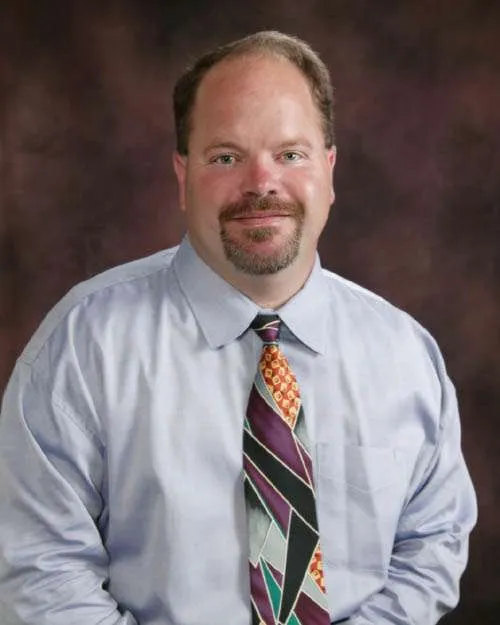
Author emphasizes social dimension of international development
LAWRENCE — Good intentions are not enough to make community-based international development work. It needs a facilitator who can literally translate but also figuratively bridge the gap in power dynamics between the two sides of the equation.


That’s the gist of a new book chapter by Brent Metz, professor of anthropology and director of the Center for Latin American & Caribbean Studies at the University Kansas.


The book is titled “Community-Led Development in Practice: We Power Our Own Change” (Routledge, 2025, ed. Elene Cloete and Gunjan Veda), and Metz’s chapter deals with the difficulties faced by a Kansas-based Engineers Without Borders group trying to bring clean water to a small group of Indigenous people in rural Guatemala.


Metz, who is also affiliated with KU’s Department of Indigenous Studies, has studied and regularly visited the Ch’orti’ Maya people of Guatemala since 1991, so he was positioned to act as one of the necessary go-betweens.


But even that was not enough, he writes, to see the project through to even a partially successful conclusion.


Metz said an Engineers Without Borders facilitator on the ground and a local partner organization affiliated with the Catholic church were needed “to get the project over the finish line.”


This is because of numerous intersecting social dynamics, Metz said. The legacy of colonialism led to distrust of outsiders (or even those within the Indigenous group who step outside or get ahead of others) and a resulting penchant for gossip and envy. Add to that a rapidly climbing population, and these dynamics undermine the Ch’orti’’s preferred method of operating by consensus, Metz said.


“Indigenous societies … like to do things by consensus, not by democracy,” Metz said. “Not 51% say one thing, and the other 49% feeling excluded. So they try to avoid or prevent conflict.


“Well, their communities have grown in the last few generations from hundreds to thousands, and try getting consensus among thousands of people. It is really hard, but they insist on it, and they don’t have any alternative. Sometimes they say ‘We wish we had a strong man or a chief who would just order us to do something.’ And then other times they say, ‘We give up. Let’s just vote on it, and 51 percent wins.’


But then, you know, those same simmering problems are there.”


Metz’s chapter states that conflicts over the installation and operation of the water project even led to death threats among the disputants. Metz recommends as a best practice regular, communitywide meetings to raise and knock down rumors about a project whenever possible.


“Our section of our book was on how to garner participation,” Metz said. “Participation sounds like a great word. They throw it around in development all the time. They also throw around ‘collaboration.’ But what does that really mean on the ground? So my article shows how challenging it is to garner participation when people weren’t used to working on projects like this.


“And it’s not just about the Indigenous people. It’s about the engineers, too. They don’t know who the Ch’orti’s are and how they live and what their concerns are, and what they can and can’t manage. So a lot of it had to be training both sides about each other.“


It turns out, Metz said, that organizing people is the hardest part.


“These engineers were amazing,“ he said. “Their work is straightforward. But if we did another project like this, the first thing I would ask is, ‘Where are the conflicts in this community? Who might not work with whom?’ Because every community, Indigenous or not, has these issues.”


-30-

————————————————————————


KU News Service

1450 Jayhawk Blvd.

Lawrence KS 66045

[email protected]

https://www.news.ku.edu


Erinn Barcomb-Peterson, director of news and media relations, [email protected]


Today’s News is a free service from the Office of Public Affairs
KU News: Study finds cities that conducted greenhouse gas emissions inventories moved needle toward reduction

0

From the Office of Public Affairs | https://www.news.ku.edu

Headlines

Study finds cities that conducted greenhouse gas emissions inventories moved needle toward reduction.
For years, cities have been taking on efforts to reduce their carbon footprint by reducing greenhouse gas emissions. Yet little has been done to verify if such work has the intended outcome. New research from the University of Kansas found that completing a greenhouse gas emission inventory indeed moves the needle toward mitigation. “Sustainability” can refer to any number of efforts a municipality can employ, but research has found that when American cities conduct a greenhouse gas emissions inventory, they reduce their CO2 emissions significantly more than they would have otherwise.


Hall Center announces competition winners
The Hall Center for the Humanities at the University of Kansas has revealed its winners for the upcoming summer and academic year, honoring faculty and graduate students for their groundbreaking humanities research and creative work. These awards provide critical support for travel, research time and scholarly engagement, advancing KU’s contributions to the humanities.

Full stories below.

————————————————————————

Contact: Mike Krings, 785-864-8860, [email protected]

Study finds cities that conducted greenhouse gas emissions inventories moved needle toward reduction
LAWRENCE — For years, cities have been taking on efforts to reduce their carbon footprint by reducing greenhouse gas emissions. Yet little has been done to verify if such work has the intended outcome.

New research from the University of Kansas found that completing a greenhouse gas emission inventory indeed moves the needle toward mitigation. “Sustainability” can refer to any number of efforts a municipality can employ, but research has found that when American cities conduct a greenhouse gas emissions inventory, they reduce their CO2 emissions significantly more than they would have otherwise.

“We found evidence that the construction and development of a GHG (green house gas) emissions inventory was causally linked to fewer fossil fuel carbon dioxide emissions,” said Rachel Krause, professor of public affairs and administration at KU and the study’s lead author. “Inventories reflect considerable investigation into the source and amount of local emissions, and we hypothesize that this information increases ability to manage efforts and allowed for change.”

Completing such an inventory, as well as employing sustainability directors or professionals in city government, are two of the most common methods cities have used to boost sustainability and reduce emissions, and researchers wanted to examine the understudied area of how effective those efforts are.

Researchers gathered data from cities across the United States identifying whether they had an emissions inventory and/or sustainability staff in place in both 2010 and 2015. Because the goal was to determine the difference that these investments generate, only those without them in place in 2010 were included in the analysis.

This yielded a sample of 702 municipalities to examine the emissions inventory and 484 for the sustainability staff. The research team then used satellite-gathered emissions data to calculate emissions released within the cities’ boundaries and compared the differences in emissions from the two points in time for groups of cities that did and did not make these investments.

“The estimation method we used controlled for over time and between city differences and indicates a statistically significant link back to this treatment,” Krause said of the emissions inventory. “Looking at fossil fuel-based CO2 from on-site residential emissions is a small piece of the overall pie, but the fact that there is evidence of real impact is relevant.”

Researchers examined emissions from on-site residential settings and on-road traffic. The results showed that conducting an emissions inventory results in about 22 fewer pounds of emissions per capita. The reduction appeared primarily via residential emissions.

The addition of sustainability staff, however, did not show a statistically significant reduction.

The study was co-written with Angela Park of the KDI School of Public Policy and Management in South Korea, who is also a public affairs alumna of KU; Christopher Hawkins of the University of Central Florida; and Aote Xin of Claremont Graduate University. It was published in the journal Cities.

Krause reiterated that the findings do not mean that employing sustainability staff is not a worthwhile investment for cities. Sustainability can mean many things and just because the study did not find that the addition of staff results in fewer emissions does not mean they have not influenced important improvements in other areas.

“Because greenhouse gas emissions are influenced by many factors — including climate, macroeconomics and higher-level policy — some people argue that local efforts aren’t large enough to matter,” Krause said. “The causal reduction shown following an emissions inventory is meaningful and adds to an area of research that was lacking.

“It’s not going to solve the issue, but is there evidence that these accounting and planning efforts are moving the needle in the right direction? We are finding that the answer is yes, they are. I posit that means something.”

As national and international political and policy priorities change, cities will continue to be among the most active in addressing greenhouse gas emissions, she added. Data is now beginning to show that investments and action taken by municipalities can move the needle.

-30-

————————————————————————

KU News Service is now on BlueSky.

Follow for KU News Service stories, discoveries and experts.


https://bsky.app/profile/kunewsservice.bsky.social

————————————————————————


Contact: Dan Oetting, 785-864-7823, [email protected]

Hall Center announces competition winners

LAWRENCE — The Hall Center for the Humanities at the University of Kansas has revealed its winners for the upcoming summer and academic year, honoring faculty and graduate students for their groundbreaking humanities research and creative work. These awards provide critical support for travel, research time and scholarly engagement, advancing KU’s contributions to the humanities.


Faculty Research Travel Grants

The Faculty Research Travel Grants offer KU faculty up to $3,500 each to support humanities-oriented research requiring domestic or international travel. This year’s recipients and their destinations are:


Sheyda F.A. Jahanbani, history: Paris, Cahors, Montpellier and Nimes, France
Benjamin Chappell, American studies: Los Angeles, New York City
Rebecca Laughlin Rovit, theatre: Berlin, Germany
Maya Kerstin Hyun Stiller, art history: Seoul, South Korea
Abdelmajid Hannoum, anthropology: Malaga, Spain
Silvia Park, English: Jeju, South Korea
Linda Galvane, East Asian languages & cultures: Tokyo, Japan
Midori Samson, School of Music: La Union and Pangasinan, Philippines; St. Louis, Missouri; Heart Mountain, Wyoming

Graduate Student Research Travel Grants

Graduate Student Research Travel Awards provide up to $3,500 to humanities graduate students for research-related travel. This year’s awardees and their research locations include:


Abigail Grace Scott, history: Paris, Aix-en-Provence, Nantes, France
Chang Wang, linguistics: Lhasa, Tibet, China
Josh Edmond Hayes, curriculum & teaching: South Korea
Xiaoyan Li, American studies: New York City
Ridwan Aribidesi Muhammed, history: Southwestern Nigeria
Han Mao, history: Taipei, Taiwan; Tokyo, Japan
Silvia Sanchez Diaz, anthropology: Guatemala
Lorena Victoria Mosquera Aguilar, Spanish & Portuguese: Colombia

Hall Center Resident Faculty Fellowships

The Resident Fellowships offer tenure-track humanities professors one semester of release time from teaching and service to focus on research or creative work. This year’s fellows and their projects are:


Paul Outka, English: “Judgment and the Human,” exploring how contemporary debates on artificial and nonhuman intelligence echo 19th-century judgments about human identity, race and gender
Michael Joseph Krueger, visual art: “Equine Archetype: Horses in Art as Symbols of Healing and Recovery,” a multimedia project using art and equine therapy to address trauma in at-risk youth
Patricia Walsh Manning, Spanish & Portuguese: “Correcting Erroneous History in Contemporary Spanish Historical Novels,” examining how post-Franco historical fiction shapes perceptions of 17th-century Spain
Maki Kaneko, art history: “Street Nihonga: The Art of Jimmy Tsutomu Mirikitani,” a retrospective exhibition of a Japanese-American artist’s work blending Nihonga techniques with urban survival narratives
Ninel Valderrama Negrón, Spanish & Portuguese: “Infrastructures of the Spanish Planet: Crafting Loyalty in the Borderlands,” investigating colonial infrastructure’s role in reinforcing racial and political hierarchies in Spain’s last colonies

Mid-Career Research Fellowship

The Mid-Career Research Fellowship provides associate professors a full academic year off from teaching and service to pursue research for promotion to full professor. This year’s recipient is:


Kent Blansett, history: “Expressions of Red Power: Engaged Resistance and Pop Colonialism,” a book that examines the Red Power movement through Native American use of popular culture across the 20th century

Richard and Jeannette Sias Graduate Fellowship in the Humanities

This fellowship funds two KU humanities graduate students for one semester each to focus on their dissertations while engaging with the Hall Center’s scholarly community. The recipients are:


Hayden Lee Nelson, history: “The North Woods: An Environmental History from the Pleistocene to the Pyrocene,” tracing the North Woods’ ecological and human history over 12,000 years.
Jeongwon Yoon, art history: “The Boundary Breakers: The Free Artists Association and the Abstract Art Movement in Imperial Japan and Colonial Korea, 1937–1945,” exploring abstract art’s role across empire-colony lines.

For more information about these awards or the Hall Center’s programs, visit hallcenter.ku.edu.


-30-

————————————————————————


KU News Service

1450 Jayhawk Blvd.

Lawrence KS 66045

[email protected]

https://www.news.ku.edu


Erinn Barcomb-Peterson, director of news and media relations, [email protected]


Today’s News is a free service from the Office of Public Affairs