Sunday, January 25, 2026
Home Blog Page 206

The Bridge Story

0
Thayne Cozart
Milo Yield

This is a story I resurrected from my public speaking days of attempting to humor rural audiences across a wide swath of the U.S. Here it it:

It wuz back in the days when tenant farming wuz much more common and the farm families actually lived on their rented farms. In this instance, on March 1, the Smith family rented a farm on one side of a flooded river. On the other side of the river lived another tenant family, the Jones.

With the river flooded, there wuz no easy way from one side of the river to the other. But, it wuz easy enuf for folks to yell across the river and understand the conversation.

And, as it turned out, the Smith family included a belligerent, testosterone-laden teenage son named Billy. And, the Jones family included an always-on-the-prod brute of a teenage son named Clarence. And, it only took a few days before the two teens were taunting each other across the flood waters about whose family wuz farming the best.

The animosity between the teens grew with each passing day. Billy would yell across the flooded river that red International farming equipment wuz the absolute best. Clarence would yell back that John Deere green was the best and always had been.

Billy claimed loudly that Fords were the best farm conveyance. Clarence echoed that Chevy’s could leave Fords in their dust.

Billy would counter that his family’s Angus cattle easily outperformed all other breeds. Clarence would yell back that his family’s Herefords were the best.

Billy yelled that Hampshire hogs were the best breed. Clarence yelled back that no breed could top Durocs.

They even yelled back and forth about whose bird dogs were the best. Billy favored his Setters. Clarence favored Pointers.

As it happened, all the while this teenage acrimony grew nastier, the county wuz nearing completion of a long bridge across the flooded river. At long last, the bridge construction wuz completed and open for travel.

The very day the bridge wuz open for travel, Billy told his Dad that he wuz going to cross the bridge and settle the score with Clarence. His Dad advised against it, but knew his argument wuz to no avail.

So, off to the bridge went the red-necked Billy to shut Clarence’s boastful mouth once and all. However, once he arrived at the bridge, he stopped short. Then he sheepishly backtracked as fast as he could all the way home.

When he got home, Billy’s dad asked him how his fight went with Clarence. Billy replied, “Well, Dad, there wuzn’t no fight. When I got to the bridge, I looked up and there on our side of the bridge wuz a big yellow sign that read, ‘CAUTION: CLEARANCE 12 FEET’ and I realized there is no way I can whip a kid that big.”

***

This story wuz told as a true one. One winter, a north-central Kansas farmer decided to save some repair money on his big round hay baler by replacing all the baler’s worn out belts.

So, he bought all the expensive belts from his local dealer, warmed up his farm shop and went to work. He got inside the bale chamber and first cut off all the worn-out belts. Then he put all new belts inside the chamber with him and started installing them.

He got so engrossed with the installation that eventually he realized he’d imprisoned himself behind a web of new belts with no way out unless the rear of the baler wuz lifted.

So, he took out his trusty cell phone and called his wife to help extricate him from his baler prison. He told his wife how to exactly start the tractor and carefully lift the baler lid. His wife refused, explaining that she wuz too nervous to start the tractor because she wuz afraid she would panic and hurt her hubby.

So, with no other way to get out, the farmer took out his pocket knife and cut away enuf of the newly-installed belting to let himself out. It turned out to be an expensive way to save repair money.

***

This story wuz told at the Old Geezers’ Morning Gabfest. The conversation had somehow turned to sad stories of how the use of alcohol had negatively affected workplaces, both on the farm and in the factory.

Here’s the story told by the oldest member of our gossipy group. He’s north of 90. He said that he once worked with a crew and one of the member’s had a glass pint of whisky. When it wuz quitting time, the generous worker passed the pint around the crew for everyone to take a sip.

Well, everyone did that, but one member wuz chewing tobacco and as he took his gulp of firewater, he clearly back-flushed flakes of tobacco into the bottle.

The owner of the bottle never said a word. He simply went to his vehicle, extracted an empty glass pint and used the corner of his handkerchief as an impromptu strainer and within moments had strained the tobacco-tainted whiskey into the empty bottle.

Satisfied with the purity of his remaining whisky, he put the new pint into his hip pocket and went home.

***

Words of wisdom for the week: “There ain’t nuthin makes me happier than to see the last snowflake from a blizzard finally melt. That’s what happened to me this week.”

Have a good ‘un.



Plant now for seeds of success

0

Get a jump on the gardening season by starting vegetable and flower seeds indoors now, says University of Missouri Extension field horticulturist Donna Aufdenberg.

“Starting seeds indoors doesn’t have to be difficult,” she says. “Knowing the basics is the best way to start.”

Sow most garden seeds 6-8 weeks before transplanting, says Aufdenberg. Set a goal date to plant outdoors and then count back on the calendar the number of weeks (or days) it will take for the plants to be ready to transplant, she says. Add the appropriate number of days for seed germination. This information is usually found on the seed packet.

Use new containers or reuse containers soaked for 10 minutes in 10% bleach water. Choose containers that are at least 2 inches deep and have drainage holes. Paper pots, plastic pots, cell packs or open flats can also be used. If you use open flats, plant in rows rather than broadcasting.

Select a high-quality medium such as potting mix or seed starting mix that contains peat and/or vermiculite. Do not use mixes that include fertilizer, and avoid potting and garden soils. “Buying inexpensive, poor-quality soils only causes problems,” says Aufdenberg.

Check seed packets for variety and information such as planting depth and light requirements.

After sowing seeds, keep the medium moist but not wet. Don’t let the soil dry completely. If you cover the seeds with a plastic dome, remove it when seedlings start to emerge to prevent disease.

Use heating mats under trays to speed germination of warm-season crops. Cool-season crops do not need heating mats.

Good lighting encourages quicker germination and keeps seedlings from becoming long and lanky, says Aufdenberg. Fluorescent shop lights are a good choice for seed starting. Place lights directly over seedlings, no more than 1-2 inches away from leaf tops. Do not allow bulbs to touch the foliage because burning can occur.

Check seedlings daily, or twice a day if they dry quickly. Water from the bottom and do not let the seedling sit in standing water. If you water from the top, water gently.

Keep seedlings in a well-ventilated, cool area (under 70 degrees during the day and 60 degrees at night). Good air circulation makes sturdier stems and stronger plants. Pay close attention to light levels and watering practices if seedlings get tall and lanky and have weak stems. Too little light and too much heat and water cause lankiness.

To transplant seedlings to a larger container, watch for the sprouting of the first “true leaves,” which look like adult leaves. Use a pencil or narrow tool to lift seedlings from the container. Plant each seedling in its own small pot filled with growing medium. Apply a diluted fertilizer solution after true leaves appear.

Plants grown indoors must “harden off” before being transplanted into the garden. If not gradually acclimated to outdoor conditions, plants can suffer wind or sun burn or chill. Place them in a cool, protected location outdoors for about 3-5 days to acclimate. Then move them into filtered sun/shade for another couple of days before planting outdoors. Plant on a cloudy day or late in the afternoon to avoid the strong sun and transplant shock. Water after planting.

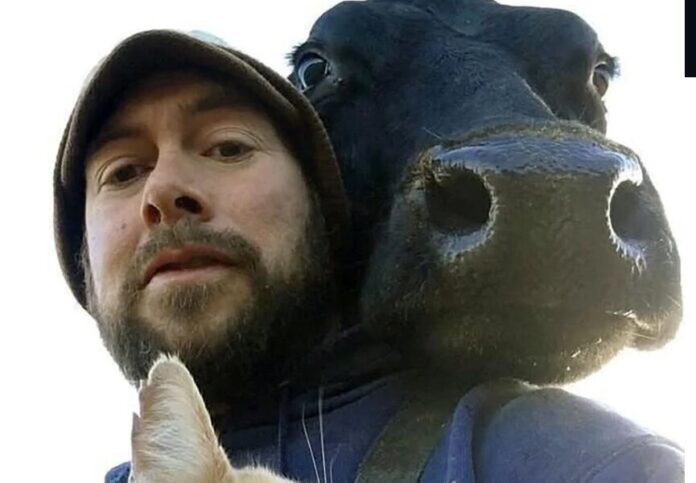
My cow friend, Buffalo, stood beside me throughout my farming career. Now I’ve had to say goodbye.

0

The other day, my old cow friend, Buffalo, died. She was the kindest, gentlest dairy cow that I’ve ever known, and I cannot remember mourning the loss of a cow more than I am mourning Buffalo. She has been by my side almost the entirety of my dairy farming career, and it is difficult to imagine the farm without her presence.

Small-scale, traditional dairy farming is unique among all sectors of agriculture due to the degree of intimacy between cow and farmer. I am with my cows from the first minutes of their lives every day until the last minutes of many of their lives. We endure it all together. Rain or shine, I am with my cows every single day, feeding, milking, breeding, calving, fighting them and loving their company. It’s not always romantic. The power imbalance can be brutal. But I always strive to give my cows the best possible lives I can afford to give them under the constraints of the dairy industry.

Some cows are just special. Every cow has a distinct personality, and every year I have a couple cows who just love people. As a kid, my sisters and I called these cows the “pets.”

Some of these pets are aggressive animals who don’t understand their own size and will bowl me over in their enthusiasm. Occasionally, I’ll run across a naturally timid cow who also wants to be my friend. These cows are the best. They make my job as a farmer particularly enjoyable, and I’ve long called them my therapy animals.

Twelve years ago, soon after the first crop of my calves hit the ground after I returned to the family farm, Buffalo was born. When I returned to the dairy farm 15 years ago, my parents and I worked out an arrangement where I would artificially inseminate their cows and I could keep the offspring to begin growing my own dairy herd. My parents had big black and white Holsteins, and I wanted to transition the herd to the smaller brown Jersey cows. The first generation of the crosses between these two breeds are normally born as solid black or chocolate-colored animals.

In the early part of 2013, Buffalo was born. This little, chocolate-colored, furry creature looked just like a little bison, so I named her Baby Buffalo. As this timid yet friendly calf grew up, her name became just Buffalo.

As someone who spends more time with animals than people, I tend to anthropomorphize my animal friends. I am convinced many animals (especially mammals) have similar emotional responses to life as humans. Buffalo was one of those cows who always seemed to have a sunny disposition. She would greet me with a rough lick to the face or would gently sidle up to me for a hug or a scratch. She went about her life with ease and without complaint.

I’m not sure if she was one of the aggressive boss cows, because I rarely remember her being a bully to younger cows. She definitely associated with the top boss cows of the herd who always bullied their way to the front of the line — first to get into the milk barn, first at the feed bunk, first out to fresh pasture. She had nine calves over her lifetime and almost always was one of my top milking cows. She never had a sick day in her life. She had a beautiful udder and was one of the gentlest cows I’ve ever had in the milk barn. If I ever had visitors who wanted to milk a cow, Buffalo would be the cow I took them to.

Last year, during her eighth lactation, Buffalo had her first bout of mastitis. One of the front quarters of her udder never really came back in milk production after that. This past fall, when she had her ninth calf, I decided that rather than trying to milk her bad mastitis quarter, I would make her a nurse cow for raising baby calves. I’ve been playing around with turning my old cows into nurse cows as their retirement plan from the milking herd. Keeping nurse cows seems to be a kinder and gentler way to raise baby dairy calves, different from the industry standard of separating babies from their mothers and bottle feeding the baby calves.

Because dairy cows produce way more milk than a single calf can handle, most milk cows can raise three to four calves. Finding cows with the right temperament to adopt calves can be tricky. Because the maternal instinct has been selected out of many dairy breeds, some cows have zero interest in caring for calves. Buffalo was the exception. She eagerly adopted each calf I put in her pen. I meant to stop with four calves, but I kind of accidentally put a fifth calf in with her. I thought about pulling the fifth calf but did some quick calculations. Buffalo had produced between 80 to 100 pounds of milk (10 gallons) daily her whole life. If any cow could raise five calves, it was her.

So she raised these five with the joy that she always seemed to have. When the calves were a couple months old, I moved Buffalo and her babies into a small pasture with other young calves and another nurse cow. I would still hear her low guttural calls to her babies as she led them around. Some joined in the shenanigans with the other calves while others were more clearly attached to mom.

This winter, through a brutally cold January on the Kansas plains and a couple of blizzards, I noticed Buffalo was losing weight. I’m still figuring out this nurse cow thing, but it does seem that once calves start growing bigger, they take a toll on the nurse cow. Their ravenous nursing sucks all the energy stores out of the cow. I think weaning at this point could be beneficial to allow the cows to recover. But I had my hands full with the hard winter weather and didn’t pay close enough attention to my old bovine friend. She still eagerly greeted me each day when I fed her and the calves their daily allotment of grain.

Buffalo continued to lose weight.

On a cold blustery February morning, I noticed Buffalo laying by herself out in her pasture with one or two of her calves occasionally coming over to her. From a distance, I knew the signs of a drooping head and a sunken frame that indicates a very sick cow. About noon, I pulled together some vitamins, grain, and other medication to go see if I could doctor her up. When I reached her side, I was alarmed by just how rough she looked. She greeted me with an outstretched neck. I knelt down and let her eat some grain, chasing away the other critters.

Once I gave her an injection, she struggled to her feet and continued to gingerly eat the grain. I had the fleeting idea of trying to bring her into the shed and making a small comfortable sick pen for her. As she continued to lick the grain and I, by her side, was stroking her and shoeing away the other calves, her body all at once went ridged and she fell flat on her side, barely missing me. It took me a second to realize this was the end. I took her big head in my lap and stroked her face as she moaned and struggled for a minute or two before her breathing stopped.

Buffalo’s ending was sudden and unexpected. I had a big lump in my throat as I said goodbye to my old friend. I was mad at myself for not intervening sooner. However, it was most likely an infection or cancer that finally took Buffalo. She was an old cow. In an industry in which the average dairy cow only lasts one and a half lactations (3.5 years of age), a 12-year-old cow is as old as Methuselah. Her death after a good, long, honest life should not have come as a shock.

Old Buffalo, I will miss you. It was an honor to be by your side these last 12 years. You were the best cow this dairy farmer could have ever asked for. I hope I gave you the best life I could have given you. Wishing you greener pastures, dear friend.

Jason Schmidt is a fifth-generation Kansas farmer near Whitewater. 

Spring Garden Tips for Drought Preparedness

0

Many simple gardening practices can greatly impact the drought preparedness of your lawn and garden the rest of the year. Here are 6 quick tips for preparing your garden this spring for drought:

Core Aerate Your Lawn: this will help improve soil health and allow moisture to reach deeper into the soil

Prevent Weeds: weeding and applying pre-emergents can prevent summer weeds which will compete for water with desirable plants in the lawn & garden

Apply Mulch: this will help conserve soil moisture & reduce weed competition

Apply Minimal Irrigation: minimal watering practices in the spring help to develop deep root growth. Do NOT overwater in the spring. Most lawns and gardens will thrive on watering just once a week or less. More frequent irrigation can limit deep root growth in the spring, making plants more sensitive to drought when temperatures increase. Inspect Irrigation Systems For Leaks: when turning on irrigation systems for the growing season, inspect all zones for leaks, overspray, or wasted water

Water Deeply When Irrigating: begin your year using best watering practices. Water deeply, and infrequently, soaking the ground 6-12 inches deep with each watering, and providing “mini droughts” in between watering to increase the depth of plant roots.

For more tips and water conservation techniques, visit our drought resources website: https://sedgwick.ksu.edu/drought

Finding the motivation to exercise

0

The mind is a powerful tool we can utilize to jumpstart a new physical activity journey or any new healthy habit. Everyone has days where they struggle to find the motivation to be active and exercise. Whether you had a long day at work, are feeling overwhelmed with too many responsibilities, or think that you lack the time, many things can hinder our motivation. Adults should aim for at least 150 minutes of moderate aerobic activity or 75 minutes of vigorous aerobic activity per week. These numbers may seem daunting, but remember, even small doses of movement count. There are also many ways to involve the entire family in being more active together. Whether you are trying to become more active, reach new goals, or need tips to get moving on difficult days, read on to discover some simple ways to boost your motivation.

Motivation Boosters

  • Exercise with family or friends.
    Exercise can be a great opportunity to be social and bond with children, grandchildren, spouses, and friends. You can plan weekly walks with a friend or dance with your child to their favorite songs!
  • Make a specific goal and write it down.
    Tell others about your goal, so they can help you be accountable. Don’t forget to make your goal S.M.A.R.T. (specific, measurable, attainable, realistic, and time-oriented). You are much more likely to stick to a goal that you can easily track and has a targeted end date. Start with a small, short-term goal and work your way towards a larger, long-term goal. Think about the “why” and purpose behind your goal, which can be used as daily motivation.
  • Create a vision board.
    Create a poster with images or words about your exercise and other health goals and hang it somewhere where you will see it often to remind yourself of why you started on this journey. Your child can also participate by creating their own poster featuring their favorite activities that get them moving.
  • Set reminders and calendar alerts.
    Set reminders on your phone or work calendar throughout the day to stretch, go up and down the stairs, or take a lap around your office. When we are busy it is easy to forget the importance of movement, but remember, even five minutes counts and is beneficial!
  • Track your progress.
    There are many apps, journals, and other resources that offer great ways to track your exercise progress. When you are feeling discouraged, look back and see how much progress you have made since the beginning of your journey.
  • Reward yourself.
    When you reach a personal goal, such as attaining 150 minutes of moderate aerobic activity per week or running a 5k, you could purchase a new book or pair of workout shoes, enjoy a favorite treat, or any other reward. You can even make a sticker chart for your child and give them a sticker to place on it when they move for 60 minutes that day. When their chart is full, they can earn a reward too! Just be cautious that your reward does not hinder your progress towards future health or fitness goals.
  • Keep a fitness diary.
    Keep a personal fitness diary and write down how you feel before versus after exercise. You can also work through the emotions and feelings you have towards starting and reaching your goals. When we associate exercise with positive feelings, we are more likely to follow through.
  • Find success stories.
    Find a story about someone who was in your shoes and utilize strategies they used for success. Whether it be someone with a similar health concern or family situation, reading about another person and what strategies they utilized to succeed on their fitness journey can be very uplifting and inspiring.
  • Choose activities you enjoy.
    Exercise becomes much easier when it is something we also enjoy doing. There are endless possibilities of ways to be physically active; don’t be afraid to try something new and expand your fitness opportunities. Try new group fitness classes in your community, join a recreational league, enroll in a parent-child swimming class, or explore local trails and parks.
  • Listen to some favorites.
    Grab some headphones and listen to your favorite audiobook, podcast, or playlist. Time can go by fast when we are focused on something else!

Choose an idea from above and try to implement it into your daily life. Start with small changes and don’t forget to give yourself grace as you integrate these new strategies. Each step forward gets you closer to reaching your fitness and health goals.