Friday, January 30, 2026
Home Blog Page 277

Garden Mums

0

Garden mums (Chrysanthemum sp.) that have finished flowering can be cut back to two to three inches. Apply a layer of mulch over the top for protection through the winter. It is also okay to leave the top growth intact through winter.

This can provide insulation for the crown. Regardless of fall maintenance practices, garden mums should not be allowed to dry out during the winter. If there has not been any precipitation in the form of rain or snow, it may be necessary to apply supplemental water.

Massive safety recall hits Volvo and Mack trucks

0

The NHTSA has announced a recall involving over 185,000 vehicles from Volvo and Mack Trucks. This extensive recall addresses potentially serious electronic control unit (ECU) malfunctions that could affect crucial vehicle systems, leading to increased accident risks.

Discover the details and understand what steps you should take if your vehicle is impacted.

Key Points of Recall:

ECU Malfunctions: Faulty ECUs could disrupt multiple safety systems, including ABS, stability control, and collision mitigation.
Risk of Accidents: Reduced functionality of crucial safety systems could significantly raise the likelihood of crashes.
Widespread Impact: Extensive range of models from 2020 to 2025 affected, covering both Volvo and Mack branded trucks.

Fuel pump concerns in Paccar Trucks with Cummins Engines
October 28, 2024
A crucial recall has been issued by the NHTSA for thousands of Paccar tractors, specifically models equipped with Cummins X15 diesel engines. An identified risk of fuel pump leaks could lead to unexpected engine stalls, posing a serious risk on the road.

Check whether your vehicle is affected and what actions to take to ensure safety and compliance.

Key Points of Recall:

Fuel Pump Leaks: Potential for engine stalls due to fuel pump issues in critical truck models.
Immediate Risk: The defect presents an immediate hazard of stalling, increasing the likelihood of accidents.
Broad Spectrum of Models: Multiple 2025 models of Kenworth and Peterbilt trucks are included in this recall notice.


Reno County Lights Courthouse Green in Support of Operation Green Light for Veterans

0

Reno County proudly announces that the Reno County Courthouse has been illuminated green as part of Operation Green Light for Veterans, a nationwide effort by counties, the National Association of Counties (NACo), and the National Association of County Veterans Service Officers.

From November 4-11, 2024, across the country there will be county buildings and landmarks illuminated green to show support for veterans and raise awareness around the resources available at the county, state, and federal levels to assist veterans and their families.

Now in its third year, Operation Green Light is expected to draw hundreds of counties to participate. “The county role in administering services for veterans includes County Veterans Service Officers helping fellow former service members access more than $52 billion in federal health, disability and compensation benefits each year, as well as other services supporting the approximately 200,000 service members who transition into civilian communities annually,” according to Operation Green Light.

“Participating in Operation Green Light allows Reno County to support and honor our veterans, not only by raising awareness of the sacrifices they’ve made, but also fostering a sense of community that shows these veterans that they are valued and appreciated,” said Reno County Commission Chairman Randy Parks. The Reno County Veterans Memorial is located at 209 Des Moines Ave, in South Hutchinson, featuring the names of veterans from Reno County or those who called Reno County home. Their website address is https://renocountyveterans.com/

Residents, businesses, and other organizations are encouraged to participate by simply changing one light bulb inside or outside their home to a green bulb. By shining a green light, veterans can know that they are seen, appreciated, and supported, and open conversations can be held about the needs of veterans and the services that support veteran communities.

Counties and residents across the country are sharing their participation on social media using the hashtag #OperationGreenLight. For more information on Operation Green Light, go to https://www.naco.org/program/operation-green-light-veterans

Advocates of imperiled lesser prairie chicken say market incentives key to expanding habitat

0

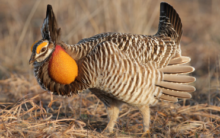
The federal government’s decision to list the lesser prairie chicken as endangered or threatened could inspire interest in a system of conservation banking that pays landowners a market rate for protecting bird habitat.

TOPEKA — Entrepreneur and conservationist Wayne Walker says the business of saving the lesser prairie chicken in Kansas required wider commitment to paying market rates to landowners dedicated to improving grassland habitat for the vulnerable birds.

He said companies involved in energy production within regions favored by the prairie chicken often had good intentions in terms of addressing the need for biological diversity and addressing climate change concerns. But, he said, too many balked at paying the true cost of a landowner setting aside large tracts for benefit of the colorful, reclusive prairie chicken.

Walker, owner of Common Ground Capital and CEO of LPC Conservation, said on Kansas Reflector’s podcast that programs designed to aid the lesser prairie chicken tended to fall short because they didn’t pay farmers or ranchers enough to justify multigenerational shifts in land use.

“You can’t keep asking the ranchers to be good conservationists for free. That’s essentially what we’ve done to date and … is why we have lost so much prairie and this bird’s in trouble,” Walker said.

“Our financial system is designed to make a profit and conservation historically has been kept out of that model,” he said. “Until a rancher can make a profit conserving prairie because of the prairie chicken or some other ecosystem service — just like he can make money selling his wind rights or his solar rights or his mineral rights or his development rights — it’s not going to turn around.”

In 2023, the U.S. Fish and Wildlife Service controversially listed two distinct population segments of the lesser prairie chicken under the Endangered Species Act due to habitat loss and fragmentation of grassland areas.

In the northern region, including western Kansas, southeastern Colorado, western Oklahoma and the northeast Texas panhandle, the lesser prairie-chicken was listed as threatened. The southern range of the lesser prairie-chicken in eastern New Mexico and the southwest Texas panhandle was listed as endangered due to the threat of extinction.

The decision of federal regulators enraged members of the Kansas congressional delegation who denounced the listing as an overreach damaging to the state’s agriculture and energy sectors.

U.S. Rep. Tracey Mann, a Republican serving the 1st District that includes much of the bird’s habitat in Kansas, said the listing amounted to a “proxy war on American agriculture and energy sectors that are vital to our economy.”

He said the federal government should get out of the way of farmers, ranchers and landowners, who he described as the “original conservationists.”

More than a cudgel

Years of brawling among energy companies, environmentalists, elected officials and federal regulators led to the listing and fueled the inevitable flurry of lawsuits.

Mike Smith, who works with LPC Conservation projects in five states, said the population of lesser prairie chicken had dropped to perhaps 25,000. In certain years, due to good rainfall, there might be a temporary surge in the population. Drought has the opposite impact on the birds.

The long-term spiral, despite a hodgepodge of voluntary programs and initiatives, justified intervention with the federal Endangered Species Act, Smith said.

He said mandates from the federal government could prompt greater environmental awareness to deterioration of bird habitat and raise the profile of approaches anchored to business principles.

“The Endangered Species Act provides a cudgel, and, you know, keeps everybody honest, but the outsourcing of conservation work to the states and then having state rangers or state wildlife managers in the land business has not worked,” Smith said. “They don’t know how to cobble together the last of the best properties in order to make … these easements, which is what Wayne (Walker) has done in his conservation banking business.”

Walker said collaboration could work if there was sufficient financial incentive for property owners to redirect land resources in a way that also benefitted the bird.

“The old conservation models have done some good things, but overall we’re losing, right?” Walker said. “It just became clear to me … we had to bring some business acumen to it.”

It’s a business

Common Ground Capital works to identify landowners with property that possessed ecological and biological features that could be restored and preserved through a system of conservation banking. Property owners enter into long term protective land easements that serve interests of prairie chickens in exchange for a prescribed revenue stream. It would be ideal to build strongholds for the kesser prairie chicken with 25,000 to 50,000 acres each, Walker said.

When the varied interests come together, companies with a large imprint on the environment — energy companies, for example — purchase conservation credits to position themselves as more clean and green. Wind and solar industries have taken to conservation banking more than oil and gas interests.

“We approach it like a developer would approach building a housing development. You know, location, location. Where are the birds? Where are there ranchers there that are willing to talk to us about this arrangement. And then, of course, with the Fish and Wildlife Service, there are standards we have to meet,” Walker said.

Listing of the bird as threatened and endangered ought to build momentum for conservation banking. Common Ground Capital, and companies like it, would profit by bringing the diverse interests together.

“I really don’t want to be apologizing for that. I mean, people have accused me of trying to get rich off the prairie chicken,” Walker said. “Look, if it’s a get-rich-quick scheme, it is the worst one in history because we do this for 12 years, and we still aren’t quite in the black yet.”

Tim Carpenter, Kansas Reflector

Kansas Farmers Union 2024 State Convention Set for Lawrence

0

“The Conscience of Agriculture” is the theme of Kansas Farmers Union’s 117th anniversary state convention to be held at SpringHill Suites in Lawrence, KS November 20-21.

“Every year our state convention is great, but this year it feels like it’s going to be even more special. Besides our policy drafting and business meeting, our guest speakers will be superb and educational. We invite KFU members and the public to join us for our annual convention,” Donn Teske, KFU State President said.

A pre-convention session co-hosted by Common Ground Producers & Growers will be held November 18-19. Whether an experienced specialty crop grower or just starting out, the second annual pre-convention training offers valuable insights for both urban and rural agriculture enthusiasts, community gardeners, and growers.

Covering topics from canning to marketing your products, participants will gain a wealth of knowledge from industry experts across various facets of agriculture. More information and registration can be found here: https://commongroundpg.com/farmers-training/

The 117th anniversary KFU convention kicks off the morning of Wednesday, November 20 with a keynote presentation from Dãnia Davy, founder of Land & Liberation, a consultancy promoting liberatory relationships between humans, natural and financial resources, and land. She will challenge attendees to face their individual and collective land histories so they can recognize the critical role we each have to play in restoring our internal and external ecosystems.

Lucas Bessire, author of Running Out: In Search of Water on the High Plains will lead an open conversation with attendees about the Ogallala Aquifer. He will share insights from the research that led to his book on groundwater depletion in southwest Kansas, reflect on his family’s relationships to groundwater, discuss the major myths that have prevented solutions, and think together with attendees about what can be done now.

Other Wednesday speakers include Kansas farmer Gail Fuller who will lead a two-part breakout on farm and rural mental health, National Cooperative Business Association CLUSA International (NCBA CLUSA) President & CEO Doug O’Brien will speak about the upcoming International Year of Cooperatives, and the K-State Produce Safety Extension Team of Dr. Manreet Bhullar and Katelynn Stull will deliver information on the FSMA Produce Safety Rule.

Convention attendees will also get the opportunity to tour Bowersock Mills & Power Company Hydroelectric Plant Tour – the only operating hydroelectric plant in Kansas, located just across the river from the convention hotel.

Wednesday evening features a banquet where attendees will receive an update on the Farmers Union Midwest Agency and the annual Ruth Hirsh Friend of the Family Farmer Award, Linda Hessman Lifetime Achievement Award, and Farmers Union Midwest Agency Agent of the Year Award will be presented. Following the banquet, a live and silent auction will be held to benefit the Kansas Farmers Union Foundation.

On the morning of Thursday November 21, National Farmers Union (NFU) government relations representative Layla Soberanis will provide an update on NFU’s 2024 policy priorities—legislative wins and end of year lame duck expectations. She will also cover the 2024 election results, what that means for 2025, and the possibility of getting a Farm Bill done. KFU contract lobbyist Sean Gatewood will provide an outlook on the upcoming Kansas legislative session which begins in early January.

Dawn Buehler, Kansas Riverkeeper and Executive Director of Friends of the Kaw will talk about Kansans for Conservation – a coalition of more than 40 organizations working to ensure a sustainable future for Kansas. Brownie Wilson of the Kansas Geological Survey will look at water resources and use patterns across the entire state with particular emphasis on water level changes and trends of the HPA and its subsystems- the Ogallala, Great Bend Prairie, and Equus Beds.

Immigration Attorney Valerie Sprout will present on the immigration programs and policies that help sustain agriculture, and what changes could be made to the immigration law to continue to help rural communities. Smoky Hills PBS’ Max Aguiar will discuss how animation promoted food conservation and production during both World Wars, turning everyday tasks like rationing and farming into patriotic acts.

The final speaker of the convention will be Sammy Gleason to share how Kansas Department of Agriculture’s From the Land of Kansas trademark program helps members promote their Kansas products and provides members with a variety of business development tips and opportunities including marketing assistance.

Grassroots policy updates and development takes center stage Thursday afternoon. Each year, members review past policy, propose, and debate new issues, and adopt policy for the coming year. KFU members will also elect board members from the north and south districts, state president, and delegates to National Farmers Union’s annual convention.

KFU convention registration, sponsorship opportunities, hotel information, and full convention agenda are available at https://www.kansasfarmersunion.org/news Scholarship opportunities are available by contacting KFU Executive Director Nick Levendofsky ([email protected])

About Kansas Farmers Union – Since 1907, Kansas Farmers Union (KFU) has worked to protect and enhance the economic interests and quality of life for family farmers and ranchers and their communities. Kansas Farmers Union represents its members, who are engaged in diverse farming and ranching pursuits, through education, legislation, and cooperation.