Saturday, January 31, 2026
Home Blog Page 289

Wheat Scoop: Celebrate your local cooperative this October

0
Kansas Wheat

For audio version, visit kswheat.com.

Each October, the Kansas Cooperative Council celebrates National Co-op Month. More than just a prairie skyscraper, these member-owned, member-controlled businesses are a pillar of Kansas communities that continuously invest in new services, resources and infrastructure to help their farmer member-owners.


“As we travel the state this year, it’s important to meet people in their space and recognize the important role cooperatives play in their communities,” said Brandi Miller, president/CEO of the Kansas Cooperative Council, the organization that has represented the cooperative business model in the Sunflower State since 1944. “This year is our organization’s 80th birthday, and we are excited to celebrate, it is also encouraging to see a more successful harvest after several years of drought.”


By definition, a cooperative works for the mutual benefit of its members, who own and control the business. Agricultural cooperatives have existed nearly as long as farmers have been farming as producers learned how to pool resources and expertise to support each other’s operations. The local co-op is where farmers deliver and store their grain, market their crops, obtain field recommendations and purchase inputs. Agricultural cooperatives also return earnings to their members, known as patronage.


In Kansas, cooperatives continue to invest in the grain industry, including building to meet the demand for increased grain storage capacity, improved efficiency in weighing and dumping time and more crop input warehouse space. Cooperatives are also meeting needs for replacing aging infrastructure with newer, updated facilities.


Outside of this now-standard set of services, cooperatives provide credit, insurance, electric service, health care, housing, telephone services and even childcare. Cooperatives also support the health of local economies by creating jobs, paying property taxes and income taxes and giving to charity.


This year’s theme for National Co-op Month is “The Future is Cooperative.” Miller said this reflects the work that Kansas cooperatives are doing to be more innovative, create efficiencies, become nimbler and better serve larger operations and younger farmers.


In Kansas, cooperatives have more than 116,00 members with more than 5,000 people employed at more than 575 locations. The Kansas Cooperative Council is engaging in several activities throughout the month to thank members and help raise the profile of cooperatives in Kansas, including bringing lunches to cooperatives across the council’s membership districts, signing an official proclamation of October as Co-op Month with Kansas Governor Laura Kelly and organizing a photo contest.


Now in its third year, the council’s annual photo contest is open for entries on Facebook at facebook.com/KansasCooperativeCouncil/. The contest is open to all ages and skill levels, and individuals may submit up to five total photos from now until October 25, 2024. Categories include:

Life Around the Co-op
Faces of Agriculture
Amber Waves of Grain
Show Us Your Co-op Principles
Farm Life Unfiltered

Winners will be selected from voting on the Facebook page from October 28-31, 2024, with winners and prizes announced on November 1, 2024.


Enter the contest or follow along during National Co-op Month with the Kansas Cooperative Council at https://www.facebook.com/KansasCooperativeCouncil.


###


Written by Julia Debes for Kansas Wheat

Finding Time to Write amid a Busy Schedule

0

Lovina’s Amish Kitchen
Lovina Eitcher,
Old Order Amish
Cook, Wife &
Mother of Eight

It is Monday evening, around 9:45 p.m. Everyone has settled down for the night. It would be so good to go to bed as well, but I need to write this column. Tomorrow will be a full day, and I do not see how time will allow me to get this in the schedule. 

Tomorrow, daughter Verena is hosting a Tupperware bridal shower here for daughter Lovina at 10 a.m. Lunch will be served afterwards.

Verena and I made two casseroles for tomorrow. We also made one to send to our neighbors. She had a baby and had a hospital stay. We thought sending a casserole might help out. 

I washed laundry this morning while Verena was helping daughter Loretta. It looked like it could rain earlier, but then it cleared up, and the sun came out. By tonight, the clothes were all dry. 

On Friday night, we had supper at son Joseph and Grace’s house. It was a change to see Joseph’s belongings in a new house. They are still getting settled but have a nice home. They grilled chicken and wings plus had mac and cheese and more. They were great hosts, and we had a very nice evening.

On Sunday, we attended church services. We came home after church and rested, then left again to go to daughter Elizabeth and Tim’s house. They had invited our family over, and all were there except Joseph and Grace and Daniel Ray and Verena. 

Elizabeth made four different pizzas, which were all delicious!

They are gradually getting their unattached garage made into living quarters so they can move in until they get their house taken care of from the mold. 

Sunday in church, I still need to get used to the fact that I only have two grandchildren and not twelve in church with us. It will take a lot of getting adjusted to. I am thankful I was able to see them all at Tim and Elizabeth’s then for supper. 

Friday, October 18, will be son-in-law Tim’s birthday. May he have a great birthday and many more happy healthy years. 

It is now 5:45 a.m. I didn’t fair so well with my writing. It was so hard to stay awake, and I feel sorry for my editors when they need to read my writing when I’m tired. I would probably do them a favor if I got better at typing. I haven’t used my typewriter for so long that the ink is probably dried up in it. 

My husband Joe and son Benjamin left for work quite a while ago. Daughter Verena went to daughter Loretta’s around 5:30 a.m. They will come over in a few hours when the boys are awake. It is cold this morning, and I wouldn’t be surprised if we have a frost this week. Maybe tonight we can pick the rest of the peppers and tomatoes; then our garden is history for 2024. 

Daughter Lovina will probably come with daughter Susan. I haven’t talked to her since Sunday night. She has been staying with Susan while Daniel goes to work. Susan still hasn’t passed her kidney stone, so she’s still miserable. 

Granddaughter Andrea, 2 (Tim and Elizabeth), always brings her doll along. She takes it to church and everywhere she goes. Last week, she brought two dolls along. After she and Elizabeth left for home, I saw one of her dolls (not her favorite one) hidden behind my recliner. We knew who always hides stuff there—Denzel, 2 (Dustin and Loretta). He was annoyed that Andrea wouldn’t let him have one of her dolls, so the first chance he got, he hid it from her. Usually this is also where he hides from Loretta when he knows he’s in trouble. Haha! He knows Loretta can’t get behind the recliner with her mobility scooter. Children are so funny sometimes! They are also so precious and can win your heart. 

Let us keep praying for all those affected by the hurricanes. I cannot imagine what they are battling with. One of the men from our community took a trailer load of things to the victims. May God give them strength through the time and always God bless!

Pumpkin Chocolate Chip Bars

1 cup pumpkin puree

1 cup granulated sugar

1/2 cup brown sugar

1/2 cup vegetable oil

2 large eggs

1 1/2 cups all-purpose flour

1 tsp baking powder

1/2 tsp baking soda

1/2 tsp salt

1 tsp ground cinnamon

1/4 tsp ground nutmeg

1/4 tsp ground cloves

1 cup chocolate chips

Preheat oven to 350 degrees Fahrenheit and grease a 9 x 13-inch baking pan. In a large bowl, mix together pumpkin puree, granulated sugar, brown sugar, and vegetable oil until smooth. Beat in eggs one at a time. In a separate bowl, whisk together flour, baking powder, baking soda, salt, cinnamon, nutmeg, and cloves. Gradually add the dry ingredients to the wet ingredients, stirring until combined. Fold in the chocolate chips. Pour the batter into the prepared pan and spread evenly. Bake for 25-30 minutes or until a toothpick inserted in the center comes out clean. Let the bars cool completely in the pan before cutting into squares.

Lovina’s Amish Kitchen is written by Lovina Eicher, Old Order Amish writer, cook, wife, and mother of eight. Her three cookbooks, The Cherished Table, The Essential Amish Cookbook, and Amish Family Recipes, are available wherever books are sold. Readers can write to Eicher at Lovina’s Amish Kitchen, PO Box 234, Sturgis, MI 49091 (please include a self-addressed stamped envelope for a reply); or email [email protected] and your message will be passed on to her to read. She does not personally respond to emails.

Natural Gas

0
lee pitts

Our heater in the house is on the fritz so I checked with a heating and air conditioning firm we’ve done business with in the past and was informed that I could get a new heater for… are you ready for this… ONLY $5,000!

“Does that include a lifetime supply of gas or something?” I asked the salesman.

So I started on my quest to find an alternate heating solution. The first option was that we could just go without a heater and freeze to death. Or we could buy more blankets and firewood. Then I was struck by a fantastic idea. What could we use for fuel that we have plenty of and would be free? COW CHIPS, of course, that we could burn in our fireplace for free like the pioneers did.

My wife likes saving money as much as I do and I’d almost convinced her about the cow chip idea until I told her that because of my tender health she’d have to be the one to collect the chips.

In my neck of the woods we only have to deal with nearly freezing weather for about one week of the year. Having written that I’m thinking the folks in North Dakota, Maine and Montana right now are saying, “What a wimp Pittsy is!” And I suppose I am. What can I say, I’m a fifth generation Californian who has lived on, or near, the coast my entire life where our weather is almost idyllic. All we have to put up with is fog and earthquakes. We don’t need, or have, air conditioning and hardly ever use the heater except at night when it might get all the way down to 45 degrees inside our comfy home. So you can see why spending $5,000 for something we’ll rarely use seems like an unnecessary allocation of our resources.

We were almost ready to pull the trigger on the heater when I remembered something I’d read about years ago. As I explained to my wife, “I don’t remember in what country it was but the people’s houses were two story with the bottom story being reserved for cows. Yes, cows. By cutting a few holes in the floor the heat the cows produced naturally drifted upwards and that is how they heated their houses.”

“Well that gives new meaning to the words “natural gas”, doesn’t it?” asked my wife.

“It’s the perfect solution for us. We have all that open space underneath our house and we could kill two birds with one stone. A few cows could get out of the weather and they’d heat our house for free.”

“To make room for the cows what are you gonna do with all that worthless junk you’ve stored under the house?”

“We’ll sell all my valuable junk, but because of my tender health you’ll have to remove it to make room for the cows which will produce more cow chips that you’ll have to muck out in the Spring. But just think, it’s an ingenious enclosed system that I’m sure any greeny would love. If we want to turn down the thermostat in the middle of the night all YOU have to do is go kick a couple cows out from under our house.”

“Would we have to get a permit from the county?” asked my wife.

“Of course we would. After all, this is California where you gotta get a permit to flush the toilet.”

“But wouldn’t it smell something awful?” asked the wife.

“Not any worse than the natural gas that comes out of a pipe that they make smell like rotten eggs so you can smell a gas leak. Only instead of coming out of the orifice of a pipe our natural gas will come out of the orifice of a cow!”

“But when company comes to stay won’t we be embarrassed about heating with cows?”

“That’s the beautiful part about it. You know how we hate having company, right? If we install our cow heater I guarantee it will cut down on the number of house guests we have in the future. And even if relatives do come and try to use our home as a hotel where we cook and clean for them I guarantee they’ll be be getting an early checkout after only one night!”

Get barn cats vaccinated

0

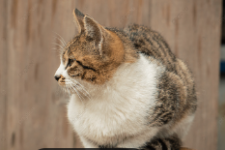
After the announcement by KDHE earlier this month that there have been rabid cats found in the state, Erica Miller, DVM with Apple Lane Animal Hospital reminds us to get those barn cats vaccinated.

“One of those cats I think was in Jewell County,which is where my in-laws are from,” Miller said. “I sent that article to my husband to show his parents, yes, even the barn cats, outdoor only. Truly, I mean, those are the ones that need to be vaccinated for rabies because they have the most exposure.”

The outdoor cats in particular are exposed to the wildlife.

“I’m sure everyone’s seen videos where we’ve got the plate of cat food out, and we’ve seen, you know, then we’ve got like possums and raccoons coming up to eat it too,” Miller said. “We can see that, so more exposure to the wildlife with our outdoor pets, and you know, not only that, but rabies is required in the state of Kansas, so you know, I have to tell you, everything has to be vaccinated for rabies.”

If you find a litter of kittens in your barn, remember to get those new ones vaccinated as soon as possible.

“Specifically rabies vaccine, you know, four months, 16 weeks,” Miller said. “We do recommend other vaccines for cats, even barn cats, you know, one of the vaccines helps prevent against kind of the upper respiratory tract infections, they’ll pass to one another being outdoors, and then the feline leukemia vaccine that they can also pass, and so most people with barn cats, or, you know, that aren’t kind of the family cats, they will just do the rabies.”

To set an appointment for those vaccinations, call your veterinarian.

Governor Kelly Updates Declaration of Drought Emergency, Warnings, and Watches for Kansas Counties

0

Governor Laura Kelly has signed a proclamation approving updated drought declarations for Kansas counties.

“Drought conditions have persisted across the state through the summer season, and Kansans are continuing to see the effects,” Governor Laura Kelly said. “With conditions expected to remain dry throughout the fall, Kansans should consider their water usage and take extra care to prevent wildfires.”

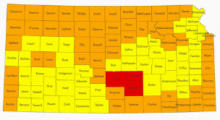
The drought declaration placed three counties into emergency status, 55 into warning status, and 47 into watch status. This action was recommended by Connie Owen, Director of the Kansas Water Office and Chair of the Governor’s Drought Response Team. Although recent rainfall provided widespread drought relief, this relief was short-term, with many areas experiencing below-average rainfall for several months. Forecasts indicate that drought will persist and expand across most of the state through October and into the winter.

Many of our state’s large river basins are currently being supported by federal reservoirs, utilizing storage in those reservoirs to maintain streamflow,” said Owen. “If conditions persist, as predicted, the demand and stress on water resources may increase quickly. The Governor’s Drought Response Team will continue to monitor the drought conditions across Kansas and make recommendations to Governor Kelly as conditions change.”

Through an interagency agreement between the Kansas Water Office, the Kansas Department of Wildlife and Parks, and the Kansas Division of Emergency Management, counties in the emergency stage are eligible for emergency water use from certain state fishing lakes and some federal reservoirs.

Individuals and communities must contact the Kansas Water Office for a water supply request before withdrawing water from lakes. These requests will, in turn, be referred to the appropriate office to obtain the necessary permits to withdraw the requested water.

This proclamation shall remain in effect for those counties identified until rescinded by a proclamation ending the declaration or revising the drought stage status of the affected counties.

Effective immediately, the proclamation:

  • Declares a Drought Emergency, Warning, or Watch for the counties as identified below;
  • Authorizes and directs all agencies under the jurisdiction of the Governor to implement the appropriate watch, warning, or emergency-level drought response actions assigned in the Operations Plan of the Governor’s Drought Response Team.

The Governor’s Drought Response Team will continue to watch the situation closely and work to minimize the negative drought-induced effects on Kansans. Kansans are encouraged to report drought-related conditions and impacts in their region through the Condition Monitoring Observer Reports (CMOR) system.

For more detailed information about current conditions, visit the Climate and Drought webpage on the Kansas Water Office website at kwo.ks.gov.

County Drought Stage Declarations:

Drought Emergency: Harvey, Reno, Sedgwick.

Drought Warning: Barton, Bourbon, Brown, Chautauqua, Cherokee, Cheyenne, Clay, Cloud, Cowley, Crawford, Decatur, Elk, Ellis, Ellsworth, Graham, Hamilton, Harper, Jewell, Johnson, Kingman, Labette, Lane, Lincoln, Linn, Marshall, Miami, Mitchell, Montgomery, Morton, Nemaha, Neosho, Norton, Osborne, Ottawa, Phillips, Pottawatomie, Rawlins, Republic, Riley, Rooks, Rush, Russell, Scott, Shawnee, Sheridan, Sherman, Smith, Stafford, Stanton, Sumner, Thomas, Wabaunsee, Wallace, Washington, Wyandotte.

Drought Watch: Allen, Anderson, Atchison, Barber, Butler, Chase, Clark, Coffey, Comanche, Dickinson, Doniphan, Douglas, Edwards, Finney, Ford, Franklin, Geary, Gove, Grant, Gray, Greeley, Greenwood, Haskell, Hodgeman, Jackson, Jefferson, Kearny, Kiowa, Leavenworth, Logan, Lyon, Marion, McPherson, Meade, Morris, Ness, Osage, Pawnee, Pratt, Rice, Saline, Seward, Stevens, Trego, Wichita, Wilson, Woodson.