Tuesday, December 23, 2025
Home Blog Page 4764

Power raking and core-aeration

0

September is the optimum time to power rake or core-aerate tall fescue and
Kentucky bluegrass lawns. These grasses should be coming out of their summer
doldrums and beginning to grow more vigorously. This is a good time to
consider what we are trying to accomplish with these practices.
Power raking is primarily a thatch control operation. It can be excessively
damaging to the turf if not done carefully. For lawns with one-half inch of
thatch or less, I don’t recommend power raking but rather core aeration. For
those who are unsure what thatch is, it is a springy layer of light-brown
organic matter that resembles peat moss and is located above the soil but
below the grass foliage. Power raking pulls up an incredible amount of
material that then must be dealt with by composting or discarding.
Core-aeration is a much better practice for most lawns. By removing cores of
soil, core-aeration relieves compaction, hastens thatch decomposition, and
improves water, nutrient, and oxygen movement into the soil profile. This
operation should be performed when the soil is just moist enough so that it
crumbles easily when worked between the fingers. Enough passes should be
made so that the holes are spaced about2 to 3 inches apart.Ideally, the holes
should penetrate 2.5 to 3 inchesdeep. The cores can be left on the lawn to decompose
naturally (a processthat usually takes two or three weeks, depending on soil-type), or they can
be broken up with a vertical mower set just low enough to nick the cores,
and then dragged with a section of chain-link fence or a steel doormat. The
intermingling of soil and thatch is beneficial to the lawn.


By: Ward Upham

Jean’s Polio Story

0

Polio (poliomyelitis or infantile paralysis) triggers memories of closed swimming pools, parents building bonfires in the backyard to burn a child’s bedding, clothes and collections to prevent contaminating other family members, “Polio Ward Stop: No Visitor” signs on hospital floors, and March of Dimes campaigns urging people to send a dime to President Roosevelt to help a child walk again.

Hundreds of polio survivors were never in the iconic iron lung, but now experience the after effects of weakened muscles. Referred to as Post-Polio Syndrome, these survivors who overcame polio to lead productive lives as doctors, farmers, ranchers, lawyers, teachers, bankers, nurses, dads and moms, now have nerves and joints that hurt and throb after decades of doing too much work with too little muscle support. Symptoms of PPS include:

Generalized fatigue

Muscle weakness

Muscle atrophy or wasting

Joint pain

Cold intolerance

Swallowing and breathing problems

Sleep disorders

Jean Graber, Pretty Prairie, retired after teaching at USD 331 Kingman for 38 years and is a polio survivor. In 1952, more cases of polio were reported than in any other year of the polio epidemic that lasted 29 years.

“Now I take regular breathing treatments similar to those required by asthmatics. I also use a portable ventilator to “rest” my breathing muscles at night and part of the day,” Graber said. “Polio has not ruled my life.” This is Jean’s story.

People lived in fear. There was no cure, no way to stop polio and no where to run from it. Parents feared their child would be next.

It was September, 1952. Jean Graber was six-years-old and had a three-year-old sister, Susan.  The family had returned to their home in Meade from the State Fair in Hutchinson. Graber said she and her sister were very tired and cranky, and the next day had fevers and were nauseous. The family doctor came to their house and urged her parents to get the girls to Grace Hospital in Hutchinson (forerunner of Hutchinson Medical Center) immediately because he suspected polio.

Graber said her condition worsened during that first night in the hospital and she was moved to an iron lung (Collins-Drinker tank respirator). “The iron lung breathed for me twenty-four hours a day for six weeks,” said Graber.  “I will never forget its life-sustaining sound.” She described it as a tin can on wheels in which her entire body, except her head, was enclosed. A rubber gasket was drawn securely around her neck so that air couldn’t escape.

Life changed for Graber’s family, too. Her mother rented a room in Hutchinson to be near her daughter, and her sister, went to live with grandparents in Kismet. Graber’s father, an agricultural extension agent, drove to Hutchinson every weekend and many times during the week.

“After I stabilized, life in the iron lung settled into a routine.  My mother fed me, and I learned to chew and swallow on the machine’s exhale. Nurses turned, bathed, and toileted me through portals with rubber gaskets along the sides of the iron lung. My skin became so sensitive that I often cried when they worked on me. Mother read to me, holding the books above my head so that the pages were reflected in a mirror attached to the iron lung. I learned to mirror read before I read the conventional way!  My first grade classmates collected $35 to purchase a record player and records.  Cinderella, Bozo the Clown, Dumbo the Elephant, and others became friends who also helped fill my days,” Graber recalled.

When it came time time for Graber to breathe on her own, she said she was extremely weak and very scared.  Her mother hung a Cinderella wrist watch where she could see it and kept a chart of her progress.  Her goal: breathe on her own for an hour.  “I began with the lung turned off for 30 seconds and gradually increased until I could claim my prize.  It took much longer to be able to breathe on my own for twenty-four hours,” Graber said.

Then she relearned how to walk. During her six months in the iron lung, Graber had lost one third of her six-year-old body weight. The lasting visible effects of polio include a paralyzed left arm, partially paralyzed right arm, very weak shoulder and neck muscles, and upper back scoliosis.  “I am an ‘upside down polio’ – my legs are fine; only my upper body was affected,” explained Graber.

If you or someone you know had polio and is now experiencing diminished physical mobility, tell them about the Mobility Rodeo, hosted by Kansas Truck Mobility on Friday, October 3, Wichita. www.mobilityrodeo.com.  It is an annual event at Kansas Truck Mobility, 8846 W. Monroe Circle, Wichita, and is free and open to the public from 10 am to 6 pm to help people understand what equipment, products, funding and support services are available to them to live life as independently as possible.

Other resources: www.post-polio.org; Central Kansas Polio Group at [email protected] or Wichita Post-Polio Support Group contact [email protected].

cover phot ]o

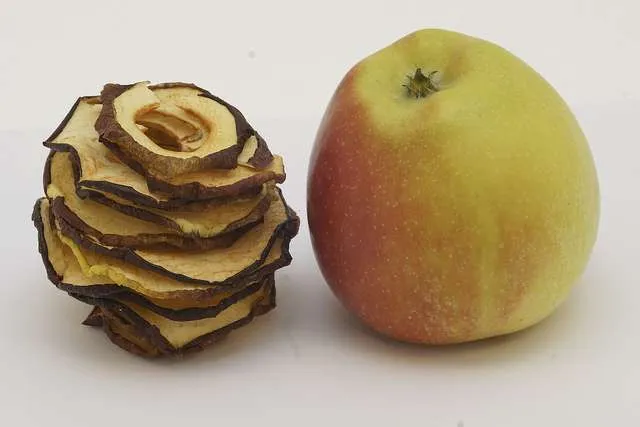
Drying produce

0
Christina Claßen

Janet Hackert, Regional Nutrition and Health Education Specialist, Harrison County, University of Missouri Extension

With food prices on the rise, many people are becoming more interested in growing and preserving their own food. More and more are canning and freezing, while others are discovering, or rediscovering, the science of drying foods. The first dehydrator was introduced in France in 1795. Ever since, people have been storing home-dried food in a cool, dry, dark place for long periods and keeping it safe to eat.

Dehydrating

Dehydrating removes the water from food, which is how properly dried and stored foods last for so long. Molds, yeast and bacteria that make food spoil quickly need water to live and grow. With lower moisture content, these microorganisms cannot survive.

Nutritional value

As with most processing methods, drying foods affects the nutritional value of the food. The heat and air used in dehydration destroys both vitamins A and C. Blanching vegetables before drying stops the enzyme action that causes the produce to decay. Blanching also reduces the amount of water soluble nutrients like vitamin C, B vitamins and some minerals. However, blanching helps maintain levels of vitamin A, vitamin C and thiamin during the drying process and storage. With most of their water removed, the nutrients in dried foods are more concentrated, and are higher in calories and fiber per weight compared to their fresh counterparts.

Drying methods

Foods can be dried in the sun or in a solar drier, but using an oven or electric dehydrator is more reliable than depending on the weather. Oven drying is a great way to try food dehydration because it involves little, if any, added equipment. It is not, however, a very efficient way to dry foods. Those wanting to do more preservation may want to invest in an electric dehydrator designed specifically for this task.

An electric dehydrator uses warm air and good air circulation to remove moisture from food. A drying temperature of 140 degrees F is recommended. Dehydrators can dry fruit, vegetables, meat and herbs. Drying times vary from a few hours to a full day. Times depend on the moisture content, amount of food, room temperature and humidity.

For a lot more information on what foods to dry and how to dry and store them, check out the full version of this article at http://missourifamilies.org/features/foodsafetyarticles/fdsfty67.htm

School success requires family commitment

0

According to education experts, a lot of school success depends on attitudes toward education fostered in the home.

“There are ways families can help children get the most out of their school years. To start with, a positive attitude toward education is needed,” said Renette Wardlow, human development specialist, University of Missouri Extension.

Studies show that motivated students learn more quickly and achieve more effectively while discouraged children lack the motivation to do what is expected of them.

One way for parents to motivate their child is by providing encouragement for school success, no matter how small. Wardlow recommends “when your child becomes frustrated with an assignment, provide supportive advice.”

“Be realistic in your expectations and don’t expect the impossible from your child. I think it is important to sit down with your child at the start of the school year to help them set goals for the coming school year. Then give support to your mutually agreed upon plan,” said Wardlow.

It is also important to help set a positive climate for good study habits according to Wardlow. For example, set aside a special place at home for studying.

“Encourage a regular time and place for homework. With studying, emphasis should be on making it a habit. Regularity is the key,” said Wardlow.

This article can be viewed online at http://missourifamilies.org/features/parentingarticles/parenting78.htm

Peonies may be cut back now

0

Peonies often look a little bedraggled by this time of year and gardeners
may want to cut them back. That will not be a problem with this perennial.
Peonies are essentially dormant by September 1 even though leaves may still
be green. Cut leaves off close to the ground and compost or discard.


By: Ward Upham