Tuesday, February 3, 2026
Home Blog Page 312

Sunflower State of Mind

0

Whether you’ve had a bad day and need some quiet time, or whether your faith has taken a hit lately and you need some assurance that there is still good in this world, take a drive along any back road going anywhere in Kansas right now and let God treat you to a spectacle only He can provide in the form of acre-after-acre of brightly shimmering wild sunflowers in the ditches and fencerows. As you drive along, thousands of luminescent yellow heads appear to guide your way and offer a boost to your spirits.

Did you know that the sunflower is the only crop grown for seed that was domesticated right here in the USA? Sunflowers were a common crop among Native American tribes throughout North America, and Spanish explorers took the exotic plants back to Europe in the 1500’s. Sunflowers were first grown for food in Russia. By the early 19th century, Russian farmers were growing over 2 million acres, and by the late 19th century, Russian sunflower seed had found it’s way back to North America again. Though different from domestic sunflowers in many ways, wild sunflowers are the genetic basis of today’s commercially grown crop. Domestic sunflower blooms appear to follow the sun across the horizon each day, but once the radiant flowers open, they actually face east for the rest of their lives. This is possibly a defense mechanism, as facing any other direction could scald the seeds before they ripen. Wild sunflowers don’t seem to care which direction they face.

In 2023, US farmers grew just over 1.3 million acres of domestic sunflowers, 36,000 of those acres were grown here in KS, putting us in 6th place behind North Dakota, South Dakota, Minnesota, Texas and Nebraska. Total 2023 domestic sunflower production in the US totaled 2.3 billion pounds. Russia, Ukraine, the European Union, Argentina and Turkey make up the top 5 world producers of domestic sunflower seed. The sunflower, by the way is the national flower of Russia.

Now, here’s a little “sunflower trivia,” compliments of the Guinness Book of World Records. A sunflower grown in Germany holds the record for the tallest ever grown, at 30 feet, 1 inch, a sunflower grown in British Columbia boasts the widest head ever recorded at over 32 inches across, a sunflower head weighing over 14 pounds grown in Wales is the heaviest sunflower head on record, and a sunflower grown in Michigan claims the most heads with 837 sunflower heads on one plant.

In 1903, the sunflower became the state flower of Kansas. As history has it, in 1901, George Morehouse, a state senator from Council Grove, attended a rodeo in Colorado Springs where all the Kansas folk in attendance wore sunflowers identifying them as Kansans. So moved and inspired by the Kansas spirit was he, that upon returning home, he drafted the bill naming the sunflower as our state flower. In this original bill, Morehouse stated “This flower has to all Kansans an historical symbolism which speaks of frontier days, winding trails, pathless prairie and is full of the life and glory of the past, the pride of the present and richly emblematic of the majesty of the golden future, and is a flower which has given Kansas the world-wide name “The Sunflower State.”

The last couple years we’ve had typical Kansas summer weather, dried and roasted, but like the mailman, those Kansas wild sunflowers don’t seem to care. They fill the ditches

and pastures of our state with a gazillion gleaming jewels fit for any king’s crown. So take a lesson from the wild sunflower and when life deals you adverse conditions. turn them into sunflower seeds! (I know that doesn’t make sense but it sounds cool) Continue to Explore Kansas Outdoors

Steve can be contacted by email at [email protected].

Ginger Pumpkin Pie

0

Well; I promised pumpkin this week, and pumpkin it shall be! I went back a few years tonight, as I visited some of my old archives. I had planned a brand-new recipe, but someone forgot to go get an orange at the grocery store! And..it wasn’t me either! So, change the attack plan, right? This pumpkin pie is definitely one of my favorite versions of pumpkin pie. Perhaps, it’s because I am a big fan of ginger snaps. You are probably going to give this recipe a look over and realize there are ‘once again’, many ways to adapt my recipe out to different flavors of pies.

Tonight, I got home from work around 6pm, made tacos for supper and then dove into more prep work for the weekend back in my hometown of Lewistown, MO.

I made about 20 breakfast wraps; half went back home and the other half stayed here. This time I filled them with eggs, cheese, sausage, onion, spinach, tater tots and a teaspoon of salsa. This way there’s not a great deal of mess around when we go back home to clean and pack. This weekend we are traveling in different vehicles and coming and going at different times. I also prepared fresh ice tea, a marinated cucumber salad, cleaned the kitchen, did about 3 loads of laundry, research, and got the column written early. When I finally hit the hay, I will feel good about having things done ahead of time.

Speaking of ahead of time, I would like to give a few hints for the early bird Christmas shoppers out there. There are several sites which have ‘huge’ clearances going on. Hit it now for some of those holiday gifts. I plan on doing so myself, in the next few days. Christmas exchanges, secret pals, nieces and nephews, oh yes, it’s a good time to get some of those things done ahead of time.

I’m putting up a few pieces of fall décor that will hold me until I return on Monday. Then we’ll do a bit more. I still haven’t gotten a pot of apple butter made. It may have to wait until middle of next week. Never enough hours in the day.

Let me post the recipe and call it a full evening, on the home-front. I hope you give this recipe a try, I don’t think you will be disappointed!

Ginger Pumpkin Pie

1 9-inch-deep dish pie crust of choice

Bottom Layer:

1/8 cup chopped pecans

(6) 2 1/2-inch ginger snaps, finely crumbled

1 tablespoon praline flavoring or maple extract

Filling

1 (15 oz.) can pumpkin puree

3/4 cup apple butter

1/2 cup light brown sugar

1 teaspoon cinnamon

3/4 teaspoon nutmeg

5 eggs, beaten

1 3/4 cups buttermilk

Pinch of salt

Streusel Topping

3 tablespoons butter, cold

1/4 cup flour

1/4 cup brown sugar

1/4 cup chopped pecans

(4) 2 1/2-inch ginger snaps, finely crumbled

2 teaspoons praline flavoring or maple extract

Any remaining bottom layer crumble

Prepare the pie crust. Next, mix the ingredients for the bottom layer and sprinkle 5 tablespoons over the bottom of the prepared pie crust. This helps to keep the crust from becoming soggy. Set aside the remaining crumb mixture to add to the top mixture later.

In a large bowl, lightly whisk the eggs; add buttermilk and the remaining ingredients. Pour over the bottom layer of the crumbs. Bake in a 425-degree F oven for about 30 minutes with the crust covered. While the pie is baking, make the streusel by cutting the cold butter into the dry ingredients of the streusel. It will resemble coarse crumbs.

After the 30 minutes of baking lower the oven temperature to 350 degrees and sprinkle on the topping. Continue baking until a knife inserted in the center

comes out clean. Remove the cover on the crust to brown edges to the degree your family likes best. Serves 8-10 persons. YUM

A Monday’s day-in-the-life diary

0

Lovina’s Amish Kitchen
Lovina Eitcher,
Old Order Amish
Cook, Wife &
Mother of Eight

4 a.m. My alarm rings and I get up to start another day. Daughter Verena gets ready to go across the road to stay with daughter Loretta and her boys until Dustin comes home from work. I always watch at the door to make sure she gets across the road and to their house okay. 

4:25 a.m. Daughter Lovina gets a ride here with her husband Daniel on his way to work. She goes up to her former bedroom to get some more sleep since it’s still so early. 

4:30 a.m. I’m helping get some food packed for son Benjamin’s lunch. He usually doesn’t want breakfast. He leaves a little after 4:30. He’s working 10 hour days at the factory.

4:45 a.m. I start packing my husband Joe’s lunch and make him a sausage, egg, and cheese sandwich. I use tortilla soft shells instead of bread for the sandwich. I had plenty of leftovers from last night when the family was all here for supper for their lunches. 

5:10 a.m. Joe leaves for work. I take a nap in my recliner. I can tell it’s Monday and it’s hard to get started. 

7:15 a.m. I had a great nap and feel much more rested. I do some work at my desk—including paying bills and getting it ready for the mail, etc. Then I gather laundry and throw it down to the basement through our “laundry shoot” (which is only a vent I take out of the floor).

8:30 a.m. Lovina is washing dishes and sweeping floors while I help son Kevin get in his mobility scooter. He takes the mail out for me.

9:30 a.m. I wash the laundry and hang it out on the lines after eating breakfast first. 

12:30 p.m. I’m finally done with the laundry. Verena is back home.

1:30 p.m. Loretta brings her two little boys over here while she and Dustin leave for town. Verena gets Byron to take a nap, but Denzel is full of energy. They are so precious! He knows where Grandpa and Grandma keep their candy, and he also knows where the Nesquik powder is. He gets the can out and stands by the refrigerator wanting milk. I give him some Smarties, and he goes to the drawer and gets a small container out to put the Smarties in. He is happy and walking around smiling. Sometimes I give him some chewable vitamins instead of Smarties and he thinks it’s candy. He loves the vitamins. 

2 p.m. The girls start making a potato and meat casserole, but Daniel comes to pick Lovina up before it’s done, so I help Verena. After it’s done, Verena takes it over to a family from our church for their supper. They are having some struggles right now, and I wrote a note of encouragement along. Verena said the young mother was so encouraged from this. Do we realize how small acts of kindness can make someone’s day so much brighter?

While Verena is gone I make another meat and potato casserole for us and one for Dustin and Loretta’s supper. I sent the rest of the soup from last night home with Lovina and Daniel. Daniel and Lovina made the campfire soup over the open fire last night while Joe and son-in-law Tim grilled 20 pounds of chicken. Our whole family came here after church services, and Joseph and Grace came for awhile after arriving home from their honeymoon. So our menu was campfire stew, grilled chicken, cheese, crackers, ice cream, and watermelon. It was good to have everyone here. 

3 p.m. Joe is home from work. Denzel runs out to meet him. He takes Grandpa’s hand and leads him to where the Smarties are. Haha! They sure do catch on fast. Byron wakes up and wants Grandpa’s attention too. Byron is walking short distances. 

4 p.m. Benjamin is home from work, and Denzel runs out to greet him too. He carries Benjamin’s lunch bucket in and opens it to see if he can find any goodies left. I get the laundry off the lines, and Denzel collects the clothespins from me and puts them in the bag for me. He feels so good to be helping Grandma. 

5:30 p.m. Loretta is here to get the boys. She is very glad that we have supper ready for her to take home. 

6:30 p.m. Supper is ready. We have leftover chicken with the casserole. 

8:30 p.m. Everyone is ready for bed. It feels good to sit in my recliner again. I like to read before going to bed. Benjamin left with a friend and isn’t home yet. If I fall asleep in the recliner, he’ll wake me up when he comes home. 

10 p.m. Benjamin is home, and I of course had fallen asleep in the recliner. I will go to bed and set the alarm again for 4 a.m. Good night, and God’s many blessings to all of you. 

Congratulations to nephew Benjamin and Crystal! They were blessed with a son on September 10 (granddaughter Abigail’s 8th birthday). They named him Wesley Benjamin. Isaiah is proud of his little baby brother.

Cream Pie

3/4 cup white sugar

1/3 cup brown sugar

1 tablespoon flour

Pinch salt

1 cup cream

1 cup scalded milk

1 teaspoon vanilla

2 eggs, separated

1 (9-inch) unbaked pie crust

Mix together white sugar, brown sugar, flour, and salt; then mix in cream, milk, vanilla, and egg yolks. In a separate bowl, beat egg whites until foamy, then fold into cream mixture. Pour into unbaked pie crust. Bake at 400 degrees Fahrenheit for 10 minutes. Then reduce heat to 325 degrees Fahrenheit for another 30 minutes, or until a knife comes out clean when inserted in the center.

Lovina’s Amish Kitchen is written by Lovina Eicher, Old Order Amish writer, cook, wife, and mother of eight. Her three cookbooks, The Cherished Table, The Essential Amish Cookbook, and Amish Family Recipes, are available wherever books are sold. Readers can write to Eicher at Lovina’s Amish Kitchen, PO Box 234, Sturgis, MI 49091 (please include a self-addressed stamped envelope for a reply); or email [email protected] and your message will be passed on to her to read. She does not personally respond to emails.

Remarkable, Intriguing Traits About Horses

0

Horses are majestic creatures that have captivated humans for centuries.
Beyond their grace and strength, these animals possess fascinating traits and histories that make them truly remarkable.
Whether you’re a seasoned equestrian or simply curious about these equine marvels, there are intriguing and surprising facts about horses, according to horse researchers,
Horses are known for their exceptional memory.
Once they learn something, they rarely forget it. This ability extends to recognizing people they’ve met before, understanding complex training cues, and even remembering challenging trail routes or competition courses.
Much like humans and some primates, horses can communicate their emotions through facial expressions.
Researchers have found that horses use their eyes, nostrils, and mouth to convey happiness, fear, and even pain to those around them.
Determining the age of a horse can be as simple as looking at its teeth. Horses have unique dental patterns that change as they mature.
By examining the wear and shape of their teeth, veterinarians and experienced handlers can estimate a horse’s age within a few years.
Just as human fingerprints are unique, so too are the hoofbeats of horses. Each horse has a distinct sound when it walks or runs, due to differences in hoof shape, gait, and weight distribution.
Skilled horse owners can often identify their horses by the sound of their hoofbeats alone.
Horses have eyes positioned on the sides of their heads, allowing them to have a panoramic field of vision. This evolutionary trait helps them detect predators from various angles without needing to turn their heads significantly.
However, it also means they have a small blind spot directly in front of and behind them.
Humans began domesticating horses around 4,000 BC, marking a pivotal moment in history. This partnership revolutionized transportation, agriculture, and warfare.
The bond between humans and horses has since deepened, with these animals becoming cherished companions and partners in various activities worldwide.
In the wild, horses live in herds led by a dominant mare. This social structure promotes cooperation, communication, and protection against predators.
Even in domestic settings, horses thrive on social interaction, forming strong bonds with both humans and fellow equines.
Horses have a unique ability to lock their legs in place using a specialized stay-apparatus, allowing them to doze off while standing.
This adaptation is rooted in their evolutionary history as prey animals, enabling them to quickly flee from danger if needed.
Horses are herbivores with a specialized digestive system designed to process large quantities of roughage.
Their stomachs are relatively small compared to their size, so they rely on fermenting fibrous plant material in their hindgut to extract nutrients effectively.
In 1961, a horse named Pony Express was among the animals sent into space by the Soviet Union.
Although primarily an experiment to test the effects of space travel on living organisms, Pony Express and other animals paved the way for human space exploration.
+++30+++

Five fall tips for cool-season lawn care

0

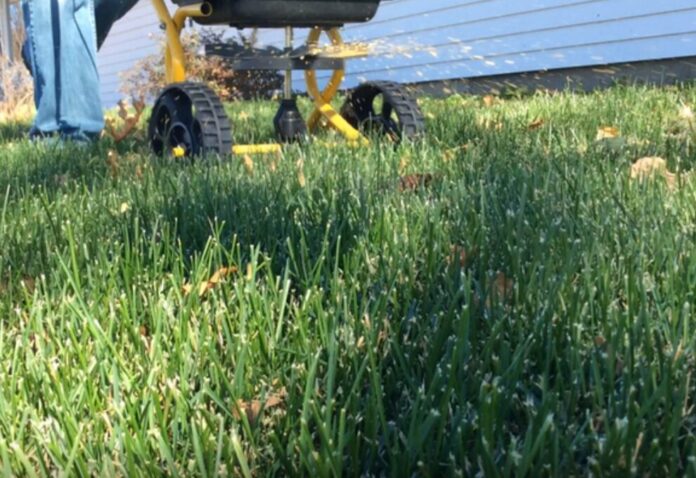
As the sun sets on another summer season, lawn care does not stop. When it comes to routine turf maintenance, the late summer to early fall months are critical for cool-season lawns.

Cool season lawns are a group of turf species comprised mainly of Kentucky bluegrass, tall fescue, perennial ryegrass, and fine fescue. Many Illinois homeowners with a lawn are likely to have a cool-season type. Cool-season lawns green up quickly in the spring and fall but may go dormant during the hottest part of summer.

Cool-season lawns coming out of a hot, dry summer will be stressed and could use some tender, loving care. The following are five tips to give a lawn a pick-me-up as the summer fades to fall.

  • Aerate. Aeration is a great way to relieve soil compaction and reduce thatch. The machine for the job is a hollow-tine aerator or core aerator. Operate the core aerator a few days after rain when the soil is still slightly damp. Core aerators cannot cut into hard, dry soil. Leave the soil cores to break down over the next few weeks.
  • Overseed. Broadcast seed into an established lawn with a seeder or by hand. Slit seeders are a great tool for overseeding into established lawns. Select a high-quality seed and set the seeder at the correct rate.

Bonus Tip: To patch bare spots, rake up the soil surface for good seed-to-soil contact. Mix bagged topsoil with bagged compost 50/50. Combine grass seed with the soil and compost mix at a 3:1 ratio. Three scoops of soil mixed with one scoop of seed. Apply the 3:1 mix to the bare spot, and firm up the patch by hand. Keep the area moist until germination and follow up with watering while the young grass plants develop.

  • Fertilize. Apply one pound of nitrogen fertilizer per 1,000 square feet. If a lawn only gets one feeding a year, it should be before fall. The window for Central Illinois is August 15 through September 15. Adjust accordingly to early August in northern counties, and September for southern counties.

Optional: Apply a late-season fertilizer called a winterizer one week after the final mowing of the season.

  • Mulch clippings and leaves. By bagging clippings and leaves, nutrients are taken away from the soil. Ditch the bag and return those nutrients and organic matter back to the lawn. Lawns, where clippings are not bagged, can go longer between fertilizer applications. Research at Michigan State University shows that shredding fall leaves into the turf can improve lawn health. For those wishing to preserve leaves for insect overwintering habitat, rake the leaves from the desired lawn space into planting beds.
  • Perennial weed control. Fall is also a great time to kill broadleaf weeds such as dandelion or creeping Charlie. At this time of year, perennial weeds prepare for winter, sending carbohydrates to their roots. Applying a systemic herbicide at this time will be more successful at killing the entire plant, above- and below-ground. Once the weeds are dead, cool temperatures are conducive for cool-season turf to fill in the bare spots.

For more on lawns, visit extension.illinois.edu/lawns. For questions, connect with a location Extension office at go.illinois.edu/ExtensionOffice.

Chris Enroth is an Illinois Extension horticulture educator for Henderson, Knox, McDonough, and Warren counties. Gardeners Corner is a quarterly newsletter from gardening experts around the state. Each issue highlights best practices that will make your houseplants, landscape, or garden shine in any season. Join the Gardener’s Corner email list at go.illinois.edu/GCsubscribe for direct access to timely tips.